, to see if you have full access to this publication.
Monograph No access
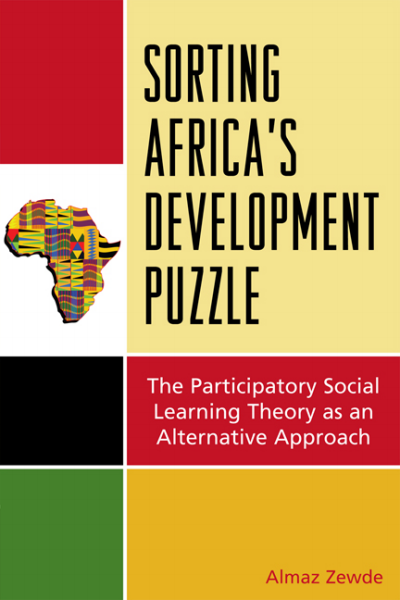
Sorting Africa's Developmental Puzzle
The Participatory Social Learning Theory as an Alternative Approach
Authors:
Publisher:
2010
Summary
Sorting Africa's Development Puzzle: The Participatory Social Learning Theory as an Alternative Approach is a comprehensive exploration of why Africa has not managed to achieve a sustainable and self-regenerating development over the past half-century of effort. The work situates the problems of Africa's persistent underdevelopment in the practices employed by national political elites, donors, and lenders to African development that played roles in determinant policy and planning. Unlike many newly developed countries and regions, and contrary to the historical experiences of developed countries where ordinary people were full stakeholders and drivers of development, Africa's development has been top-down, expert and capital driven, mechanical, and typically externally designed. Ordinary Africans were made marginal to development. This approach to Africa's development was devoid of building the people and their institutions as the legitimate means of development. The entrusting of Africa's development to local and international elites to the exclusion of the people from decision-making and full participation, has led to grievous deficits in the formation of human and social capital, and legitimate economic, social, and political institutions for development. The book offers a studied alternative that can positively change Africa's development direction - The Participatory Social Learning Approach. The philosophical, theoretical, historical and heuristic origins of this alternative are offered in detail within this book.
Search publication
Bibliographic data
Edition
1/2010
Copyright Year
2010
ISBN-Print
978-0-7618-4907-0
ISBN-Online
978-0-7618-4908-7
Publisher
Hamilton Books, Lanham
Language
English
Pages
262
Product Type
Monograph
Table of contents
ChapterPages
Contents No access
Preface No access
Acknowledgments No access
Acronyms No access
Introduction No access Pages 1 - 22
Chapter 1. Selected Development Theories: Some Post-World War II Theoretical Contests No access Pages 23 - 46
Chapter 2. The Alternative Development Theory: The Participatory Social Learning Development Theory and Model for Africa No access Pages 47 - 67
Chapter 3. The Institutional Imperative: Its Condition in Africa and Implications for Development No access Pages 68 - 98
Chapter 4. The Human Resource Imperative No access Pages 99 - 126
Chapter 5. The Resource Imperative: Natural and Man-enhanced Resources for Development No access Pages 127 - 130
Chapter 6. The Technology Imperative No access Pages 131 - 144
Chapter 7. The Investment Capital Imperative No access Pages 145 - 156
Chapter 8. Putting Together the Development Puzzle: The Participatory Social Learning Paradigm and the Five Development Imperatives in Practice: Case Studies No access Pages 157 - 186
Chapter 9. African Women: The Continent’s Undervalued and Overworked Development Assets No access Pages 187 - 211
Chapter 10. Looking Ahead: Some After Thoughts No access Pages 212 - 232