, to see if you have full access to this publication.
Monograph No access
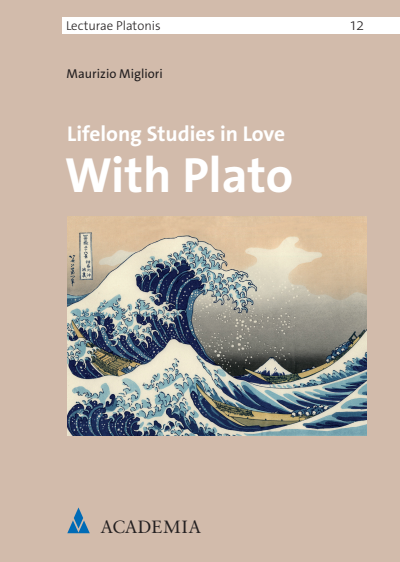
Lifelong Studies in Love With Plato
- Authors:
- Series:
- Lecturae Platonis, Volume 12
- Publisher:
- 2020
Summary
This book contains eight long essays, which have never been published in English and which offer a highly original reconstruction of the different elements of Platonic thought, starting with reflections on the writing techniques ‘invented’ by Plato. Two dialogues, the Phaedrus and the Statesman, are analysed in depth, while an analysis of the Apology of Socrates serves to challenge the traditional vision of ‘Socratic dialogues’. The two final essays are devoted to methodological questions, which on the one hand reaffirm the need to respect the letter of the text, and on the other hand present a completely innovative hermeneutic proposal: the multifocal approach.
Search publication
Bibliographic data
- Edition
- 1/2020
- Copyright Year
- 2020
- ISBN-Print
- 978-3-89665-865-4
- ISBN-Online
- 978-3-89665-866-1
- Publisher
- Academia, Baden-Baden
- Series
- Lecturae Platonis
- Volume
- 12
- Language
- English
- Pages
- 178
- Product Type
- Monograph
Table of contents
ChapterPages
- Titelei/Inhaltsverzeichnis No access Pages 1 - 8
- 1. Some examples No access
- 2. The reasons for this approach No access
- 3. The problem of writing No access
- 4. The writing as “game” No access
- 5. The Seventh Letter No access
- 6. Conclusion No access
- 1. How Plato comes to the doctrine of the Ideas and Principles in the Phaedo No access
- 2. Parmenides No access
- 3. One important consequence No access
- 4. Ontological justification No access
- 5. Conclusion No access
- A. First premise. The reasons for the crisis of truth No access
- B. Second premise. The multifocal approach to knowledge No access
- 1. The sense perception No access
- 2. The central role of the soul No access
- 3. The necessity and insufficiency of the various ways of knowledge No access
- 4. Doxa No access
- 5. To know a complex reality No access
- 6. The basis of knowledge No access
- 1. The order of the dialogues No access
- 2. The “youthful” dialogues No access
- The charge No access
- The gods No access
- Socrates’ defence No access
- Post-eventum prophecies No access
- Platonic elements No access
- The contrast between different ways of life No access
- 4. Conclusion No access
- 1. A paradoxical situation No access
- 2. Introductory elements for reading the dialogue No access
- 3. The structure of the dialogue No access
- 4. The dominant motif: the technique of oral and written communication and the responsibility of the teacher No access
- 5. The central theme of the dialogue: the true between philosophy and mania No access
- 6. The most important theme: the soul and the relationship between man and God No access
- 7. Conclusion No access
- 1. Some preliminary remarks No access
- 2. The politeia in the Republic No access
- 3. The help of the Laws No access
- 4. The Statesman No access
- 5. Law and Politician No access
- 6. Pessimism of the intelligence, optimism of the will No access
- 1. A peculiar situation No access
- 2. A different choice and its implications No access
- The sophists’ contribution No access
- The Platonic experience No access
- Aristotelian developments No access
- 4. The contemporary value of this view of ancient philosophy No access
- 1. Premise No access
- 2. The underlying problem No access
- The theoretician’s problem No access
- The problem of historian and theoretician No access
- Some differences between the two hermeneutics No access
- First conclusion No access
- The impossibility of a pure reduplication of thought No access
- The alleged univocity of the text No access
- An excessive disapproval No access
- The inability of fixing the method No access
- A clarification on the actual situation No access
- The issue of the reader No access
- The issue of the author No access
- A short excursus on Plato No access
- The necessary rigorousness on the topic of presuppositions No access
- The whole and the part No access
- Context and literature No access
- Ancient Philosophy No access
- 7. Conclusions No access
- Bibliography No access Pages 167 - 172
- Index of ancient names No access Pages 173 - 174
- Index of modern authors No access Pages 175 - 176
- Index of the passages cited in extended form No access Pages 177 - 178