, to see if you have full access to this publication.
Monograph No access
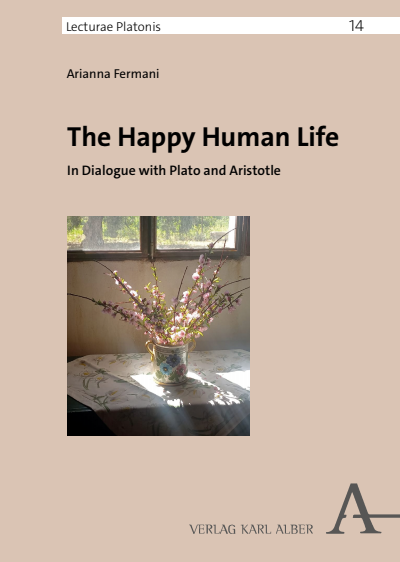
The Happy Human Life
In Dialogue with Plato and Aristotle- Authors:
- Series:
- Lecturae Platonis, Volume 14
- Publisher:
- 2026
Summary
This volume contains the map of a journey in search of happiness. It is a journey for which the reflections of Plato and Aristotle serve as irreplaceable compasses. Happiness, Plato and Aristotle teach us, is the product of a long and conscious construction. Therefore, it is also a task that each individual, starting from their own unmistakable individuality, must come to grips with day after day. This is why happiness is defined by the two ancient philosophers as the happiness of the complete life, bíos téleios. Within this fundamental theoretical framework are the crucial notions of aréte and phrónesis, which form the cornerstone of that harmonious whole that constitutes the happy human life.
Search publication
Bibliographic data
- Edition
- 1/2026
- Copyright Year
- 2026
- ISBN-Print
- 978-3-495-98810-7
- ISBN-Online
- 978-3-495-98811-4
- Publisher
- Karl Alber, Baden-Baden
- Series
- Lecturae Platonis
- Volume
- 14
- Language
- English
- Pages
- 333
- Product Type
- Monograph
Table of contents
ChapterPages
- Translator’s note No access
- Introduction No access Pages 11 - 18
- 1.1 The Question “of” Happiness No access
- 1.2.1 Happiness: A Terminological Question No access
- 1.2.2 Happiness and Forms of Life No access
- 2.1.1 Pain as an Event No access
- 2.1.2.1 The Maximum Intensity of Pain: Death No access
- 2.1.2.2 Figures of Death. Conclusive Remarks No access
- 2.2.1 Approaches to Pain No access
- 2.2.2 Care of Pain and Care of the Self No access
- 2.2.3 Taking Up Pain No access
- 2.3 Concluding Remarks No access
- 3.1 The Experience of Pleasure No access
- 3.2.1 Pleasure within the Horizon of Corporeality No access
- 3.2.2 Pleasant and Painful Dynamics No access
- 3.2.3 The Body and Desires: The Vehemence of a Flooded River No access
- 3.2.4a Truth and falsity of pleasures No access
- 3.2.4b Unity and multiplicity of the notion of desire. Some marginal notes on Platonic and Aristotelian texts No access
- 3.2.5 Pleasures and criteria of choice No access
- 3.3 The role of pleasure in the happy life No access
- 4.1.1 Virtue as excellence No access
- 4.1.2 Virtue as strength No access
- 4.1.3 Virtue as disposition No access
- 4.1.4 Virtue as the Mean No access
- 4.2.1 A happy and attuned life: virtue as music No access
- 4.2.2 A happy and ordered life: virtue as measure No access
- 4.2.3 Virtue as the art of living well No access
- 5.1 First Approaches to the Problem No access
- 5.2.1 Flashes of Happiness, Strokes of Fortune No access
- 5.2.2 Fortune and Virtue No access
- 5.2.3 Happiness and Fortune: Concluding Remarks No access
- 5.3.1 The possession and use of two supreme goods: sophia and phronesis No access
- 1.1.1 Toward a eudaimonia within the horizon of physis No access
- 1.1.2a Some reflections on the notions of body and soul in Plato and Aristotle No access
- 1.1.2b Souls and life projects: concluding observations No access
- 1.2.1 Happiness as awareness No access
- 1.2.2 Existential paths and trajectories of happiness No access
- 1.3 Practical wisdom and theoretical wisdom in relation to happiness No access
- 2.1.1 Attempts to articulate the notion of fulness No access
- 2.2 Toward a fulness within the horizon of energeia No access
- 2.3.1 Fully Conscious and Fully Human Happiness No access
- 2.4 Concluding Reflections No access
- 1. To Conclude No access
- 2. Happy Human Life: Travel Notes No access
- Bibliography No access Pages 313 - 332