, to see if you have full access to this publication.
Monograph No access
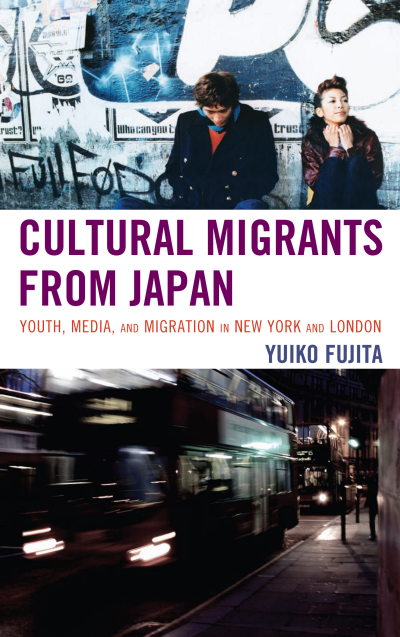
Cultural Migrants from Japan
Youth, Media, and Migration in New York and London
Authors:
Publisher:
2009
Summary
In recent years, a large number of young Japanese have been migrating to New York and London for the purpose of engaging in cultural production in areas such as dance, fashion, DJing, film, and pop arts in the hope of 'making it' as artists. In the past, this kind of cultural migration was restricted to relatively small, elite groups, such as American artists in Paris in the 1920's, but Cultural Migrants from Japan looks at the phenomenon of tens of thousands of ordinary, middle-class Japanese youths who are moving to these cities for cultural purposes, and it questions how this shift in cultural migration can be explained. Following Appadurai's theory of the relation between electronic media and mass migration, and using ethnographies of twenty-two young migrants over a five year period, Fujita examines how television, film, and the internet influence this mobility. She challenges emerging orthodoxies in the general discussion of transnationalism, demonstrating the disjunction migrants experience between the pre-existing expectations created by media exposure, and the reality of creating and living as a 'transnational' artist participating in a global community. Intersecting long-term, multi-sited ethnography with emerging transnational and globalization theory, Cultural Migrants from Japan is a timely look at the emerging shift in concepts of national identity and migration.
Search publication
Bibliographic data
Edition
1/2009
Copyright Year
2009
ISBN-Print
978-0-7391-2891-6
ISBN-Online
978-0-7391-3710-9
Publisher
Lexington, Lanham
Language
English
Pages
206
Product Type
Monograph
Table of contents
ChapterPages
Contents No access
Figures and Tables No access
Acknowledgments No access
Introduction: Media, Migration, and Multi-sited Ethnography No access Pages 1 - 18
Chapter One: The “Imagined West” in Japan No access Pages 19 - 70
Chapter Two: Encountering “Race” and Ethnic Relations No access Pages 71 - 100
Chapter Three: Gendered Japaneseness: Negotiating Images of “Submissive” and “Easy” Women No access Pages 101 - 124
Chapter Four: Local Japanese Communities No access Pages 125 - 144