, to see if you have full access to this publication.
Edited Book No access
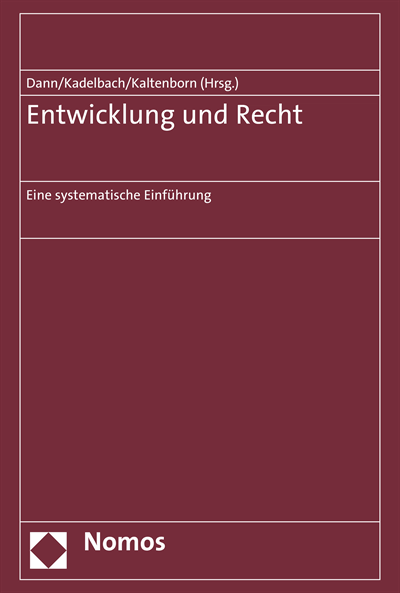
Entwicklung und Recht
Eine systematische Einführung- Editors:
- | |
- Publisher:
- 2014
Search publication
Bibliographic data
- Edition
- 1/2014
- Copyright Year
- 2014
- ISBN-Print
- 978-3-8487-0284-8
- ISBN-Online
- 978-3-8452-4656-7
- Publisher
- Nomos, Baden-Baden
- Language
- German
- Pages
- 816
- Product Type
- Edited Book
Table of contents
ChapterPages
- Titelei/Inhaltsverzeichnis No access Pages 1 - 10
- No access
- No access
- No access
- Authors:
- Authors:
- Modernisierungstheorie und Entwicklung durch Rechtstransfer No accessAuthors:
- Dependenztheorie und Entwicklung durch teleologisches Völkerrecht No accessAuthors:
- Neo-Liberalismus und Entwicklung durch Strukturanpassung und Konditionalitäten No accessAuthors:
- Capabilities approach und Entwicklung durch menschenrechtliches empowerment No accessAuthors:
- Good Governance und Entwicklung (auch) durch Verfassungs- und Verwaltungsrecht No accessAuthors:
- Development effectiveness und Steuerung durch Entwicklungsverwaltungsrecht No accessAuthors:
- Authors:
- Begriff Entwicklung: fragwürdig, aber prozedural zu retten? No accessAuthors:
- Themen und Stimmen aus dem Globalen Süden: honoriert und (meist) ignoriert? No accessAuthors:
- 1945 / 1949: Zäsur oder Kontinuität? No accessAuthors:
- Volatilität und Autonomie des Diskurses No accessAuthors:
- Schluss No accessAuthors:
- Ausgewählte Literatur No accessAuthors:
- Authors:
- Einleitung No accessAuthors:
- Authors:
- Authors:
- Modernisierung No accessAuthors:
- Dependenz und Neue Weltwirtschaftsordnung No accessAuthors:
- Neoliberalismus No accessAuthors:
- Die post-neoliberale Phase No accessAuthors:
- Geltendes Recht No accessAuthors:
- Normebenen unterhalb des Völkerrechts No accessAuthors:
- Authors:
- „Soft Law“ No accessAuthors:
- Internationale Praxis No accessAuthors:
- Differenzierung der Akteure No accessAuthors:
- Prinzipienwirkung No accessAuthors:
- Normative Aufladung des Entwicklungsbegriffs No accessAuthors:
- Ausgewählte Literatur No accessAuthors:
- Authors:
- Authors:
- Konzeptionelle Vorarbeiten und die New International Economic Order No accessAuthors:
- Der Inhalt der Erklärung von 1986 No accessAuthors:
- Dogmatische Einordnungsversuche – Recht auf Entwicklung als kollektive Solidaritäts- und Drittgenerationsrechte No accessAuthors:
- Authors:
- Die neoklassische Weltwirtschaftsordnung No accessAuthors:
- Institutionalisierung, capabilities-Ansatz und human rights approaches to development No accessAuthors:
- Authors:
- Die High Level Task Force und die Genfer Rituale No accessAuthors:
- Strukturelle Ungerechtigkeit aus Sicht der Moralphilosophie No accessAuthors:
- Ausgewählte Literatur No accessAuthors:
- Authors:
- Recht und Entwicklung normativ No accessAuthors:
- Recht und Entwicklung – kritisch No accessAuthors:
- „Law and development“ als wissenschaftlicher Beitrag zur Entkolonialisierung der Rechtswissenschaft No accessAuthors:
- Schluss No accessAuthors:
- Authors:
- Authors:
- Entwicklungsmessung durch statistische Indikatoren als rechtliche Herausforderung No accessAuthors:
- Authors:
- Genealogie internationalisierter Entwicklungsmessung No accessAuthors:
- Institutionelle Architektur globaler Entwicklungsmessung No accessAuthors:
- Authors:
- Das Primat der Wirtschaftsstatistik und seine rechtlichen Folgen No accessAuthors:
- Messung nachhaltiger, sozialer und menschlicher Entwicklung No accessAuthors:
- Authors:
- Authors:
- Menschenrechtsmessung No accessAuthors:
- Governance- und Rechtsstaats-Indikatoren No accessAuthors:
- Authors:
- Nicht-rechtliche Steuerung durch „governance by information“ No accessAuthors:
- Finalsteuerung durch MDG-Indikatoren No accessAuthors:
- Prozessteuerung durch Indikatoren in der „Aid-Effectivness“-Agenda No accessAuthors:
- Authors:
- Ambivalenz von Indikatoren als Herausforderung für das Recht der EZ No accessAuthors:
- Entwicklungsverwaltungsrecht als Informationsordnung No accessAuthors:
- Handlungsmodi, Kompetenzen, Organisation, Verfahren und Kontrolle im entwicklungsspezifischen Informationsverwaltungsrecht No accessAuthors:
- Fazit No accessAuthors:
- Ausgewählte Literatur No accessAuthors:
- Authors:
- Authors:
- Einleitung No accessAuthors:
- Authors:
- Authors:
- Soziale Rechte im Internationalen Pakt über wirtschaftliche, soziale und kulturelle Rechte von 1966 No accessAuthors:
- Weitere multilaterale Verträge auf globaler und regionaler Ebene No accessAuthors:
- Der Verpflichtungsgehalt der sozialen Menschenrechte No accessAuthors:
- Entwicklungsvölkerrechtliche Fragestellungen No accessAuthors:
- Millennium-Entwicklungsziele und Rights-based Approaches to Development No accessAuthors:
- Die Aktivitäten der im Bereich der sozialen Sicherung tätigen Internationalen Organisationen No accessAuthors:
- Bilaterale Entwicklungszusammenarbeit und soziale Sicherung No accessAuthors:
- Authors:
- Authors:
- Die Rechtsprechung des südafrikanischen Verfassungsgerichts zu den sozialen Menschenrechten No accessAuthors:
- Der “Right to Food – Case“ vor dem indischen Obersten Gerichtshof No accessAuthors:
- Programme sozialer Sicherung in Entwicklungs- und Schwellenländern No accessAuthors:
- Ausblick No accessAuthors:
- Ausgewählte Literatur No accessAuthors:
- Authors:
- Einführung No accessAuthors:
- Authors:
- Inhalt des Expansions-Narrativs No accessAuthors:
- Authors:
- Etablierung der Idee des modernen Immaterialgüterrechts (1624 bis 1883) No accessAuthors:
- Globale Expansion während des Kolonialismus (1800 bis ca. 1960) No accessAuthors:
- Dekolonisierung und Integration der Entwicklungsländer (1945 bis 1990) No accessAuthors:
- Washington Consensus 1990-2000 No accessAuthors:
- Widerstreitende Tendenzen seit 2000 No accessAuthors:
- Authors:
- Argumente der IP-Optimisten im Hinblick auf Entwicklungsländer No accessAuthors:
- Argumente der IP-Pessimisten im Hinblick auf Entwicklungsländer No accessAuthors:
- Insbesondere: Immaterialgüterrechte im Prozess der Industrialisierung entwickelter Länder No accessAuthors:
- Authors:
- Aus Sicht der Sozialwissenschaften No accessAuthors:
- Im Hinblick auf das internationale Immaterialgüterrecht und die Innovationspolitik No accessAuthors:
- Ausgewählte Literatur No accessAuthors:
- Authors:
- Die Rolle der Entwicklungsländer im globalen Migrationsregime No accessAuthors:
- Authors:
- Kann Entwicklung in den Herkunftsländern die Süd-Nord-Migration dämpfen? No accessAuthors:
- Kann Süd-Nord-Migration die Entwicklung in den Herkunftsländern fördern? No accessAuthors:
- Authors:
- Befristete Aufenthaltstitel für Studierende aus Entwicklungsländern No accessAuthors:
- Die Blue Card-Richtlinie der EU No accessAuthors:
- Programme zirkulärer Migration No accessAuthors:
- Ausblick No accessAuthors:
- Ausgewählte Literatur No accessAuthors:
- Authors:
- Authors:
- Einleitung No accessAuthors:
- Authors:
- Anfänge und erste Jahre No accessAuthors:
- Herausforderungen und Gegenbewegungen No accessAuthors:
- Reaktionen im Welthandelsregime No accessAuthors:
- Entwicklungsländer im GATT bis 1986 und in der Uruguay-Runde No accessAuthors:
- Handel und Entwicklung im WTO-Recht No accessAuthors:
- Die Doha Development Agenda No accessAuthors:
- Regionale Handelsabkommen und Süd-Süd-Kooperationen No accessAuthors:
- Zusammenfassung No accessAuthors:
- Authors:
- Die WTO und ihre Mitglieder No accessAuthors:
- Partizipation von Entwicklungsländern an der WTO-Entscheidungsfindung No accessAuthors:
- Entwicklungsländer und WTO-Streitbeilegung No accessAuthors:
- Rolle und Funktion von Nichtregierungsorganisationen No accessAuthors:
- Die WTO als Entwicklungsorganisation? No accessAuthors:
- Authors:
- Meistbegünstigung No accessAuthors:
- Special and Differential Treatment No accessAuthors:
- Regelorientierung No accessAuthors:
- Nachhaltige Entwicklung No accessAuthors:
- Authors:
- Erfolgsmodelle und ihre Indikatoren No accessAuthors:
- Empirische Feststellungen No accessAuthors:
- Fazit und Forschungsbedarf No accessAuthors:
- Ausgewählte Literatur No accessAuthors:
- Authors:
- Authors:
- Rohstoffe: Fluch und Segen No accessAuthors:
- Authors:
- Rohstoffrecht als transnationales Recht No accessAuthors:
- Kartierung des transnationalen Rohstoffrechts auf Grundlage seiner Konfliktlinien No accessAuthors:
- Authors:
- Authors:
- Rohstoffstaat/Importstaat No accessAuthors:
- Rohstoffstaat/Investor No accessAuthors:
- Importstaat/Importstaat No accessAuthors:
- Authors:
- Rohstoffstaat/Investor No accessAuthors:
- Investor/Bevölkerung No accessAuthors:
- Rohstoffstaat/Bevölkerung No accessAuthors:
- Authors:
- Rohstoffstaat/Importstaat No accessAuthors:
- „Wir“/„Die Märkte“ No accessAuthors:
- Entwicklung im Transnationalen Rohstoffrecht: Wer ist verantwortlich? No accessAuthors:
- Ausgewählte Literatur No accessAuthors:
- Authors:
- Spannungsverhältnis zwischen Investitionen und Entwicklung No accessAuthors:
- Regulierung von Investitionen auf innerstaatlicher und völkerrechtlicher Ebene No accessAuthors:
- Entwicklung des internationalen Investitionsschutzrechts No accessAuthors:
- Entwicklungsdiskurs in der Investitionsschiedsgerichtsbarkeit No accessAuthors:
- „Legitimitätskrise“ des Investitionsschutzrechts: Investitionsschutz als Entwicklungshindernis No accessAuthors:
- Investitionsschutzrecht als Teil des Entwicklungsvölkerrechts am Beispiel des Grundsatzes billiger und gerechter Behandlung No accessAuthors:
- Schlussbetrachtung und Ausblick No accessAuthors:
- Ausgewählte Literatur No accessAuthors:
- Authors:
- Authors:
- Staatsverschuldung bis zum Zweiten Weltkrieg No accessAuthors:
- Bretton Woods: Ruhe vor dem Sturm No accessAuthors:
- Authors:
- Entstehung entwicklungstypischer Verschuldung und Krisen No accessAuthors:
- Restrukturierungen: Reschedulings, Brady Bonds, Schuldenerlass No accessAuthors:
- Zwischenfazit No accessAuthors:
- Authors:
- Argentinien: Restrukturierung ohne IWF und Klageflut No accessAuthors:
- Institutionelle Entwicklungen seit der Finanzkrise 2007ff. No accessAuthors:
- Authors:
- Initiativen für nachhaltige Staatsverschuldung No accessAuthors:
- Initiativen für nachhaltige Restrukturierung No accessAuthors:
- Fazit No accessAuthors:
- Authors:
- Mehrebenenaspekte No accessAuthors:
- Authors:
- Geldgeber No accessAuthors:
- Foren zur Restrukturierung No accessAuthors:
- Authors:
- Die Unterscheidung zwischen öffentlicher und privater Gewalt No accessAuthors:
- Schuldtitel No accessAuthors:
- Maßnahmen der Krisenprävention No accessAuthors:
- Einleitung einer Restrukturierung No accessAuthors:
- Instrumente und Verfahren der Krisenbewältigung No accessAuthors:
- Streitschlichtung und Vollstreckung No accessAuthors:
- Authors:
- Nachhaltigkeit No accessAuthors:
- Transparenz No accessAuthors:
- Authors:
- Odious debt und Staatennachfolge No accessAuthors:
- Wirtschaftlicher Notstand No accessAuthors:
- Insolvenz als Grund für ein Vollstreckungsverbot? No accessAuthors:
- Pflicht zum Eintritt in Verhandlungen, Gleichbehandlung No accessAuthors:
- Konditionalität und Ownership No accessAuthors:
- Menschenrechte No accessAuthors:
- Schlussbetrachtung: Erfolge und Perspektiven des Rechts der Staatsverschuldung und Staateninsolvenz No accessAuthors:
- Ausgewählte Literatur No accessAuthors:
- Authors:
- Einleitung No accessAuthors:
- Authors:
- Bilaterale Nutzungskonflikte als Geburtshelfer des Umweltvölkerrechts No accessAuthors:
- „Armut ist der größte Verschmutzer“ (Indira Gandhi, Stockholm 1972) No accessAuthors:
- Die Konferenz der Vereinten Nationen über Umwelt und Entwicklung (Rio 1992) No accessAuthors:
- Relativierung des Umweltschutzes zugunsten wirtschaftlicher Entwicklung? New York 2000 und Johannesburg 2002 No accessAuthors:
- Rio+20 und die Konsolidierung des Prinzips der Nachhaltigkeit No accessAuthors:
- Authors:
- Gerechtigkeit und Solidarität No accessAuthors:
- Die gemeinsame, aber differenzierte Verantwortlichkeit von Industriestaaten und Entwicklungsländern für den Schutz der globalen Umwelt No accessAuthors:
- Das Prinzip der nachhaltigen Entwicklung No accessAuthors:
- Erfüllungshilfe No accessAuthors:
- Authors:
- Inadäquanz der Dichotomie von Industrie- und Entwicklungsländern No accessAuthors:
- Das Setzen falscher Anreize und die Fokussierung auf Transferleistungen No accessAuthors:
- Institutionelle Defizite: Fragmentierung statt Kohärenz? No accessAuthors:
- Zur Notwendigkeit von Anpassungsstrategien im Lichte globalen Wandels No accessAuthors:
- Ausblick No accessAuthors:
- Ausgewählte Literatur No accessAuthors:
- Authors:
- Einleitung No accessAuthors:
- Konzept der fragilen Staatlichkeit No accessAuthors:
- Völkerrechtliche Folgeprobleme fragiler Staatlichkeit No accessAuthors:
- Entwicklungsdimension No accessAuthors:
- Sonderproblem: Post-Conflict Peace-Building No accessAuthors:
- ‚Good Governance‘-Konditionalität No accessAuthors:
- Bilanz No accessAuthors:
- Ausgewählte Literatur No accessAuthors:
- Authors:
- Einführung No accessAuthors:
- Authors:
- Irak: Verfassungsgebung unter Besatzung (2003-2005) No accessAuthors:
- Erkenntnisse aus dem irakischen Verfassungsprozess No accessAuthors:
- Kenia: Institutionenreform und Demokratisierung (2009-2010) No accessAuthors:
- Erkenntnisse aus dem kenianischen Verfassungsprozess No accessAuthors:
- Deutsche Akteure und Beiträge zu Verfassungsreformen No accessAuthors:
- Ausgewählte Literatur No accessAuthors:
- Authors:
- Einleitung No accessAuthors:
- Authors:
- Die Wiederentdeckung der demokratischen Friedenstheorie No accessAuthors:
- Demokratieförderung als Auftrag der Vereinten Nationen No accessAuthors:
- Authors:
- Die Entdeckung der Demokratie als Entwicklungskomponente No accessAuthors:
- Die Good Governance Agenda der Weltbank No accessAuthors:
- Fazit: Abkehr von einem pluralistischen Weltordnungsmodell durch funktionale Demokratieförderung globaler Institutionen No accessAuthors:
- Ausgewählte Literatur No accessAuthors:
- Authors:
- Authors:
- Governance-Begriff der Weltbank No accessAuthors:
- Good Governance No accessAuthors:
- Governance-Forschung No accessAuthors:
- Authors:
- Bindung durch Vertrag No accessAuthors:
- Bewirkung der Selbstverpflichtung No accessAuthors:
- Rating No accessAuthors:
- Analyse No accessAuthors:
- Authors:
- Good Governance-Recht No accessAuthors:
- Good Global Governance? No accessAuthors:
- Ausgewählte Literatur No accessAuthors:
- Authors:
- Von „Transplant“ zu „Transfer“ No accessAuthors:
- Grundlagen von Transfer No accessAuthors:
- De-Kontextualisierung No accessAuthors:
- Aufnahme in die globale Verfassung No accessAuthors:
- Transfer-Resistenz: „Odd Details“ No accessAuthors:
- Re-Kontextualisierung: Bricolage, Risiken und Nebenwirkungen No accessAuthors:
- Fazit No accessAuthors:
- Ausgewählte Literatur No accessAuthors:
- Authors:
- Einleitung No accessAuthors:
- Authors:
- Theorieansätze zur Erklärung der Korruption No accessAuthors:
- Authors:
- Ursachen von Korruption No accessAuthors:
- Folgen von Korruption No accessAuthors:
- Bedeutung für die Entwicklungspolitik No accessAuthors:
- Authors:
- Konvention gegen Korruption der Vereinten Nationen No accessAuthors:
- OECD No accessAuthors:
- Europaratsabkommen No accessAuthors:
- Amerika No accessAuthors:
- Afrika No accessAuthors:
- Authors:
- Transnationale staatliche Initiativen (G8/G20) No accessAuthors:
- Soft Law Instrumente der OECD No accessAuthors:
- Weltbank-Initiativen No accessAuthors:
- Internationale Soft Law Normen für Unternehmen No accessAuthors:
- Korruption und Internationales Investitionsschutzrecht No accessAuthors:
- Ein holistisches Konzept der Entwicklungsförderung durch Korruptionsbekämpfung No accessAuthors:
- Ausgewählte Literatur No accessAuthors:
- Authors:
- Einleitung No accessAuthors:
- Authors:
- Authors:
- Inhaltliche Steuerung No accessAuthors:
- Organisationsbezogene Steuerung No accessAuthors:
- Authors:
- Inhaltliche Steuerung No accessAuthors:
- Organisationsbezogene Steuerung No accessAuthors:
- Authors:
- Authors:
- Die Autonomie der staatlichen Durchführungsorganisationen No accessAuthors:
- Die Einschaltung privater Durchführungsorganisationen No accessAuthors:
- Authors:
- Das Verfahren No accessAuthors:
- Rechnungsprüfung und Evaluation No accessAuthors:
- Fazit No accessAuthors:
- Ausgewählte Literatur No accessAuthors:
- Authors:
- Einführung No accessAuthors:
- Authors:
- Primärrecht: Entwicklungsziele und auswärtiges Handeln der Union No accessAuthors:
- Internationale Vorgaben No accessAuthors:
- Authors:
- Authors:
- Authors:
- Von Yaoundé bis Cotonou No accessAuthors:
- Besondere Merkmale der Entwicklungsassoziierung No accessAuthors:
- AKP-Recht als Sonderrecht No accessAuthors:
- Neue Partnerschaften No accessAuthors:
- Entwicklungspolitik nach Art. 208 ff. AEUV No accessAuthors:
- Authors:
- Programmierung No accessAuthors:
- Durchführung No accessAuthors:
- Zusammenfassung: Akteure in der europäischen Entwicklungsverwaltung No accessAuthors:
- Rechtsschutz durch Gerichte der EU No accessAuthors:
- Abweichungen im AKP-Recht No accessAuthors:
- Authors:
- Handelspolitik No accessAuthors:
- Wirtschaftliche, finanzielle und technische Zusammenarbeit mit Drittländern und Humanitäre Hilfe No accessAuthors:
- Authors:
- Komplementarität, Koordinierung und Kohärenz No accessAuthors:
- Potenziale einer Prinzipiensteuerung No accessAuthors:
- Authors:
- Die Zukunft der EU-AKP-Partnerschaft No accessAuthors:
- Agenda für den Wandel No accessAuthors:
- Entwicklung als europäisches Prinzip? No accessAuthors:
- Ausgewählte Literatur No accessAuthors:
- Authors: |
- Einführung: Begriff und Merkmale des Entwicklungsverwaltungsrechts No accessAuthors: |
- Authors: |
- Institutionelle Typen und finanzielle Dimensionen – Überblick No accessAuthors: |
- Authors: |
- Organisationsstruktur No accessAuthors: |
- Rechtsgrundlagen No accessAuthors: |
- Mandat und Verbot politischer Einmischung No accessAuthors: |
- Authors: |
- Prinzip Entwicklung No accessAuthors: |
- Prinzip kollektiver Autonomie und Eigenverantwortung No accessAuthors: |
- Authors: |
- Bindung der Geber an Menschenrechte No accessAuthors: |
- Umfang der Menschenrechtsbindung No accessAuthors: |
- Prinzip der Effizienz und Kohärenz No accessAuthors: |
- Authors: |
- Budgetierung No accessAuthors: |
- Planung der ODA-Vergabe: Programmierung No accessAuthors: |
- Authors: |
- Projekthilfe No accessAuthors: |
- Budgethilfe No accessAuthors: |
- „Programming for Results“ als neues Instrument No accessAuthors: |
- Vertiefung: Der Begriff der „Konditionalität“ No accessAuthors: |
- Authors: |
- Quasi-justizielle Kontrolle No accessAuthors: |
- Evaluation, Finanz- und Öffentlichkeitskontrolle No accessAuthors: |
- Ausgewählte Literatur No accessAuthors: |
- Authors:
- Einleitung No accessAuthors:
- Authors:
- Prinzipien der guten ODA-Verwaltung: Paris Declaration No accessAuthors:
- Materielle Ziele des ODA-Transfers: Millennium Goals No accessAuthors:
- Materielle Regeln und Standards des ODA-Transfers No accessAuthors:
- Authors:
- Einleitung: United Nations Development System No accessAuthors:
- Politische und administrative Lenkungsstrukturen No accessAuthors:
- Authors:
- Delivering as One No accessAuthors:
- Gemeinsame Verwaltungsstrukturen: One Leader, One Team, One Office No accessAuthors:
- Gemeinsame Bedarfsanalyse (CCA) und gemeinsamer strategischer Planungsrahmen (UNDAF) No accessAuthors:
- Gemeinsame Programmierungsprozesse: One Plan, One Programme No accessAuthors:
- Gemeinsamer Haushaltsrahmen: One Budgetary Framework No accessAuthors:
- Zwischenergebnis: Das UN-Development System als Verwaltungsraum No accessAuthors:
- Authors:
- Einleitung: Die institutionellen Beziehungen zwischen Weltbank und Vereinten Nationen No accessAuthors:
- Gemeinsame politische und administrative Lenkungsstrukturen No accessAuthors:
- Authors:
- Delivering as One No accessAuthors:
- Gemeinsame ODA-Verwaltung in Krisenländern No accessAuthors:
- Zwischenergebnis: Mehr Netzwerk als Verwaltungsraum No accessAuthors:
- Authors:
- Einleitung: Institutionelle Beziehungen No accessAuthors:
- Finanzierungsbeziehungen No accessAuthors:
- Abstimmungsprozesse beim ODA-Transfer No accessAuthors:
- Schlussfolgerung No accessAuthors:
- Ausgewählte Literatur No accessAuthors:
- Autorenliste No access Pages 797 - 800
- Stichwortverzeichnis No access Pages 801 - 816