Kant und Reid und die Geschichte der Erkenntnistheorie
- Authors:
- Publisher:
- 2025
Summary
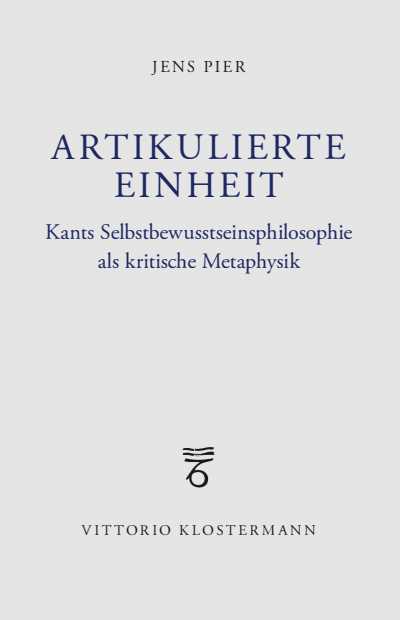
In the 1780s, two ambitious foundational works on epistemology (and later ethics) appeared, both of which responded to David Hume's sceptical challenge - those of the Scotsman Thomas Reid (1710-1786) and Immanuel Kant (1724-1804). Reid never took any notice of Kant, Kant only once made disparaging remarks about his competitor, who exerted an influence on the later development of Anglo-Saxon epistemology that was every bit as significant as Kant's influence on the German tradition. This book offers the first comprehensive comparison of the two epistemologies - their different positions on realism and idealism, their philosophical foundations of mathematics, their theories of the faculties of knowledge, their justifications of first principles and their basic metaethical assumptions. All of this is embedded in a concise presentation of the basic problems of epistemology as well as a detailed history of the discipline from Heraclitus to Kant, which emphasises the parallels between the individual epochs as well as the differences, such as those arising from the deviations between the first and second scientific revolutions.
Keywords
Search publication
Bibliographic data
- Edition
- 1/2025
- Copyright Year
- 2025
- ISBN-Print
- 978-3-465-04705-6
- ISBN-Online
- 978-3-465-14705-3
- Publisher
- Klostermann, Frankfurt am Main
- Language
- German
- Pages
- 464
- Product Type
- Monograph
Table of contents
- Titelei/Inhaltsverzeichnis No access Pages 1 - 18
- 1.1 Der biographische Hintergrund No access
- 1.2 Der Anstoß Humes No access
- 1.3 Kants Rezeption der schottischen Common-Sense-Philosophie No access
- 2.1.1 Erkenntnistheorie, Ontologie und Ethik No access
- 2.1.2 Quellen der Erkenntnis. Das Leib-Seele-Problem No access
- 2.1.3 Fehlbarkeit und Erkenntnisgrad No access
- 2.2.1 Die Vorsokratiker: Die Entdeckung und die Zersetzung des Nus No access
- 2.2.2 Die erste wissenschaftliche Revolution und Platons Erkenntnistheorie der Mathematik und Ethik No access
- 2.2.3 Aristoteles’ Theorie der Wissenschaft und seine biologische Einordnung des Erkennens No access
- 2.2.4 Epikureismus und Stoa: Materialismus und Korporealismus No access
- 2.2.5 Akademische und pyrrhonische Skepsis No access
- 2.2.6 Der Neuplatonismus und die Wiederentdeckung des Geistes No access
- 2.2.7 Die christliche Wende und Augustinus’ Freilegung des Zugangs in der ersten Person No access
- 2.2.8 Glaube und Vernunft im Mittelalter: Anselm und Thomas von Aquin No access
- 2.2.9 Die Erschütterung des Rationalismus bei Wilhelm von Ockham, Johannes Rodington und Nicolaus von Autrécourt No access
- 2.2.10 Die Geistphilosophie von Dietrich von Freiberg und Nicolaus von Kues No access
- 2.2.11 Die zweite wissenschaftliche Revolution und Bacon No access
- 2.2.12.1 Descartes’ Methodenideal No access
- 2.2.12.2 Der Gang der Meditationen zwischen Ich und Gott No access
- 2.2.12.3 Die Entdeckung des Leib-Seele-Problems und die Frage der Intersubjektivität No access
- 2.2.13 Das komplexe Verhältnis von Rationalismus und Empirismus. Leibniz’ Panlogismus No access
- 2.2.14.1 Gibt es angeborene Ideen? No access
- 2.2.14.2 Lockes und Leibniz’ Theorien der Ideen No access
- 2.2.14.3 Lockes und Leibniz’ Sprachphilosophien No access
- 2.2.14.4 Lockes und Leibniz’ Theorien der Erkenntnis No access
- 2.2.15.1 Berkeleys Kritik an Newton und seine Theorie des Sehens No access
- 2.2.15.2 Berkeleys Hauptwerke und das Solipsismusproblem No access
- 2.2.16.1 Eindrücke und Ideen im ersten Buch des Treatise of Human Nature No access
- 2.2.16.2 Die Natur der Kausalität, das Verschwinden des Ichs und die Metaethik No access
- 3.1.1 Reids epistemologische Methodologie No access
- 3.1.2 Reids Theorie der Wahrnehmung und seine Rehabilitation der sekundären Qualitäten No access
- 3.1.3 Kants Argumente für den transzendentalen Idealismus No access
- 3.1.4 Das »Präformationssystem« als Alternative zu Naturalismus und Idealismus No access
- 3.1.5 Kants »Widerlegung des Idealismus« und das Solipsismusproblem No access
- 3.2.1 Kants Philosophie der Mathematik und seine Entdeckung der synthetischen Urteile a priori No access
- 3.2.2 Reids Entdeckung der Möglichkeit nicht-euklidischer Geometrie No access
- 3.3.1 Geschmack bei Reid und Kant No access
- 3.3.2 Erinnerung bei Reid und Kants Kritik am dritten Paralogismus No access
- 3.3.3 Vorstellen / Begreifen bei Kant und Reid No access
- 3.3.4 Schließen bei Reid und Kant No access
- 3.4.1 Was sind erste Prinzipien nach Reid? No access
- 3.4.2 Erste Prinzipien kontingenter Wahrheiten No access
- 3.4.3 Erste Prinzipien notwendiger Wahrheiten No access
- 3.4.4 Wie begründet Kant synthetische Urteile a priori? No access
- 3.5 Glück, Moral und die Natur der Freiheit No access
- 4. Historisch-systematischer Ausblick No access Pages 445 - 448
- Bibliographie No access Pages 449 - 459
- Namenregister No access Pages 460 - 464