, to see if you have full access to this publication.
Monograph No access
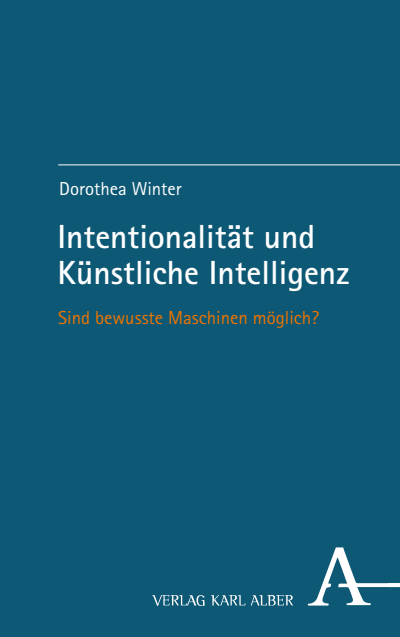
Intentionalität und Künstliche Intelligenz
Sind bewusste Maschinen möglich?- Authors:
- Publisher:
- 2026
Summary
The book examines whether and in what sense AI systems can be said to possess intentionality. Based on the classical and contemporary debates on intentionality, Dorothea Winter develops a strong definition of intentionality and examines its transferability to AI systems. The book is aimed at philosophers, cultural scientists, and humanities scholars, as well as anyone who wants to reexamine the foundations of thinking, cognition, and understanding in the context of technical intelligence.
Keywords
Search publication
Bibliographic data
- Edition
- 1/2026
- Copyright Year
- 2026
- ISBN-Print
- 978-3-495-98925-8
- ISBN-Online
- 978-3-495-98926-5
- Publisher
- Karl Alber, Baden-Baden
- Language
- German
- Pages
- 362
- Product Type
- Monograph
Table of contents
ChapterPages
- Danksagung No access
- Die Ausgangsproblematik No access
- Der argumentative Aufbau No access
- Zur Methodik No access
- 1.1 Eine Arbeitsdefinition von Künstlicher Intelligenz No access
- 1.2 Über die philosophiehistorischen Grundlagen der Künstlichen Intelligenz Forschung No access
- 2.1 Der begriffshistorische Ursprung der Intentionalitätsdebatte No access
- 2.2 Begriffliche Abgrenzungen: Intentionalität versus Intention und Intension No access
- 2.3 Die Intentionalitätspassage Brentanos, ihre Doppeldeutigkeit und die Bedeutung für die Intentionalitätsdebatte No access
- 3.1. Positionen innerhalb der zeitgenössischen Intentionalitätsdebatte No access
- 3.2 Positionen bezüglich Künstlicher Intelligenz in der zeitgenössischen Intentionalitätsdebatte No access
- 4.1 Der Eliminativismus und das Problem der intentionalen Inexistenz No access
- 4.2 Der Relationalismus und das Problem der intentionalen Inexistenz No access
- 4.3 Der Adverbialismus und das Problem der intentionalen Inexistenz No access
- 4.4 Die Relevanz der intentionalen Inexistenz für Künstliche Intelligenz No access
- 5 Conclusio: Vorläufige Folgerungen zu Intentionalität und Künstlicher Intelligenz No access
- 6.1 Semantik in der Intentionalitätsdebatte No access
- 6.2 Informatische semantische Künstliche Intelligenz und die Abgrenzung zu Semantik und Künstlicher Intelligenz in der Philosophie No access
- 6.3. Das Verhältnis von Sprache, Semantik und Syntax bei Wittgenstein und deren Bezug zu Künstlicher Intelligenz No access
- 6.4. Das Verhältnis von Sprache, Semantik und Syntax bei Chomsky und deren Bezug zu Künstlicher Intelligenz No access
- 7.1 Humanistische Semantik nach Nida-Rümelin No access
- 7.2 Die normative Dimension Humanistischer Semantik nach Nida-Rümelin No access
- 8.1. Turings Versuchsaufbau No access
- 8.2 Kritik des Behaviorismus No access
- 9.1 Searles Versuchsaufbau No access
- 9.2. Kritik des „Human Mind“-Primats No access
- 10 Conclusio: Künstliche Intelligenz verfügt über Syntax, aber nicht über Semantik No access
- 11.1 Das lumen naturale: Intentionalität als gerichtete Beziehung No access
- 11.2 Das lumen artificiale: Intentionalitätszuschreibung an Künstliche Intelligenz als anthropomorpher Fehlschluss No access
- 12.1 Das Gedankenexperiment das Zeichenzimmer und der vermeintliche Nachweis von Intentionalität bei Künstlicher Intelligenz No access
- 12.2 Abgeleitete Intentionalität und Künstliche Intelligenz No access
- 12.3 Kollektive Intentionalität und Künstliche Intelligenz No access
- 13.1 Fehler, Irrtum, Lüge und Intentionalität im Zusammenhang mit Künstlicher Intelligenz No access
- 13.2 Konsequenzen der Fehleranfälligkeit für den Einsatz von Künstlicher Intelligenz No access
- 13.3 Autorschaft, Intentionalität und Künstliche Intelligenz No access
- 14 Conclusio: Warum kann Künstliche Intelligenz keine Intentionalität entwickeln – und das prinzipiell? No access
- Zusammenfassung No access
- Grenzen und Perspektiven der Untersuchung No access
- Literaturverzeichnis No access Pages 321 - 362