, to see if you have full access to this publication.
Monograph No access
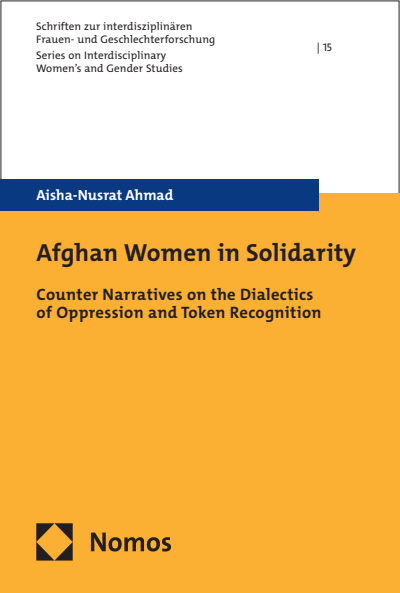
Afghan Women in Solidarity
Counter Narratives on the Dialectics of Oppression and Token Recognition- Authors:
- Series:
- Schriften zur interdisziplinären Frauen- und Geschlechterforschung. | Series on Interdisciplinary Women’s and Gender Studies., Volume 15
- Publisher:
- 2024
Summary
The book is a historical testimony from the time before the Taliban took power in Afghanistan in 2021. In her qualitative research, the author traces the interwoven narratives of girls' and young Afghan women's experiences of suffering, solidarity and hope, focussing on the subjective realities and agency of girls and young women in Afghanistan. She contextualises how women in Afghanistan have always been exploited as pawns of national and international actors and the extent to which military and humanitarian interventions have ignored the realities of life.
Keywords
Search publication
Bibliographic data
- Copyright Year
- 2024
- ISBN-Print
- 978-3-7560-0342-6
- ISBN-Online
- 978-3-7489-3642-8
- Publisher
- Nomos, Baden-Baden
- Series
- Schriften zur interdisziplinären Frauen- und Geschlechterforschung. | Series on Interdisciplinary Women’s and Gender Studies.
- Volume
- 15
- Language
- English
- Pages
- 186
- Product Type
- Monograph
Table of contents
ChapterPages
- Titelei/Inhaltsverzeichnis No access Pages 1 - 10
- Afghan Youths’ Position before August 2021 No access
- The Afghan Youth Project No access
- 2.1 The political discourse No access
- 2.2 Humanitarian Aid in Afghanistan No access
- 2.3 Postcolonial and transnational feminist perspective No access
- 3.1 Afghanistan under King Amir Abdur Rahman—1880 - 1901 No access
- 3.2 Afghanistan under King Amanullah—1919 - 1929 No access
- 3.3 Afghanistan under Nadir Shah—1929 - 1933 No access
- 3.4 Afghanistan under Zahir Shah—1933 - 1973 No access
- 3.5 Afghanistan under Communist rule—1978 - 1992 No access
- 3.6 Afghanistan under the Mujahideen rule—1992 - 1996 No access
- 3.7 Afghanistan under the rule of the Taliban—1996 - 2001 No access
- 4.1 Research Context—What it means to do research in a conflict zone No access
- Desiderata of the research design and the research—i.e.: failure. No access
- Sample No access
- 4.3.2 The projective essays No access
- 4.3.3 The drawings No access
- 4.3.4 The analysis and presentation of the data No access
- 5.1 Case vignette: Razia No access
- 5.2 Case Vignette: Farishta No access
- 5.3 Case Vignette: Nilofar No access
- 5.4 Case Vignette: Gul-Afshan No access
- 5.5 Case Vignette: Zuhul No access
- 5.6 Case Vignette: Shabana No access
- 5.7 Case Vignette: Nazeneen No access
- 5.8 Case Vignette: Mohsina No access
- 5.9 Case Vignette: Satayesh No access
- 6.1 Narratives of Suffering and Expressions of Solidarity No access
- 6.2.1 What is solidarity? No access
- 6.2.2 Solidarity in feminist and postcolonial theory No access
- 6.3 Expressions of Solidarity as an Expression of Agency No access
- Conclusion No access Pages 163 - 172
- Literature No access Pages 173 - 186
Bibliography (252 entries)
No match found. Try another term.
- Abifareh, L. (2005). Lessons from gender focused international aid in post-conflict Afghanistan ... Learned? Friedrich-Ebert-Stiftung. Open Google Scholar DOI: 10.5771/9783748936428
- Abirafeh, L. (2009). Gender and international aid in Afghanistan: The politics and effects of intervention. McFarland & Co. Open Google Scholar DOI: 10.5771/9783748936428
- Abu-Lughod, L. (2002). Do Muslim Women Really Need Saving? Anthropological Reflections on Cultural Relativism and Its Others. American Anthropologist, 104(3), 783–790. Open Google Scholar DOI: 10.5771/9783748936428
- Afshar, H. (2004). “Introduction War and Peace: what do women contribute”. In H. Afshar & D. Eade (Eds.), Development, Women, and War: Feminist Perspectives (pp. 1-7). Oxford: Oxfam Publishing. Open Google Scholar DOI: 10.5771/9783748936428
- Agathangelou, A. M., & Ling, L. H. M. (2004). The House of IR: From Family Power Politics to the Poisies of Worldism. International Studies Review, 6(4), 21–49. JSTOR. Open Google Scholar DOI: 10.5771/9783748936428
- Ahmed, L. (1993). Women and Gender in Islam: Historical Roots of a Modern Debate. New Haven: Yale University Press. Open Google Scholar DOI: 10.5771/9783748936428
- Ahmed-Ghosh, H. (2003). A History of Women in Afghanistan: Lessons Learnt for the Future or Yesterdays and Tomorrow: Women in Afghanistan. Journal of International Women’s Studies, 4, 1–14. Open Google Scholar DOI: 10.5771/9783748936428
- Ahram, A. I. (2013). Iraq in the Social Sciences: Testing the Limits of Research. The Journal of the Middle East and Africa, 4(3), 251–266. Open Google Scholar DOI: 10.5771/9783748936428
- Akhtar, N. (2008). PAKISTAN, AFGHANISTAN, AND THE TALIBAN. International Journal on World Peace, 25(4), 49–73. Open Google Scholar DOI: 10.5771/9783748936428
- Akseer, T., & Keats, E. C. (2019). A Survey of the Afghan Returnees 2018. Retrieved at March 14, 2021 from https://think-asia.org/handle/11540/10276. Open Google Scholar DOI: 10.5771/9783748936428
- Alimajrooh, P. (1989). Afghan women between Marxism and Islamic fundamentalism. Central Asian Survey, 8(3), 87–98. Open Google Scholar DOI: 10.5771/9783748936428
- Allport, G. W. (1945). Human nature and the peace. Psychological Bulletin, 42(6), 376–378. Open Google Scholar DOI: 10.5771/9783748936428
- Amin, S. & Clausen, T. (2023). Silencing half the population: The tragic denial of girls and women‘s right to education in Afghanistan. Friedrich-Naumann-Stiftung. Open Google Scholar DOI: 10.5771/9783748936428
- Amiri, R., Hunt, S., & Sova, J. (2004). Transition Within Tradition: Women’s Participation in Restoring Afghanistan. Sex Roles, 51(5/6), 283–291. Open Google Scholar DOI: 10.5771/9783748936428
- Antonovsky, A. (1997). Salutogenese: Zur Entmystifizierung der Gesundheit (N. Schulte, Translation.). dgvt Verlag. Open Google Scholar DOI: 10.5771/9783748936428
- Arat-Koc, S. (2002). Feature-Hot Potato: Imperial Wars or Benevolent Interventions? Reflections on "Global Feminism" Post September 11th. Atlantis: Critical Studies in Gender, Culture & Social Justice, 26(2), 53-65. Open Google Scholar DOI: 10.5771/9783748936428
- Arbabzadah, N. (2011). In Search of a Real but Invisible Afghan Feminist Icon: CSW Research Scholar Returns to Kabul to Explore the Legacy of Queen Soraya Tarzi. Retrieved at March 6, 2021 from https://escholarship.org/uc/item/0fj0v57p. Open Google Scholar DOI: 10.5771/9783748936428
- Arsenault, M. (2019). Research Methods in Counterinsurgency Warfare: Lessons Learned From an Embedded Political Scientist. SAGE Publications Ltd. Open Google Scholar DOI: 10.5771/9783748936428
- Asian Development Bank. (2020). Asian Development Bank—Afghanistan. Retrieved at March 14, 2021 from https://www.adb.org/countries/afghanistan/main. Open Google Scholar DOI: 10.5771/9783748936428
- Askins, K., & Pain, R. (2011). Contact Zones: Participation, Materiality, and the Messiness of Interaction. Environment and Planning D: Society and Space, 29(5), 803–821. Open Google Scholar DOI: 10.5771/9783748936428
- Atran, S., Axelrod, R., Davis, R., & Fischhoff, B. (2017). Challenges in researching terrorism from the field. Science, 355(6323), 352–354. Open Google Scholar DOI: 10.5771/9783748936428
- Auyero, J., & Mahler, M. (2011). (In)visible Connections and the Makings of Collective Violence. In G. P. Dueñas & M. H. Rueda (Eds.), Meanings of Violence in Contemporary Latin America (pp. 197–222). Palgrave Macmillan US. Open Google Scholar DOI: 10.5771/9783748936428
- Ayotte, K. J., & Husain, M. E. (2005). Securing Afghan Women: Neocolonialism, Epistemic Violence, and the Rhetoric of the Veil. NWSA Journal, 17, 112–133. Open Google Scholar DOI: 10.5771/9783748936428
- Azarbaijani-Moghaddam, S. (2006). Women's groups in Afghan civil society: Women and men working towards equitable participation in civil society organizations. Counterpart International. Open Google Scholar DOI: 10.5771/9783748936428
- Azarbaijani-Moghaddam, S. (2004). ‘Women on the Margins of the Twenty-First Century’, In Antonio Donini, Norah Niland & Karin Wermester (Eds.), Nation-Building Unravelled? Aid, Peace and Justice in Afghanistan (pp. 95–113). Bloomfield, CT: Kumarian Press. Open Google Scholar DOI: 10.5771/9783748936428
- Azarbaijani-Moghaddam, S. (2009). The Arrested Development of Afghan Women. In A. Thier (Ed.), The Future of Afghanistan (pp. 63–72). Washington D.C.: United States Institute of Peace. Open Google Scholar DOI: 10.5771/9783748936428
- Barakat, S., & Wardell, G. (2002). Exploited by Whom? An Alternative Perspective on Humanitarian Assistance to Afghan Women. Third World Quarterly, 23(5), 909–930. JSTOR. Open Google Scholar DOI: 10.5771/9783748936428
- Barfield, T. J. (2010). Afghanistan: A cultural and political history. Princeton University Press. Open Google Scholar DOI: 10.5771/9783748936428
- Barker, J., & Weller, S. (2003). “Is it fun?” developing children centred research methods. International Journal of Sociology and Social Policy, 23(1/2), 33–58. Open Google Scholar DOI: 10.5771/9783748936428
- Bartky, S. L. (2002). “Sympathy and solidarity” and other essays. Rowman & Littlefield. Open Google Scholar DOI: 10.5771/9783748936428
- Bayertz, K. (1999). Four Uses of “Solidarity.” In K. Bayertz (Ed.), Solidarity. Philosophical Studies in Contemporary Culture (pp. 3-28). (Vol. 5). Springer Netherlands. Open Google Scholar DOI: 10.5771/9783748936428
- Becker, D. (2014). Die Erfindung des Traumas: Verflochtene Geschichten. Psychosozial-Verlag. Open Google Scholar DOI: 10.5771/9783748936428
- Bezhan, F. (2020). “Afghan Lives Matter”: Gruesome Deaths Of Afghan Migrants In Iran Unleash Outrage. Radio Free Europe/Radio Liberty. Retrieved at March 14, 2021 from https://www.rferl.org/a/iran-afghan-lives-matter-migrants-deaths-outrage/30665907.html. Open Google Scholar DOI: 10.5771/9783748936428
- Bhattacharya, S. (2019). Field Research in Conflict Zones: Analyzing Civilian Support for Maoist Rebels in India. SAGE Publications Ltd. Open Google Scholar DOI: 10.5771/9783748936428
- Billaud, J. (2015). Kabul carnival: Gender politics in postwar Afghanistan. PENN, University of Pennsylvania Press. Open Google Scholar DOI: 10.5771/9783748936428
- Blatter, J., Langer, P. C., & Wagemann, C. (2007). Qualitative Politikanalyse: Eine Einführung in Forschungsansätze und Methoden. VS, Verlag für Sozialwissenschaften. Open Google Scholar DOI: 10.5771/9783748936428
- Bloom, P. (2016). Against empathy: The case for rational compassion (First edition). Ecco, an imprint of HarperCollins Publishers. Open Google Scholar DOI: 10.5771/9783748936428
- Bogner, A., & Rosenthal, G. (2014). The "Untold" Stories of Outsiders and Their Significance for the Analysis of (Post-) Conflict Figurations. Interviews with Victims of Collective Violence in Northern Uganda (West Nile). Forum: Qualitative Social Research, 15(3). Open Google Scholar DOI: 10.5771/9783748936428
- Bohn, L. (2018). “We’re All Handcuffed in This Country.” Why Afghanistan Is Still the Worst Place in the World to Be a Woman. Retrieved at March 14, 2021 from https://time.com/5472411/afghanistan-women-justice-war/. Open Google Scholar DOI: 10.5771/9783748936428
- Bohnsack, R. (2003). Qualitative Methoden der Bildinterpretation. Zeitschrift für Erziehungswissenschaft, 6(2), 239–256. Open Google Scholar DOI: 10.5771/9783748936428
- Boltanski, L. (1999). Distant suffering: Morality, media, and politics. Cambridge University Press. Open Google Scholar DOI: 10.5771/9783748936428
- Borg, M., Karlsson, B., Kim, H. S., & McCormack, B. (2012). Opening up for Many Voices in Knowledge Construction. Forum: Qualitative Social Research, 13(1). Open Google Scholar DOI: 10.5771/9783748936428
- Bourdieu, P., & Accardo, A. (Eds.), (1999). The weight of the world: Social suffering in contemporary society. Stanford University Press. Open Google Scholar DOI: 10.5771/9783748936428
- Bourke, L. (2009). Reflections on doing participatory research in health: Participation, method and power. International Journal of Social Research Methodology, 12(5), 457–474. Open Google Scholar DOI: 10.5771/9783748936428
- Bouta, T., Frerks, G., & Bannon, I. (2005). Gender, conflict, and development. World Bank. Open Google Scholar DOI: 10.5771/9783748936428
- Breithaupt, F. (2017). Die dunklen Seiten der Empathie. Suhrkamp. Open Google Scholar DOI: 10.5771/9783748936428
- Bronstein, I., Montgomery, P., & Dobrowolski, S. (2012). PTSD in Asylum-Seeking Male Adolescents From Afghanistan: PTSD Amongst Afghan UASC. Journal of Traumatic Stress, 25(5), 551–557. Open Google Scholar DOI: 10.5771/9783748936428
- Brunner, C. (2015). Das Konzept epistemischer Gewalt als Element einer transdisziplinären Friedens- und Konflikttheorie, In W. Wintersteiner, & L. Wolf, (Eds.), Friedensforschung in Österreich, Bilanz und Perspektiven. Jahrbuch Friedenskultur, Volume 10 (pp. 38–53). Klagenfurt/Celovec: Drava Verlag. Open Google Scholar DOI: 10.5771/9783748936428
- Bush, G. W. (2002). State of the Union Address, January 29, 2002. Retrieved at March 14, 2021 from https://www.utb.de/fileadmin/user_upload/Material/heideking/13/13_stateoftheunion_2002.htm. Open Google Scholar DOI: 10.5771/9783748936428
- Bush, L. (2001). Radio Address by Mrs. Bush. Retrieved at March 14, 2021 from https://georgewbush-whitehouse.archives.gov/news/releases/2001/11/20011117.html. Open Google Scholar DOI: 10.5771/9783748936428
- Bush, L. (2002). Mrs. Bush’s Remarks on International Women’s Day at the United Nations. Retrieved at March 14, 2021 from https://georgewbush-whitehouse.archives.gov/news/releases/2002/03/20020308-15.html. Open Google Scholar DOI: 10.5771/9783748936428
- Butler, J. (2004). Precarious life: The powers of mourning and violence. Verso. Open Google Scholar DOI: 10.5771/9783748936428
- Campbell, S. P. (2017). Ethics of Research in Conflict Environments. Journal of Global Security Studies, 2(1), 89–101. Open Google Scholar DOI: 10.5771/9783748936428
- Cannella, G. S., & Lincoln, Y. S. (2007). Predatory vs. Dialogic Ethics: Constructing an Illusion or Ethical Practice as the Core of Research Methods. Qualitative Inquiry, 13(3), 315–335. Open Google Scholar DOI: 10.5771/9783748936428
- Carter, S. (2010). Iran’s Interests in Afghanistan and their Implications for NATO. International Journal: Canada’s Journal of Global Policy Analysis, 65(4), 977–993. Open Google Scholar DOI: 10.5771/9783748936428
- Catani, C., Schauer, E., Elbert, T., Missmahl, I., Bette, J.-P., & Neuner, F. (2009). War trauma, child labor, and family violence: Life adversities and PTSD in a sample of school children in Kabul: Life Adversities and PTSD Prevalence in Afghan School Children. Journal of Traumatic Stress, 22(3), 163–171. Open Google Scholar DOI: 10.5771/9783748936428
- Centlivres-Demont. (1994). Afghan women in peace, war, and exile. In M. Weiner & A. Banuazizi (Eds.), The politics of social transformation in Afghanistan, Iran, and Pakistan (pp. 333–365). NY: Syracuse University Press. Open Google Scholar DOI: 10.5771/9783748936428
- Central Statistics Organization. (2018). Afghanistan Living Conditions Survey 2016-17. Open Google Scholar DOI: 10.5771/9783748936428
- Cieri, M. (2004). Irresolvable Geographies. Rutgers, The State University of New Jersey. Open Google Scholar DOI: 10.5771/9783748936428
- Clarke, A. E. (2012). Situationsanalyse: Grounded Theory nach dem Postmodern Turn. Springer VS. Open Google Scholar DOI: 10.5771/9783748936428
- Clarke, A. E., Friese, C., & Washburn, R. (Eds.), (2015). Situational analysis in practice: Mapping research with grounded theory. Left Coast Press. Open Google Scholar DOI: 10.5771/9783748936428
- Cloud, D. L. (2004). “To veil the threat of terror”: Afghan women and the ⟨clash of civilizations⟩ in the imagery of the U.S. war on terrorism. Quarterly Journal of Speech, 90(3), 285–306. Open Google Scholar DOI: 10.5771/9783748936428
- Conceição, P. & United Nations Development Programme. (2019). Human development report 2019: Beyond income, beyond averages, beyond today: inequalities in human development in the 21st century. Open Google Scholar DOI: 10.5771/9783748936428
- Constable, Pamela. (2007). A Wake-Up Call in Afghanistan. Journal of Democracy, 18(2), 84–98. Open Google Scholar DOI: 10.5771/9783748936428
- Cornwall, A., & Brock, K. (2005). What do buzzwords do for development policy? A critical look at ‘participation’, ‘empowerment’ and ‘poverty reduction.’ Third World Quarterly, 26(7), 1043–1060. Open Google Scholar DOI: 10.5771/9783748936428
- Cureton, A. (2012). Solidarity and Social Moral Rules. Ethical Theory and Moral Practice, 15(5), 691–706. Open Google Scholar DOI: 10.5771/9783748936428
- Daulatzai, A. (2008). The Discursive Occupation of Afghanistan. British Journal of Middle Eastern Studies, 35(3), 419–435. Open Google Scholar DOI: 10.5771/9783748936428
- De Beauvoir, S. (1949). L’expérience vécue. Gallimard. Open Google Scholar DOI: 10.5771/9783748936428
- de Beer, P., & Koster, F. (2009). Sticking Together or Falling Apart?: Solidarity in an Era of Individualization and Globalization. Amsterdam University Press. Open Google Scholar DOI: 10.5771/9783748936428
- De Lauri, A. (2013). Corruption, Legal Modernisation and Judicial Practice in Afghanistan. Asian Studies Review, 37(4), 527–545. Open Google Scholar DOI: 10.5771/9783748936428
- Dean, J. (1995). REFLECTIVE SOLIDARITY. Constellations, 2(1), 114–140. Open Google Scholar DOI: 10.5771/9783748936428
- Dean, J. (1996). Solidarity of strangers: Feminism after identity politics. University of California Press. Open Google Scholar DOI: 10.5771/9783748936428
- Decoloniality Europe. (2013). Charter of Decolonial Research Ethics. https://decolonialityeurope.wixsite.com/decoloniality. Open Google Scholar DOI: 10.5771/9783748936428
- Deepak, A. C. (2012). Globalization, power and resistance: Postcolonial and transnational feminist perspectives for social work practice. International Social Work, 55(6), 779–793. Open Google Scholar DOI: 10.5771/9783748936428
- Denzin, N. K., & Lincoln, Y. S. (2008). Introduction. In N. K. Denzin & Y. S. Lincoln (Eds.), The discipline and practice of qualitative research. Strategies of qualitative inquiry (pp. 1–43). Sage Publications, Inc. Open Google Scholar DOI: 10.5771/9783748936428
- DiCarlo, M. A., Gibbons, J. L., Kaminsky, D., Wright, J. D., & Stiles, D. A. (2000). Street children’s drawings: Windows into their life circumstances and aspirations. International Social Work, 43(1), 107–120. Open Google Scholar DOI: 10.5771/9783748936428
- Dossa, P. (2005). “Witnessing” Social Suffering: Testimonial Narratives of Women from Afghanistan. BC Studies: The British Columbian Quarterly, 27-49. Open Google Scholar DOI: 10.5771/9783748936428
- Du Bois, W. E. B. (William E. B., 1868-1963. (1968). The souls of black folk; essays and sketches. Chicago, A. G. McClurg, 1903. New York : Johnson Reprint Corp., [1968]. Open Google Scholar DOI: 10.5771/9783748936428
- Dupree, L. (1973). Afghanistan. Princeton University Press. Open Google Scholar DOI: 10.5771/9783748936428
- Dupree, Nancy Hatch. 1984. Revolutionary Rhetoric and Afghan Women. In M. Nazif Shahrani & R. L. Canfield (Eds.), Revolutions and Rebellions in Afghanistan: Anthropological Perspectives (pp. 306–340). Berkeley, California.: Institute of International Studies, University of California. Open Google Scholar DOI: 10.5771/9783748936428
- Dupree, N. H. (1986). The Women of Afghanistan. Swedish Committee for Afghanistan. Open Google Scholar DOI: 10.5771/9783748936428
- Dupree, N. H. (1998). Afghan Women Under the Taliban. In Maley, W. (Ed.), Fundamentalism reborn?: Afghanistan and the Taliban (pp. 145-166). NYU Press. Open Google Scholar DOI: 10.5771/9783748936428
- Eggerman, M., & Panter-Brick, C. (2010). Suffering, hope, and entrapment: Resilience and cultural values in Afghanistan. Social Science & Medicine, 71(1), 71–83. Open Google Scholar DOI: 10.5771/9783748936428
- Eisenstein, Z. R. (1996). Hatreds: Racialized and sexualized conflicts in the 21st century. Routledge. Open Google Scholar DOI: 10.5771/9783748936428
- Emirbayer, M., & Mische, A. (1998). What Is Agency? American Journal of Sociology, 103(4), 962–1023. Open Google Scholar DOI: 10.5771/9783748936428
- Evans, M. (2013). The Meaning of Agency. In S. Madhok, A. Phillips, & K. Wilson (Eds.), Gender, Agency, and Coercion (pp. 47–63). Palgrave Macmillan UK. Open Google Scholar DOI: 10.5771/9783748936428
- Exo, M. (2017). Das übergangene Wissen: Eine dekoloniale Kritik des liberalen Peacebuilding durch basispolitische Organisationen in Afghanistan. transcript Verlag. Open Google Scholar DOI: 10.5771/9783748936428
- Fairbarin, G. (2004). Devoloping Academic Storytelling. Retrieved at March 12, 2021 from https://www.aare.edu.au/data/publications/2004/fai04793.pdf. Open Google Scholar DOI: 10.5771/9783748936428
- Fanon, F. (2008). Black skin, white masks. Grove Press; Distributed by Publishers Group West. Open Google Scholar DOI: 10.5771/9783748936428
- Farhatiar, S. (2023). Beyond tokenism: What if we meaningfully involved Afghan Women? Center for feminist foreign policy. CFFP. Retrieved at December 22, 2023 from https://centreforfeministforeignpolicy.org/2023/08/15/beyond-tokenism-what-if-we-meaningfully-involve-afghan-women/. Open Google Scholar DOI: 10.5771/9783748936428
- Farley, L., & Mishra Tarc, A. (2014). Drawing Trauma: The Therapeutic Potential of Witnessing the Child’s Visual Testimony of War. Journal of the American Psychoanalytic Association, 62(5), 835–854. Open Google Scholar DOI: 10.5771/9783748936428
- Farmer, P. (1996). On suffering and structural violence: A view from below. Daedalus, 125(1), 261-283. Open Google Scholar DOI: 10.5771/9783748936428
- Fassin, D., & Pandolfi, M. (Eds.), (2010). Contemporary states of emergency: The politics of military and humanitarian interventions. Zone Books ; Distributed by the MIT Press. Open Google Scholar DOI: 10.5771/9783748936428
- Feroz, E. (2019). Why Afghanistan’s independence day remains problematic. Available. Retrieved at March 11, 2021 from https://www.trtworld.com/opinion/why-afghanistan-s-independence-day-remains-problematic-29388. Open Google Scholar DOI: 10.5771/9783748936428
- Flanders, L. (2001). Beyond the Burqa: The Rights Women Need in Afghanistan are Basic Human Rights. Retrieved at March 14, 2021 from http://www.apc.org.nz/pma/rob00417.htm. Open Google Scholar DOI: 10.5771/9783748936428
- Fluri, J. (2012). Capitalizing on Bare Life: Sovereignty, Exception, and Gender Politics. Antipode, 44(1), 31–50. Open Google Scholar DOI: 10.5771/9783748936428
- Fluri, J. (2008). ‘Rallying public opinion’ and other misuses of feminism. In R. Riley, C. T. Mohanty, & M. B. Pratt (Eds.), Feminism and war: Confronting U.S. imperialism (pp. 143–160). London: Zed Books. Open Google Scholar DOI: 10.5771/9783748936428
- Fluri, J. & Lehr, R. (2017). The carpetbaggers of Kabul and other American-Afghan entanglements: Intimate development, geopolitics, and the currency of gender and grief. University of Georgia Press. Open Google Scholar DOI: 10.5771/9783748936428
- Foster, J. E., & Minwalla, S. (2018). Voices of Yazidi women: Perceptions of journalistic practices in the reporting on ISIS sexual violence. Women’s Studies International Forum, 67, 53–64. Open Google Scholar DOI: 10.5771/9783748936428
- Foucault, M. (1977). Der Wille zum Wissen. Sexualität und Wahrheit. Suhrkamp. Open Google Scholar DOI: 10.5771/9783748936428
- Foucault, M. (1999). In Verteidigung der Gesellschaft. Vorlesungen am Collège De France (1975–76). Suhrkamp. Open Google Scholar DOI: 10.5771/9783748936428
- Foucault, M. (2006). Die Geburt der Biopolitik. Geschichte der Gouvernementalität II. Vorlesungen am Collège de France 1978/1979. Suhrkamp. Open Google Scholar DOI: 10.5771/9783748936428
- Friedman, H. (2004). ‘Psychological Operations in Afghanistan: Operation Enduring Freedom 2001. Retrieved at March 14, 2021 http://www.psywar.org/afghanistan.php. Open Google Scholar DOI: 10.5771/9783748936428
- Frisina, A. (2006). Back-talk Focus Groups as a Follow-Up Tool in Qualitative Migration Research: The Missing Link? Forum: Qualitative Social Research, 7,(3). Open Google Scholar DOI: 10.5771/9783748936428
- Frost, L., & Hoggett, P. (2008). Human agency and social suffering. Critical Social Policy, 28(4), 438–460. Open Google Scholar DOI: 10.5771/9783748936428
- Gallacher, L.-A., & Gallagher, M. (2008). Methodological Immaturity in Childhood Research?: Thinking through `participatory methods’. Childhood, 15(4), 499–516. Open Google Scholar DOI: 10.5771/9783748936428
- Geertz, C. (1973). Thick description: Toward an interpretive theory of culture. Turning Points in Qualitative Research: Tying Knots in a Handkerchief, 3, 143–168. Open Google Scholar DOI: 10.5771/9783748936428
- Gregory, T. (2012). Rescuing the women of Afghanistan: Gender, agency and the politics of intelligibility. Doctoral dissertation, University of Manchester. Open Google Scholar DOI: 10.5771/9783748936428
- Göle, N. (1996). The Forbidden Modern: Civilization and Veiling. University of Michigan Press. Open Google Scholar DOI: 10.5771/9783748936428
- Goodhand, J. (2000). Research in conflict zones: Ethics and accountability. Forced Migration Review, 8(4), 12–16. Open Google Scholar DOI: 10.5771/9783748936428
- Guhin, J., & Wyrtzen, J. (2013). The Violences of Knowledge: Edward Said, Sociology, and Post-Orientalist Reflexivity. In J. Go (Ed.), Political Power and Social Theory (pp. 231–262). Emerald Group Publishing Limited. Open Google Scholar DOI: 10.5771/9783748936428
- Guillemin, M., & Gillam, L. (2004). Ethics, Reflexivity, and “Ethically Important Moments” in Research. Qualitative Inquiry, 10(2), 261–280. Open Google Scholar DOI: 10.5771/9783748936428
- Helbardt, S., Hellmann-Rajanayagam, D., & Korff, R. (2010). War’s dark glamour: Ethics of research in war and conflict zones. Cambridge Review of International Affairs, 23(2), 349–369. Open Google Scholar DOI: 10.5771/9783748936428
- Hemmings, C. (2012). Affective solidarity: Feminist reflexivity and political transformation. Feminist Theory, 13(2), 147–161. Open Google Scholar DOI: 10.5771/9783748936428
- Hennink, M. M., Hutter, I., & Bailey, A. (2011). Qualitative research methods. SAGE. Open Google Scholar DOI: 10.5771/9783748936428
- Hirschkind, C., & Mahmood, S. (2002). Feminism, the Taliban, and Politics of Counter-Insurgency. Anthropological Quarterly, 75(2), 339–354. Open Google Scholar DOI: 10.5771/9783748936428
- Holland, S., Renold, E., Ross, N. J., & Hillman, A. (2010). Power, agency and participatory agendas: A critical exploration of young people’s engagement in participative qualitative research. Childhood, 17(3), 360–375. Open Google Scholar DOI: 10.5771/9783748936428
- Hooks, B. (1986). Sisterhood: Political Solidarity between Women. Feminist Review, 23(1), 125–138. Open Google Scholar DOI: 10.5771/9783748936428
- Human Rights Watch. (2006). Lessons in Terror: Attacks on Education in Afghanistan. Retrieved at March 14, 2021 https://www.hrw.org/sites/default/files/reports/afghanistan0706.pdf. Open Google Scholar DOI: 10.5771/9783748936428
- Hund, S. A., & Benford, R. A. (2007). Collective Identity, Solidarity, and Commitment. In D. A. Snow, S. A. Soule, & H. Kriesi (Eds.), The Blackwell Companion to Social Movements (pp. 433–457). Blackwell Publishing Ltd. Open Google Scholar DOI: 10.5771/9783748936428
- Hunt, K. (2002). The Strategic Co-optation of Women’s Rights. International Feminist Journal of Politics, 4(1), 116–121. Open Google Scholar DOI: 10.5771/9783748936428
- Hussain, S. (2012). Looking for ‘tribals’ without politics, ‘warlords’ without history: The drug economy, development and political power in Afghanistan. Identities, 19(3), 249–267. Open Google Scholar DOI: 10.5771/9783748936428
- Institute for Economics and Peace. (2019). Global Terrorism Index 2019. Retrieved at March 14, 2021 https://visionofhumanity.org/wp-content/uploads/2020/10/GTI-2019-briefingweb.pdf. Open Google Scholar DOI: 10.5771/9783748936428
- Institute for Economics and Peace (2020). Global Peace Index 2020. Retrieved at March 14, 2021 http://visionofhumanity.org/app/uploads/2020/06/GPI_2020_web.pdf. Open Google Scholar DOI: 10.5771/9783748936428
- Jefferess, D. (2009). To be good (again): The Kite Runner as allegory of global ethics. Journal of Postcolonial Writing, 45(4), 389–400. Open Google Scholar DOI: 10.5771/9783748936428
- Jeffries, V. (2014). Altruism, Morality, and Social Solidarity as a Field of Study. In V. Jeffries (Ed.), The Palgrave Handbook of Altruism, Morality, and Social Solidarity (pp. 3–20). Palgrave Macmillan US. Open Google Scholar DOI: 10.5771/9783748936428
- Jones 2004: Bruce D. Jones, “Aid, Peace and Justice in a Reordered World,” In A. Donini, N. Niland, and K. Wermester (Eds.), Nation-Building Unraveled? Aid, Peace and Jutice in Afghanistan (pp. 207–226). Bloomfield: Kumarian Press. Open Google Scholar DOI: 10.5771/9783748936428
- Jones, S. G. (2006). Averting failure in Afghanistan. Survival, 48(1), 111–128. Open Google Scholar DOI: 10.5771/9783748936428
- Kabeer, N. (1994). Reversed realities: Gender hierarchies in development thought. Verso. Open Google Scholar DOI: 10.5771/9783748936428
- Kamminga, J., & Zaki, A. (2018). Returning to Fragility: Exploring the link between conflict and returnees in Afghanistan. Oxfam. Open Google Scholar DOI: 10.5771/9783748936428
- Kandiyoti, D. (Ed.), (1991). Women, Islam and the State. Palgrave Macmillan UK. Open Google Scholar DOI: 10.5771/9783748936428
- Kandiyoti, D. (2005). The politics of gender and reconstruction in Afghanistan. UNRISD. Open Google Scholar DOI: 10.5771/9783748936428
- Kaplan C (1994). ‘The Politics of Location as Transnational Feminist Critical Practice’. In Grewal I and Kaplan C (Eds.), Scattered Hegemonies: Postmodernity and Transnational Feminist Critical Practice (pp. 137–152). Minneapolis: University of Minnesota Press. Open Google Scholar DOI: 10.5771/9783748936428
- Kapur, R. (2002). The Tragedy of Victimization Rhetoric: Resurrecting the Native Subject in International/Postcolonial Feminist Legal Politics. Harvard Human Rights Law Journal, 15, 1–38. Open Google Scholar DOI: 10.5771/9783748936428
- Kearney, K. S., & Hyle, A. E. (2004). Drawing out emotions: The use of participant-produced drawings in qualitative inquiry. Qualitative Research, 4(3), 361–382. Open Google Scholar DOI: 10.5771/9783748936428
- Kensinger, L. (2003). Plugged in Praxis: Critical Reflections on U.S. Feminism, Internet Activism, and Solidarity with Women in Afghanistan. 5(1), 1–28. Open Google Scholar DOI: 10.5771/9783748936428
- Khan Burki, S. (2011). The Politics of Zan from Amanullah to Karzai: Lessons for Improving Afghan Women’s Status. In J. Heath & A. Zahedi A. (Eds.), Land of the Unconquerable (pp. 45–59). University of California Press. Open Google Scholar DOI: 10.5771/9783748936428
- Khan, S. (2001). Between Here and There: Feminist Solidarity and Afghan Women. Retrieved at March 14, 2021 https://www.colorado.edu/gendersarchive1998-2013/2001/03/01/between-here-and-there-feminist-solidarity-and-afghan-women. Open Google Scholar DOI: 10.5771/9783748936428
- Khan, S. (2008). Afghan women: The limits of colonial rescue. In R. Riley, C. T. Mohanty, & M. B. Pratt (Eds.), Feminism and war: Confronting U.S. imperialism (pp. 161–78). London: Zed Books. Open Google Scholar DOI: 10.5771/9783748936428
- Kleinman, A., Das, V., & Lock, M. M. (1997). Introduction. In A. Kleinman, V. Das & M. M. Lock (Eds.), Social Suffering (pp. ix–xxvii). University of California Press. Open Google Scholar DOI: 10.5771/9783748936428
- Koloma Beck, T. (2018). “Liberating the Women of Afghanistan”: An ethnographic journey through a humanitarian intervention. Socio, 11, 57–75. Open Google Scholar DOI: 10.5771/9783748936428
- Koser, K., & Kuschminder, K. (2015). Comparative Research on the Assisted Voluntary Return and Reintegration of Migrants. IOM. Retrieved at March 14, 2021 https://www.iom.int/files/live/sites/iom/files/What-We-Do/docs/AVRR-Research-final.pdf. Open Google Scholar DOI: 10.5771/9783748936428
- Kühner, A., Ploder, A., & Langer, P. C. (2016). Introduction to the Special Issue: European Contributions to Strong Reflexivity. Qualitative Inquiry, 22(9), 699–704. Open Google Scholar DOI: 10.5771/9783748936428
- Kühner, A., & Langer, P. C. (2010). Dealing with Dilemmas of Difference—Ethical and Psychological Considerations of “Othering” and “Peer Dialogues” in the Research Encounter. MIGRATION LETTERS, 7(1), 69–78. Open Google Scholar DOI: 10.5771/9783748936428
- Langer, P. C. (2016). The Research Vignette: Reflexive Writing as Interpretative Representation of Qualitative Inquiry—A Methodological Proposition. Qualitative Inquiry, 22(9), 735–744. Open Google Scholar DOI: 10.5771/9783748936428
- Langer, P. C. (2018). Emanzipatorische Forschung: Fürsorgeversprechen, Widerstandsdynamiken und eine Ethik der Zurückhaltung In E. Zadow, A. Lohl, M. S. Löhlein & P. Schweder (Eds.). Widerstand und Fürsorge: Beiträge zum Thema Psychoanalyse und Gesellschaft (pp. 141–161). Vandenhoeck & Ruprecht. Open Google Scholar DOI: 10.5771/9783748936428
- Langer, P. C., Ahmad, A.-N., Auge, U. & Majidi, K. (2021). Jugend in Afghanistan Ringen um Zukunft in Zeiten des Krieges. Psychosozial-Verlag. Open Google Scholar DOI: 10.5771/9783748936428
- Langer, P. C., Dymczyk, A., Brehm, A., & Ronel, J. (2020). Traumakonzepte in Forschung und Praxis. Heidelberg: Springer. Open Google Scholar DOI: 10.5771/9783748936428
- Langer, P. C. & Pietsch, C. (2012). Studying cross-cultural competence in the military: methodological considerations of applied contract research for the German Armed Forces. In H. Carreiras & C. Castro (Eds.), Qualitative Methods in Military Studies (pp. 45–63). London & New York: Routledge. Open Google Scholar DOI: 10.5771/9783748936428
- Leavy, P. (2020). Methods meets art: Arts-based research practice (Third edition). The Guilford Press. Open Google Scholar DOI: 10.5771/9783748936428
- Liamputtong, P., & Ezzy, D. (2005). Qualitative research methods (2nd ed). Oxford University Press. Open Google Scholar DOI: 10.5771/9783748936428
- Littler, J., & Rottenberg, C. (2021). Feminist solidarities: Theoretical and practical complexities. Gender, Work & Organization, 28(3), 864– 877. Open Google Scholar DOI: 10.5771/9783748936428
- Loch, U. (2008). Spuren von Traumatisierungen in narrativen Interviews. Forum: Qualitative Social Research,9(1). Open Google Scholar DOI: 10.5771/9783748936428
- Madhok, S. (2014). Rethinking agency: Developmentalism, gender and rights. Retrieved at March 14, 2021 http://www.vlebooks.com/vleweb/product/openreader?id=none&isbn=9781315816074. Open Google Scholar DOI: 10.5771/9783748936428
- Madhok, S., Phillips, A., & Wilson, K. (2013). Introduction. In S. Madhok, A. Phillips, & K. Wilson (Eds.), Gender, Agency, and Coercion (pp. 1–13). Palgrave Macmillan UK. Open Google Scholar DOI: 10.5771/9783748936428
- Majidi, N. (2017). From Forced Migration to Forced Returns in Afghanistan: Policy and Program Implications. Retrieved at March 14, 2021 from https://www.migrationpolicy.org/sites/default/files/publications/TCM2017-Afghanistan-FINAL.pdf. Open Google Scholar DOI: 10.5771/9783748936428
- Manganaro, L. L., & Alozie, N. O. (2011). Gender Role Attitudes: Who Supports Expanded Rights for Women in Afghanistan? Sex Roles, 64(7–8), 516–529. Open Google Scholar DOI: 10.5771/9783748936428
- Mani, L. (1998). Contentious traditions: The debate on Sati in colonial India. University of California Press. Open Google Scholar DOI: 10.5771/9783748936428
- Marcus, G. (2001). Afghan women enjoy their freedom. Retrieved at March 14, 2021 from http://news.bbc.co.uk/2/hi/south_asia/1672488.stm. Open Google Scholar DOI: 10.5771/9783748936428
- Mernissi, F. (1987). Beyond the veil: Male-female dynamics in modern Muslim society (Vol. 423). Indiana University Press. Open Google Scholar DOI: 10.5771/9783748936428
- Merriman, B., & Guerin, S. (2006). Using Children’s Drawings as Data in Child-Centred Research. The Irish Journal of Psychology, 27(1–2), 48–57. Open Google Scholar DOI: 10.5771/9783748936428
- Ministry of Education, Islamic Republic of Afghanistan, United Nations Children’s Fund (UNICEF), & Samuel Hall. (2018). All in School and Learning: Global Initiative on Out-Of-School Children – Afghanistan Country Study. Ministry of Education, Islamic Republic of Afghanistan, UNICEF, Samuel Hall. Retrieved at March 14, 2021 from xhttps://www.unicef.org/afghanistan/sites/unicef.org.afghanistan/files/2018-05/afg-report-oocs2018.pdf. Open Google Scholar DOI: 10.5771/9783748936428
- Moghadam, V. M. (1994). Building human resources and women’s capabilities in Afghanistan: A retrospect and prospects. World Development, 22(6), 859–875. Open Google Scholar DOI: 10.5771/9783748936428
- Moghadam, V. M. (1997). Nationalist Agendas and Women’s Rights: Conflicts in Afghanistan in the Twentieth Century. In L. West (Ed.), Feminist Nationalism (pp. 75–100). Routledge. Open Google Scholar DOI: 10.5771/9783748936428
- Moghadam, V. M. (2002). Patriarchy, the Taleban, and politics of public space in Afghanistan. Women’s Studies International Forum, 25(1), 19–31. Open Google Scholar DOI: 10.5771/9783748936428
- Moghissi, H. (1999). Feminism and Islamic fundamentalism: The limits of postmodern analysis. Zed Books. Open Google Scholar DOI: 10.5771/9783748936428
- Mohanty, C. T. (1984). Under Western Eyes: Feminist Scholarship and Colonial Discourses. Boundary 2, 12(3), 333. Open Google Scholar DOI: 10.5771/9783748936428
- Mohanty, C. (1988). Under Western Eyes: Feminist Scholarship and Colonial Discourses. Feminist Review, 30(1), 61–88. Open Google Scholar DOI: 10.5771/9783748936428
- Mohanty, C. T. (2003). Feminism without borders: Decolonizing theory, practicing solidarity. Duke University Press. Open Google Scholar DOI: 10.5771/9783748936428
- Monsutti, A. (2013). Anthropologizing Afghanistan: Colonial and Postcolonial Encounters. Annual Review of Anthropology, 42(1), 269–285. Open Google Scholar DOI: 10.5771/9783748936428
- Mosse, D. (2015). Cultivating Development: An Ethnography of Aid Policy and Practice. Pluto Press. Open Google Scholar DOI: 10.5771/9783748936428
- Mulligan, M., Globalism Institute (Melbourne, Vic.), Victorian Health Promotion Foundation, & RMIT University. (2006). Creating community: Celebrations, arts and wellbeing within and across local communities. Globalism Institute, RMIT University : VicHealth. Open Google Scholar DOI: 10.5771/9783748936428
- Nato. (2012). International Security Assistance Force (ISAF): Key Facts and Figures. Retrieved at March 14, 2021 from https://www.nato.int/isaf/placemats_archive/2012-04-18-ISAF-Placemat.pdf. Open Google Scholar DOI: 10.5771/9783748936428
- Nato. (2015). ISAF’s mission in Afghanistan (2001-2014) (Archived). Retrieved at March 14, 2021 from https://www.nato.int/cps/en/natohq/topics_69366.htm. Open Google Scholar DOI: 10.5771/9783748936428
- Nayak, M. (2006). Orientalism and ‘saving’ US state identity after 9/11. International Feminist Journal of Politics, 8(1), 42–61. Open Google Scholar DOI: 10.5771/9783748936428
- Nguyen, L. (2011). The Ethics of Trauma: Re-traumatization in Society’s Approach to the Traumatized Subject. International Journal of Group Psychotherapy, 61(1), 26–47. Open Google Scholar DOI: 10.5771/9783748936428
- Nind, M. (2011). Participatory data analysis: A step too far? Qualitative Research, 11(4), 349–363. Open Google Scholar DOI: 10.5771/9783748936428
- Nordstrom, C., & Robben, A. C. G. M. (Eds.), (1995). Fieldwork under fire: Contemporary studies of violence and survival. University of California Press. Open Google Scholar DOI: 10.5771/9783748936428
- OCHA. (2023). Asia and the Pacific. Afghanistan. Retrieved at December 22, 2023 from https://www.unocha.org/afghanistan. Open Google Scholar DOI: 10.5771/9783748936428
- OHCHR. (2023). A/HRC/53/21: Situation of women and girls in Afghanistan. Report of the Special Rapporteur on the situation of human rights in Afghanistan and the Working Group on discrimination against women and girls. Retrieved at December 22, 2023 from https://documents.un.org/doc/undoc/gen/g23/125/67/pdf/g2312567.pdf?token=n1HizwubCHKa4S5Typ&fe=true. Open Google Scholar DOI: 10.5771/9783748936428
- Office of the Special Adviser on Gender Issues and Advancemet of Women. (1997). Report of the United Nations Interagency Gender Mission to Afghanistan. Retrieved at March 14, 2021 from http://afghandata.org:8080/jspui/bitstream/azu/3952/1/azu_acku_pamphlet_hv6250_4_w65_r47_1997_w.pdf. Open Google Scholar DOI: 10.5771/9783748936428
- Olesen, A. (1995). Islam and politics in Afghanistan. Curzon. Open Google Scholar DOI: 10.5771/9783748936428
- Ozernoy, I. (2001). "Liberation Day." U.S. News & World Report., 26 November, 30. Open Google Scholar DOI: 10.5771/9783748936428
- Panter-Brick, C., Eggerman, M., Gonzalez, V., & Safdar, S. (2009). Violence, suffering, and mental health in Afghanistan: A school-based survey. The Lancet, 374(9692), 807–816. Open Google Scholar DOI: 10.5771/9783748936428
- Peceny, M., & Bosin, Y. (2011). Winning with warlords in Afghanistan. Small Wars & Insurgencies, 22(4), 603–618. Open Google Scholar DOI: 10.5771/9783748936428
- Peter, M., & Strazzari, F. (2017). Securitisation of research: Fieldwork under new restrictions in Darfur and Mali. Third World Quarterly, 38(7), 1531–1550. Open Google Scholar DOI: 10.5771/9783748936428
- Peters, C. 2001. ‘What Does Feminism Have To Say?’, In S. Hawthorne & B. Winter (Eds.), September 11, 2001: Feminist Perspectives, (pp. 120–128). North Melbourne, Vic.: Spinifex. Open Google Scholar DOI: 10.5771/9783748936428
- Plummer, K. (2015). Cosmopolitan sexualities: Hope and the humanist imagination. Polity Press. Open Google Scholar DOI: 10.5771/9783748936428
- Plummer, K. (2010). Sociology: The basics. Routledge. Open Google Scholar DOI: 10.5771/9783748936428
- Puar, J. K. (2005). On Torture: Abu Ghraib. Radical History Review, 2005(93), 13–38. Open Google Scholar DOI: 10.5771/9783748936428
- Rashid, A. (2001). Taliban: The story of the Afghan warlords ; including a new foreword following the terrorist attacks of 11 September 2001. Pan Macmillan. Open Google Scholar DOI: 10.5771/9783748936428
- Rashid, A. (2010). Sturz ins Chaos: Afghanistan, Pakistan und die Rückkehr der Taliban. Weltkiosk. Open Google Scholar DOI: 10.5771/9783748936428
- Renner, W., Salem, I., & Ottomeyer, K. (2006). CROSS-CULTURAL VALIDATION OF MEASURES OF TRAUMATIC SYMPTOMS IN GROUPS OF ASYLUM SEEKERS FROM CHECHNYA, AFGHANISTAN, AND WEST AFRICA. Social Behavior and Personality: An International Journal, 34(9), 1101–1114. Open Google Scholar DOI: 10.5771/9783748936428
- Reuters. (2001). ‘Cherie Blair Condemns Taliban “Cruelty” to Women’. Reuters News. Open Google Scholar DOI: 10.5771/9783748936428
- Rippe, K. P. (1998). Diminishing Solidarity. Ethical Theory and Moral Practice, 1(3), 355–373. Open Google Scholar DOI: 10.5771/9783748936428
- Roane, K. R., & Ozernoy, I. (2001). Afghan Women Find New Hope. U.S. News & World Report, 22–24. Open Google Scholar DOI: 10.5771/9783748936428
- Romano, D. (2006). Conducting Research in the Middle East’s Conflict Zones. PS: Political Science & Politics, 39(03), 439–441. Open Google Scholar DOI: 10.5771/9783748936428
- Rorty, R. (1989). Contingency, irony, and solidarity. Cambridge University Press. Open Google Scholar DOI: 10.5771/9783748936428
- Rosenthal, G. (Ed.), (2015). Etablierte und Aussenseiter zugleich: Selbst- und Fremdbilder von Palästinensern im Westjordanland und in Israel. Campus Verlag. Open Google Scholar DOI: 10.5771/9783748936428
- Rostami-Povey, E. (2007a). Afghan women: Identity and invasion. Zed Books. Open Google Scholar DOI: 10.5771/9783748936428
- Rostami-Povey, E. (2007b). Gender, agency and identity, the case of Afghan women in Afghanistan, Pakistan and Iran. The Journal of Development Studies, 43(2), 294–311. Open Google Scholar DOI: 10.5771/9783748936428
- Rubin, A. (2015, December 26). Flawed Justice After a Mob Killed an Afghan Woman. The New York Times. Retrieved at March 14, 2021 from https://www.nytimes.com/2015/12/27/world/asia/flawed-justice-after-a-mob-killed-an-afghan-woman.html. Open Google Scholar DOI: 10.5771/9783748936428
- Rubin, J. A. (1984). Child art therapy: Understanding and helping children grow through art. Wiley. Open Google Scholar DOI: 10.5771/9783748936428
- Russo, A. (2006). The Feminist Majority Foundation’s Campaign to Stop Gender Apartheid: THE INTERSECTIONS OF FEMINISM AND IMPERIALISM IN THE UNITED STATES. International Feminist Journal of Politics, 8(4), 557–580. Open Google Scholar DOI: 10.5771/9783748936428
- Sabaratnam, M. (2011). IR in Dialogue … but Can We Change the Subjects? A Typology of Decolonising Strategies for the Study of World Politics. Millennium: Journal of International Studies, 39(3), 781–803. Open Google Scholar DOI: 10.5771/9783748936428
- Said, E. W. (1994). Culture and imperialism. Vintage. Open Google Scholar DOI: 10.5771/9783748936428
- Said, E. W. (1995). Orientalism. Penguin Books. Open Google Scholar DOI: 10.5771/9783748936428
- Scheid, C. (2012). Eine Erkundung zur Methodologie sozialwissenschaftlicher Analysen von gezeichneten und gemalten Bildern anhand der Analyse zweier Kinderzeichnungen. Forum Qualitative Sozialforschung, 14(1), 1–26. Open Google Scholar DOI: 10.5771/9783748936428
- Scholz, S. J. (2007). Political Solidarity and Violent Resistance. Journal of Social Philosophy, 38(1), 38–52. Open Google Scholar DOI: 10.5771/9783748936428
- Scholz, S. J. (2008). Political solidarity. Pennsylvania State University Press. Open Google Scholar DOI: 10.5771/9783748936428
- Scholz, S. J. (2009). Feminist Political Solidarity. In L. Tessman (Ed.), Feminist Ethics and Social and Political Philosophy: Theorizing the Non-Ideal (pp. 205–220). Springer Netherlands. Open Google Scholar DOI: 10.5771/9783748936428
- Scholz, S. J. (2015). Seeking Solidarity. Philosophy Compass, 10(10), 725–735. Open Google Scholar DOI: 10.5771/9783748936428
- Schuster, L., & Majidi, N. (2013). What happens post-deportation? The experience of deported Afghans. Migration Studies, 1(2), 221–240. Open Google Scholar DOI: 10.5771/9783748936428
- Sharma, R. (2010). China’s Afghanistan Policy: Slow Recalibration. China Report, 46(3), 201–215. Open Google Scholar DOI: 10.5771/9783748936428
- Shepherd, L. J. (2006). Veiled references: Constructions of gender in the Bush administration discourse on the attacks on Afghanistan post-9/11. International Feminist Journal of Politics, 8(1), 19–41. Open Google Scholar DOI: 10.5771/9783748936428
- Shissler, A. H. (2004). Beauty Is Nothing to Be Ashamed Of: Beauty Contests As Tools of Women’s Liberation in Early Republican Turkey. Comparative Studies of South Asia, Africa and the Middle East, 24(1), 109–126. Open Google Scholar DOI: 10.5771/9783748936428
- Singer, T., & Klimecki, O. M. (2014). Empathy and compassion. Current Biology, 24(18), R875–R878. Open Google Scholar DOI: 10.5771/9783748936428
- Sluka, J. A. (2020). Too dangerous for fieldwork? The challenge of institutional risk-management in primary research on conflict, violence and ‘Terrorism.’ Contemporary Social Science, 15(2), 241–257. Open Google Scholar DOI: 10.5771/9783748936428
- Smith, C., & Sorrell, K. (2014). On Social Solidarity. In V. Jeffries (Ed.), The Palgrave Handbook of Altruism, Morality, and Social Solidarity (pp. 219–247). Palgrave Macmillan US. Open Google Scholar DOI: 10.5771/9783748936428
- Smith, L. T. (1999). Decolonizing methodologies: Research and indigenous peoples. Zed Books. Open Google Scholar DOI: 10.5771/9783748936428
- Spivak, G. C. (1988). Can the Subaltern Speak? In C. Nelson & L. Grossberg (Eds.), Marxism and the Interpretation of Culture (pp. 271–313). University of Illinois Press. Open Google Scholar DOI: 10.5771/9783748936428
- Spivak, G. C. (1999). A critique of postcolonial reason: Toward a history of the vanishing present. Harvard University Press. Open Google Scholar DOI: 10.5771/9783748936428
- Strasser, P. (2001). Kinder legen Zeugnis ab: Gewalt gegen Frauen als Trauma für Kinder. Studien-Verlag. Open Google Scholar DOI: 10.5771/9783748936428
- Suhrke, A., & Borchgrevink, K. (2009). Negotiating justice sector reform in Afghanistan. Crime, Law and Social Change, 51(2), 211–230. Open Google Scholar DOI: 10.5771/9783748936428
- Tay-Lim, J., & Lim, S. (2013). Privileging Younger Children’s Voices in Research: Use of Drawings and a Co-Construction Process. International Journal of Qualitative Methods, 12(1), 65–83. Open Google Scholar DOI: 10.5771/9783748936428
- Thomas, G. V., & Jolley, R. P. (1998). Drawing conclusions: A re-examination of empirical and conceptual bases for psychological evaluation of children from their drawings. British Journal of Clinical Psychology, 37(2), 127–139. Open Google Scholar DOI: 10.5771/9783748936428
- Tickner, J. A. (2001). Gendering world politics: Issues and approaches in the post-Cold War era. Columbia University Press. Open Google Scholar DOI: 10.5771/9783748936428
- Tolia-Kelly, D. P. (2007). Participatory art: Capturing spatial vocabularies in a collaborative visual methodology with Melanie Carvalho and South Asian women in London In R. Kindon, R. Painand & M. Kesby. (Eds.), Participatory action research approaches and methods: connecting people, participation and place (pp. 132–140). New York and London: Routledge. Open Google Scholar DOI: 10.5771/9783748936428
- Trani, J.-F., Biggeri, M., & Mauro, V. (2013). The Multidimensionality of Child Poverty: Evidence from Afghanistan. Social Indicators Research, 112(2), 391–416. Open Google Scholar DOI: 10.5771/9783748936428
- Tranow, U. (2012). Das Konzept der Solidarität. VS Verlag für Sozialwissenschaften. Open Google Scholar DOI: 10.5771/9783748936428
- Turkcan, B. (2013). Semiotic Approach to the Analysis of Children’s Drawings. Educational Sciences: Theory and Practice, 13(1), 600–607. Open Google Scholar DOI: 10.5771/9783748936428
- UNESCO. (2021). Afghanistan. Retrieved at March 14, 2021 from http://uis.unesco.org/country/AF. Open Google Scholar DOI: 10.5771/9783748936428
- UNICEF. (2016). Education. Providing quality education for all. Retrieved at March 14, 2021 from https://www.unicef.org/afghanistan/education. Open Google Scholar DOI: 10.5771/9783748936428
- Unicef Afghanistan. (2018). Unicef Afghanistan—Annual Report. Retrieved at March 14, 2021 from https://www.unicef.org/afghanistan/media/4321/file/English%20.pdf. Open Google Scholar DOI: 10.5771/9783748936428
- United Nations Assistance Mission in Afghanistan. (2019). Afghanistan 2019 Mid-Year update. Retrieved at March 14, 2021 from https://unama.unmissions.org/sites/default/files/unama_poc_midyear_update_2019_-_30_july_2019_english.pdf. Open Google Scholar DOI: 10.5771/9783748936428
- United Nations Assistance Mission in Afghanistan. (2020). Afghanistan. Protection of Civilians in Armed Conflict 2019. Retrieved at March 14, 2021 from https://unama.unmissions.org/sites/default/files/afghanistan_protection_of_civilians_annual_report_2019.pdf. Open Google Scholar DOI: 10.5771/9783748936428
- United Nations High Commissioner for Refugees (UNHCR). (2018). UNHCR Afghanistan Fact Sheet—September 2018. Retrieved at March 14, 2021 from https://reliefweb.int/sites/reliefweb.int/files/resources/66542.pdf. Open Google Scholar DOI: 10.5771/9783748936428
- Ventevogel, P., Jordans, M. J. D., Eggerman, M., van Mierlo, B., & Panter-Brick, C. (2013). Child Mental Health, Psychosocial Well-Being and Resilience in Afghanistan: A Review and Future Directions. In C. Fernando & M. Ferrari (Eds.), Handbook of Resilience in Children of War (pp. 51–79). Springer New York. Open Google Scholar DOI: 10.5771/9783748936428
- Vollhardt, J. K., & Bilali, R. (2008). Social Psychology’s Contribution to the Psychological Study of Peace: A Review. Social Psychology, 39(1), 12–25. Open Google Scholar DOI: 10.5771/9783748936428
- Waller, T., & Bitou, A. (2011). Research with children: Three challenges for participatory research in early childhood. European Early Childhood Education Research Journal, 19(1), 5–20. Open Google Scholar DOI: 10.5771/9783748936428
- Walter, B. (2017). Gendering human security in Afghanistan: In a time of western intervention. Routledge. Open Google Scholar DOI: 10.5771/9783748936428
- Weber, C. (2001). Unveiling Scheherazade: Feminist Orientalism in the International Alliance of Women, 1911-1950. Feminist Studies, 27(1), 125. Open Google Scholar DOI: 10.5771/9783748936428
- Wilde, L. (2013). Global solidarity. Edinburgh University Press. Open Google Scholar DOI: 10.5771/9783748936428
- Wildt, M. (2006). Biopolitik, ethnische Säuberungen und Volkssouveränität. Eine Skizze. Mittelweg 36, 15(6), 87–106. Open Google Scholar DOI: 10.5771/9783748936428
- Wimpelmann, T. (2017). The pitfalls of protection: Gender, violence and power in Afghanistan. Retrieved at March 14, 2021 http://proxy.cm.umoncton.ca/login?url=http://www.jstor.org/stable/10.1525/j.ctt1w76wn3. Open Google Scholar DOI: 10.5771/9783748936428
- Winthrop, R. (2003). Reflections on Working in Post-Conflict Afghanistan: Local Versus International Perspectives on Gender Relations. Women’s Studies Quarterly, 31(3/4), 247–252. Open Google Scholar DOI: 10.5771/9783748936428
- Wood, E. J. (2006). The Ethical Challenges of Field Research in Conflict Zones. Qualitative Sociology, 29(3), 373–386. Open Google Scholar DOI: 10.5771/9783748936428
- Young, I. M. (1988). Five Faces of Oppression. Philosophical Forum, 19(4). Open Google Scholar DOI: 10.5771/9783748936428
- Zeweri, H. (2017). The specter of failure: Rendering Afghan women as sites of precarity in empowerment regimes. International Feminist Journal of Politics, 19(4), 441–455. Open Google Scholar DOI: 10.5771/9783748936428
- Zingel, W.-P. (2014). The Economics of Pakistan–Afghanistan Relations: Implications for the Region. India Quarterly: A Journal of International Affairs, 70(1), 1–14. Open Google Scholar DOI: 10.5771/9783748936428
- Zoya, Follain, J., & Cristofari, R. (2003). Zoya’s story: An Afghan woman’s struggle for freedom. William Morrow. keep-with-next Open Google Scholar DOI: 10.5771/9783748936428
- Zulfacar, M. (2006). The pendulum of gender politics in Afghanistan. Central Asian Survey, 25(1–2), 27–59. Open Google Scholar DOI: 10.5771/9783748936428