, to see if you have full access to this publication.
Edited Book No access
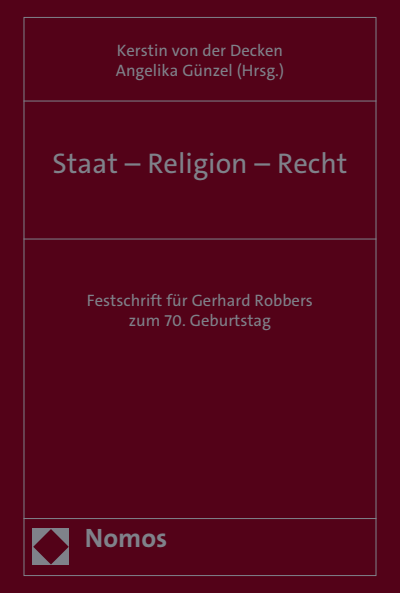
Staat – Religion – Recht
Festschrift für Gerhard Robbers zum 70. Geburtstag- Editors:
- |
- Publisher:
- 2020
Search publication
Bibliographic data
- Edition
- 1/2020
- Copyright Year
- 2020
- ISBN-Print
- 978-3-8487-6892-9
- ISBN-Online
- 978-3-7489-0987-3
- Publisher
- Nomos, Baden-Baden
- Language
- German
- Pages
- 1175
- Product Type
- Edited Book
Table of contents
ChapterPages
- Titelei/Inhaltsverzeichnis No access Pages 1 - 16
- Authors: |
- I. Akademischer Werdegang No accessAuthors: |
- II. Wissenschaftliches Wirken No accessAuthors: |
- III. Gesellschaftliches Wirken No accessAuthors: |
- IV. Kirchliches Wirken No accessAuthors: |
- V. Persönliche Haltungen No accessAuthors: |
- Authors:
- I. No accessAuthors:
- II. No accessAuthors:
- III. No accessAuthors:
- IV. No accessAuthors:
- V. No accessAuthors:
- VI. No accessAuthors:
- VII. No accessAuthors:
- VIII. No accessAuthors:
- IX. No accessAuthors:
- Authors:
- Authors:
- 1. Die Corona-Pandemie als gesellschaftliche Herausforderung No accessAuthors:
- 2. Gesundheit als transzendentales Gut No accessAuthors:
- 3. Spannungsfeld Individuum vs. Gesellschaft No accessAuthors:
- Authors:
- 1. Das höchste Gut – das größte Glück No accessAuthors:
- 2. Gleichheit und Gerechtigkeit No accessAuthors:
- Authors:
- 1. Zur Finanzierung der Teilhabe No accessAuthors:
- 2. Soziale Ungleichheit und Gesundheit No accessAuthors:
- 3. Kontrolle ist gut, Vertrauen ist besser No accessAuthors:
- Authors:
- Introduction No accessAuthors:
- Part One: A brief Look at Pre-State Societies No accessAuthors:
- Authors:
- Authors:
- I. General Overview No accessAuthors:
- Authors:
- 1. Crimes, threatened with the death penalty under this code No accessAuthors:
- 2. Blatant Misogyny under the Criminal Law laid down in Ur-Nammu’s Code No accessAuthors:
- Authors:
- I. General Overview No accessAuthors:
- Authors:
- 1. Crimes, threatened with Death Penalty under this Code No accessAuthors:
- 2. Blatant Misogyny under the Criminal Law laid down in Hammurabi’s Code No accessAuthors:
- Authors:
- Authors:
- I. Introductory Remarks No accessAuthors:
- Authors:
- 1. Only a few written Sources relating to Germanic Law No accessAuthors:
- 2. The Idea of Man (in German “Menschenbild”) of the Germanic People as Basis for Understanding the Germanic Criminal Law No accessAuthors:
- Authors:
- a) Predominance of Private Criminal Law: Criminal Law as a Private Matter No accessAuthors:
- b) Beginning of Public Criminal Law No accessAuthors:
- Authors:
- I. Such Adultery as Case of Crimes inside of the Clan (Interior Offence) No accessAuthors:
- II. Criminal Liability of the Wife’s Lover No accessAuthors:
- Authors:
- Authors:
- 1. Normprüfung durch das königlich-schwedische Obertribunal No accessAuthors:
- 2. Rechtsmittel gegen Statuten No accessAuthors:
- Authors:
- 1. Das richterliche Prüfungsrecht als „amerikanische Lehre“ No accessAuthors:
- Authors:
- a) Die naturrechtliche Tradition No accessAuthors:
- b) Normenkontrolle durch den Court of Common Pleas No accessAuthors:
- c) Das Remonstrationsrecht des Parlement de Paris No accessAuthors:
- Authors:
- aa) Die obersten Reichsgerichte No accessAuthors:
- bb) Die Territorialgerichte No accessAuthors:
- Authors:
- 1. Die Appellation gegen Statuten bei Bartolus de Saxoferrato No accessAuthors:
- 2. Spätere Autoren No accessAuthors:
- IV. Die richterliche Normenkontrolle in der europäischen Verfassungstradition No accessAuthors:
- Authors:
- I. Einleitung No accessAuthors:
- Authors:
- 1. Salvatorische Klauseln No accessAuthors:
- 2. Derogatorische Klauseln No accessAuthors:
- Authors:
- Authors:
- a) Verbindlichkeit der Reichsgesetze No accessAuthors:
- Authors:
- aa) Johann Nikolaus Hertius (1651 – 1710) No accessAuthors:
- bb) Christian Thomasius (1655 – 1728) No accessAuthors:
- Authors:
- aa) Johann Martin Silberrad (1707 – 1760) No accessAuthors:
- bb) Johann Jacob Moser (1701 – 1785) No accessAuthors:
- cc) Vermittelnde Ansicht No accessAuthors:
- IV. Resümee No accessAuthors:
- Authors:
- I. Einleitung No accessAuthors:
- II. Werdegang bis 1933 No accessAuthors:
- III. Ausgrenzung und Entrechtung in der NS-Zeit No accessAuthors:
- IV. Emigration No accessAuthors:
- V. Anwalt der Verfolgten No accessAuthors:
- VI. Wiederaufbau der jüdischen Gemeinde No accessAuthors:
- VII. Würdigung No accessAuthors:
- Authors:
- I. Juristen als Kirchentagspräsidenten No accessAuthors:
- II. Zusammenbruchserfahrungen als Kontext No accessAuthors:
- Authors:
- 1. Deutsche Liga für Völkerbund No accessAuthors:
- Authors:
- a) Das Völkerrecht No accessAuthors:
- b) Der Völkerbund No accessAuthors:
- IV. Ausblicke No accessAuthors:
- Authors:
- I. Die Wiederentdeckung des Themas No accessAuthors:
- Authors:
- 1. Die Sicht der Befürworter No accessAuthors:
- 2. Der Widerspruch No accessAuthors:
- Authors:
- 1. Zur Relevanz des französischen Vorbilds No accessAuthors:
- Authors:
- a) Klärungsbedürftige Fragen zur Tragweite des Gleichstellungsauftrags No accessAuthors:
- b) Verfassungsgerichtliche Verfahren No accessAuthors:
- 3. Beeinträchtigung der Wahlfreiheit durch Informationen zur Wahl No accessAuthors:
- 4. Sollvorschriften im Wahlrecht No accessAuthors:
- Authors:
- a) Gesetzliche Verpflichtung zur Förderung der Parität in Parteisatzungen No accessAuthors:
- b) Berücksichtigung der Parität im Rahmen der Erstattung von Wahlkampfkosten No accessAuthors:
- 6. Autonomes Parlamentsrecht No accessAuthors:
- IV. Folgewirkungen der Herstellung der Parität für die repräsentative Demokratie No accessAuthors:
- Authors:
- I. Anlass für die Thematik No accessAuthors:
- Authors:
- 1. Betroffene Rechtspositionen No accessAuthors:
- Authors:
- a) Rechtfertigung aus dem Repräsentationsprinzip No accessAuthors:
- Authors:
- aa) Prinzipielles No accessAuthors:
- bb) Benachteiligung von Frauen? No accessAuthors:
- cc) Praktische Konkordanz, Verhältnismäßigkeit? No accessAuthors:
- c) Berücksichtigung des sogenannten Dritten Geschlechts No accessAuthors:
- 3. Parité-Regelung durch Verfassungsänderung? No accessAuthors:
- III. Verfassungspolitische Bewertung No accessAuthors:
- IV. Fazit No accessAuthors:
- Authors:
- I. Einleitung No accessAuthors:
- II. Begründung von Dienstpflichten als Verfassungsproblem No accessAuthors:
- Authors:
- Authors:
- a) Dienst in den Streitkräften (allgemeine Wehrpflicht) No accessAuthors:
- b) Dienst im Bundesgrenzschutz (Bundespolizei) No accessAuthors:
- c) Dienst im Zivilschutzverband No accessAuthors:
- 2. Der Ersatzdienst – Art. 12a Abs. 2 GG No accessAuthors:
- 3. Art. 12a Abs. 3, 5 GG – Verpflichtung der Wehrpflichtigen zu zivilen Dienstleistungen No accessAuthors:
- 4. Art. 12a Abs. 4 GG – Verpflichtung der Frauen zu zivilen Dienstleistungen No accessAuthors:
- 5. Art. 12a Abs. 6 GG – Möglichkeit der Beschränkung der Berufsfreiheit No accessAuthors:
- Authors:
- 1. Verfassungsmäßigkeit einer allgemeinen Dienstpflicht No accessAuthors:
- 2. Zulässigkeit der Einführung der allgemeinen Dienstpflicht durch Verfassungsänderung No accessAuthors:
- V. Fazit No accessAuthors:
- Authors:
- I. Einleitung No accessAuthors:
- II. Verfassungsrechtliche Ausgangslage No accessAuthors:
- Authors:
- 1. Popularklage in Bayern No accessAuthors:
- Authors:
- a) „Traditionelle“ Beschwerdebefugnis No accessAuthors:
- b) Ausweitung der Beschwerdebefugnis in der neueren Rechtsprechung des HessStGH No accessAuthors:
- 3. Rechtsschutzmöglichkeiten in Rheinland-Pfalz No accessAuthors:
- Authors:
- 1. Gestaltungs- und Einschätzungsspielräume No accessAuthors:
- 2. Verfahrens- statt Ergebniskontrolle No accessAuthors:
- Authors:
- a) „Haben“ von Gründen und „Geben“ von Gründen No accessAuthors:
- b) Pflicht zur Ermittlung des kommunalen Finanzbedarfs No accessAuthors:
- V. Schluss No accessAuthors:
- Authors:
- I. Sicherheit durch den Staat und vor dem Staat No accessAuthors:
- II. Zur egoistischen Rationalität des Verbrechens No accessAuthors:
- Authors:
- 1. Allgemeines No accessAuthors:
- 2. Zum Unrecht der Gefährdungsdelikte No accessAuthors:
- IV. Konsequenzen des Sicherheitsstrafrechts No accessAuthors:
- V. Schlussbemerkung No accessAuthors:
- Authors:
- I. Recht und Religion im Widerspruch No accessAuthors:
- Authors:
- 1. Zum Rechtsbegriff No accessAuthors:
- 2. Göttliches Recht No accessAuthors:
- 3. Gerechtigkeit No accessAuthors:
- Authors:
- a) Auf der Grundlage des römischen Rechts No accessAuthors:
- b) Die Lehren des Heiligen Augustins und die Politik der römischen Päpste No accessAuthors:
- c) Thomas von Aquin No accessAuthors:
- d) Das Rechtsverständnis des Aquinaten No accessAuthors:
- Authors:
- 1. Die Scharia als göttliches Recht No accessAuthors:
- Authors:
- a) Religion und Philosophie No accessAuthors:
- b) Ibn Rushd (Averroes, 1126-1198), „Die entscheidende Abhandlung oder die Bestimmung des Zusammenhangs zwischen religiösem Gesetz und Philosophie“ No accessAuthors:
- Authors:
- 1. Die verfassungsrechtlichen Grundsätze No accessAuthors:
- Authors:
- a) Beschluss des 1. Senats von 2015 No accessAuthors:
- b) Beschluss der 2. Kammer des 1. Senats von 2016 No accessAuthors:
- c) Beschluss der 1. Kammer des 2. Senats von 2017 No accessAuthors:
- d) Fazit No accessAuthors:
- Authors:
- I. Vorbemerkungen No accessAuthors:
- Authors:
- 1. Zürich: Huldrych Zwingli und Heinrich Bullinger No accessAuthors:
- 2. Genf: Johannes Calvin No accessAuthors:
- III. Konflikte No accessAuthors:
- IV. Fazit No accessAuthors:
- Authors:
- I. Kurzer geschichtlicher Abriss: Von den Anfängen der Domstifter bis 1945 No accessAuthors:
- II. Die Vereinigten Domstifter nach dem Zweiten Weltkrieg No accessAuthors:
- III. Die Politik des Domkapitels zwischen 1950 und 1989 No accessAuthors:
- IV. Die Vereinigten Domstifter nach 1990 No accessAuthors:
- Authors:
- I. Introduction No accessAuthors:
- II. Religions versus Human Rights No accessAuthors:
- III. Faith for Rights No accessAuthors:
- IV. The trajectory from “Religions versus Human Rights” to “Faith for Rights” No accessAuthors:
- Authors:
- I. Einleitung No accessAuthors:
- Authors:
- 1. Die Rückkehr von Religion und der „Sonderfall“ Europa No accessAuthors:
- 2. Auf der Suche nach einem gemeinsamen europäischen Modell No accessAuthors:
- 3. Religionspolitik im Fokus von anderen Politikfeldern No accessAuthors:
- 4. Die religionsrechtlichen Folgen der neuen Rahmenbedingungen No accessAuthors:
- III. Religionsrechtliche Typologien und die Grenzen ihrer Brauchbarkeit No accessAuthors:
- Authors:
- I. Introduction No accessAuthors:
- II. From Minority Rights to Legal Pluralism No accessAuthors:
- III. The Conditions for a Sustainable Legal Pluralism No accessAuthors:
- IV. Conclusion No accessAuthors:
- Authors:
- Authors:
- 1. Die Auswirkung der europäischen Integration und des neuen europäischen Denkens auf die Gesetzgebung über die Menschenrechte und die Religionsfreiheit in den ehemaligen sozialistischen Ländern No accessAuthors:
- Authors:
- a) KSZE-Treffen in Helsinki (1975) No accessAuthors:
- b) KSZE-Folgetreffen in Wien (1986-89) No accessAuthors:
- c) KSZE-Folgetreffen in und Paris (1990) No accessAuthors:
- 3. Die Bedeutung des Zerfalls der Sowjetunion für die Entwicklung der Religionsfreiheit No accessAuthors:
- Authors:
- 1. Die Bürde der Geschichte No accessAuthors:
- 2. Das westeuropäische Modell der Religionsfreiheit als Leitstern in der Gesetzgebung zur Religionsfreiheit in postkommunistischen Ländern No accessAuthors:
- 3. Religionsgesetzgebung in den ehemaligen osteuropäischen Ländern und der Russischen Föderation No accessAuthors:
- 4. Der Prüfstein für die europäische Religionsfreiheit: Belarus No accessAuthors:
- III. Einige Schlussfolgerungen zur Entwicklung der Religionsfreiheit in Osteuropa No accessAuthors:
- Authors:
- I. Introduction No accessAuthors:
- II. Freedom and Identity – Setting the Context No accessAuthors:
- Authors:
- 1. Russia No accessAuthors:
- 2. Estonia No accessAuthors:
- 3. Kazakhstan No accessAuthors:
- IV. Concluding Observations No accessAuthors:
- Authors:
- I. Einleitung No accessAuthors:
- II. Die Rechtsstellung No accessAuthors:
- III. Die Rechtspersönlichkeit von Gemeinden und sonstigen kirchlichen Einrichtungen No accessAuthors:
- IV. Der Schutz kirchlichen Lebens No accessAuthors:
- V. Kooperation zwischen Staat und Kirche No accessAuthors:
- VI. Universitätsrecht No accessAuthors:
- VII. Religionsunterricht und Jugenderziehung No accessAuthors:
- VIII. Anstaltsseelsorge No accessAuthors:
- IX. Staatliche Zahlungen No accessAuthors:
- X. Kirchliche Sammlungen No accessAuthors:
- XI. Behördliche Zuständigkeit No accessAuthors:
- XII. Resumée No accessAuthors:
- Authors:
- I. Einleitung No accessAuthors:
- II. Die Schwedische Kirche No accessAuthors:
- III. „Freie“ Kirchen No accessAuthors:
- IV. Islam und Demokratie No accessAuthors:
- V. Ergebnis No accessAuthors:
- Authors:
- I. Einleitung No accessAuthors:
- II. Vom System der anerkannten Religionsgemeinschaften zum Gesetz vom 9. Dezember 1905 No accessAuthors:
- III. Zu den Bemühungen, die muslimischen Gemeinschaften zu organisieren No accessAuthors:
- IV. Ein Status für den Islam No accessAuthors:
- V. Auf der Suche nach neuen Lösungen No accessAuthors:
- VI. Fazit No accessAuthors:
- Authors:
- I. Author’s Justification No accessAuthors:
- Authors:
- 1. Marriage No accessAuthors:
- 2. Divorce No accessAuthors:
- 3. Family No accessAuthors:
- 4. Abortion No accessAuthors:
- 5. Religious Minorities No accessAuthors:
- 6. Financing No accessAuthors:
- 7. Education No accessAuthors:
- 8. Conscientious Objection No accessAuthors:
- III. Conclusions for the Future No accessAuthors:
- Authors:
- I. Einführung No accessAuthors:
- II. Die ehemaligen verfassungsrechtlichen Bestimmungen Rumäniens No accessAuthors:
- Authors:
- 1. Die Debatten No accessAuthors:
- 2. Das neue Gesetz über die Religionsgemeinschaften No accessAuthors:
- Authors:
- I. Introduction No accessAuthors:
- II. The Concept of “Cooperative Separation” of Church and State No accessAuthors:
- III. “Traditional” Churches and Religious Communities No accessAuthors:
- IV. Some Other Examples No accessAuthors:
- V. Legal Transplants on Test No accessAuthors:
- Authors:
- I. Einleitung No accessAuthors:
- II. Politischer Wille und Verfassungsreformen in religiösen Angelegenheiten No accessAuthors:
- III. Der Verfassungsartikel 24 der Bundesverfassung und seine Reform No accessAuthors:
- IV. Die Laizität des Staates No accessAuthors:
- V. Richtlinien für den Umgang mit religiöser Vielfalt No accessAuthors:
- VI. Fazit No accessAuthors:
- Authors:
- I. Introduction No accessAuthors:
- II. The Case of Dr Rommelfanger No accessAuthors:
- III. Between Dr Rommelfanger and Dr JQ: Intermediary Cases, incl. Nurse Ms Chaplin No accessAuthors:
- IV. The Case of Dr JQ No accessAuthors:
- V. Panta rhei – Final Remarks No accessAuthors:
- Authors:
- I. Problemaufriss No accessAuthors:
- Authors:
- 1. Chefarzt No accessAuthors:
- 2. Vera Egenberger No accessAuthors:
- III. Ausblick No accessAuthors:
- Authors:
- I. Ausgangslage No accessAuthors:
- II. Kernaussagen der EuGH-Entscheidungen No accessAuthors:
- Authors:
- 1. Kritische Würdigung der Argumentation des EuGH No accessAuthors:
- 2. Umsetzung durch das BAG No accessAuthors:
- Authors:
- 1. Kirchenaustritt No accessAuthors:
- 2. Ungleichbehandlung wegen sexueller Identität No accessAuthors:
- Authors:
- 1. Verkündigungsauftrag als Trennlinie? No accessAuthors:
- 2. Niveauangleichung für alle Mitarbeiter No accessAuthors:
- 3. Die Renaissance der Grundsätze des Tendenzbetriebes No accessAuthors:
- Authors:
- I. Einleitung No accessAuthors:
- Authors:
- Authors:
- a) Selbstbestimmung durch Selbstverständnis No accessAuthors:
- b) Selbstbestimmungs- und Geltungsanspruch No accessAuthors:
- Authors:
- a) Nationale Bindungen No accessAuthors:
- b) Europarechtliche Bindungen No accessAuthors:
- Authors:
- 1. Presto statt Andante religioso No accessAuthors:
- 2. Ripieno statt Concertino No accessAuthors:
- 3. Unisono statt Polifonia No accessAuthors:
- Authors:
- 1. Selbstbestimmung durch Anpassung No accessAuthors:
- 2. Selbstbehauptung trotz Selbstbindung? No accessAuthors:
- V. Coda: Et nunc et semper et in saecula saeculorum? No accessAuthors:
- Authors:
- I. Systems and Means of Public Financing for Religious Denominations No accessAuthors:
- II. Reasons Supporting the Public Funding of Religious Organisations No accessAuthors:
- III. Legitimacy of Public Funding for Religious Organisations No accessAuthors:
- Authors:
- 1. Church Tax Systems No accessAuthors:
- 2. Respect for the Principle of Non-discrimination in Granting Tax Relief No accessAuthors:
- V. Conclusions No accessAuthors:
- Authors:
- I. Der Begriff der Religionsgesellschaft No accessAuthors:
- Authors:
- Authors:
- a) Volk und Religion No accessAuthors:
- Authors:
- aa) Keine Heilsnotwendigkeit der Gemeinde No accessAuthors:
- bb) Wesentliche Aufgaben einer jüdischen Gemeinde No accessAuthors:
- c) Zu religiös-hierarchischen Strukturen im Judentum No accessAuthors:
- 2. Jüdische Einheitsgemeinden No accessAuthors:
- Authors:
- Authors:
- aa) Erforderlichkeit einer satzungsmäßigen Verbindung zu natürlichen Personen? No accessAuthors:
- bb) Stellungnahme No accessAuthors:
- Authors:
- aa) Identitätsstiftende Aufgaben No accessAuthors:
- bb) Gemeinsames Bekenntnis No accessAuthors:
- Authors:
- a) Personales Substrat No accessAuthors:
- Authors:
- aa) Religiöse Bildung No accessAuthors:
- bb) Religiöse Gerichtsbarkeit No accessAuthors:
- cc) Sonstige religiöse Tätigkeiten No accessAuthors:
- dd) Stellungnahme No accessAuthors:
- Authors:
- aa) Anderes religiöses Selbstverständnis No accessAuthors:
- bb) Besondere Bedürfnisse einer Minderheitsreligion No accessAuthors:
- cc) Sonstige Aspekte No accessAuthors:
- III. Resumée No accessAuthors:
- Authors:
- I. Einleitung No accessAuthors:
- Authors:
- 1. Die Vereinbarkeit des Islam- und Werteunterrichts mit Art. 7 Abs. 3 S. 2 GG, Art. 136 Abs. 2, Art. 137 Abs. 1 BV No accessAuthors:
- Authors:
- a) Die Vereinbarkeit des Islam- und Werteunterrichts mit Art. 137 Abs. 2 BV No accessAuthors:
- b) Der Islam- und Werteunterricht als Wahlpflicht-Alternative zum Ethikunterricht No accessAuthors:
- Authors:
- Authors:
- aa) Kein Schutz vor neutraler Information über Religion No accessAuthors:
- bb) Keine Verletzung des Abmelderechts vom Religionsunterricht No accessAuthors:
- b) Erziehungsrecht der Eltern No accessAuthors:
- c) Religiöse Gleichheit No accessAuthors:
- 4. Zur Vereinbarkeit eines Islam- und Werteunterrichts mit dem Selbstbestimmungsrecht der Religionsgemeinschaften No accessAuthors:
- Authors:
- 1. Islam- und Werteunterricht neben dem Ethikunterricht No accessAuthors:
- 2. „Isolierter“ Islam- und Werteunterricht No accessAuthors:
- IV. Ergebnis No accessAuthors:
- Authors:
- I. Thematische Problemeinkreisung No accessAuthors:
- Authors:
- 1. Schulgesetzlich vorgegebene Quotierungen? No accessAuthors:
- 2. Bekenntnisquoten in der Rechtsprechung No accessAuthors:
- Authors:
- 1. Bekenntnisschule und VUG 1906 No accessAuthors:
- 2. Die Diskussion über die Schülerquoten in der Zeit der Weimarer Republik No accessAuthors:
- 3. Quotierungen nach 1945/49 – eine „Reformalisierung“ des Typus Bekenntnisschule? No accessAuthors:
- Authors:
- 1. Lagebeschreibung No accessAuthors:
- 2. Bundesverfassungsrechtlicher Begriff „Bekenntnisschule“? No accessAuthors:
- 3. Neujustierung des Bekenntnisschulbegriffs als Ausweg aus dem Dilemma? No accessAuthors:
- Authors:
- I. Kirchenasyl – seine Funktion im kanonischen Recht der Vormoderne No accessAuthors:
- II. Kirchenasyl im konfessionellen Zeitalter No accessAuthors:
- III. Kirchenasyl im demokratischen Rechtsstaat No accessAuthors:
- Authors:
- 1. Kirchenasylgewährung als Anwendungsfall der Religionsfreiheit No accessAuthors:
- 2. Kirchenasylgewährung aufgrund regelbasierter Tolerierung No accessAuthors:
- V. Grenzen der Anwendung des überpositiven Rechts auf Kirchenasyl No accessAuthors:
- Authors:
- I. Introduction No accessAuthors:
- Authors:
- 1. Power of Governance and Power of Ordination No accessAuthors:
- Authors:
- a) Separation of Powers No accessAuthors:
- b) Blurring Law and Ethics No accessAuthors:
- III. Conclusion No accessAuthors:
- Authors:
- I. Das Problem No accessAuthors:
- Authors:
- 1. Theologie als Wissenschaft No accessAuthors:
- 2. Keine a priori Begrenzung des Schutzbereichs No accessAuthors:
- 3. Freiheit der Lehre No accessAuthors:
- 4. Besonderheiten kirchlicher Hochschulen No accessAuthors:
- III. Eingriffe No accessAuthors:
- Authors:
- 1. Gesetzesvorbehalt No accessAuthors:
- 2. Grundrechtskonformes Verfahren No accessAuthors:
- Authors:
- a) Allgemeines No accessAuthors:
- b) Schutzbereich des kirchlichen Selbstbestimmungsrechts No accessAuthors:
- c) Unabdingbare Verhältnismäßigkeitsprüfung No accessAuthors:
- Authors:
- a) Eingriffe in die Forschung No accessAuthors:
- b) Eingriffe in die Lehre No accessAuthors:
- c) Verweigerung von Leitungsfunktionen No accessAuthors:
- V. Schlussbemerkung – Wissenschaft als Vermittlungsinstanz von Kirche und demokratischem Staat No accessAuthors:
- Authors:
- I. Angewandte Forschung No accessAuthors:
- II. Verfassungsrechtlicher Schutz durch Wissenschafts- und Forschungsfreiheit No accessAuthors:
- III. Verfassungsimmanente Schranken No accessAuthors:
- IV. Art. 5 Abs. 3 GG als Teilhabe- und Leistungsrecht in Form der staatlichen Wissenschaftsförderung No accessAuthors:
- V. Forschungsförderung durch die Europäische Union No accessAuthors:
- VI. Ausblick No accessAuthors:
- Authors:
- I. Gewerkschaftsrechte im Betrieb – eine einfachgesetzlich weithin ungeregelte Materie No accessAuthors:
- Authors:
- 1. Gewerkschaftliche Betätigung im Betrieb als Teil der grundrechtlich geschützten koalitionsmäßigen Betätigung No accessAuthors:
- 2. Beschränkung des Schutzbereichs auf die für Erhalt und Sicherung der Koalition unerlässliche Betätigung No accessAuthors:
- Authors:
- a) Die „Klarstellung“ durch das BVerfG No accessAuthors:
- b) Die weitere Rechtsprechung des BAG No accessAuthors:
- c) Rezeption und Kritik No accessAuthors:
- Authors:
- 1. Grundrechte als Freiheitsrechte No accessAuthors:
- 2. Leistungsrechtlicher Gehalt der Grundrechte? No accessAuthors:
- Authors:
- a) Schutzbereich des Grundrechts No accessAuthors:
- b) Zulässigkeit koalitionsmäßiger Betätigung No accessAuthors:
- Authors:
- 1. Schutzpflicht als Folge des objektiv-rechtlichen Gehalts der Grundrechte No accessAuthors:
- 2. Voraussetzungen der Schutzpflicht No accessAuthors:
- Authors:
- 1. Die Befugnis zur Grundrechtsausgestaltung als Grundlage der Rechtsfortbildung – die Begründung des BAG No accessAuthors:
- 2. Funktion und Bedeutung der Grundrechtsausgestaltung No accessAuthors:
- 3. Die Befugnis zur Ausgestaltung der Koalitionsfreiheit im Wege der Rechtsfortbildung No accessAuthors:
- VI. Die Regelung von Gewerkschaftsrechten im Betrieb – eine Aufgabe des Gesetzgebers No accessAuthors:
- Authors:
- I. Einleitung No accessAuthors:
- Authors:
- 1. Übereinkommen über die Rechte des Kindes No accessAuthors:
- 2. Europäische Menschenrechtskonvention (EMRK) No accessAuthors:
- 3. Europäische Grundrechte-Charta (GRC) No accessAuthors:
- III. Der Anspruch des Kindes auf rechtliches Gehör als justizielles Grundrecht gemäß Art. 103 Abs. 1 GG No accessAuthors:
- Authors:
- 1. Die Anhörung des Kindes im familiengerichtlichen Verfahren No accessAuthors:
- 2. Die Unterstützung des Kindes durch einen Verfahrensbeistand No accessAuthors:
- V. Fazit No accessAuthors:
- Authors:
- I. Transparenz als Rechtsprinzip No accessAuthors:
- II. Privatautonomie und Aufklärungspflichten No accessAuthors:
- III. Störungen der Vertragsparität No accessAuthors:
- IV. Informationsasymmetrien und Algorithmen No accessAuthors:
- V. Strukturelle Unterlegenheit No accessAuthors:
- VI. Folgenbetrachtung No accessAuthors:
- Authors:
- 1. Informationelle Selbstbestimmung No accessAuthors:
- 2. Allgemeine Handlungsfreiheit No accessAuthors:
- Authors:
- 1. Einschränkung der Vertragsfreiheit No accessAuthors:
- 2. Kontrahierungszwang? No accessAuthors:
- IX. Fazit No accessAuthors:
- Authors:
- I. Art. 18 EMRK: Verbot von pseudo-legitimen Zwecken No accessAuthors:
- II. Sinn und Zweck No accessAuthors:
- Authors:
- 1. Allgemeines und Prüfungsstruktur No accessAuthors:
- Authors:
- a) Fälle aus Russland No accessAuthors:
- b) Cebotari v. Moldova No accessAuthors:
- c) Fälle aus der Ukraine No accessAuthors:
- d) Fälle aus Aserbaidschan No accessAuthors:
- e) Merabishvili v. Georgia No accessAuthors:
- f) Fälle aus der Türkei No accessAuthors:
- 3. Herleitungen für das Verständnis von ulterior purposes No accessAuthors:
- IV. Pluralität von Eingriffszwecken: Behandlung und Kritik No accessAuthors:
- Authors:
- 1. Vermutung für Staatshandeln in good faith und Träger der Beweislast No accessAuthors:
- 2. Unmittelbarer Beweis No accessAuthors:
- 3. Indizienbeweis No accessAuthors:
- 4. Kritik gegen den Indizienbeweis No accessAuthors:
- VI. Plädoyer für eine Fokussierung auf ulterior purposes auf globaler Ebene No accessAuthors:
- VII. Ausblick No accessAuthors:
- Authors:
- I. Introduction No accessAuthors:
- II. The Structure of Article 9 No accessAuthors:
- III. Limitation Arguments in Kokkinakis No accessAuthors:
- Authors:
- 1. Prescribed by Law No accessAuthors:
- Authors:
- a) Public Safety and Public Order No accessAuthors:
- b) Health and Morals No accessAuthors:
- c) Rights and Freedoms of Others No accessAuthors:
- 3. Necessary in a Democratic Society No accessAuthors:
- 4. Margin of Appreciation No accessAuthors:
- V. Conclusion No accessAuthors:
- Authors:
- I. A Recurrent Issue No accessAuthors:
- II. The General Principles Established by the ECtHR No accessAuthors:
- III. A Case Law in Need of Development No accessAuthors:
- IV. Statements of Fact and Subjective Opinions No accessAuthors:
- V. Manipulation of History and Hate Speech No accessAuthors:
- Authors:
- Authors:
- 1. The Constitutional Query of this Paper No accessAuthors:
- 2. Blasphemy and Defamation of Religion No accessAuthors:
- 3. Prohibition of Hate Speech No accessAuthors:
- 4. Changing the Object and the Aim of the Protection No accessAuthors:
- Authors:
- 1. The Prohibition of Blasphemy and of Religiously Motivated Hate Speech as Restrictions of Freedom of Expression No accessAuthors:
- 2. Blasphemy is Equivalent to an Intolerance of Ideas and Criticism whereas Prohibition of Hate Speech is Equivalent to a Tolerance of Others and Equal Freedom No accessAuthors:
- 3. The Stance of the ECtHR No accessAuthors:
- 4. Is Hate Speech an Expression of Religious Freedom? No accessAuthors:
- 5. The Thorniest Issue: Protecting “Religious Feelings”? The ECtHR Case E.S. v Austria as an Example of Excessive Speech Prohibitions No accessAuthors:
- III. A Brief Conclusion of a Perennial Discussion No accessAuthors:
- Authors:
- I. Einleitung No accessAuthors:
- Authors:
- 1. US-amerikanische „targeted killings“ No accessAuthors:
- 2. Informationsgewinnung durch die NSA No accessAuthors:
- 3. Informationsgewinnung durch den BND No accessAuthors:
- Authors:
- 1. US-amerikanisches Verfassungsrecht No accessAuthors:
- 2. Rechte nach dem Zivilpakt und der EMRK No accessAuthors:
- 3. Extraterritorialer Grundrechtsschutz nach deutschem Verfassungsrecht No accessAuthors:
- IV. Fazit und Ausblick No accessAuthors:
- Authors:
- I. Einführung No accessAuthors:
- Authors:
- 1. Relevanz des flüchtlingsrechtlichen Refoulement-Verbots No accessAuthors:
- Authors:
- a) Verbot der Rückführung No accessAuthors:
- b) Anwendungsbeispiel: Verbot der Rückführung nach Libyen No accessAuthors:
- c) Unterstützung der libyschen Küstenwache No accessAuthors:
- III. Schlussfolgerungen No accessAuthors:
- Authors:
- I. Einleitung: Der Rechtsstaat als globale Leitidee? No accessAuthors:
- Authors:
- 1. Zulässigkeit der Zwangshaft dem Grunde nach No accessAuthors:
- 2. Abwägung der Zwangshaft mit der Funktionsfähigkeit der Verwaltung No accessAuthors:
- 3. Zwischenergebnis No accessAuthors:
- Authors:
- 1. Der zweigeteilte Ansatz der EU No accessAuthors:
- 2. Die Vorgeschichte: die Reformen der polnischen Justiz seit dem Jahr 2015 No accessAuthors:
- Authors:
- a) Die Verfahren im Überblick No accessAuthors:
- b) Das Urteil des EuGH vom 19. November 2019 in den verbundenen Rechtssachen C‑585/18, C‑624/18 und C‑625/18 No accessAuthors:
- c) Die Stellungnahme der Venedig-Kommission vom 16. Januar 2020 und die weitere Entwicklung No accessAuthors:
- 4. Zwischenergebnis und Schlussfolgerungen No accessAuthors:
- IV. Fazit und Ausblick No accessAuthors:
- Authors:
- I. Die Privatrechtswirkung der Grundrechte als zentrales Problem der Grundrechtstheorie und –dogmatik No accessAuthors:
- II. Die funktionale Dimension des unionalen Grundrechtsschutzes No accessAuthors:
- Authors:
- 1. Ein naheliegender Fehlschluss: Art. 51 Abs. 1 GRCh No accessAuthors:
- 2. Ein fernliegender Fehlschluss: Unmittelbare Wirkung der GRCh als Primärrecht No accessAuthors:
- 3. Konformauslegung: Von der Grundrechtsbindung des Unionsgesetzgebers zur Grundrechtsverwirklichung in der mitgliedstaatlichen Gesetzgebung No accessAuthors:
- 4. Grundrechtspolitik: Plädoyers für judicial activism No accessAuthors:
- 5. Funktionale Auffächerung: Entdeckung der Schutzpflichten auch im Unionsrecht? No accessAuthors:
- IV. Perspektiven No accessAuthors:
- Authors: |
- I. Introduction No accessAuthors: |
- II. The Approach of the European Union Courts No accessAuthors: |
- III. Assessing the Proportionality of the Interference: Through the Looking Glass of Political Realities No accessAuthors: |
- IV. Depositors as Investors No accessAuthors: |
- V. Conclusion No accessAuthors: |
- Authors:
- I. Einleitung No accessAuthors:
- Authors:
- 1. Die Verlegung des Verwaltungssitzes No accessAuthors:
- 2. Die Verlegung des Satzungssitzes No accessAuthors:
- Authors:
- 1. Die eingeschränkte Geltung der Niederlassungsfreiheit No accessAuthors:
- 2. Schutz durch Art. 21 AEUV? No accessAuthors:
- 3. Der Zuzug eines ausländischen Vereins No accessAuthors:
- 4. Wegzugsfreiheit für deutsche Vereine? No accessAuthors:
- 5. Die fehlende Möglichkeit der Satzungssitzverlegung No accessAuthors:
- IV. Zusammenfassung No accessAuthors:
- Authors:
- I. Einführung No accessAuthors:
- II. Mehrheit natürlicher Personen im Allgemeinen No accessAuthors:
- Authors:
- 1. Unionsrecht: Ausschluss der BGB-Gesellschaft No accessAuthors:
- 2. Verbindlichkeit des harmonisierten Bereichs No accessAuthors:
- 3. Regelungen außerhalb des harmonisierten Bereichs No accessAuthors:
- Authors:
- 1. Option für den sachlichen Anwendungsbereich einer Richtlinie No accessAuthors:
- 2. Keine Option bei Maximalharmonisierungskonzept No accessAuthors:
- V. Optionen im nicht harmonisierten Bereich No accessAuthors:
- Authors:
- 1. Tatbestandsmerkmal „überwiegend“ in § 13 BGB No accessAuthors:
- 2. Internationale Zuständigkeit No accessAuthors:
- VII. Zusammenfassung No accessAuthors:
- Authors:
- I. Introduction No accessAuthors:
- II. Transitional Justice and the Redress of Injustices No accessAuthors:
- Authors:
- 1. The Den Act No accessAuthors:
- 2. The VWV Act No accessAuthors:
- 3. The RI Act No accessAuthors:
- 4. The WGS Act and the Concealed War Graves and Burial of Victims Act No accessAuthors:
- 5. The Payment of Compensation to the Victims of War and Post-war Aggression Act No accessAuthors:
- 6. Other Statutes No accessAuthors:
- Authors:
- 1. Review of the Citizenship Act No accessAuthors:
- 2. Review of the VWV Act No accessAuthors:
- 3. Review of the RI Act No accessAuthors:
- 4. Review of the Den Act No accessAuthors:
- 5. Review of the CP Act and Other Statues in the Area of Criminal Law No accessAuthors:
- 6. Review of the JO Act No accessAuthors:
- 7. Review of Other Acts No accessAuthors:
- V. Conclusion No accessAuthors:
- Authors:
- Authors:
- 1. Aufnahme der Tätigkeit unter der „Verfassung der ungarischen Republik“ No accessAuthors:
- 2. Grundgesetz Ungarns 2012, eine Zäsur No accessAuthors:
- 3. Europäische Dimensionen No accessAuthors:
- 4. Kurzer Abriss der neueren Entwicklungen der ungarischen Verfassung No accessAuthors:
- 5. Historische Herausforderungen No accessAuthors:
- Authors:
- 1. Verhältnis zum Parlament No accessAuthors:
- 2. Verhältnis zur einfachen Gerichtsbarkeit No accessAuthors:
- Authors:
- 1. Verhältnis zu den europäischen Gerichten, insbesondere zum EuGH No accessAuthors:
- 2. Europafreundliche Auslegung von Verfassungsbestimmungen No accessAuthors:
- Authors:
- 1. Auftrag des Verfassungsgerichts No accessAuthors:
- 2. Auslegung der Verfassung No accessAuthors:
- 3. Kontrolle der einfachen Gerichte No accessAuthors:
- 4. Kontrolle des Parlaments No accessAuthors:
- V. Historische Verfassung No accessAuthors:
- VI. Ausblick No accessAuthors:
- Authors:
- I. Christian Heritage in the National Avowal No accessAuthors:
- Authors:
- 1. The Purpose of the State – “Sollen”? No accessAuthors:
- 2. Protection of the Existing System of Values – “Sein”? No accessAuthors:
- 3. The Relationship between Christian Culture and Christian Faith No accessAuthors:
- III. The Issue of Neutrality No accessAuthors:
- IV. Conclusion No accessAuthors:
- Authors:
- Authors:
- 1. Development until the Adoption of the Human Rights Act 1998 No accessAuthors:
- 2. Judicial “Future-Proofing” of the Common Law Constitution No accessAuthors:
- II. The Range of Constitutional Rights and Principles Recognised at Common Law No accessAuthors:
- Authors:
- Authors:
- a) Limiting the Scope of the Powers No accessAuthors:
- b) Giving Effect to Ministers’ Accountability to Parliament No accessAuthors:
- 2. Restriction of EU-Rooted Safeguards for Rights No accessAuthors:
- IV. Summary and Concluding Remarks No accessAuthors:
- Authors:
- I. Einführung No accessAuthors:
- II. Enttarnung No accessAuthors:
- III. Besonderheiten des NSU No accessAuthors:
- Authors:
- 1. Strafrechtliches Verfahren No accessAuthors:
- 2. Parlamentarische Untersuchungsausschüsse No accessAuthors:
- Authors:
- Authors:
- a) Überprüfung rassistischer Motive No accessAuthors:
- b) Ungeklärte Straftaten und per Haftbefehl Gesuchte No accessAuthors:
- c) Politisch motivierte Kriminalität (PMK) No accessAuthors:
- d) Polizeiliche Aus- und Fortbildung No accessAuthors:
- e) Interkulturelle Kompetenz, Vielfalt und Opferschutz No accessAuthors:
- f) Zentrale Ermittlungsführung und verbesserte Fehlerkultur No accessAuthors:
- Authors:
- a) Zuständigkeit des Generalbundesanwaltes; Änderung § 46 Abs. 2 Satz 2 StGB No accessAuthors:
- b) Qualitätsstandards für Prüfvorgänge; Aus- und Fortbildungen im Bereich Justiz No accessAuthors:
- Authors:
- a) Verbesserte Informationsübermittlung, GETZ No accessAuthors:
- b) Nachrichtendienstliches Informationssystem (NADIS) No accessAuthors:
- c) Behördlicher Bewusstseinswandel und Stärkung der Analysefähigkeit No accessAuthors:
- d) Datenschutz in den Verfassungsschutzbehörden No accessAuthors:
- e) Nachrichtendienstliche V-Leute No accessAuthors:
- f) Parlamentarische Kontrolle der Verfassungsschutzbehörden No accessAuthors:
- g) Niedersächsisches Verfassungsschutzgesetz No accessAuthors:
- VI. Schluss No accessAuthors:
- Authors:
- I. Einleitung No accessAuthors:
- Authors:
- 1. Grundlagen No accessAuthors:
- Authors:
- a) Erforderlichkeitsgebot No accessAuthors:
- Authors:
- aa) Erfordernis eines schlüssigen gesamträumlichen Planungskonzepts No accessAuthors:
- bb) Erfordernis substanzieller Raumverschaffung zu Gunsten der Windenergienutzung (Verbot der Verhinderungsplanung) No accessAuthors:
- cc) Kein genereller Vorrang der Windenergienutzung in der Abwägung No accessAuthors:
- dd) Sicherstellung der Durchsetzung der Windenergienutzung gegenüber konkurrierenden Nutzungen in den Konzentrationszonen No accessAuthors:
- ee) Zulässigkeit größerer Abstände als zur Abwehr schädlicher Umwelteinwirkungen rechtlich geboten No accessAuthors:
- Authors:
- a) Erstmalige Skizzierung des Tabuzonenkonzepts No accessAuthors:
- Authors:
- aa) Bestimmung der harten und weichen Tabuzonen No accessAuthors:
- bb) Einzelfallbezogene Abwägung zu den Potenzialflächen No accessAuthors:
- cc) Prüfung der substanziellen Raumgebung für die Windenergienutzung No accessAuthors:
- 4. Folgen der Tabuzonenrechtsprechung des Bundesverwaltungsgerichts No accessAuthors:
- Authors:
- 1. Artenschutzrecht No accessAuthors:
- 2. Erstellung des Umweltberichts No accessAuthors:
- IV. Schlussbetrachtung No accessAuthors:
- Authors:
- I. Introduction No accessAuthors:
- II. Origins in the Two-Pillar Legal System No accessAuthors:
- Authors:
- 1. Trusts in Property Rights No accessAuthors:
- 2. Types of Trusts No accessAuthors:
- 3. Reflexion of the Trust in Civil Jurisdictions No accessAuthors:
- Authors:
- 1. Trusts under the Blue Sky Laws No accessAuthors:
- 2. Trusts as an Aliud, not an Alien No accessAuthors:
- Authors:
- Authors:
- 1. The Claims of the Macedonian Authorities No accessAuthors:
- 2. The Claims of the Greek Authorities No accessAuthors:
- Authors:
- 1. A Successful International Negotiation No accessAuthors:
- 2. The Conclusion of the Prespa Agreements No accessAuthors:
- I. Selbständige Schriften No access
- II. Kommentierungen No access
- III. Herausgegebene Einzelwerke No access
- IV. Herausgegebene Zeitschriften und Schriftenreihen No access
- V. Beiträge in Sammelwerken No access
- VI. Beiträge in Zeitschriften und Zeitungen No access
- VII. Diskussions- und Konferenzbeiträge sowie Referate No access
- VIII. Wissenschaftliche Studien, Stellungnahmen und Anhörungen No access
- IX. Rezensionen, Buchbesprechungen und Bibliographien No access
- Autorenverzeichnis No access Pages 1169 - 1175