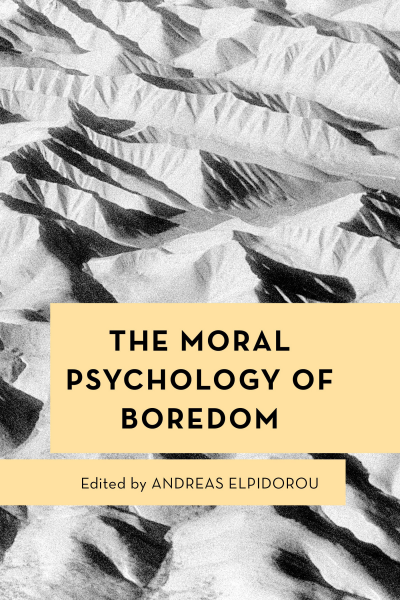
The Moral Psychology of Boredom
- Editors:
- Publisher:
- 2022
Summary
Whether we like it or not, boredom is a major part of human life. It permeates our personal, social, practical, and moral existence. It shapes our world by demarcating what is engaging, interesting, or meaningful from what is not. It also sets us in motion insofar as its presence can motivate us to act in a plethora of ways. Indeed, in our search for engagement, interest, or meaning, our responses to boredom straddle the line between the good and the bad, the beneficial and the harmful, the creative and the mundane. In this volume, world-renowned researchers come together to explore a neglected but crucially important aspect of boredom: its relationship to morality. Does boredom cause individuals to commit immoral acts? Does it affect our moral judgment? Does the frequent or chronic experience boredom make us worse people? Is the experience of boredom something that needs to be avoided at all costs? Or can boredom be, at least sometimes, a solution and a positive moral force? The Moral Psychology of Boredom sets out to answer these and other timely questions.
Keywords
Search publication
Bibliographic data
- Edition
- 1/2022
- Copyright Year
- 2022
- ISBN-Print
- 978-1-78661-538-1
- ISBN-Online
- 978-1-78661-539-8
- Publisher
- Rowman & Littlefield, Lanham
- Language
- English
- Pages
- 324
- Product Type
- Edited Book
Table of contents
- Contents No access
- Introduction No access
- 1. How Emotions Steer Morality No access
- 2. How Boredom Steers Moral Decision-Making No access
- 3. Charting a Better Course No access
- References No access
- 1. Introduction No access
- 2. Meaning-Regulation Hypotheses of Boredom No access
- 3. Enhancement via Search for Meaning: Aggression and Helping No access
- 4. Protection via Existential Escapes: Food, Sex, and Impulsivity No access
- 5. Meaning as a Resource: Preventing Boredom No access
- 6. Conclusions: Boredom, Meaning-Regulation, and Morality No access
- References No access
- 1. How Do We Learn about Ourselves? No access
- 2. What Does Boredom Tell Us about Our Goals? No access
- 3. What Does It Mean When We Are Constantly Bored? No access
- 4. Trait Boredom as Existential Crisis and Moral Conundrum No access
- 5. Conclusion No access
- References No access
- Notes No access
- References No access
- 1. The Best Way Out Is Always Through No access
- 2. A Boring Experiment No access
- 3. Resolving Boredom Is No Easy Feat No access
- 4. Boredom at the Margins No access
- 5. Oppressed Agency No access
- 6. Conclusion No access
- Notes No access
- References No access
- 1. What Is Boredom? No access
- 2. Individual Moral Decision-Making vs. Social Justice and Equity No access
- 3. Coping, Tolerance, and Mismanagement No access
- 4. Boredom and School Environments No access
- 5. Conclusion No access
- References No access
- 1. Social Class No access
- 2. Boredom and Poverty: An Interactionist Model No access
- 3. From Poverty to Boredom No access
- 4. Poverty and the Experience of Boredom No access
- 5. Responses to Boredom in Poverty No access
- 6. Conclusion No access
- References No access
- 1. Introduction No access
- 2. Emotions as Epistemically Rationally Assessable No access
- 3. Situational Boredom as Epistemically Irrational No access
- 4. Epistemic Functionality No access
- 5. The Epistemic Benefits of Situational Boredom No access
- 6. Conclusions and Implications No access
- Note No access
- References No access
- 1. Emotion and Appetite No access
- 2. Boredom as Cognitive Appetite No access
- 3. The Ethical Significance of Boredom No access
- 4. Conclusion No access
- Notes No access
- References No access
- 1. Boredom No access
- 2. Meaning in Life No access
- 3. Dismissal of Conceptions of Meaning in Life on Grounds of Boredom No access
- 4. Meaning in Life as Interest or Absence of Boredom No access
- 5. Interest No access
- 6. More on Meaningfulness as Interest No access
- 7. Boredom, Interest, Meaninglessness, and Meaning No access
- 8. Life with Interest but No Meaning? No access
- References No access
- 1. Animal vs. Human Literature No access
- 2. A Cross-Species Approach to the Study of Boredom No access
- 3. Animal Boredom and Morality No access
- 4. Conclusions No access
- References No access
- Notes No access
- References No access
- Index No access Pages 313 - 324