, to see if you have full access to this publication.
Monograph No access
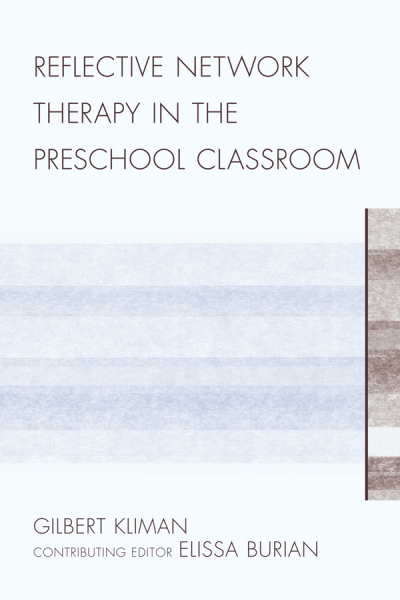
Reflective Network Therapy in the Preschool Classroom
Authors:
Publisher:
2011
Summary
Reflective Network Therapy describes a remarkably effective school-based treatment method that harnesses small social networks for the good of seriously emotionally disturbed preschoolers or those with autism spectrum disorders. The book provides an in-depth explanation of the method — including the work of parents, peers, teachers, and mental health therapists. The RNT method has a substantial evidence base, with about the same number of treated children and a larger number of comparison and control cases as the published IQ results of the most widely used school based method. It has been used in many real life environments and is well-tested for feasibility, replicability, IQ effects, and children's global mental health results. The RNT method does not separate the child from peers by pairing him with an aide but is peer, teacher and parent inclusive. The cost-benefits and human benefits are extraordinary.
Search publication
Bibliographic data
Edition
1/2011
Copyright Year
2011
ISBN-Print
978-0-7618-5470-8
ISBN-Online
978-0-7618-5469-2
Publisher
Hamilton Books, Lanham
Language
English
Pages
376
Product Type
Monograph
Table of contents
ChapterPages
Dedication No access
Contents No access
Tables and Figures No access
Preface No access
Acknowledgments No access
Introduction No access
Chapter One. New Hope for Children with Psychiatric and Developmental Disorders No access
Chapter Two. Welcome to a Reflective Network Therapy Classroom No access
Chapter Three. Reflective Network Therapy: How-To-Do-It Manual for Therapists, Teachers, and Parents No access
Chapter Four. How I Recovered from Autism No access
Chapter Five. An Aggressive, Cruel Boy Becomes an Empathic, Socialized Learner No access
Chapter Six. A Traumatized Child Emerges from Chaos No access
Chapter Seven. Helping a Child with a Serious Emotional Disorder (SED) and a Serious Physical Disorder No access
Chapter Eight. Bereaved Preschoolers with Serious Emotional Disorders (SED) No access
Chapter Nine. Benefits and Cost-Benefit Comparisons to Other Methods: The RNT Advantage for Special Needs Preschoolers and the People Who Care about Them No access
Chapter Ten. Theory of What Happens in Reflective Network Therapy No access
References and Suggested Readings No access Pages 315 - 350
Appendix A. Resources for Therapists, Teachers, Researchers, Parents, Schools, and Mental Health Agencies No access Pages 351 - 354
Appendix B. Reflective Network Therapy Training and Certification No access Pages 355 - 362
Appendix C. Professional Participants No access Pages 363 - 366
Appendix D. The Children’s Psychological Health Center, Inc. No access Pages 367 - 368