, to see if you have full access to this publication.
Edited Book No access
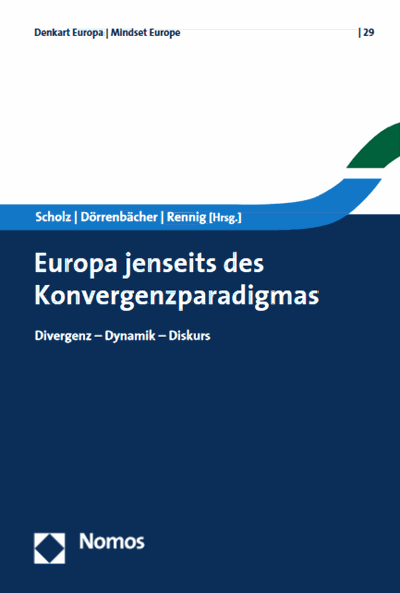
Europa jenseits des Konvergenzparadigmas
Divergenz - Dynamik - Diskurs- Editors:
- | |
- Series:
- Denkart Europa | Mindset Europe, Volume 29
- Publisher:
- 2019
Keywords
Search publication
Bibliographic data
- Edition
- 1/2019
- Copyright Year
- 2019
- ISBN-Print
- 978-3-8487-4928-7
- ISBN-Online
- 978-3-8452-9141-3
- Publisher
- Nomos, Baden-Baden
- Series
- Denkart Europa | Mindset Europe
- Volume
- 29
- Language
- German
- Pages
- 418
- Product Type
- Edited Book
Table of contents
ChapterPages
- Titelei/Inhaltsverzeichnis No access Pages 1 - 14
- Authors:
- A. Der Traum am Anfang: Wie und warum alles begann No accessAuthors:
- Authors:
- 1. 1950er Jahre: Europa als faszinierende Vision No accessAuthors:
- 2. 1980er Jahre: Europa als technokratisches Integrationsobjekt No accessAuthors:
- 3. 2010er Jahre: Europa als gesellschaftspolitisches Fragezeichen No accessAuthors:
- Authors:
- 1. Konvergenz-Theoretiker mit wenig Konvergenzbefunden No accessAuthors:
- 2. Europapolitik mit uneinheitlicher Tendenz No accessAuthors:
- 3. Wirtschaftswissenschaft mit Divergenz-Tendenz No accessAuthors:
- D. Aktueller Problemdruck und konkretisierte Fragestellung No accessAuthors:
- Authors:
- 1. Was sind Konvergenz und Divergenz? No accessAuthors:
- 2. Ein kleines abstraktes Beispiel No accessAuthors:
- 3. Ein kleines Zahlen-Beispiel No accessAuthors:
- 4. Welche Formen von Konvergenz und Divergenz gibt es? No accessAuthors:
- 5. Wie analysiert man Konvergenz und Divergenz? No accessAuthors:
- Authors:
- 1. Identitätsbegründend: Divergenz und/oder Konvergenz No accessAuthors:
- 2. Universalistisch: Konvergenz No accessAuthors:
- 3. Strategisch: Divergenz und/oder Konvergenz No accessAuthors:
- 4. Kontextual: Divergenz No accessAuthors:
- G. „One last thing“: Europäische Forschung über Europa als Chance No accessAuthors:
- Literaturverzeichnis No accessAuthors:
- Authors:
- 1. Zur Frage der Europäisierung von Public Policies No accessAuthors:
- Authors:
- 2.1 Wege der Top-down-Europäisierung: Ein knapper Überblick No accessAuthors:
- 2.2 Die Notwendigkeit der Einbeziehung des elektoralen Kontexts No accessAuthors:
- Authors:
- 3.1 Die Ausgangslage: Harte Regeln für Haushaltsdisziplin – großer Widerstand gegen Sparpolitik No accessAuthors:
- 3.2 Konvergenz: Die haushaltspolitische Entwicklung bis 1997 No accessAuthors:
- 3.3 Divergenz: Die haushaltspolitische Entwicklung nach 1997 No accessAuthors:
- 4. Divergenz und Konvergenz? Lehren aus zwei Politikfeldern No accessAuthors:
- Literaturverzeichnis No accessAuthors:
- Authors:
- 1. Begriffsbestimmung No accessAuthors:
- 2. Die Konvergenz der Rechtsordnungen als inhärenter Bestandteil der europäischen Integration No accessAuthors:
- 3. Die Vielfalt der Mittel und der Zwecke der Konvergenz No accessAuthors:
- 4. Unionsrichtlinien als Rahmen der Konvergenz der Rechtsordnungen No accessAuthors:
- 5. Die Umsetzung der Richtlinien als Beispiel der Divergenz der Kulturen No accessAuthors:
- Fazit No accessAuthors:
- Literaturverzeichnis No accessAuthors:
- Authors:
- 1. Warum uns dieses Thema interessiert: Europa sind Menschen und Europäisierung bedeutet Personalarbeit No accessAuthors:
- Authors:
- 2.1 Content: Differenzierung als Produkt aus Unkenntnis und Zufall No accessAuthors:
- 2.2 Usability: Vereinheitlichung als Industriestandard No accessAuthors:
- 2.3 Branding: Individualisierung als Glücksache No accessAuthors:
- 2.4 Emotion: Vernachlässigung als sträfliche Inkompetenz No accessAuthors:
- 2.5 Zwischenergebnis: Komplexität selbst im Kleinen No accessAuthors:
- Authors:
- 3.1 Europäisches HRM als Konvergenz zu den USA No accessAuthors:
- 3.2 Europäisches HRM als eigenständige Konvergenz No accessAuthors:
- 3.3 HRM in Europa als forcierte Divergenz No accessAuthors:
- 3.4 Zwischenergebnis: Viele Plädoyers für Konvergenz No accessAuthors:
- Authors:
- 4.1 Felder für Konvergenz: Vorgabe und Anpassung? No accessAuthors:
- 4.2 Felder für Divergenz: Markt und Strategie? No accessAuthors:
- 4.3 Felder für weder/noch: Unabhängigkeit und Unterschiedlichkeit? No accessAuthors:
- 4.4 Zwischenergebnis: Emergenz und Rationalität? No accessAuthors:
- Authors:
- 5.1 Universalistisch: Konvergenz auf jeden Fall No accessAuthors:
- 5.2 Kontextual: Divergenz nur Ergebnis einer planvollen Handlung No accessAuthors:
- 5.3 Identitätsstiftend: Etwas Divergenz plus keine Konvergenz No accessAuthors:
- 5.4 Strategisch: Divergenz plus Konvergenz No accessAuthors:
- 5.5 Zwischenergebnis: Kultur und Markt als treibende Kräfte No accessAuthors:
- 6. Ergebnis: Kondivergenz als sinnvolles Paradigma für Europa No accessAuthors:
- Anhang: Rohdaten No accessAuthors:
- Literaturverzeichnis No accessAuthors:
- Authors: |
- 1. Risikokultur von Banken als relevantes Gestaltungsfeld No accessAuthors: |
- Authors: |
- 2.1 Der Begriff der Risikokultur No accessAuthors: |
- 2.2 Risikokultur aus der Führungsperspektive No accessAuthors: |
- 3. Potenziale zur Beeinflussung von Risikokultur auf der Werteebene No accessAuthors: |
- Authors: |
- 4.1 Allgemeiner Regulierungsrahmen No accessAuthors: |
- 4.2 Konkrete Regulierung in Bezug auf Risikokultur von Banken No accessAuthors: |
- 5. Fazit: Konvergenzverhaltens-Beurteilung zur Risikokultur von europäischen Banken No accessAuthors: |
- Literaturverzeichnis No accessAuthors: |
- Authors:
- 1. Allgemeine Problemstellung No accessAuthors:
- Authors:
- 2.1 Definition der Hochschulbildung No accessAuthors:
- Authors:
- 2.2.1 Die EU als Impulsgeber No accessAuthors:
- 2.2.2 Der Bologna-Prozess als Triebkraft für Standardisierung No accessAuthors:
- 2.2.3 Weitere Interessengruppen der europäischen Hochschulen No accessAuthors:
- Authors:
- 2.3.1 Steigende Bedeutung von Rankings No accessAuthors:
- 2.3.2 Umbau der Hochschulstrukturen No accessAuthors:
- 2.4 Modell zur Beschreibung der Hochschulsysteme No accessAuthors:
- Authors:
- 3.1 Definition von Konvergenz No accessAuthors:
- 3.2 Analyse von Konvergenz No accessAuthors:
- 3.3 Triebkräfte für Konvergenz No accessAuthors:
- Authors:
- 4.1 Finanzierung der europäischen Hochschulsysteme No accessAuthors:
- 4.2 Hochschulzugang No accessAuthors:
- 4.3 Institutionen No accessAuthors:
- 4.4 Internationale Mobilität der Studierenden No accessAuthors:
- 4.5 Hochschulabsolventen No accessAuthors:
- 5. Fazit No accessAuthors:
- Anhang: Rohdaten No accessAuthors:
- Literaturverzeichnis No accessAuthors:
- Authors: |
- 1. Die Liberalisierung von europäischen Binnengrenzen als wesentlicher Teil der europäischen Integration No accessAuthors: |
- Authors: |
- 2.1 Grenzliberalisierung als Ausdruck der vier Freiheiten der europäischen Integration No accessAuthors: |
- 2.2 Europäisierung als Maßstabsfrage: kleinräumige Konsequenzen aus ‚großer‘ Politik No accessAuthors: |
- 2.3 Formen der räumlichen Integration No accessAuthors: |
- 3. Zielsetzung und Operationalisierung No accessAuthors: |
- Authors: |
- 4.1 Grenzregion Aachen-Lüttich-Maastricht No accessAuthors: |
- 4.2 Grenzregion ‚Großregion‘ um Luxemburg No accessAuthors: |
- 4.3 Grenzregion Deutschland-Niederlande No accessAuthors: |
- 4.4 Grenzregion Österreich-Slowenien No accessAuthors: |
- 5. Fazit No accessAuthors: |
- Literaturverzeichnis No accessAuthors: |
- Authors:
- E pluribus una? Vier Schlüsseldimensionen von ‚Gesellschaft‘ und ihr Wandel No accessAuthors:
- 1. Supranationale und nationale Grenzen: Kein Nullsummenspiel No accessAuthors:
- 2. Konvergenz der sozialen Strukturen? Eine mögliche Wende No accessAuthors:
- 3. Konvergenz sozialer Normen und Praktiken? Säkularisierung und nicht viel anderes No accessAuthors:
- 4. ‚Sich europäisch fühlen‘: Gemeinsame Identifikation oder anhaltende Kluft? No accessAuthors:
- 5. Schlussbemerkungen No accessAuthors:
- Literaturverzeichnis No accessAuthors:
- Authors:
- 1. Interkulturelle Herausforderungen No accessAuthors:
- 2. Problemfeld Kulturstandards und Wertedifferenzen No accessAuthors:
- 3. Problembereich Mehrsprachigkeit No accessAuthors:
- 4. Problembereich Kulturtransfer und Übersetzung als konvergenzfördernde Prozesse No accessAuthors:
- Literaturverzeichnis No accessAuthors:
- Authors: |
- 1. Vorbemerkungen No accessAuthors: |
- 2. Sprachentwicklung: vom sprachlichen Kontinuum zur Standardsprache No accessAuthors: |
- Authors: |
- 3.1 Romanischer Sprachraum No accessAuthors: |
- 3.2 Slavischer Sprachraum No accessAuthors: |
- 3.3 Germanischer Sprachraum No accessAuthors: |
- 4. Konvergenz als Grundlage für Sprachlehr- und Sprachlernprozesse: EuroCom No accessAuthors: |
- 5. Schlussbemerkungen No accessAuthors: |
- Literaturverzeichnis No accessAuthors: |
- Authors: |
- 1. Ausgangslage und Zielsetzung No accessAuthors: |
- Authors: |
- 2.1 Die traditionelle Entstehung informationeller Mehrwerte No accessAuthors: |
- 2.2 Veränderungen in der Entstehung informationeller Mehrwerte No accessAuthors: |
- Authors: |
- 3.1 Die traditionellen Ansätze zur Themensetzung und Themenauswahl No accessAuthors: |
- 3.2 Die neue „Medienwelt“ mit neuer Nachrichtenselektionsfunktion No accessAuthors: |
- Authors: |
- 4.1 Herausforderungen und Risiken für europapolitische Informationspraktiken No accessAuthors: |
- 4.2 Konvergenz und Divergenz bei EU-Informationsprozessen No accessAuthors: |
- 4.3 Lösungsansätze und Chancen für europapolitische Informationsarbeit No accessAuthors: |
- 5. Resümee und Ausblick No accessAuthors: |
- Literaturverzeichnis No accessAuthors: |
- Authors:
- 1. Die präsidiale Forderung: Wir brauchen ein europäisches Fernsehen No accessAuthors:
- Authors:
- 2.1 Divergenz und Konvergenz, aber nicht Unterschiedlichkeit und Gleichheit No accessAuthors:
- 2.2 Europa-Fernsehen, aber nicht Fernsehen in Europa No accessAuthors:
- 2.3 Inhaltliche Konvergenz, aber keine technische Konvergenz No accessAuthors:
- 2.4 Deskription, aber nicht Präskription No accessAuthors:
- Authors:
- 3.1 Fernsehen: Wichtig, aber nicht unproblematisch No accessAuthors:
- 3.2 Länderübergreifende Sender als Vision No accessAuthors:
- 3.3 Staatliches Fernsehen als politische Deutungshoheit No accessAuthors:
- 3.4 Privatfernsehen als europafreie Alternative No accessAuthors:
- 3.5 Nachrichtensender als großes Fragezeichen No accessAuthors:
- Authors:
- 4.1 Synchronisieren No accessAuthors:
- 4.2 Adaptieren No accessAuthors:
- 4.3 Kreieren No accessAuthors:
- Authors:
- 5.1 Das kontextuale Paradigma No accessAuthors:
- 5.2 Das identitätsbegründende Paradigma No accessAuthors:
- 5.3 Das universalistische Paradigma No accessAuthors:
- 5.4 Das strategische Paradigma No accessAuthors:
- 6. Massive Störung: „On Demand“ als Spielverderber No accessAuthors:
- 7. Ernüchternde Schlussfolgerung: Europa als soziale Dekonstruktion No accessAuthors:
- Anhang: Rohdaten No accessAuthors:
- Literaturverzeichnis No accessAuthors:
- Authors:
- 1. Digitalisierung No accessAuthors:
- 2. Konvergenz und Divergenz No accessAuthors:
- Authors:
- 3.1 Sigma-Konvergenz: Der Kampf um die Netzneutralität No accessAuthors:
- 3.2 Beta-Konvergenz: Estland als Vorreiter im eGovernment No accessAuthors:
- 3.3 Gamma-Konvergenz: Der Wechsel der europäischen IT-Giganten No accessAuthors:
- 3.4 Delta-Konvergenz: Digitalisierung der Datenschutz-Grundverordnung No accessAuthors:
- Authors:
- 4.1 Szenario 1: Divergente Dezentralisierung durch Liberalisierung No accessAuthors:
- 4.2 Szenario 2: Selbstbestimmte und selbstorganisierte Konvergenz No accessAuthors:
- 4.3 Szenario 3: Konvergenz nach chinesischem oder US-amerikanischem Muster No accessAuthors:
- 5. Fazit No accessAuthors:
- Literaturverzeichnis No accessAuthors:
- Authors:
- 1. Ziel der Tagung No accessAuthors:
- 2. Teilnehmerinnen und Teilnehmer No accessAuthors:
- Authors:
- Sektion 1: Historische/kulturelle/soziologische Aspekte No accessAuthors:
- Sektion 2: Politische–ökonomische–mediale–rechtliche Aspekte No accessAuthors:
- Sektion 3: Sprache–Grenzraum–Regionalentwicklung No accessAuthors:
- Authors: | |
- 1. Die Frage: Konvergenz oder Divergenz? No accessAuthors: | |
- 2. Die Projektidee: Design Thinking ohne Framing No accessAuthors: | |
- 3. Das Kennenlernen: Wer sind Sie? Und woher kommen Sie? No accessAuthors: | |
- Authors: | |
- 4.1 Gruppe „Demokratie“ No accessAuthors: | |
- 4.2 Gruppe „Medien“ No accessAuthors: | |
- 4.3 Gruppe „Geld“ No accessAuthors: | |
- 4.4 Gruppe „Bildung“ No accessAuthors: | |
- Authors: | |
- 5.1 Gruppe „Demokratie“ No accessAuthors: | |
- 5.2 Gruppe „Medien“ No accessAuthors: | |
- 5.3 Gruppe „Geld“ No accessAuthors: | |
- 5.4 Gruppe „Bildung“ No accessAuthors: | |
- 5.5 Interpretation No accessAuthors: | |
- Authors: | |
- 6.1 Gruppe „Demokratie“ No accessAuthors: | |
- 6.2 Gruppe „Medien“ No accessAuthors: | |
- 6.3 Gruppe „Geld“ No accessAuthors: | |
- 6.4 Gruppe „Bildung“ No accessAuthors: | |
- 6.5 Interpretation No accessAuthors: | |
- Authors: | |
- 7.1 Gruppe „Demokratie“ No accessAuthors: | |
- 7.2 Gruppe „Medien“ No accessAuthors: | |
- 7.3 Gruppe „Geld“ No accessAuthors: | |
- 7.4 Gruppe „Bildung“ No accessAuthors: | |
- 7.5 Interpretation No accessAuthors: | |
- 8. Zusammenfassung No accessAuthors: | |
- 9. Divergenz oder Konvergenz? No accessAuthors: | |
- Literaturverzeichnis No accessAuthors: | |
- Autorenverzeichnis No access Pages 413 - 418