, to see if you have full access to this publication.
Edited Book No access
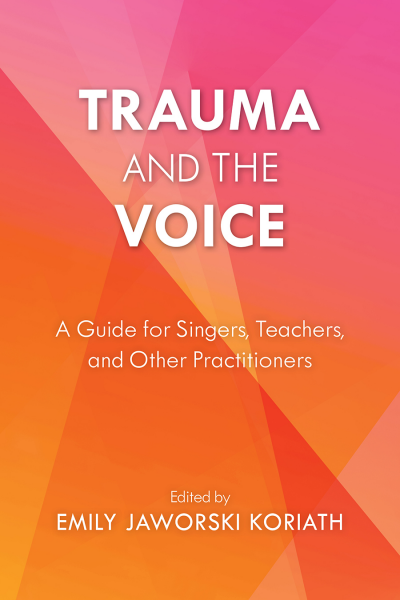
Trauma and the Voice
A Guide for Singers, Teachers, and Other Practitioners- Editors:
- Publisher:
- 2023
Keywords
Search publication
Bibliographic data
- Copyright Year
- 2023
- ISBN-Print
- 978-1-5381-7945-1
- ISBN-Online
- 978-1-5381-7947-5
- Publisher
- Rowman & Littlefield, Lanham
- Language
- English
- Pages
- 225
- Product Type
- Edited Book
Table of contents
ChapterPages
- Contents No access
- Acknowledgments No access
- Introduction No access
- Trauma and the Voice Teacher No access
- Of Special Note to Performers: The Nervous System Onstage No access
- What Am I Supposed to Do? No access
- Navigational Thoughts No access
- Reading Guide No access
- The Truth in the Numbers No access
- The Nervous System No access
- Common Behavioral Symptoms of Trauma No access
- Trauma and the Brain No access
- What’s Going On in There? The Brain’s Response to Traumatic Stimuli No access
- How Does Healing Occur? No access
- Stephen Porges’s Polyvagal Theory Explained No access
- Voice and Communication from a Polyvagal Perspective No access
- The Impact of Trauma No access
- A Case Study No access
- Applications of the Polyvagal Theory in Practice No access
- The Impact of Dysregulation on Voice and Other Complaints No access
- Voice and Trauma No access
- Body-Oriented Approach No access
- Re-Regulating the Autonomic Nervous System No access
- A Case Study to Illustrate the Effect of SSP No access
- The Role of the Clinician No access
- Attachment and Communication No access
- Avoidant Attachment No access
- Anxious Attachment No access
- Disorganized Attachment No access
- Trauma and Functional Voice Disorders No access
- Empirical Data on Trauma History and Non-Disordered Voices No access
- Empirical Data on Diagnostics Criteria for Post-Traumatic Stress Disorder and Speech / Voice Indicators Utilizing Computational Models No access
- Case Studies in Vocal Psychotherapy No access
- Additional Related Methods No access
- How Does This Inform Voice Teaching? No access
- What Is Trauma? No access
- Becca’s Story No access
- Trauma-Informed Practice No access
- What Does “Trauma-Informed” Mean? No access
- Singing in Co-Harmony No access
- Embodying A Supportive Presence No access
- Transference and Countertransference No access
- Joint Statement from NATS and VASTA No access
- Survey of Teachers No access
- Symposium at the National Center for Voice and Speech No access
- Professional Ethics No access
- Template for Student Disclosure No access
- Professional Ethics and the Principles of Trauma Informed Practice No access
- 1. Safety No access
- 2. Trustworthiness and Transparency No access
- Create a Culture of Exploration and Discovery No access
- 3. Peer Support No access
- 4. Collaboration and Mutuality No access
- The Role of the Teacher in Emotional Skill Building No access
- 5. Empowerment, Voice, and Choice No access
- 6. Humility and Responsiveness to Cultural, Historical, and Gender Issues No access
- Things We Can Ethically Do No access
- Exploring Meta-Therapy (aka the “It” Factor) No access
- Perfectionism No access
- Shame No access
- Mindset No access
- Mindset at School No access
- Feedback Skills No access
- Paths to Trauma in the Studio No access
- Race andVoice No access
- Teachers and Stress No access
- Signs You May Be Operating beyond Capacity No access
- Sixteen Signs of Trauma Exposure Response No access
- Just Don’t Say “Self-Care” No access
- Clear It Out No access
- Creating a Trauma-Informed Culture No access
- Secure Attachment Skills No access
- Talk to Them No access
- Listen No access
- Attend to Ruptures No access
- If the Teacher Has Avoidant Attachment No access
- If the Teacher Has Ambivalent Attachment No access
- Two Existing Musical Frameworks: Social Emotional Learning and Trauma-Informed Choral Pedagogy No access
- Social Emotional Learning No access
- Trauma-Informed Choral Pedagogy No access
- Tools for Working with Attachment Adaptations No access
- Teaching Self-Compassion No access
- Self-Compassion in Action No access
- Consent in the Voice Studio by Lauren A. Cook No access
- Part One: What Is a Safe Space? Best Practices for Inclusivity and Consent No access
- Part Two: Our Bodies, Our Voices: Body Diversity as an Element of Inclusivity No access
- Opening Practice No access
- What Is “Dignity”? No access
- Voicework Practice No access
- When Dignity Is Denied No access
- Voicework Practice No access
- Honoring Difference No access
- Celebrating Choices No access
- Yes, No, Maybe Practice No access
- Centering Both/And No access
- Non-Dual Practice No access
- Re-Sounding Joy No access
- A Final Practice: Holding both Dignity and Humility No access
- Conclusion: Trauma Awareness as a Social Justice Practice No access Pages 201 - 204Authors:
- Bibliography No access Pages 205 - 206
- Index No access Pages 207 - 222
- About the Editor and Contributors No access Pages 223 - 225