, to see if you have full access to this publication.
Monograph No access
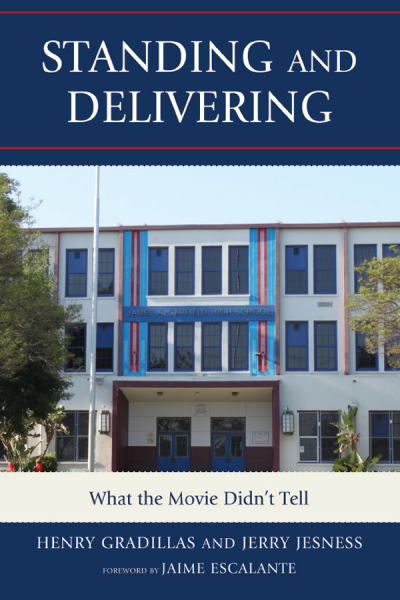
Standing and Delivering
What the Movie Didn't Tell
Authors:
|
Publisher:
2010
Summary
We often hear about the need to make demands on all students, especially those of color, of different cultural backgrounds, and from low income families. A lot of educators talk the talk, but only a few have actually walked the walk. One of the few American schools that actually made substantial strides in improving education for low-income students was Garfield High school in the 1980s. The success of Jaime Escalante, Garfield's calculus teacher, was depicted in the 1987 film Stand and Deliver. This film is often shown in education classes and teacher inservices. Unfortunately, Hollywood played rather freely with the facts and created a film that is a poor guide for teachers and administrators who want to recreate Escalante's experience. The reality, however, is even more wonderful than the film, and, unlike the Hollywood fantasy, is replicable. When coauthor Jerry Jesness interviewed Jaime Escalante about the secret of his success, the first four words Escalante spoke were, 'Our principal, Henry Gradillas_ .' In this book, Dr. Gradillas shares both his upbeat philosophy of education and the practical school management techniques that helped translate that philosophy into success for thousands of students over three decades. The book focuses on three areas that are key to the operation of an effective school: School climate, instruction, and curriculum. It includes many references to the Garfield experience, as well as to other schools where Gradillas was at the helm.
Search publication
Bibliographic data
Edition
1/2010
Copyright Year
2010
ISBN-Print
978-1-60709-942-0
ISBN-Online
978-1-60709-944-4
Publisher
Rowman & Littlefield, Lanham
Language
English
Pages
121
Product Type
Monograph
Table of contents
ChapterPages
Table of Contents No access
Foreword No access
Preface No access
Acknowledgments No access
Chapter 1: Who is Responsible for Making Schools Effective? No access Pages 1 - 4
Chapter 2: The Power of High Expectations No access Pages 5 - 12