, to see if you have full access to this publication.
Monograph No access
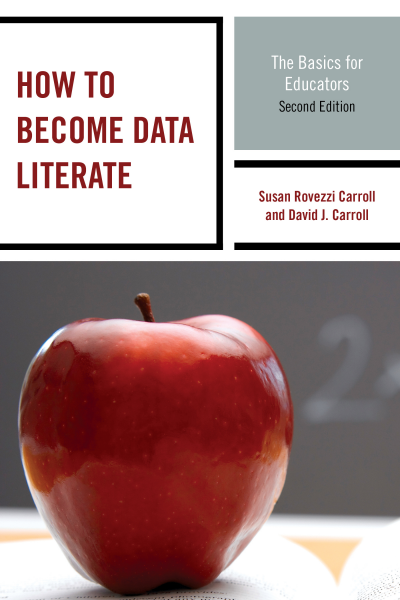
How to Become Data Literate
The Basics for Educators
Authors:
|
Publisher:
2015
Summary
In this follow up to Statistics Made Simple for School Leaders Carroll and Carroll have provided an updated, easy to comprehend, manual for practitioners. Now more than ever, educators are being held accountable by taxpayers, students, parents, government officials and the business community for supportable documentation of educational results. Data management has become everyone’s job and everyone’s concern. But the regression of data has exposed a raw nerve. The lack of comfort that many educators have in working with data poses a great challenge as school districts make the transition from a data rich to an information rich environment. How to Become Data Literate is the solution. Educators need the ability to formulate and answer questions using data as part of evidence-based thinking, selecting and using appropriate data tools, interpreting information from data, evaluating evidence-based differences, using data to solve real problems and communicating solutions. This book is intended to be a user-friendly, educator’s primer. It will leave the reader with the confident attitude that “I can do this." In the long run, it is intended to underscore the magnificence of data. Decisions based on excellent data produce meaningful action strategies that benefit students, parents, staff, and the community at large.
Keywords
Search publication
Bibliographic data
Copyright Year
2015
ISBN-Print
978-1-4758-1332-6
ISBN-Online
978-1-4758-1333-3
Publisher
Rowman & Littlefield, Lanham
Language
English
Pages
122
Product Type
Monograph
Table of contents
ChapterPages
Contents No access
Preface No access
Introduction No access
Chapter 1: Speaking the Language Correctly No access Pages 1 - 13
Chapter 2: Creating a Snapshot of Data with a Picture No access Pages 14 - 29
Chapter 3: Presenting a Mountain of Data with One Number No access Pages 30 - 38
Chapter 4: Understanding Why the Range in Your Data Is Important No access Pages 39 - 53
Chapter 5: Drawing a Sample to Represent the Whole Group No access Pages 54 - 62
Chapter 6: Putting Your Ideas and Assumptions to the Test No access Pages 63 - 71
Chapter 7: t-Tests: Examining Differences between Two Groups No access Pages 72 - 84
Chapter 8: ANOVA: What if There Are More Than Two Groups? No access Pages 85 - 94
Chapter 9: Chi-Square Analyses: Examining Distributions for Differences No access Pages 95 - 103