, to see if you have full access to this publication.
Monograph No access
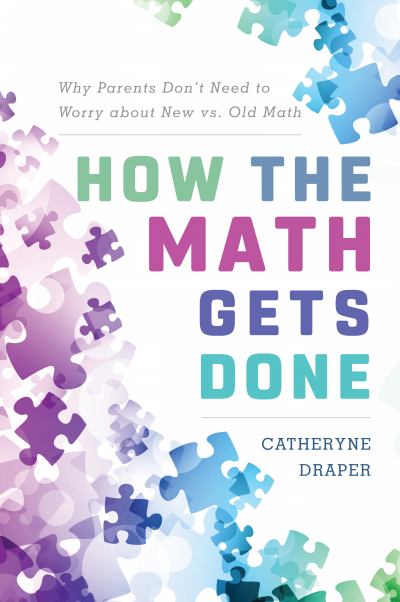
How the Math Gets Done
Why Parents Don't Need to Worry about New vs. Old Math
Authors:
Publisher:
2017
Summary
How the Math Gets Done: Why Parents Don't Need to Worry About New vs. Old Math provides a roadmap to understanding what the symbols for math operations (add, subtract, multiply, and divide) really mean, what the clues are to interpret these symbols, and a kind of short story of how they evolved over time. to decipher the enigmatic squiggles of those verbs called operations.
How the Math Gets Done: Why Parents Don't Need to Worry About New vs. Old Math
compares the old and the new methods for math procedures from a “Big Idea” perspective by organizing the information in four sections: Definition, Organization, Relationships and Patterns, and Connections. Each section contains three chapters that clarify the issues related to each “Big Idea” section. The Conclusion offers parents even more hints and guidelines to help their child through this “math country” of procedures for calculating in math.
Search publication
Bibliographic data
Edition
1/2017
Copyright Year
2017
ISBN-Print
978-1-4758-3422-2
ISBN-Online
978-1-4758-3424-6
Publisher
Rowman & Littlefield, Lanham
Language
English
Pages
140
Product Type
Monograph
Table of contents
ChapterPages
Contents No access
Foreword No access
Preface No access
Introduction No access
Chapter One. Math According to Jen, Bobby, and Others No access
Chapter Two. Math Grammar of Nouns, Verbs, and Stories No access
Chapter Three. The Choice between Two R’s: Rote Memorization or Reasoning No access
Chapter Four. In Search of Like Terms: Classification Revisited No access
Chapter Five. Artful Assembly of Operations No access
Chapter Six. Same Math, Same Meaning, Different Organization: New vs. Old No access
Chapter Seven. “Seeing” Math Patterns with Viewfinders No access
Chapter Eight. Spelunking for Patterns with More Viewfinders No access
Chapter Nine. Functions, Predictability, and Balance No access
Chapter Ten. A Multiplication Area Image for the Ages No access
Chapter Eleven. Ratios, Proportions, and Rate of Change No access
Chapter Twelve. Algebraic Thinking No access
Conclusion. What Parents Can Do No access Pages 127 - 130
Glossary No access Pages 131 - 134
References No access Pages 135 - 138
About the Author No access Pages 139 - 140
Similar publications
from the topics "Bildung allgemein"
Edited Book No access
Amina Kielblock, Stephan Kielblock, Christoph Bülau, Anna- Maria Seemann