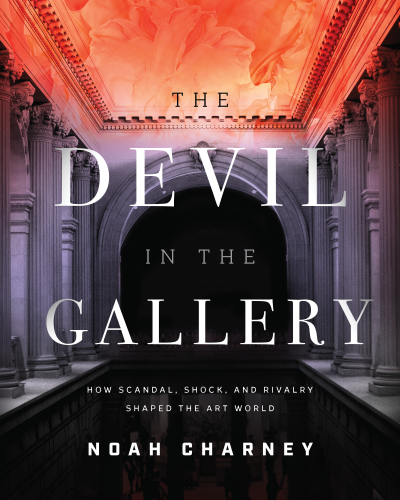
The Devil in the Gallery
How Scandal, Shock, and Rivalry Shaped the Art World- Autor:innen:
- Verlag:
- 2021
Zusammenfassung
"It’s an in-depth look at varied time periods and artists, which readers interested in gossip, drama, or art history will enjoy." Library Journal, Starred Review
Scandal, shock and rivalry all have negative connotations, don’t they? They can be catastrophic to businesses and individual careers. A whiff of scandal can turn a politician into a smoking ruin.
But these potentially disastrous “negatives” can and have spurred the world of fine art to new heights. A look at the history of art tells us that rivalries have, in fact, not only benefited the course of art, from ancient times to the present, but have also helped shape our narrative of art, lending it a sense of drama that it might otherwise lack, and therefore drawing the interest of a public who might not be drawn to the objects alone. There would be no Sistine Chapel by Michelangelo had rival Raphael not tricked the pope into assigning him the commission, certain that Michelangelo, who had never before worked with frescoes, would botch the job and become a laughing stock.
Scandal and shock have proven to be powerful weapons when harnessed and wielded willfully and well. That scandal is good for exposure has been so obviously the case that many artists have courted it intentionally, which we will define as shock: intentionally overturning expectations of the majority in a way that traditionalist find dismaying or upsetting, but which a certain minority avant-garde find exciting. From Damien Hirst presenting the public with a shark embalmed in formaldehyde and entombed in a glass case to Marcel Duchamp trying to convince the art community that a urinal is a great sculpture shock has been a key promotional tool.
The Devil in the Gallery is a guided tour of the history of art through it scandals, rivalries, and shocking acts, each of which resulted in a positive step forward for art in general and, in most cases, for the careers of the artists in question. In addition to telling dozens of stories, lavishly illustrated in full color, of such dramatic moments and arguing how they not only affected the history of art but affected it for the better, we will also examine the proactive role of the recipients of these intentionally dramatic actions: The art historians, the critics and even you, the general public.
The Devil likes to lurk in dark corners of the art world, morphing into many forms.
Let us shed light upon him.
Schlagworte
Publikation durchsuchen
Bibliographische Angaben
- Copyrightjahr
- 2021
- ISBN-Print
- 978-1-5381-3864-9
- ISBN-Online
- 978-1-5381-3865-6
- Verlag
- Rowman & Littlefield, Lanham
- Sprache
- Englisch
- Seiten
- 184
- Produkttyp
- Monographie
Inhaltsverzeichnis
- Contents Kein Zugriff
- List of Figures Kein Zugriff
- Foreword Kein Zugriff
- Preface Kein Zugriff
- Acknowledgments Kein Zugriff
- Introduction Kein Zugriff Seiten 1 - 12
- Guernica and the Monumentalizing of Scandal Kein Zugriff
- Dix and the Legacy of a Victim of Scandal Kein Zugriff
- Greuze, the Académie, and the Hierarchy of Genres Kein Zugriff
- Courbet and the Rival Salons Kein Zugriff
- Whistler and the Weight of Rejection Kein Zugriff
- Manet and the Prostitutes Kein Zugriff
- Koons, Leaks, and Misunderstandings Kein Zugriff
- Malevich and Attention Seeking Kein Zugriff
- Bronzino and Shifts in Morality and Politics Kein Zugriff
- “Bad” Artists and the Fame of Scandal Kein Zugriff
- Aristotle and the Art Split Kein Zugriff
- Cattelan, Ai Weiwei, and Art as Prison Break Kein Zugriff
- Schlegl and Burning for Attention Kein Zugriff
- ISIS and the Shock of the Act against the Art Kein Zugriff
- Ofili and the Shock of the Weird Kein Zugriff
- Orozco and the Memento Mori Kein Zugriff
- Abramović and Shock through Pain Kein Zugriff
- Bernini and the Shock of the Body Kein Zugriff
- Burden and Shocks That Bit Back Kein Zugriff
- Shock as a Means to an End, Not an End unto Itself Kein Zugriff
- Vasari and Competition for the Greater Good Kein Zugriff
- Pliny and the Artistic Duel Kein Zugriff
- Titian and Renaissance Rivalries Kein Zugriff
- Borromini and Rivals after the Age of Vasari Kein Zugriff
- Velazquez and the Ut Pictura Poesis Debate Kein Zugriff
- Hirst and Institutional Battles Kein Zugriff
- Lysippos and Acquisition Angst Kein Zugriff
- Ai Weiwei and Patrons against Artists Kein Zugriff
- The Biennale and Modern Love-Hate Relationships Kein Zugriff
- Banksy and Rivalry in Economic Theory Kein Zugriff
- Ulay and the Frenemies Kein Zugriff
- Conclusion Kein Zugriff Seiten 151 - 164
- Notes Kein Zugriff Seiten 165 - 176
- Selected Bibliography Kein Zugriff Seiten 177 - 178
- Index Kein Zugriff Seiten 179 - 182
- About the Author Kein Zugriff Seiten 183 - 184