, um zu prüfen, ob Sie einen Vollzugriff auf diese Publikation haben.
Monographie Kein Zugriff
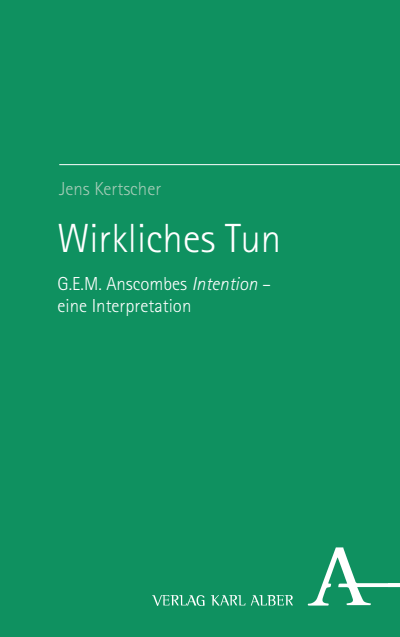
Wirkliches Tun
G.E.M. Anscombes Intention – eine Interpretation- Autor:innen:
- Verlag:
- 2023
Zusammenfassung
Elizabeth Anscombes 1957 erschienene Monographie Intention (Absicht) gilt als Klassiker der der Handlungstheorie des 20. Jahrhunderts. Das vorliegende Buch knüpft an das erneut wachsende Interesse an Anscombes Philosophie an und bietet erstmals in deutscher Sprache eine durchgängige Werkinterpretation von „Intention“. Anscombes Buch wird in den Kontext ihres Werks gestellt und vor dem Hintergrund ihrer Anknüpfung an die aristotelisch-thomistische Tradition der Handlungsreflexion sowie an die Spätphilosophie Wittgensteins diskutiert. Dabei werden Fehldeutungen korrigiert, die die Rezeption von Anscombes Handlungstheorie nach wie vor erschweren.
Schlagworte
Publikation durchsuchen
Bibliographische Angaben
- Copyrightjahr
- 2023
- ISBN-Print
- 978-3-495-49258-1
- ISBN-Online
- 978-3-495-99621-8
- Verlag
- Karl Alber, Baden-Baden
- Sprache
- Deutsch
- Seiten
- 297
- Produkttyp
- Monographie
Inhaltsverzeichnis
KapitelSeiten
- Titelei/Inhaltsverzeichnis Kein Zugriff Seiten 1 - 8
- 1. Vorbemerkung und Danksagung Kein Zugriff Seiten 9 - 12
- 2.1 Einleitung Kein Zugriff
- 2.2 Leben und Werke Kein Zugriff
- 2.3 Moral Kein Zugriff
- 2.4 Handeln Kein Zugriff
- 2.5 Methode Kein Zugriff
- 3.1 Einleitung Kein Zugriff
- 3.2 Das Problem: Drei paradigmatische Verwendungsweisen für einen Begriff und die Frage nach seiner Einheit Kein Zugriff
- 3.3 Formunterschiede: Vorhersagen, Absichtsäußerungen und Befehle Kein Zugriff
- 4.1 Einleitung Kein Zugriff
- 4.2 Wonach man fragt, wenn man nach der Warum-Frage fragt Kein Zugriff
- 4.3 Handlungen und ihre Beschreibungen Kein Zugriff
- 4.4 Abgrenzungsfragen – Bewegungen, Handlungen, willentlich, unwillentlich, absichtlich Kein Zugriff
- 4.5. Übergänge: Von der isolierten Handlung zur Einheit des Begriffs Absicht Kein Zugriff
- 5.1 Einleitung Kein Zugriff
- 5.2 Zwei Erklärungsschemen: Um zu und indem Kein Zugriff
- 5.3 Einheit und Identität einer Handlung: Was? Warum? Wie? Kein Zugriff
- 6.1 Einleitung Kein Zugriff
- 6.2 Praktisches Wissen I: Das Problem Kein Zugriff
- 6.3 Der praktische Syllogismus Kein Zugriff
- 6.4 Praktisches Wissen II: causa rerum intellectarum (§§ 45–48) Kein Zugriff
- 7.1 Einleitung Kein Zugriff
- 7.2. Beabsichtigen und Wollen Kein Zugriff
- 7.3 Vorhersagen und zukunftsbezogene Absichten Kein Zugriff
- 8.1 Zitierweise Kein Zugriff
- 8.2 Siglen Kein Zugriff
- 8.3.1. Werke von Elizabeth Anscombe Kein Zugriff
- 8.3.2 Werke zu Elizabeth Anscombe Kein Zugriff
- 8.3.3 Sonstige zitierte Literatur Kein Zugriff
Literaturverzeichnis (226 Einträge)
Es wurden keine Treffer gefunden. Versuchen Sie einen anderen Begriff.
- Werke von Elizabeth Anscombe Google Scholar öffnen DOI: 10.5771/9783495996218
- Bücher Google Scholar öffnen DOI: 10.5771/9783495996218
- 1957. Intention. Oxford: Blackwell [Nachdruck 2000]. Google Scholar öffnen DOI: 10.5771/9783495996218
- 1959. An Introduction to Wittgenstein’s Tractatus. London: Hutchinson University Library. Google Scholar öffnen DOI: 10.5771/9783495996218
- 1963. (mit Geach, Peter T.). Three Philosophers. Oxford: Blackwell. Google Scholar öffnen DOI: 10.5771/9783495996218
- 1986. Absicht. Übers. u. hg. v. Connolly, John M./Keutner, T., Freiburg i.B.: Alber. Google Scholar öffnen DOI: 10.5771/9783495996218
- 2011. Absicht. Übers. v. Schulte, Joachim, Berlin: Suhrkamp. Google Scholar öffnen DOI: 10.5771/9783495996218
- Aufsatzsammlungen Google Scholar öffnen DOI: 10.5771/9783495996218
- 1981a. From Parmenides to Wittgenstein. The Collected Philosophical Papers of G.E.M. Anscombe. Bd. 1, Oxford: Blackwell. Google Scholar öffnen DOI: 10.5771/9783495996218
- 1981b. Metaphysics and the Philosophy of Mind. The Collected Philosophical Papers of G.E.M. Anscombe. Bd. 2, Oxford: Blackwell. Google Scholar öffnen DOI: 10.5771/9783495996218
- 1981c. Ethics, Religion and Politics. The Collected Philosophical Papers of G.E.M. Anscombe. Bd. 3, Oxford: Blackwell. Google Scholar öffnen DOI: 10.5771/9783495996218
- 2005. Human life, action and ethics. Essays by G.E.M. Anscombe. Edited by Mary Geach and Luke Gormally, Exeter: Imprint Acad. Google Scholar öffnen DOI: 10.5771/9783495996218
- 2008. Faith in a Hard Ground. Essays on Religion, Philosophy and Ethics. Essays by G.E.M. Anscombe. Edited by Mary Geach and Luke Gormally, Exeter: Imprint Acad. Google Scholar öffnen DOI: 10.5771/9783495996218
- 2011. From Plato to Wittgenstein. Essays by G.E.M. Anscombe. Edited by Mary Geach and Luke Gormally, Exeter: Imprint Acad. Google Scholar öffnen DOI: 10.5771/9783495996218
- 2015. Logic, Truth and Meaning. Writingd by G.E.M. Anscombe. Edited by Mary Geach and Luke Gormally, Exeter: Imprint Acad. Google Scholar öffnen DOI: 10.5771/9783495996218
- 2014. Aufsätze. Übers. und hg. v. Hlobil, U./Nieswandt, K., Berlin: Suhrkamp.break-after Google Scholar öffnen DOI: 10.5771/9783495996218
- Zitierte Aufsätze Google Scholar öffnen DOI: 10.5771/9783495996218
- 1939/1981c. The Justice of the Present War Examined. In Ethics, Religion and Politics. The Collected Philosophical Papers of G.E.M. Anscombe. Bd. 3, Oxford: Blackwell, 72–81. Google Scholar öffnen DOI: 10.5771/9783495996218
- 1957/1981c. Mr Truman’s Degree. In Ethics, Religion and Politics. The Collected Philosophical Papers of G.E.M. Anscombe. Bd. 3, Oxford: Blackwell, 62–71. Google Scholar öffnen DOI: 10.5771/9783495996218
- 1958a/2014. Die Moralphilosophie der Moderne. In Aufsätze. Übers. und hg. v. Hlobil, U./Nieswandt, K., Berlin: Suhrkamp, 142–172. Google Scholar öffnen DOI: 10.5771/9783495996218
- 1958b/2014. Nackte Tatsachen. In Aufsätze. Übers. und hg. v. Hlobil, U./Nieswandt, K., Berlin: Suhrkamp, 9–14. Google Scholar öffnen DOI: 10.5771/9783495996218
- 1962/1981b. On Sensations of Positions. In Metaphysics and the Philosophy of Mind. The Collected Philosophical Papers of G.E.M. Anscombe. Bd. 2, Oxford: Blackwell, 71–74. Google Scholar öffnen DOI: 10.5771/9783495996218
- 1965a/2014. Die Intentionalität der Wahrnehmung: Ein grammatischer Aspekt. In Aufsätze. Übers. und hg. v. Hlobil, U./Nieswandt, K., Berlin: Suhrkamp, 230–260. Google Scholar öffnen DOI: 10.5771/9783495996218
- 1965b/2014. Denken und Handeln bei Aristoteles: Was ist ›praktische Wahrheit‹? In Aufsätze. Übers. und hg. v. Hlobil, U./Nieswandt, K., Berlin: Suhrkamp, 293–315. Google Scholar öffnen DOI: 10.5771/9783495996218
- 1971/2014. Kausalität und Determination. In Aufsätze. Übers. und hg. v. Hlobil, U./Nieswandt, K., Berlin: Suhrkamp, 173–199. Google Scholar öffnen DOI: 10.5771/9783495996218
- 1974. Comment (to Roderick Chisholm). In Körner, Stephan (ed.): Practical Reason. New Haven: Yale University Press, 17–21. Google Scholar öffnen DOI: 10.5771/9783495996218
- 1974/2014. Die erste Person. In Aufsätze. Übers. und hg. v. Hlobil, U./Nieswandt, K., Berlin: Suhrkamp, 200–229. Google Scholar öffnen DOI: 10.5771/9783495996218
- 1978/2014. Regeln, Rechte und Versprechen. In Aufsätze. Übers. und hg. v. Hlobil, U./Nieswandt, K., Berlin: Suhrkamp, 82–93. Google Scholar öffnen DOI: 10.5771/9783495996218
- 1979/1981b. Under a Description. In Metaphysics and the Philosophy of Mind. The Collected Philosophical Papers of G.E.M. Anscombe. Bd. 2, Oxford: Blackwell, 208–219. Google Scholar öffnen DOI: 10.5771/9783495996218
- 1982/2005. Action, Intention and ›Double Effect‹. In Human life, action and ethics. Essays by G.E.M. Anscombe. Edited by Geach, Mary, Exeter: Imprint Acad., 207–226. Google Scholar öffnen DOI: 10.5771/9783495996218
- 1983/2005. The Causation of Action. In Human life, action and ethics. Essays by G.E.M. Anscombe. Edited by Geach, Mary, Exeter: Imprint Acad., 89–108. Google Scholar öffnen DOI: 10.5771/9783495996218
- 1989/2014. Praktisches Schlussfolgern. In Aufsätze. Übers. und hg. v. Hlobil, U./Nieswandt, K., Berlin: Suhrkamp, 15–60. Google Scholar öffnen DOI: 10.5771/9783495996218
- 1993/2005. Practical Truth. In Human life, action and ethics. Essays by G.E.M. Anscombe. Edited by Geach, Mary, Exeter: Imprint Acad., 149–158.break-after Google Scholar öffnen DOI: 10.5771/9783495996218
- Werke zu Elizabeth Anscombe Google Scholar öffnen DOI: 10.5771/9783495996218
- Monographien zu Intention und Überblicksdarstellungen Google Scholar öffnen DOI: 10.5771/9783495996218
- Aucouturier, Valérie (2012). Elizabeth Anscombe. L’Esprit en Pratique. Paris: CNRS Editions. Google Scholar öffnen DOI: 10.5771/9783495996218
- Bayne, Stephen R. (2010). Elizabeth Anscombe’s Intention. Breinigsville: PA. Google Scholar öffnen DOI: 10.5771/9783495996218
- Driver, Julia (2018). »Gertrude Elizabeth Margaret Anscombe«, The Stanford Encyclopedia of Philosophy (Spring 2018 Edition), Edward N. Zalta (ed.), URL = <https://plato.stanford.edu/archives/spr2018/entries/anscombe/>. Google Scholar öffnen DOI: 10.5771/9783495996218
- Grimi, Elisa (2018). G.E.M. Anscombe: guida alla lettura di Intention. Rom: Carocci editore. Google Scholar öffnen DOI: 10.5771/9783495996218
- Müller, Anselm W. (2001). G.E.M. Anscombe (1919–2001). In Martinich, A. P./Sosa, D. (eds.): A Companion to Analytical Philosophy. Oxford: Blackwell Publishing, 315–325. Google Scholar öffnen DOI: 10.5771/9783495996218
- Müller, Anselm W. (2014). G.E.M. Anscombe – Entdeckung einer philosophischen Entdeckerin. In Anscombe, G.E.M.: Aufsätze. Übers. und hg. v. Hlobil, U./Nieswandt, K., Berlin: Suhrkamp, 359–368. Google Scholar öffnen DOI: 10.5771/9783495996218
- Richter, Duncan (2011). Anscombe’s Moral Philosophy. Lanham (MD): Lexington Books. Google Scholar öffnen DOI: 10.5771/9783495996218
- Schwenkler, John (2019). Anscombe’s Intention: A Guide. New York: Oxford University Press. Google Scholar öffnen DOI: 10.5771/9783495996218
- Teichmann, Roger (2011). The Philosophy of Elizabeth Anscombe, Oxford/New York: Oxford University Press. Google Scholar öffnen DOI: 10.5771/9783495996218
- Wiseman, Rachael (2016a). Routledge Philosophy Guidebook to Anscombe’s Intention. London/New York: Routledge, Taylor & Francis Group. Google Scholar öffnen DOI: 10.5771/9783495996218
- Biographisches Google Scholar öffnen DOI: 10.5771/9783495996218
- Haldane, John (2001). In Memoriam: G.E.M. Anscombe (1919–2001). In the Review of Metaphysics 53 (4), 1019–1021. Google Scholar öffnen DOI: 10.5771/9783495996218
- Haldane, John (2019a). Elizabeth Anscombe: Life and Work. In Haldane, John (ed.). The Life and Philosophy of Elizabeth Anscombe. Exceter: Imprint Academic, 1–11. Google Scholar öffnen DOI: 10.5771/9783495996218
- Kenny, Anthony (2016). Elizabeth Anscombe at Oxford. In American Catholic Philosophical Quarterly 90 (2), 181–189. Google Scholar öffnen DOI: 10.5771/9783495996218
- Lipscomb, Benjamin J.B. (2022). The Women Are Up To Something. How Elizabeth Anscombe, Philippa Foot, Mary Midgley, and Iris Murdoch Revolutionized Ethics. Oxford: Oxford University Press. Google Scholar öffnen DOI: 10.5771/9783495996218
- Mac Cumhaill, C./Wiseman, R. (2022). Methaphysical Animals. How Four Women Brought Philosophy Back To Life. Chatto & Windus: London. Google Scholar öffnen DOI: 10.5771/9783495996218
- Teichman, Jenny (2001). Gertrude Elizabeth Margaret Anscombe, 1919–2001. In Proceedings of the British Academy 115 (1), 31–50. Google Scholar öffnen DOI: 10.5771/9783495996218
- Vogler, Candace (2013). Anscombe, G.E.M. In LaFollette, Hugh (ed.): The International Encyclopedia of Ethics. Oxford: Blackwell Publishing, 303–309. Google Scholar öffnen DOI: 10.5771/9783495996218
- Sammelbändenoindent Google Scholar öffnen DOI: 10.5771/9783495996218
- Diamond, C./Teichman, J. (eds.) (1979). Intention and Intentionality. Essays in Honour of G.E.M. Anscombe. Ithaca [u.a.]: Cornell University Press. Google Scholar öffnen DOI: 10.5771/9783495996218
- Ford, A./Hornsby, J./Stoutland, F. (eds.) (2011). Essays on Anscombe’s Intention. Cambridge: Harvard University Press. Google Scholar öffnen DOI: 10.5771/9783495996218
- Gormally, L./Jones, D. A./Teichmann, R. (eds.) (2016). The Moral Philosophy of Elizabeth Anscombe. Exceter: Imprint Academic. Google Scholar öffnen DOI: 10.5771/9783495996218
- Haldane, John (ed.) (2019b). The Life and Philosophy of Elizabeth Anscombe. Exceter: Imprint Academic. Google Scholar öffnen DOI: 10.5771/9783495996218
- Sonstige zitierte Literatur Google Scholar öffnen DOI: 10.5771/9783495996218
- Alvarez, Maria (2017). Wittgenstein on Action and the Will. In Glock, H.-J./Hyman, J. (eds.): A Companion to Wittgenstein. Oxford: Blackwell Publishing, 491–501. Google Scholar öffnen DOI: 10.5771/9783495996218
- Annas, Julia (1976). Davidson and Anscombe on the ›same action‹. In Mind 85 (338), 251–257. Google Scholar öffnen DOI: 10.5771/9783495996218
- Austin, John L. (1961). A Plea for Excuses. In Urmson, J. O./Warnock, G. J. (eds.): Philosophical Papers. Oxford/New York: Oxford University Press, 123–152. Google Scholar öffnen DOI: 10.5771/9783495996218
- Austin, John L. (1979). Zur Theorie der Sprechakte (How to do Things with words). Übers. v. Savigny, Eike von, Stuttgart: Reclam. Google Scholar öffnen DOI: 10.5771/9783495996218
- Ayer, Alfred J (1936/1990). Language, Truth and Logic. London: Penguin. Google Scholar öffnen DOI: 10.5771/9783495996218
- Baker, Gordon P. (2006). Wittgenstein’s Method. Neglected Aspects, Essays on Wittgenstein. Oxford: Blackwell Publishing. Google Scholar öffnen DOI: 10.5771/9783495996218
- Black, Max (1964/2019). Ein Kompendium zu Wittgensteins Tractatus. Übers. u. hg. v. Koller, Jürgen, Wien [u.a.]: Turia + Kant. Google Scholar öffnen DOI: 10.5771/9783495996218
- Börchers, Fabian (2020). Anscombe und ›Knowledge-How‹ – Zum Zusammenhang von Form und Vermögen bei der Bestimmung absichtlichen Handelns. In Allgemeine Zeitschrift für Philosophie 45 (3). Google Scholar öffnen DOI: 10.5771/9783495996218
- Bornemann, E./Risch, E. (1978). Griechische Grammatik. Frankfurt a.M. [u.a.]: Diesterweg. Google Scholar öffnen DOI: 10.5771/9783495996218
- Brandt, Reinhard (2009). Können Tiere denken? Ein Beitrag zur Tierphilosophie. Frankfurt a.M.: Suhrkamp. Google Scholar öffnen DOI: 10.5771/9783495996218
- Bratman, Michael E. (1987). Intentions, Plans and practical Reason. Cambridge, Mass [u.a.]: Harvard Univ. Press. Google Scholar öffnen DOI: 10.5771/9783495996218
- Bratman, Michael E. (1999). Davidson’s Theory of Intention. In Ders.: Faces of Intention. Selected Essays on Intention and Agency. Cambridge: Cambridge University Press, 209–224. Google Scholar öffnen DOI: 10.5771/9783495996218
- Brentano, Franz (1874/1973). Psychologie vom empirischen Standpunkt. Mit Einleitung, Anmerkungen und Register hg. v. Oskar Kraus, erster Band, Hamburg: Meiner 1973. Google Scholar öffnen DOI: 10.5771/9783495996218
- Carnap, Rudolf (1958). Meaning and Necessity. A Study in semantics and modal logic. Chicago [u.a.]: Univ. of Chicago Press. Google Scholar öffnen DOI: 10.5771/9783495996218
- Cavanaugh, Thomas A. (2016). Anscombe, Thomson, and Double Effect. In American Catholic Philosophical Quarterly 90 (2), 263–280. Google Scholar öffnen DOI: 10.5771/9783495996218
- Connolly, J. M./Keutner, T. (1986). Ein Wissen, das kein Licht ist – Absicht und die Autonomie des Praktischen. In Anscombe, G.E.M.: Absicht. Übers. u. hg. v. Connolly, J. M./Keutner, T., Freiburg i.Br.: Alber, IX-LXXII. Google Scholar öffnen DOI: 10.5771/9783495996218
- Corcilius, Klaus (2008a). Praktische Syllogismen bei Aristoteles. In Archiv für Geschichte der Philosophie 90 (3), 247–297. Google Scholar öffnen DOI: 10.5771/9783495996218
- Corcilius, Klaus (2008b). Aristoteles‘ praktische Syllogismen in der zweiten Hälfte des 20. Jahrhunderts. In Philosophiegeschichte und logische Analyse 11, 101–132. Google Scholar öffnen DOI: 10.5771/9783495996218
- Corcilius, Klaus (2018a). Philosophische Einleitung. In Aristoteles: De motu animalium. Über die Bewegung der Lebewesen. Historisch-kritische Edition des griechischen Textes und philologische Einleitung von Oliver Primavesi. Deutsche Übersetzung, philosophische Einleitung und erklärende Anmerkungen von Klaus Corcilius. Griechisch-Deutsch. Hamburg: Meiner, CXLV-CCXL. Google Scholar öffnen DOI: 10.5771/9783495996218
- Corcilius, Klaus (2018b). Anmerkungen. In Aristoteles: De motu animalium. Über die Bewegung der Lebewesen. Historisch-kritische Edition des griechischen Textes und philologische Einleitung von Oliver Primavesi. Deutsche Übersetzung, philosophische Einleitung und erklärende Anmerkungen von Klaus Corcilius. Griechisch-Deutsch. Hamburg: Meiner, 62–179. Google Scholar öffnen DOI: 10.5771/9783495996218
- Crane, Tim (1995). The Mental Causation Debate. In Proceedings of the Aristotelian Society, Supplementary Volumes 69, 211–236. Google Scholar öffnen DOI: 10.5771/9783495996218
- Danto, Arthur C. (1963). What we can do. In Journal of Philosophy 60 (15), 435–445. Google Scholar öffnen DOI: 10.5771/9783495996218
- Danto, Arthur C. (1965). Basic Actions. In American Philosophical Quarterly 2 (2), 141–148. Google Scholar öffnen DOI: 10.5771/9783495996218
- Darwall, S./Gibbard, A./Railton, P. (1992). Toward Fin de Siècle Ethics: Some Trends. In The Philosophical Review 101 (1), 115–189. Google Scholar öffnen DOI: 10.5771/9783495996218
- Davidson, Donald (1963/1990). Handlungen, Gründe und Ursachen. In Ders.: Handlung und Ereignis. Übers. v. Schulte, Joachim, Frankfurt a.M.: Suhrkamp, 19–42. Google Scholar öffnen DOI: 10.5771/9783495996218
- Davidson, Donald (1969/1990). Zur Individuation von Ereignissen. In Ders.: Handlung und Ereignis. Übers. v. Schulte, Joachim, Frankfurt a.M., Suhrkamp, 233–258. Google Scholar öffnen DOI: 10.5771/9783495996218
- Davidson, Donald (1970/1990). Geistige Ereignisse. In Ders.: Handlung und Ereignis. Übers. v. Schulte, Joachim, Frankfurt a.M.: Suhrkamp, 291–316. Google Scholar öffnen DOI: 10.5771/9783495996218
- Davidson, Donald (1971/1990). Handeln. In Ders.: Handlung und Ereignis. Übers. v. Schulte, Joachim, Frankfurt a.M.: Suhrkamp, 73–98. Google Scholar öffnen DOI: 10.5771/9783495996218
- Davidson, Donald (1973/1990). Handlungsfreiheit. In Ders.: Handlung und Ereignis. Übers. v. Schulte, Joachim, Frankfurt a.M.: Suhrkamp, 99–124. Google Scholar öffnen DOI: 10.5771/9783495996218
- Davidson, Donald (1975/1990). Denken und Reden. In Ders.: Wahrheit und Interpretation. Übers. v. Schulte, Joachim, Frankfurt a.M.: Suhrkamp, 224–246. Google Scholar öffnen DOI: 10.5771/9783495996218
- Davidson, Donald (1978/1990). Beabsichtigen. In Ders.: Handlung und Ereignis. Übers. v. Schulte, Joachim, Frankfurt a.M.: Suhrkamp, 125–154. Google Scholar öffnen DOI: 10.5771/9783495996218
- Davidson, Donald (1982/2004). Vernünftige Tiere. In Ders.: Subjektiv, Intersubjektiv, Objektiv. Übers. v. Schulte, Joachim, Frankfurt. a.M.: Suhrkamp, 167–185. Google Scholar öffnen DOI: 10.5771/9783495996218
- Davidson, Donald (1990). Handlung und Ereignis. Übers. v. Schulte, Joachim, Frankfurt a.M.: Suhrkamp. Google Scholar öffnen DOI: 10.5771/9783495996218
- De Libera, Alain (2014). Intention. In Cassin, B. (ed.): Dictionary of Untranslatables. A Philosophical Lexicon. Princeton/Oxford: Princeton University Press, 500–511. Google Scholar öffnen DOI: 10.5771/9783495996218
- Diamond, Cora (1997). Consequentialism in Modern Moral Philosophy. In Oderberg, D. S./Laing, J. A. (eds.): Human Lives. Critical Essays on Consequentialist Bioethics. Basingstoke: Palgrave Macmillan, 13–38. Google Scholar öffnen DOI: 10.5771/9783495996218
- Doyle, James (2019). Theophrastus, Thomas and practical Knowledge in Anscombe’s Intention. (Unveröffentlichtes Typoskript, 48 Seiten). Google Scholar öffnen DOI: 10.5771/9783495996218
- Dummett, Michael (1988). Ursprünge der analytischen Philosophie. Übers. v. Schulte, Joachim, Frankfurt a.M.: Suhrkamp. Google Scholar öffnen DOI: 10.5771/9783495996218
- Ebert, Theodor/Nortmann, Ulrich (2007). Kommentar. In Aristoteles: Analytica Priora. Buch I. Übersetzt und erläutert von Theodor Ebert und Ulrich Nortmann (Aristoteles. Werke in deutscher Übersetzung. Begründet von Ernst Grumach. Hg. v. Hellmut Flashar, Band 3, Teil I. Analytica Priora Buch I), Berlin: Akademie Verlag, 207–906. Google Scholar öffnen DOI: 10.5771/9783495996218
- Engelhardt, Paulus (1976). Intentio. In Ritter, J./Gründer, K. (Hgg.): Historisches Wörterbuch der Philosophie, Band 4: I-K, Darmstadt: Wissenschaftliche Buchgesellschaft, 466–474. Google Scholar öffnen DOI: 10.5771/9783495996218
- Evans, Gareth (1982). The Varieties of Reference. Oxford: Oxford University Press. Google Scholar öffnen DOI: 10.5771/9783495996218
- Foot, Philippa (2004). Die Natur des Guten. Übers. v. Reuter, Michael, Frankfurt a.M.: Suhrkamp. Google Scholar öffnen DOI: 10.5771/9783495996218
- Frankfurt, Harry G. (1978). Das Problem des Handelns. In Horn, C./ Löhrer, G. (Hgg.) (2010): Gründe und Zwecke. Texte zur aktuellen Handlungstheorie. Frankfurt a.M.: Suhrkamp, 70–84. Google Scholar öffnen DOI: 10.5771/9783495996218
- Frege, Gottlob (1892/1986a). Über Sinn und Bedeutung. In Ders.: Funktion, Begriff, Bedeutung. Fünf logische Studien. Hg. v. Günther Patzig, Göttingen (Vandenhoeck & Ruprecht) 6. Aufl. 1986, 40–65. Google Scholar öffnen DOI: 10.5771/9783495996218
- Frege, Gottlob (1914/1980). Frege an Jourdain. In Gabriel, G./Hermes, H. et. al. (Hgg.): Wissenschaftlicher Briefwechsel. Hamburg: Meiner, 110–112. Google Scholar öffnen DOI: 10.5771/9783495996218
- Frege, Gottlob (1918/1986b). Der Gedanke. In Patzig, Günther (Hg.): Logische Untersuchungen. Göttingen: Vandenhoeck & Ruprecht, 30–53. Google Scholar öffnen DOI: 10.5771/9783495996218
- Frey, Christopher/Frey, Jennifer A. (2017). G.E.M. Anscombe on the analogical unity of intention in perception and action. In Analytic Philosophy 58 (3), 202–247. Google Scholar öffnen DOI: 10.5771/9783495996218
- Frey, Jennifer A (2020). Revisiting Modern Moral Philosophy. In A Centenary Celebration: Anscombe, Foot, Midgley, Murdoch. Royal Institute of Philosophy Supplement 87, 61–83. Google Scholar öffnen DOI: 10.5771/9783495996218
- Gabriel, Gottfried (2004). Art. Reflexionsbegriffe. In Mittelstraß, Jürgen (Hg.): Enzyklopädie Philosophie und Wissenschaftstheorie. Band 3. Stuttgart: J.B. Metzler, 527–528. Google Scholar öffnen DOI: 10.5771/9783495996218
- Geach, Mary (2005). Introduction. In Dies. et al. (eds.): Human Life, Action and Ethics: Essays by G.E.M. Anscombe. Upton Pyne: Imprint Academic, XIII-XXI. Google Scholar öffnen DOI: 10.5771/9783495996218
- Geach, Mary (2008). Introduction. In Dies. et al. (eds.): Faith in a Hard Ground. Essays on Religion, Philosophy and Ethics by G.E.M. Anscombe. Upton Pyne: Imprint Academic, XIII-XXVI. Google Scholar öffnen DOI: 10.5771/9783495996218
- Geach, Peter T. (1956). Good and Evil. In Analysis 17 (2), 33–42. Google Scholar öffnen DOI: 10.5771/9783495996218
- Geach, Peter T. (1957/1971). Mental Acts: Their Content and Their Objects. London: Routledge. Google Scholar öffnen DOI: 10.5771/9783495996218
- Geach Peter T. (1991): Vorwort des Herausgebers. In Ludwig Wittgenstein: Vorlesungen über die Philosophie der Psychologie 1946/47. Aufzeichnungen von P.T. Geach, K.J. Shah und A.C. Jackson, hg. v. P.T. Geach. Übersetzt von Joachim Schulte, Frankfurt a.M. 1991, 11–17. Google Scholar öffnen DOI: 10.5771/9783495996218
- Goldman, Alvin I. (1970). Theory of Human Action. Princeton: Princeton University Press. Google Scholar öffnen DOI: 10.5771/9783495996218
- Hampshire, Stuart (1959). Thought and Action. London: Chatto & Windus. Google Scholar öffnen DOI: 10.5771/9783495996218
- Hare, R.M. (1972). Die Sprache der Moral. Übers. v. Morstein, Petra, Frankfurt a.M.: Suhrkamp. Google Scholar öffnen DOI: 10.5771/9783495996218
- Hare, R.M. (1983). Freiheit und Vernunft. Übers. v. Meggle, Georg, Frankfurt a.M.: Suhrkamp. Google Scholar öffnen DOI: 10.5771/9783495996218
- Hare, R.M. (1992). Moralisches Denken: seine Ebenen, seine Methoden, sein Witz. Übers. v. Fehige, C./Meggle, G., Frankfurt a.M.: Suhrkamp. Google Scholar öffnen DOI: 10.5771/9783495996218
- Heinrichs, Bert (2019). George Edward Moore zur Einführung, Hamburg: Junius. Google Scholar öffnen DOI: 10.5771/9783495996218
- Hlobil, U./Nieswandt, K. (2016). On Anscombe’s Philosophical Method. In Klesis: Revue Philosophique 35, 180–198. Google Scholar öffnen DOI: 10.5771/9783495996218
- Horn, C./Löhrer, G. (2010). Einleitung. Die Wiederentdeckung teleologischer Handlungserklärungen. In Dies. (Hgg.): Gründe und Zwecke. Texte zur aktuellen Handlungstheorie. Frankfurt a.M.: Suhrkamp, 7–45. Google Scholar öffnen DOI: 10.5771/9783495996218
- Hornsby, Jennifer (1980). Actions. London: Routledge. Google Scholar öffnen DOI: 10.5771/9783495996218
- Hornsby, Jennifer (2013). Basic Activity. In Aristotelian Society Supplementary Volume 87 (1), 1–18. Google Scholar öffnen DOI: 10.5771/9783495996218
- Horst, David (2012). Absichtliches Handeln. Paderborn: Mentis. Google Scholar öffnen DOI: 10.5771/9783495996218
- Hubig, Christoph (2006). Die Kunst des Möglichen, Band I, Technikphilosophie als Reflexion der Medialität. Bielefeld: Transcript Verlag. Google Scholar öffnen DOI: 10.5771/9783495996218
- Humberstone, I. Lloyd (1992). Direction of Fit. In Mind 101 (401), 59–83. Google Scholar öffnen DOI: 10.5771/9783495996218
- Hursthouse, Rosalind (2000). Intention. In Diamond, C./Teichman, R. (ed.): Logic, Cause and Action. Essays in Honour of Elizabeth Anscombe. Cambridge: Cambridge University Press, 83–105. Google Scholar öffnen DOI: 10.5771/9783495996218
- Husserl, Edmund: Ideen zu einer reinen Phänomenologie und phänomenologischen Philosophie. Erstes Buch. Allgemeine Einführung in die reine Phänomenologie. Nachwort (1930). Text nach Husserliana III/1 und V (Gesammelte Schriften hg. von E. Ströker, Band 5), Hamburg: Meiner 1992. Google Scholar öffnen DOI: 10.5771/9783495996218
- Hyman, John (2011). Wittgenstein on Action and the Will. In Grazer Philosophische Studien 82 (81), 285–311. Google Scholar öffnen DOI: 10.5771/9783495996218
- Hyman, John (2015). Action, Knowledge and Will. Oxford/NewYork: Oxford University Press. Google Scholar öffnen DOI: 10.5771/9783495996218
- James, William (1890/1950). The Principles of Psychology, 2 Volumes in 1. New York, Dover Publications. Google Scholar öffnen DOI: 10.5771/9783495996218
- Keil, Geert (2007). What do Deviant Causal Chains Deviate from? In Lumer, Christoph et al. (eds.): Intentionality, Deliberation and Autonomy. The Action-Theoretic Basis of Practical Philosophy. Burlington: Ashgate, 69–90. Google Scholar öffnen DOI: 10.5771/9783495996218
- Keil, Geert (2015). Handeln und Verursachen. Frankfurt a.M.: Klostermann. Google Scholar öffnen DOI: 10.5771/9783495996218
- Kemmerling, Andreas (2017). Glauben. Essay über einen Begriff. Frankfurt a.M.: Klostermann. Google Scholar öffnen DOI: 10.5771/9783495996218
- Kenny, Anthony (1975). Will, Freedom and Power. New York: Barnes & Noble Books. Google Scholar öffnen DOI: 10.5771/9783495996218
- Kertscher, Jens (2020). Praktisches Wissen: Ein Leitfaden ausgehend von G.E.M. Anscombe. In Allgemeine Zeitschrift für Philosophie 45 (3), 295–316. Google Scholar öffnen DOI: 10.5771/9783495996218
- Kietzmann, Christian (2019). Handeln aus Gründen als praktisches Schließen. Freiburg/Münster: Verlag Karl Alber. Google Scholar öffnen DOI: 10.5771/9783495996218
- Kietzmann, Christian (2020). Praktisches Wissen von misslingenden Handlungen. In Allgemeine Zeitschrift für Philosophie 45 (3), 339–362. Google Scholar öffnen DOI: 10.5771/9783495996218
- Kim, Jaegwon (2003). Philosophy of Mind and Psychology. In Ludwig, Kirk (ed.): Donald Davidson (Contemporary Philosophy in Focus). Cambridge: Cambridge University Press, 113–136. Google Scholar öffnen DOI: 10.5771/9783495996218
- Klagge, J. C./Nordmann, A. (Hg.) (1993). Ludwig Wittgenstein. Philosophical occasions, 1912–1951. Indianapolis: Hackett Publishing Company. Google Scholar öffnen DOI: 10.5771/9783495996218
- Knaup, Marcus (2013). Leib und Seele oder mind and brain? Zu einem Paradigmenwechsel im Menschenbild der Moderne. Freiburg/Münster: Verlag Karl Alber. Google Scholar öffnen DOI: 10.5771/9783495996218
- Kolnai, Aurel (2008). Ethics, Value & Reality. With opening Essays by Bernard Williams, David Wiggins and Graham McAleer. London: Routledge. Google Scholar öffnen DOI: 10.5771/9783495996218
- Künne, Wolfgang (2010). Die Philosophische Logik Gottlob Freges. Ein Kommentar. Frankfurt a.M.: Klostermann. Google Scholar öffnen DOI: 10.5771/9783495996218
- Lanz, Peter (1987). Menschliches Handeln zwischen Kausalität und Rationalität. Frankfurt a.M.: Athenäum. Google Scholar öffnen DOI: 10.5771/9783495996218
- Larmore, Charles (2012). Vernunft und Subjektivität. Frankfurt a.M.: Suhrkamp. Google Scholar öffnen DOI: 10.5771/9783495996218
- Larmore, Charles (2017). Das Selbst in seinem Verhältnis zu sich und zu anderen. Frankfurt a.M.: Klostermann. Google Scholar öffnen DOI: 10.5771/9783495996218
- Lavin, Douglas (2013). Must there be basic action. In Nous 47 (2), 273–301. Google Scholar öffnen DOI: 10.5771/9783495996218
- Löhrer, Guido (2006). Abweichende Kausalketten, abwegige Handlungsverläufe und die Rückkehr teleologischer Handlungserklärungen. In Deutsche Zeitschrift für Philosophie 54 (5), 785–800. Google Scholar öffnen DOI: 10.5771/9783495996218
- Löhrer, Guido (2008). Alltagspsychologische Handlungserklärungen, Kausalität und Normativität. In Internationale Zeitschrift für Philosophie 17 (1), 67–100. Google Scholar öffnen DOI: 10.5771/9783495996218
- Luckner, Andreas (2005). Klugheit, Berlin/New York: De Gruyter. Google Scholar öffnen DOI: 10.5771/9783495996218
- Lübbe, Weyma (2022). Handlungskonsequenzen abwägen vs. Handlungskonsequenzen zurechnen. In Lübbe Weyma / Grosse-Wilde, Thomas (Hg.): Abwägung. Voraussetzungen und Grenzen einer Metapher für rationales Entscheiden. Paderborn: Brill Mentis, 37–54. Google Scholar öffnen DOI: 10.5771/9783495996218
- MacIntyre, Alasdair (1981/2006). Der Verlust der Tugend. Zur moralischen Krise der Gegenwart. Erweiterte Neuausgabe 2006. Frankfurt a.M.: Campus. Google Scholar öffnen DOI: 10.5771/9783495996218
- Marcus, Eric (2012). Rational Causation. Cambridge (MA): Harvard University Press. Google Scholar öffnen DOI: 10.5771/9783495996218
- McDowell, John (1998). Some Issues in Aristotle’s Moral Psychology. In Ders.: Mind, Value, and Reality, Cambridge/Mass.: Harvard University Press, 23–49. Google Scholar öffnen DOI: 10.5771/9783495996218
- McDowell, John (2011). Anscombe on Bodily Self-Knowledge. In Ford, A./Hornsby, J./Stoutland, F. (eds.). Essays on Anscombe’s Intention. Cambridge: Harvard University Press, 128–146. Google Scholar öffnen DOI: 10.5771/9783495996218
- Melden, Abraham I. (1961). Free Action. London: Routledge. Google Scholar öffnen DOI: 10.5771/9783495996218
- Mele, Alfred R. (2003). Philosophy of Action. In Ludwig, Kirk (ed.): Donald Davidson (Contemporary Philosophy in Focus). Cambridge: Cambridge University Press, 64–84. Google Scholar öffnen DOI: 10.5771/9783495996218
- Midgley, Mary (2007). The Owl of Minerva: A Memoir. London: Routledge. Google Scholar öffnen DOI: 10.5771/9783495996218
- Moore, George E. (1903/1970). Principia Ethica. Übers. u. hg. v. Wisser, Burkhard, Stuttgart: Reclam. Google Scholar öffnen DOI: 10.5771/9783495996218
- Moore, George E. (1966). Lectures on Philosophy. London: George Allen & Unwin. Google Scholar öffnen DOI: 10.5771/9783495996218
- Moore, George E. (1993). Moore’s Paradox. In: G.E. Moore: Selected Writings. Edited by Thomas Baldwin. London: Routledge, 207–212. Google Scholar öffnen DOI: 10.5771/9783495996218
- Moran, R./Stone, M. J. (2011). Anscombe on Expression of Intention: An Exegesis. In Ford, A./Hornsby, J./Stoutland, F. (eds.): Essays on Anscombe’s Intention. 33–75. Google Scholar öffnen DOI: 10.5771/9783495996218
- Mothershill, Mary (1962). Anscombe’s account of the practical syllogism. In Philosophical Review 71 (4), 448–461. Google Scholar öffnen DOI: 10.5771/9783495996218
- Müller, Anselm W. (1991a). Rezension zu Gertrude Elizabeth M. Anscombe Absicht (Intention, deutsch). Übers. und hrsg. von John M. Connolly und Thomas Keutner. Freiburg [i.Br.] [u.a.] 1986. In Archiv für Geschichte der Philosophie 73 (1), 116–120. Google Scholar öffnen DOI: 10.5771/9783495996218
- Müller, Anselm W. (1991b). Was heißt »Praktisches Wissen«? Probleme um einen Schlüsselbegriff in Anscombes Handlungstheorie. In Zeitschrift für Philosophische Forschung 45 (4), 545–557. Google Scholar öffnen DOI: 10.5771/9783495996218
- Müller, Anselm W. (2017). Menschliche Vernunft als Natur: Die Ethik G.E.M. Anscombes. In Hähnel, Martin (Hg.): Aristotelischer Naturalismus. Stuttgart: J.B. Metzler, 131–143. Google Scholar öffnen DOI: 10.5771/9783495996218
- Nieswandt, Katharina (2017). Anscombe on the Sources of Normativity. In The Journal of Value Inquiry 51, 141–163. Google Scholar öffnen DOI: 10.5771/9783495996218
- Nieswandt, Katharina (2022). Rezension zu: Mac Cumhaill, C./Wiseman, R. Methaphysical Animals. How Four Women Brought Philosophy Back To Life. In Zeitschrift für Ethik und Moralphilosophie 5, 31–235. Google Scholar öffnen DOI: 10.5771/9783495996218
- O’Shaughnessy, Brian (1980). The Will. A Dual Aspect Theory. Cambridge: Cambridge University Press. Google Scholar öffnen DOI: 10.5771/9783495996218
- Parfit, Derek (2011). On What Matters, Oxford/New York: Oxford University Press. Google Scholar öffnen DOI: 10.5771/9783495996218
- Passmore, J. A./Heath, P. (1955). Symposium: Intentions. In Proceedings of the Aristotelian Society. Supplementary Volumes 29, 131–164. Google Scholar öffnen DOI: 10.5771/9783495996218
- Pouivet, Roger (2014). Après Wittgenstein, Saint Thomas. Paris, Vrin. Google Scholar öffnen DOI: 10.5771/9783495996218
- Prichard, Harold A. (1945/2002). Acting, Willing, Desiring. In Ders.: Moral Writings. Oxford: Oxford University Press, 272–281. Google Scholar öffnen DOI: 10.5771/9783495996218
- Quante, Michael (2020). Philosophische Handlungstheorie. Paderborn: utb. Google Scholar öffnen DOI: 10.5771/9783495996218
- Rapp, C./Brüllmann, P. (2008). The Practical Syllogism. Analyses of an Aristotelian Concept. In Meixner, U./Newen, A. (eds.): Philosophiegeschichte und logische Analyse, Paderborn: Mentis, 93–100. Google Scholar öffnen DOI: 10.5771/9783495996218
- Raz, Joseph (2010). On the Guise of the Good. In Tenenbaum, Sergio (ed.) (2010): Desire, practical Reason, and the Good. Classical and Contemporary Perspectives, Oxford: Oxford University Press, 111–137. Google Scholar öffnen DOI: 10.5771/9783495996218
- Richter, Duncan (2016). The Conception of the Architectonic Good in Anscombe’s Moral Philosophy. Gormally, L./Jones, D. A./Teichmann, R. (eds.): The Moral Philosophy of Elizabeth Anscombe. Exceter: Imprint Academic, 33–50. Google Scholar öffnen DOI: 10.5771/9783495996218
- Robb, D./Heil, J. (2021). Mental Causation. In The Stanford Encyclopedia of Philosophy (Spring 2021 Edition), Edward N. Zalta (ed.) Google Scholar öffnen DOI: 10.5771/9783495996218
- (https://plato.stanford.edu/archives/spr2021/entries/mental-causation/). Google Scholar öffnen DOI: 10.5771/9783495996218
- Ricoeur, Paul (1990): Soi-même comme und autre, Pairs: Éditions du Seuil. Google Scholar öffnen DOI: 10.5771/9783495996218
- Rödl, Sebastian (2010). The Form of the Will. In Tenenbaum, Sergio (ed.) (2010): Desire, practical Reason, and the Good. Classical and Contemporary Perspectives. Oxford: Oxford University Press, 138–160. Google Scholar öffnen DOI: 10.5771/9783495996218
- Rorty, Richard (1967). Introduction. In Rorty, Richard (ed.): The Linguistic Turn. Recent Essays in Philosophical Method. Chicago (IL): University of Chicago Press, 1–9. Google Scholar öffnen DOI: 10.5771/9783495996218
- Russell, Bertrand (1905). On Denoting. In Mind 14 (56), 479–493. Google Scholar öffnen DOI: 10.5771/9783495996218
- Russell, Bertrand (1919/2006). Einführung in die mathematische Philosophie. Hgg. v. Lenhard, J./Otte, M. 2. Aufl., Hamburg: Meiner. Google Scholar öffnen DOI: 10.5771/9783495996218
- Russell, Bertrand (1921/2000). Die Analyse des Geistes. Hg. v. Grelling, Kurt. Hamburg: Meiner. Google Scholar öffnen DOI: 10.5771/9783495996218
- Ryle, Gilbert (1949/1969). Der Begriff des Geistes. Übers. v. Baier, Kurt. Leipzig: Reclam. Google Scholar öffnen DOI: 10.5771/9783495996218
- Ryle, Gilbert (1954). Pleasure. In Proceedings of the Aristotelian Society. Supplementary Volumes 28, 135–146. Google Scholar öffnen DOI: 10.5771/9783495996218
- Sandis, Constantine (2015). One Fell Swoop. Small Red Book Historicism Before and After Davidson. In Journal of the Philosophy of History 9, 372–392. Google Scholar öffnen DOI: 10.5771/9783495996218
- Sandis, Constantine (2016). Anscombe’s Intentions. In Klesis: Revue Philosophique 35, 74–89. Google Scholar öffnen DOI: 10.5771/9783495996218
- Scanlon, Thomas M. (2000). What We Owe to Each Other. Camridge (MA): Harvard University Press. Google Scholar öffnen DOI: 10.5771/9783495996218
- Scanlon, Thomas M. (2008). Moral Dimensions. Permissibility, Meaning, Blame. Cambridge, MA/London: Belknap Press of Harvard University Press. Google Scholar öffnen DOI: 10.5771/9783495996218
- Scanlon, Thomas M. (2014). Being Realist about Reasons. Oxford/New York: Oxford University Press. Google Scholar öffnen DOI: 10.5771/9783495996218
- Schadow, Steffi (2021). Braucht die Moralphilosophie den Begriff der Verpflichtung? Über Anscombes Kritik an der Moralphilosophie der Moderne. In Philosophisches Jahrbuch 128 (2), 246–265. Google Scholar öffnen DOI: 10.5771/9783495996218
- Schroeder, Severin (2017). Grammar and Grammatical Statements. In Glock, H. J./Hyman, J. (eds.): A Companion to Wittgenstein. Oxford: Blackwell Publishing, 252–267. Google Scholar öffnen DOI: 10.5771/9783495996218
- Schulte, Joachim (2011). Anmerkungen des Übersetzers. In Anscombe, G.E.M.: Absicht. Übers. v. Schulte, Joachim, Berlin: Suhrkamp, 156–159. Google Scholar öffnen DOI: 10.5771/9783495996218
- Schwenkler, John (2015). Understanding Practical Knowledge. In Philosophers’ Imprint 15 (15), 1–32. Google Scholar öffnen DOI: 10.5771/9783495996218
- Searle, John R. (2015). Oxford Philosophy in the 1950s. In Philosophy 90 (2), 173–193. Google Scholar öffnen DOI: 10.5771/9783495996218
- Shoemaker, Sydney (1968). Self-Knowledge and Self-Awareness. In Journal of Philosophy 65 (October), 555–567. Google Scholar öffnen DOI: 10.5771/9783495996218
- Skelton, Anthony (2012). »William David Ross«, The Stanford Encyclopedia of Philosophy (Spring 2022 Edition), Edward N. Zalta (ed.), URL = <https://plato.stanford.edu/archives/spr2022/entries/william-david-ross/>. Google Scholar öffnen DOI: 10.5771/9783495996218
- Setiya, Kieran (2010). Sympathy for the devil. In Tenenbaum, Sergio (ed.) (2010): Desire, practical Reason, and the Good. Classical and Contemporary Perspectives. Oxford: Oxford University Press, 82–110. Google Scholar öffnen DOI: 10.5771/9783495996218
- Setiya, Kieran (2017). Practical Knowledge. Selected Essays. Oxford: Oxford University Press. Google Scholar öffnen DOI: 10.5771/9783495996218
- Setiya, Kieran (2018). »Intention«, The Stanford Encyclopedia of Philosophy (Fall 2018 Edition), Edward N. Zalta (ed.), URL = <https://plato.stanford.edu/archives/fall2018/entries/intention/>. Google Scholar öffnen DOI: 10.5771/9783495996218
- Sidgwick, Henry (1907/1981): The Methods of Ethics. 7th Edition, Indianapolis/Cambridge: Hackett Publishing Company. Google Scholar öffnen DOI: 10.5771/9783495996218
- Spaemann, Robert (2001). Einzelhandlungen. In Ders.: Grenzen. Zur ethischen Dimension des Handelns. Stuttgart: Klett-Cotta, 49–63. Google Scholar öffnen DOI: 10.5771/9783495996218
- Spaemann, Robert (2015). Moralische Grundbegriffe. 9. Aufl., München: C.H. Beck. Google Scholar öffnen DOI: 10.5771/9783495996218
- Stoutland, Frederick (2011a). Introduction: Anscombe’s Intention in Context. In Ford, A./Hornsby, J./Stoutland, F. (eds.) (2011). Essays on Anscombe’s Intention. Cambridge: Harvard University Press, 1–22. Google Scholar öffnen DOI: 10.5771/9783495996218
- Stoutland, Frederick (2011b). Summary of Anscombe’s Intention. In Ford, A./Hornsby, J./Stoutland, F. (eds.) (2011). Essays on Anscombe’s Intention. Cambridge: Harvard University Press, 23–22. Google Scholar öffnen DOI: 10.5771/9783495996218
- Strawson, Peter F. (1959/1972). Einzelding und logisches Subjekt (Individuals). Ein Beitrag zur deskriptiven Metaphysik. Übers. v. Scholz, Freimut, Stuttgart: Reclam. Google Scholar öffnen DOI: 10.5771/9783495996218
- Strawson, Peter F. (1994). Analyse und Metaphysik. Eine Einführung in die Philosophie. Übers. v. Hochkeppel, Sabine, München: dtv. Google Scholar öffnen DOI: 10.5771/9783495996218
- Strawson, Peter F. (2011). The Post-Linguistic Thaw. In Ders.: Philosophical Writings. Oxford/New York: Oxford University Press, 71–77. Google Scholar öffnen DOI: 10.5771/9783495996218
- Teichman, Jenny (1961). Mental Cause and Effect. In Mind 70 (277), 36–52. Google Scholar öffnen DOI: 10.5771/9783495996218
- Teichmann, Roger (2014). The Voluntary and the Involuntary: Themes from Anscombe. In American Catholic Philosophical Quarterly 88 (3), 465–486. Google Scholar öffnen DOI: 10.5771/9783495996218
- Tenenbaum, Sergio (ed.) (2010): Desire, practical Reason, and the Good. Classical and Contemporary Perspectives. Oxford: Oxford University Press. Google Scholar öffnen DOI: 10.5771/9783495996218
- Thompson, Michael (2011). Leben und Handeln. Grundstrukturen der Praxis und des praktischen Denkens. Übers. v. Haase, Michael, Frankfurt a.M.: Suhrkamp. Google Scholar öffnen DOI: 10.5771/9783495996218
- Urmson, James O. (2001). The Greek Philosophical Vocabulary. London: Duckworth. Google Scholar öffnen DOI: 10.5771/9783495996218
- Velleman, David (1989). Practical Reflection. Princeton: Princeton University Press. Google Scholar öffnen DOI: 10.5771/9783495996218
- Velleman, David (2000). The Possibility of Practical Reason. New York: Oxford University Press. Google Scholar öffnen DOI: 10.5771/9783495996218
- Vogler, Candace A. (2001). Anscombe on Practical Inference. In Milgram, Elijah (ed.): Varieties of Practical Reasoning. MIT Press, 437–464. Google Scholar öffnen DOI: 10.5771/9783495996218
- Vogler, Candace A. (2002). Reasonably Vicious. Cambridge, Mass.: Harvard University Press. Google Scholar öffnen DOI: 10.5771/9783495996218
- Vogler, Candace (2016). Nothing Added: Intention §§19 and 20. In American Catholic Philosophical Quarterly 90 (2), 229–247. Google Scholar öffnen DOI: 10.5771/9783495996218
- Von Wright, Georg Hendrik (1991). Erklären und Verstehen. Übers. v. Grewendorf, G./Meggle, G., Frankfurt a.M.: Hain. Google Scholar öffnen DOI: 10.5771/9783495996218
- Wieland, Wolfgang (1992). Die aristotelische Physik: Untersuchungen über die Grundlegung der Naturwissenschaft und die sprachlichen Bedingungen der Prinzipienforschung bei Aristoteles. 3. Aufl., Göttingen: Vandenhoeck & Ruprecht. Google Scholar öffnen DOI: 10.5771/9783495996218
- Wiggins, David (1998). Deliberation and Practical Reason. In Ders.: Needs, Values, Truth. 3rd Edition, Oxford: Oxford University Press, 215–237. Google Scholar öffnen DOI: 10.5771/9783495996218
- Wiggins, David (2006). Ethics. Twelve Lectures on the Philosophy of Morality. London: Penguin. Google Scholar öffnen DOI: 10.5771/9783495996218
- Wild, Markus (2019). Tierphilosophie zur Einführung. 3. Aufl., Hamburg: Junius. Google Scholar öffnen DOI: 10.5771/9783495996218
- Windelband, Wilhelm (1883/2021). Präludien. Aufsätze und Reden zur Philosophie und ihrer Geschichte. Hgg. v. Bohr, J./Luft, S., Hamburg: Meiner. Google Scholar öffnen DOI: 10.5771/9783495996218
- Wiseman, Rachael (2016b). The Intended and Unintended Consequences of Intention. In American Catholic Philosophical Quarterly 90 (2), 207–227. Google Scholar öffnen DOI: 10.5771/9783495996218