, um zu prüfen, ob Sie einen Vollzugriff auf diese Publikation haben.
Monographie Kein Zugriff
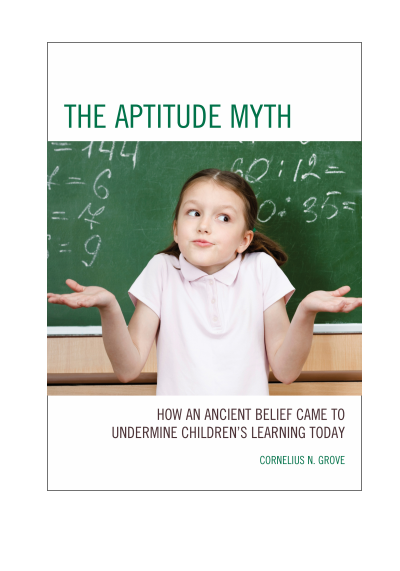
The Aptitude Myth
How an Ancient Belief Came to Undermine Children’s Learning Today- Autor:innen:
- Verlag:
- 2013
Publikation durchsuchen
Bibliographische Angaben
- Auflage
- 1/2013
- Copyrightjahr
- 2013
- ISBN-Print
- 978-1-4758-0436-2
- ISBN-Online
- 978-1-4758-0437-9
- Verlag
- Rowman & Littlefield, Lanham
- Sprache
- Englisch
- Seiten
- 189
- Produkttyp
- Monographie
Inhaltsverzeichnis
KapitelSeiten
- Contents Kein Zugriff
- Foreword Kein Zugriff
- Acknowledgments Kein Zugriff
- Why Do Americans Assume that Aptitude Governs Learning? Kein Zugriff
- The “Modern” Mindset That’s Actually a Relic: A Preview Kein Zugriff
- Replacing Our Antique Mindset withOne Tailor-Made for Us Today Kein Zugriff
- Notes Kein Zugriff
- When, Why, and How Did Americans'Current Ways of Thinking Originate? Kein Zugriff
- Family-Centered Subsistence Societies in Prehistoric Times Kein Zugriff
- Selecting a Teacher in Prehistoric Times: A Thought Experiment Kein Zugriff
- The “Time-Honored Paradigm” forThinking about Teachers Kein Zugriff
- The Six Elements of the Time-Honored Paradigm Kein Zugriff
- The Rise of the “Western-Contemporary Paradigm”for Thinking about Teachers Kein Zugriff
- Musings and Speculations Kein Zugriff
- Why Chapter 1 Is Important Kein Zugriff
- What to Remember: Bullet-Point Lists ofKey Learnings from Chapters 1–16 Kein Zugriff
- Notes Kein Zugriff
- The Contribution of Pythagoras to theParadigm of Plato’s Times Kein Zugriff
- Transmigration of Souls and the DawningBelief in the Power of Intuition Kein Zugriff
- Elements of the Greek Paradigm into Which Plato Was Born Kein Zugriff
- Plato Posits that the MostValuable Knowledge Is Inside Each Person Kein Zugriff
- Aristotle Adjusts Plato’s Concepts andStates How Mental Development Occurs Kein Zugriff
- Musings and Speculations Kein Zugriff
- Why Chapter 2 Is Important Kein Zugriff
- Genealogical Chart: Tracing the Path toa Modern American Paradigm Kein Zugriff
- Notes Kein Zugriff
- Life, Learning, and Logic in 15th and 16th Century Europe Kein Zugriff
- New Views Begin to Emerge Late in the 16th Century Kein Zugriff
- New Views Encounter ScholarlySkepticism Before Gaining Credibility Kein Zugriff
- Europe in the 15th and 18th Centuries:Comparing Old and New Paradigms Kein Zugriff
- Musings and Speculations Kein Zugriff
- Why Chapter 3 Is Important Kein Zugriff
- Notes Kein Zugriff
- Humanism and Realism during the Renaissance Kein Zugriff
- Comenius, Locke, and the Rise of Sense Realism Kein Zugriff
- Philosophic Trends in Europe between the16th and 18th Centuries Kein Zugriff
- Musings and Speculations Kein Zugriff
- Why Chapter 4 Is Important Kein Zugriff
- Notes Kein Zugriff
- Younger Children Are Better Children Kein Zugriff
- The Enduring Impact of Rousseau’s Émile Kein Zugriff
- The Emergence of Childhood andTwo Views of How to Regard It Kein Zugriff
- Musings and Speculations Kein Zugriff
- Why Chapter 5 Is Important Kein Zugriff
- Notes Kein Zugriff
- Thought Leaders Question the Basis of Authority Kein Zugriff
- Changes in the Texture of Europeans’ Daily Lives Kein Zugriff
- Authority in Classrooms Enters the 18th Century Discussion Kein Zugriff
- Musings and Speculations Kein Zugriff
- Why Chapter 6 Is Important Kein Zugriff
- Notes Kein Zugriff
- Intellectual Streams Feed a Romantic Flood Kein Zugriff
- Literary Romanticism’s Love Affair with Children and Nature Kein Zugriff
- Three Literary Romantics in Their Own Words Kein Zugriff
- The Assumptions, Beliefs, and Ideals of Literary Romanticism Kein Zugriff
- Musings and Speculations Kein Zugriff
- Why Chapter 7 Is Important Kein Zugriff
- Notes Kein Zugriff
- From Obscurity and Bankruptcy to Pan-Western Influence Kein Zugriff
- Psychology Enters the Discussion about Children and Teaching Kein Zugriff
- Protestant Perspectives—Calvinism and Pietism—Enter the Discussion Kein Zugriff
- Musings and Speculations Kein Zugriff
- Why Chapter 8 Is Important Kein Zugriff
- Notes Kein Zugriff
- A Man with a Prodigiously Restless Mind Kein Zugriff
- Spencer’s View of Evolutionary Development:Homogeneous-to-Heterogeneous Kein Zugriff
- Spencer’s “First Principles”: Inborn, Intuited,Scientifically Accurate Truths Kein Zugriff
- The Rise and Fall of Herbert Spencer Kein Zugriff
- Musings and Speculations Kein Zugriff
- Why Chapter 9 Is Important Kein Zugriff
- Notes Kein Zugriff
- A Ringing Declaration about Children,Learning, Teaching, and Parenting Kein Zugriff
- Aristotle, Spencer, and theBiological Model of Human Mental Activity Kein Zugriff
- Herbert Spencer’s Prescriptions for theClassroom Teaching of Children Kein Zugriff
- Musings and Speculations Kein Zugriff
- Why Chapter 10 Is Important Kein Zugriff
- Notes Kein Zugriff
- How Did Americans Apply the European Ways of Thinking, and Why? Kein Zugriff
- The Culture and Mindset of Colonial and Post-Colonial America Kein Zugriff
- Varieties of Protestantism: Calvinism, Pietism, and Quakerism Kein Zugriff
- The Values and Patterns of American Parenting Gradually Evolve Kein Zugriff
- Assumptions about Children’s MentalFragility Strengthen and Spread Kein Zugriff
- Two Assumptions about What Children Are Innately “Given” Kein Zugriff
- “Common Schools,” Horace Mann, and thePractical Perspective on Teaching Kein Zugriff
- Musings and Speculations Kein Zugriff
- Why Chapter 11 Is Important Kein Zugriff
- Notes Kein Zugriff
- Rapid Social Changes Transform theContext and Concerns of Schools Kein Zugriff
- A Visit to Public Schools and Classrooms during 1892 Kein Zugriff
- Society’s Response to Immigration,Industrialization, and Urbanization Kein Zugriff
- A Review of Critical Challenges and Society’s Responses Kein Zugriff
- Musings and Speculations Kein Zugriff
- Why Chapter 12 Is Important Kein Zugriff
- Notes Kein Zugriff
- Humans as Reflection of a Spirit World:Four Belief-Based Views of Consciousness Kein Zugriff
- Humans as Grounded in Their Biology:An Evidence-Based View of Consciousness Kein Zugriff
- Humans as Grounded in Their Society:An Evidence-Based View of Consciousness Kein Zugriff
- James Argues that the Learner,Not the Teacher, Is the Critical Success Factor Kein Zugriff
- Musings and Speculations Kein Zugriff
- Why Chapter 13 Is Important Kein Zugriff
- Notes Kein Zugriff
- Public Secondary Schools during theLast Decades of the 19th Century Kein Zugriff
- Public Secondary Schools during theFirst Decades of the 20th Century Kein Zugriff
- The Shift in Educational Authorityaround the Turn of the Century Kein Zugriff
- Documenting the Course of Educational Reform:25 Years of NEA Reports Kein Zugriff
- Musings and Speculations Kein Zugriff
- Why Chapter 14 Is Important Kein Zugriff
- Notes Kein Zugriff
- Child-Centered Education and Its Grandfather Figure,Col. Francis W. Parker Kein Zugriff
- The Child Study Movement and Its Champion, Dr. G. Stanley Hall Kein Zugriff
- The Message: Passivity in the Face of Assumed Inborn Inequality Kein Zugriff
- Other Factors Strengthening the Shifttoward Child-Centered Teaching Kein Zugriff
- Musings and Speculations Kein Zugriff
- Why Chapter 15 Is Important Kein Zugriff
- Postscript: Did John Dewey Join the Shifttoward Child-Centered Teaching? Kein Zugriff
- Notes Kein Zugriff
- European Antecedents: Early Thinking about General Intelligence Kein Zugriff
- American Responses: Interest in GeneralIntelligence Takes Root in the United States Kein Zugriff
- Intelligence Tests Enter the Mainstream:Sorting Recruits for War Service Kein Zugriff
- Intelligence Tests Join the Establishment:Sorting Applicants to Colleges Kein Zugriff
- Three Proponents of General Intelligence Recant Their Views Kein Zugriff
- Musings and Speculations Kein Zugriff
- Why Chapter 16 Is Important Kein Zugriff
- Notes Kein Zugriff
- Can We Transcend Our Inherited Mindset toGive Mastery the Highest Priority? Kein Zugriff
- Missing from Our Unpacked Beliefs and Values: Mastery and Effort Kein Zugriff
- 20th Century Wake-up Calls about Our Neglect of Mastery Kein Zugriff
- Our Value Propositions about Mastery and Effort,Unpacked and Elaborated Kein Zugriff
- Confronting the Inevitable Outcome ofOur Inherited Beliefs and Values Kein Zugriff
- Learning to Think on a Graduated Spectrum Kein Zugriff
- Learning to Shift Moderately ButSignificantly toward the Goal of Mastery Kein Zugriff
- Notes Kein Zugriff
- A Paradigm to Solve the Problem That,Here and Now, Is Most Significant for Us Kein Zugriff
- 1. Accountability for Learning RestsMore with the Parents than with the Teacher Kein Zugriff
- 2. Accountability for Learning RestsMore with the Student than with the Teacher Kein Zugriff
- 3. A Child’s Mental Apparatus Is Vigorous,Robust, Resilient, Curious, and Absorbent Kein Zugriff
- 4. A Child’s Mental Development InvolvesIntentional Adaptation to Its Environment Kein Zugriff
- 5. A Child’s Competence Grows MoreStrongly and Swiftly with Authoritative Guidance Kein Zugriff
- 6. Learning Attainment Is Determined FarMore by Perseverance than by “Givens” Kein Zugriff
- 7. Increasing Mastery of Skills andKnowledge Depends on Skill- and Knowledge-Focus Kein Zugriff
- Postscript: Beyond Thinking With,an Outstanding Resource for Doing Kein Zugriff
- Notes Kein Zugriff
- Appendix Kein Zugriff Seiten 175 - 178
- Index Kein Zugriff Seiten 179 - 188
- About the Author Kein Zugriff Seiten 189 - 189