, um zu prüfen, ob Sie einen Vollzugriff auf diese Publikation haben.
Monographie Kein Zugriff
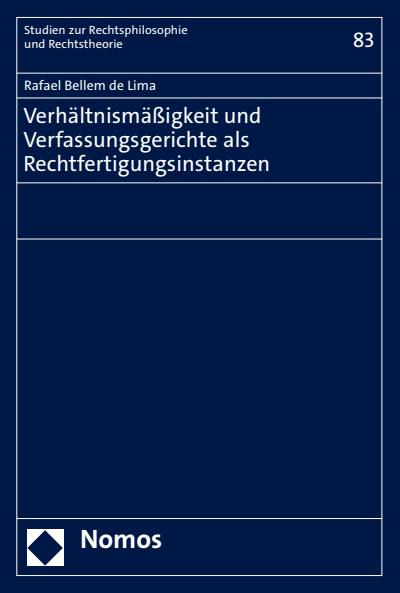
Verhältnismäßigkeit und Verfassungsgerichte als Rechtfertigungsinstanzen
- Autor:innen:
- Reihe:
- Studien zur Rechtsphilosophie und Rechtstheorie, Band 83
- Verlag:
- 2023
Zusammenfassung
Die Verhältnismäßigkeitsprüfung und die Prinzipienabwägung haben in vielen Rechtssystemen große Bedeutung erlangt. Die neue rechtstheoretische Studie zeigt auf, warum diese methodischen Techniken Vorteile für die Verfassungsgerichtsbarkeit bringen. Das Werk befasst sich auch mit der Frage, wie juristische Argumente und institutionelle Faktoren in der verfassungsrechtlichen Argumentation zusammenwirken. Hierzu werden die Hauptthesen der rechtswissenschaftlichen Debatte (insbesondere über „judicial deference“) genau analysiert. Abschließend formuliert der Autor einen Vorschlag zur Verbesserung der Verhältnismäßigkeitskontrolle.
Schlagworte
Publikation durchsuchen
Bibliographische Angaben
- Copyrightjahr
- 2023
- ISBN-Print
- 978-3-8487-8999-3
- ISBN-Online
- 978-3-7489-3462-2
- Verlag
- Nomos, Baden-Baden
- Reihe
- Studien zur Rechtsphilosophie und Rechtstheorie
- Band
- 83
- Sprache
- Deutsch
- Seiten
- 239
- Produkttyp
- Monographie
Inhaltsverzeichnis
KapitelSeiten
- Titelei/Inhaltsverzeichnis Kein Zugriff Seiten 1 - 12
- A. Kontext der Untersuchung Kein Zugriff
- B. Ziele Kein Zugriff
- C. These Kein Zugriff
- D. Gang der Untersuchung Kein Zugriff
- A. Internationale Verbreitung der Verhältnismäßigkeit Kein Zugriff
- I. Regeln: Anwendung und Konfliktlösung Kein Zugriff
- II. Prinzipien: Anwendung und Kollisionslösung Kein Zugriff
- III. Der prima-facie-Vorrang der Regeln vor den Prinzipien Kein Zugriff
- I. Teilgrundsatz der Geeignetheit Kein Zugriff
- II. Teilgrundsatz der Erforderlichkeit Kein Zugriff
- III. Teilgrundsatz der Verhältnismäßigkeit im engeren Sinne Kein Zugriff
- D. Verhältnismäßigkeit als Ergebnis der Unterscheidung zwischen Prinzipien und Regeln Kein Zugriff
- E. Schlussfolgerung des Kapitels Kein Zugriff
- A. Einführung Kein Zugriff
- I. Eine weite Tatbestandstheorie Kein Zugriff
- II. Eine Außentheorie des definitiven Rechtsschutzbaus Kein Zugriff
- III. Die weite Tatbestandtheorie und die Außentheorie als Voraussetzungen der Verhältnismäßigkeitsprüfung Kein Zugriff
- C. Verhältnismäßigkeit und das Erfordernis der Begründung richterlicher Entscheidungen Kein Zugriff
- a. Grégoire Webbers Einwand der Inkommensurabilität: Missverständnis der Struktur der Verhältnismäßigkeitsprüfung Kein Zugriff
- II. Die Suche nach einer richterlichen Argumentation, die alle Staatsbürger in Rechten und Freiheit als gleich ansieht Kein Zugriff
- E. Argumentative Repräsentation der Bürger durch die Verfassungsgerichte Kein Zugriff
- F. Schlussfolgerung des Kapitels Kein Zugriff
- A. Einführung Kein Zugriff
- B. Das Argument der globalen Nachfrage nach Rechtfertigung: das Problem der Verwechslung zwischen den beschreibenden und vorschreibenden Dimensionen Kein Zugriff
- C. Die Verteidigung der Verhältnismäßigkeit auf der Grundlage der Idee der Rechtfertigung Kein Zugriff
- D. Argumentative Voraussetzungen der Verhältnismäßigkeit und Handlungsweise der Verfassungsgerichte als Rechtfertigungsinstanzen Kein Zugriff
- D. Strukturelle Spielräume als Folge der Rechtfertigungsgrenze Kein Zugriff
- E. Die Notwendigkeit der funktionellen Unterscheidung zwischen Parlamenten und Verfassungsgerrichten Kein Zugriff
- F. Verfassungsgerichte als Rechtfertigungsinstanzen und Demokratie Kein Zugriff
- G. Der globaler Anspruch der rechtfertigenden Funktion des Verfassungsgerichts Kein Zugriff
- H. Schlussfolgerung des Kapitels Kein Zugriff
- A. Einen Schritt weiter Kein Zugriff
- I. “Räumliche Metaphern” und Einteilung in Zonen mit unterschiedlichen Kontrollintensitäten Kein Zugriff
- II. Die Due Deference-Doktrin: Explizite Argumentation bei der Bestimmung des deference-Grades Kein Zugriff
- III. Non-doctrinalists: Die Kritiker der Idee der judicial deference Kein Zugriff
- IV. Der Begriff “judicial deference” Kein Zugriff
- I. Die Frage der formellen Prinzipien Kein Zugriff
- D. Schlussfolgerung des Kapitels Kein Zugriff
- A. Argumentationsstrukturen, Gewaltenteilung und Schutz der Grundrechte Kein Zugriff
- B. Die Relevanz der Argumentationsstrukturen zur richtertichen Normkontrolle Kein Zugriff
- Literaturverzeichnis Kein Zugriff Seiten 231 - 239
Literaturverzeichnis (164 Einträge)
Es wurden keine Treffer gefunden. Versuchen Sie einen anderen Begriff.
- AFONSO DA SILVA, VIRGÍLIO, A Constitucionalização do Direito: Os Direitos Fundamentais nas Relações entre Particulares, São Paulo, Malheiros, 2005. Google Scholar öffnen DOI: 10.5771/9783748934622
- AFONSO DA SILVA, VIRGÍLIO, Comparing the incommensurable: constitutional principles, balancing and retional decision, in: Oxford Journal of Legal Studies 31 2011, 1-29. Google Scholar öffnen DOI: 10.5771/9783748934622
- AFONSO DA SILVA, VIRGÍLIO, Deciding without deliberating, in: International Journal of Constitutional Law 11 2013, 557-584. Google Scholar öffnen DOI: 10.5771/9783748934622
- AFONSO DA SILVA, VIRGÍLIO, Direitos Fundamentais: Conteúdo essencial, restrições, eficácia, 2. Aufl. São Paulo 2011. Google Scholar öffnen DOI: 10.5771/9783748934622
- AFONSO DA SILVA, VIRGÍLIO, Grundrechte und gesetzgeberische Spielräume, Baden-Baden, 2003. Google Scholar öffnen DOI: 10.5771/9783748934622
- AFONSO DA SILVA, VIRGÍLIO, O proporcional e o razoável. In: Revista dos Tribunais 789 2002, 23-50. Google Scholar öffnen DOI: 10.5771/9783748934622
- AFONSO DA SILVA, VIRGÍLIO, Ponderação e objetividade na interpretação constitucional. In: Barbieri / Macedo Jr. (org.) Direito e Interpretação Constitucional, São Paulo, 2010, 115-143. Google Scholar öffnen DOI: 10.5771/9783748934622
- AFONSO DA SILVA, VIRGÍLIO, Prinzipientheorie, Abwägungskompetenzen und Gewaltenteilung, in: Sieckmann, Jan (Hrsg.) Die Prinzipientheorie der Grundrecht: Studien zur Grundrechtstheorie Robert Alexys, Baden-Baden 2007, 215-230. Google Scholar öffnen DOI: 10.5771/9783748934622
- AFONSO DA SILVA, VIRGÍLIO, The Brazilian Supreme Court Needs Iolaus: A Reply to Marcelo Neves’ Objections to Balancing and Optimization, in: Revista Direito UnB 2 2016, 96–117. Google Scholar öffnen DOI: 10.5771/9783748934622
- AFONSO DA SILVA, VIRGÍLIO, How Global is Global Constitutionalism?: Comments on Kai Möller ‘The Global Model of Constitutional Rights’ in: Jerusalem Review of Legal Studies 10 2014, 175-186. Google Scholar öffnen DOI: 10.5771/9783748934622
- ALEXY, ROBERT, Balancing, Constitutional Review and Representation, in: International Journal of Constitutional Law 4 2005, 572-581. Google Scholar öffnen DOI: 10.5771/9783748934622
- ALEXY, ROBERT, Constitutional Rights, Democracy and Representation, in: Richerche Giuridiche 3 2014, 197-210. Google Scholar öffnen DOI: 10.5771/9783748934622
- ALEXY, ROBERT, Die Gewichtsformel, in: Jickeli / Kreutz / Reuter (Hrsg.) Gedächtnisschrift für Jürgen Sonnenschein, Berlin, 2003, 771-792. Google Scholar öffnen DOI: 10.5771/9783748934622
- ALEXY, ROBERT, Die Konstruktion der Grundrechte, in: Clérico / Sieckmann (Hrsg.) Grundrechte, Prinzipien und Argumentation: Studien zur Rechtstheorie Robert Alexys, Baden-Baden 2009, 9-19. Google Scholar öffnen DOI: 10.5771/9783748934622
- ALEXY, ROBERT, Grundrechte im demokratischen Verfassungsstaat, in: Aarnio / Alexy / Bergholtz (Hrsg.) Justice, Morality and Society: A tribute to Alexsander Peczenik on the Occasion of his 60th Birthday, Lund, 1997, 27-42. Google Scholar öffnen DOI: 10.5771/9783748934622
- ALEXY, ROBERT, Ideales Sollen, in: Clérico / Sieckmann (Hrsg.) Grundrechte, Prinzipien und Argumentation: Studien zur Rechtstheorie Robert Alexys, Baden-Baden 2009, 21-38. Google Scholar öffnen DOI: 10.5771/9783748934622
- ALEXY, ROBERT, On Balancing and Subsumption: A structural comparison, in: Ratio Juris 16 2003, 443-449. Google Scholar öffnen DOI: 10.5771/9783748934622
- ALEXY, ROBERT, Rechtsregeln und Rechtsprinzipien, in: ARSP 25 1985, 13-29. Google Scholar öffnen DOI: 10.5771/9783748934622
- ALEXY, ROBERT, Rechtssystem und praktische Vernunft, in: Alexy, Robert, Recht, Vernunft und Diskurs: Studien zur Rechtsphilosophie, Frankfurt am Main, 1995, 213-231. Google Scholar öffnen DOI: 10.5771/9783748934622
- ALEXY, ROBERT, Postscript, in: Alexy, Robert, A Theory of Constitutional Rights, Oxford, 2002, 388-425. Google Scholar öffnen DOI: 10.5771/9783748934622
- ALEXY, ROBERT, Theorie der Grundrechte, 3. Aufl. Frankfurt am Main 1996. Google Scholar öffnen DOI: 10.5771/9783748934622
- ALEXY, ROBERT, Theorie der juristischen Argumentation: Die Theorie des rationalen Diskurses als Theorie der juristischen Begründung, 2. Aufl. Frankfurt am Main 1991. Google Scholar öffnen DOI: 10.5771/9783748934622
- ALEXY, ROBERT, The Special Case Thesis in: Ratio Juris 12 1999, 374-384. Google Scholar öffnen DOI: 10.5771/9783748934622
- ALEXY, ROBERT, The Special Case Thesis and the Dual Nature of Law in: Ratio Juris 31 2018, 254-259. Google Scholar öffnen DOI: 10.5771/9783748934622
- ALEXY, ROBERT, Verfassungsrecht und einfaches Recht: Verfassungsgerichtsbarkeit und Fachgerichtsbarkeit, in: VVDStRL 61 2002, 7-33. Google Scholar öffnen DOI: 10.5771/9783748934622
- ALLAN, T.R.S., Common Law Reason and the Limits of Judicial Deference, in: Dyzenhaus, David (ed.), The Unity of Public Law, Oxford 2004, 289-306. Google Scholar öffnen DOI: 10.5771/9783748934622
- ALLAN, T.R.S., Human Rights and Judicial Review: A Critique of ‘‘Due Deference’, in: Cambridge Law Journal 65 2006, 671-695. Google Scholar öffnen DOI: 10.5771/9783748934622
- ALMEIDA, FERNANDA DIAS MENEZES DE, As Imunidades Parlamentares na Constituição Brasileira de 1988, in: Anuário Português de Direito Constitucional 3 2003, 87-110. Google Scholar öffnen DOI: 10.5771/9783748934622
- ÁVILA, HUMBERTO, Neoconstitucionalismo: entre a “ciência do direito” e o “direito da ciência”, in: Revista Eletrônica de Direito do Estado 17 2009, 1-19. Google Scholar öffnen DOI: 10.5771/9783748934622
- ÁVILA, HUMBERTO, Teoria dos Princípios, 15. Aufl., São Paulo 2014. Google Scholar öffnen DOI: 10.5771/9783748934622
- BARKOW, RACHEL E. More Supreme than Court? The Fall of the Political Question Doctrine and the Rise of Judicial Supremacy, in: Columbia Law Review 102 2002, 237-336. Google Scholar öffnen DOI: 10.5771/9783748934622
- BELLEM DE LIMA, RAFAEL, Regras na Teoria dos Princípios, São Paulo 2014. Google Scholar öffnen DOI: 10.5771/9783748934622
- BICKEL, ALEXANDER M., The Least Dangerous Branch, 2. Aufl. New Haven, 1986. Google Scholar öffnen DOI: 10.5771/9783748934622
- BIX, BRIAN, H. L. A. Hart and the ‘Open Texture’ of Language, in: Bix, Brian, Law, Language and Legal Determinacy, Oxford, 1993, 7-35. Google Scholar öffnen DOI: 10.5771/9783748934622
- BÖCKENFÖRDE, ERNST-WOLFGANG, Grundrechte als Grundsatznormen: Zur gegenwärtigen Lage der Grundrechtsdogmatik, in: Der Staat 29 1990, 1-31. Google Scholar öffnen DOI: 10.5771/9783748934622
- BÖCKENFÖRDE, ERNST-WOLFGANG, Schutzbereich, Eingriff, verfassungsimmanente Schranken: Zur Kritik gegenwärtiger Grundrechtsdogmatik, in: Der Staat 42 2003, 165-192. Google Scholar öffnen DOI: 10.5771/9783748934622
- BÖCKENFÖRDE, ERNST-WOLFGANG, Vier Thesen zur Kommunitarismus-Debatte, in: Siller / Keller (Hrsg.), Rechtsphilosophische Kontroversen der Gegenwart, Baden-Baden, 1999, 83-86. Google Scholar öffnen DOI: 10.5771/9783748934622
- BOROWSKI, MARTIN, Grundrechte als Prinzipien, 2. Aufl. Baden-Baden, 2007. Google Scholar öffnen DOI: 10.5771/9783748934622
- BOROWSKI, MARTIN, The Structure of Formal Principles – Robert Alexy’s Law of Combination, in: Martin Borowski (Hg.), On the Nature of Legal Principles, ARSP Beiheft 119 2010, 25-35. Google Scholar öffnen DOI: 10.5771/9783748934622
- BRADY, ALAN D. P., Proportionality and Deference under UK Human Rights Act: An Institutionally Sensitive Approach, Cambridge, 2012. Google Scholar öffnen DOI: 10.5771/9783748934622
- BUSTAMANTE, THOMAS, Argumentação Contra Legem: A teoria do discurso e a justificação jurídica nos casos mais difíceis, Rio de Janeiro 2005. Google Scholar öffnen DOI: 10.5771/9783748934622
- BUSTAMANTE, THOMAS, Principios, reglas y derrotabilidad, in: Ramírez, Pablo Raúl Bonorino (ed.) Teoria del Derecho y Decisión Judicial, Madrid, 2010, 205-284. Google Scholar öffnen DOI: 10.5771/9783748934622
- CLÉRICO, LAURA, Die Struktur der Verhältnismäßigkeit, Baden-Baden, 2001. Google Scholar öffnen DOI: 10.5771/9783748934622
- CLÉRICO, LAURA, Hacía la reconstrucción de un modelo integrado de proporcionalidad a la luz de la jurisprudencia de la Corte Interamericana de Derechos Humanos, in: Capaldo / Sieckmann / Clérico, Internacionalización del Derecho Constitucional, Constitucionalización del Derecho Internacional, Buenos Aires 2012.199-220. Google Scholar öffnen DOI: 10.5771/9783748934622
- COHEN-ELIYA, MOSHE / PORAT, IDDO, American balancing and German proportionality: The historical origins, International Journal of Constitutional Law 8 2010, 263–286. Google Scholar öffnen DOI: 10.5771/9783748934622
- COHEN-ELIYA, MOSHE / PORAT, IDDO, Proportionality and Constitutional Culture, Cambridge 2013. Google Scholar öffnen DOI: 10.5771/9783748934622
- COHEN-ELIYA, MOSHE / PORAT, IDDO, Proportionality and Culture of Justification, in: American Journal of Comparative Law 59 2011, 463-490. Google Scholar öffnen DOI: 10.5771/9783748934622
- CRAIG, PAUL, Proportionality, Rationality and Review, in: New Zealand Law Review 2 2010, 265-301. Google Scholar öffnen DOI: 10.5771/9783748934622
- DECHSLING, RAINER, Das Verhältnismäßigkeitsgebot: Eine Bestandaufnahme der Literatur zur Verhältnismäßigkeit staatlichen Handels, München, 1989. Google Scholar öffnen DOI: 10.5771/9783748934622
- DIMOULIS, DIMITRI / MARTINS, LEONARDO, Teoria Geral dos Direitos Fundamentais, São Paulo, 2007. Google Scholar öffnen DOI: 10.5771/9783748934622
- DIVER, COLIN S., The Judge as a Political Powerbroker: Superintending Structural Change in Public Institutions in: Virginia Law Review 65 1979, 46-106. Google Scholar öffnen DOI: 10.5771/9783748934622
- DWORKIN, RONALD, The model of rules I, in: Dworkin, Ronald, Taking Rights Seriouly, Cambridge/Mass 1978, 14-45. Google Scholar öffnen DOI: 10.5771/9783748934622
- DYZENHAUS, DAVID, Law as Justification: Etienne Mureinik's Conception of Legal Culture in: South African Journal of Human Rights 14 1998, 11-37. Google Scholar öffnen DOI: 10.5771/9783748934622
- DYZENHAUS, DAVID, The Politics of Deference: Judicial Review and Democracy in: Taggart, Michael (ed.), The Province of Administrative Law, Oxford 1997, 279-307. Google Scholar öffnen DOI: 10.5771/9783748934622
- EDWARDS, RICHARD A., Judicial Deference Under the Human Rights Act, in: The Modern Law Review 65 2002, 859–882. Google Scholar öffnen DOI: 10.5771/9783748934622
- ELY, JOHN HART, Democracy and Distrust: A Theory of Judicial Review, Cambridge (Mass.)/ London 1980. Google Scholar öffnen DOI: 10.5771/9783748934622
- EMILIOU, NICHOLAS, The Principle of Proportionality in European Law: A comparative Study, Dordrecht, 1996. Google Scholar öffnen DOI: 10.5771/9783748934622
- EPSTEIN, LEE / KNIGHT. JACK / SHVETSOVA, OLGA, Comparing Judicial Selection System, in: William and Mary Bill of Rights Journal 10 2001, 7-36. Google Scholar öffnen DOI: 10.5771/9783748934622
- FAREJOHN, JOHN, The Citizens’Assembly Model, in: Warren / Pearse (eds.) Designing Deliberative Democracy: The British Columbia Citizens' Assembly, Cambridge 2008, 192-213. Google Scholar öffnen DOI: 10.5771/9783748934622
- FOLEY, BRIAN, Deference and the Presumption of Constitutionality, Dublin 2008. Google Scholar öffnen DOI: 10.5771/9783748934622
- FRANTZ, LAURENT B., Is the First Amendment Law?: A reply to Professor Mendelson in: California Law Review 51 1963, 729-754. Google Scholar öffnen DOI: 10.5771/9783748934622
- GARDBAUM, STEPHEN, Reassessing the new Commonwealth model of constitutionalism, in: International Journal of Constitutional Law 8 2010, 167-206. Google Scholar öffnen DOI: 10.5771/9783748934622
- GARDBAUM, STEPHEN, The New Commonwealth Model of Constitutionalism: Theory and Practice, Cambridge 2013. Google Scholar öffnen DOI: 10.5771/9783748934622
- GEARTY, CONOR. Principles of Human Rights Adjudication, Oxford, 2005. Google Scholar öffnen DOI: 10.5771/9783748934622
- GONÇALVES, GUILHERME LEITE, Função interpretativa, alopoiese do direito e hermenêutica da cordialidade, in: Direito e Praxis 1 2010, 16-31. Google Scholar öffnen DOI: 10.5771/9783748934622
- GONET BRANCO, PAULO GUSTAVO, Juízo de Ponderação na Jurisdição Constitucional, São Paulo 2009. Google Scholar öffnen DOI: 10.5771/9783748934622
- HABERMAS, JÜRGEN, Faktizität und Geltung, Frankfurt am Main, 1998. Google Scholar öffnen DOI: 10.5771/9783748934622
- HART, H. L. A. The Concept of Law, 2 Aufl. Oxford, 1994. Google Scholar öffnen DOI: 10.5771/9783748934622
- HENKIN, LOUIS., Is there a “Political Question” Doctrine? in: Yale Law Journal 85 1976, 597-625. Google Scholar öffnen DOI: 10.5771/9783748934622
- HICKMAN, TOM, Problems for Proportionality, in: New Zealand Law Review 2 2010, 303-326. Google Scholar öffnen DOI: 10.5771/9783748934622
- HICKMAN, TOM, Public Law after the Human Rights Act, Oxford 2010. Google Scholar öffnen DOI: 10.5771/9783748934622
- HIEBERT, JANET L., Parliamentary Bills of Rights: An alternative model? in: Modern Law Review 69 2006, 7-28. Google Scholar öffnen DOI: 10.5771/9783748934622
- HIRSCHBERG, LOTHAR. Der Grundsatz der Verthältnissmäßigkeit, Göttingen, 1981. Google Scholar öffnen DOI: 10.5771/9783748934622
- HUNT, MURRAY, Against Bifurcation, in: Dyzenhaus / Hunt / Huscroft (eds.) A Simple Common Lawyer: Essays in Honor of Michael Taggart, Oxford 2009, 99-122. Google Scholar öffnen DOI: 10.5771/9783748934622
- HUNT, MURRAY, Sovereignty’s Blight: Why Contemporary Public Law Needs the Concept of ‘Due Deference’, in: Bamforth / Leyland (eds.) Public Law in a Multi-Layered Constitution, Oxford 2003, 337-370. Google Scholar öffnen DOI: 10.5771/9783748934622
- HUSCROFT, GRANT/ MILLER, BRADLEY W. / WEBBER. GRÉGOIRE, Introduction, in: Huscroft / Miller / Webber, Proportionality and the Rule of Law: Rights, Justification, Reasoning, Cambridge 2014, 1-18. Google Scholar öffnen DOI: 10.5771/9783748934622
- JESTAEDT, MATTHIAS, Die Abwägungslehre – ihre Stärken und ihre Schwächen, in: Depenheuer / Heintzen/ Jestaedt / Axer (Hrsg.) Staat im Wort: Festschrift für Josef Isensee, Heidelberg 2007, 253-275. Google Scholar öffnen DOI: 10.5771/9783748934622
- JOWELL, JEFFREY, Beyond the Rule of Law: Towards Constitutional Judicial Review in: Public Law, Winter, 2000, 671-683. Google Scholar öffnen DOI: 10.5771/9783748934622
- JOWELL, JEFFREY, Judicial Deference: servility, civility or institutional capacity? in: Public Law, Winter, 2003, 592-601. Google Scholar öffnen DOI: 10.5771/9783748934622
- KAVANAGH, AILEEN, Constitutional Review under the UK Human Rights Act, Cambridge 2009. Google Scholar öffnen DOI: 10.5771/9783748934622
- KAVANAGH, AILEEN, Deference or Defiance? The Limits of the Judicial Role in Constitutional Adjudication, in: Huscroft, Grant (ed.) Expounding the Constitution: Essays in Constitutional Theory, Cambridge 2009, 184-216. Google Scholar öffnen DOI: 10.5771/9783748934622
- KING, JEFF A., Institutional Approaches to Judicial Restraint, in: Oxford Journal of Legal Studies 28 2008, 409-441. Google Scholar öffnen DOI: 10.5771/9783748934622
- KING, JEFF A., Proportionality: A Halfway House?, in: New Zealand Law Review 2 2010, 327-367. Google Scholar öffnen DOI: 10.5771/9783748934622
- KISCHEL, UWE, Party, pope, and politics? The election of German Constitutional Court Justices in comparative perspective, in: International Journal of Constitutional Law 11 2013, 962-980. Google Scholar öffnen DOI: 10.5771/9783748934622
- KLATT, MATTHIAS / SCHMIDT, JOHANNES, Epistemic Discretion in Constitutional Law, in: International Journal of Constitutional Law 10 2012, 69-105. Google Scholar öffnen DOI: 10.5771/9783748934622
- KLATT, MATTHIAS / SCHMIDT, JOHANNES, Spierlräume im Öffentlichen Recht: Zur Abwägungslehre der Prinzipientheorie, Tübingen 2010. Google Scholar öffnen DOI: 10.5771/9783748934622
- KLATT, MATTHIAS, An egalitarian defense of proportionality based-balancing: A reply to Luc B. Tremblay, in: International Journal of Constitutional Law 12 2014, 891-899. Google Scholar öffnen DOI: 10.5771/9783748934622
- KLATT, MATTHIAS, Balancing Competences: How institutional cosmopolitanism can manage jurisdictional, in: Global Constitutionalism 4 2015, 195-226. Google Scholar öffnen DOI: 10.5771/9783748934622
- KLATT, MATTHIAS, Positive rights: Who decides? Judicial review in balance, in: International Journal of Constitutional Law 13 2015, 354-382. Google Scholar öffnen DOI: 10.5771/9783748934622
- KLATT, MATTHIAS, Taking Rights less Seriously: a structural analysis of judicial discretion, in: Ratio Juris 20 2007, 506-529. Google Scholar öffnen DOI: 10.5771/9783748934622
- KLEMENT, JAN HENRIK, Vom Nutzen einer Theorie, die alles erklärt: Robert Alexys Prinzipientheorie aus der Sicht der Grundrechtsdogmatik , In: JuristenZeitung 15/16 2008, 756-763. Google Scholar öffnen DOI: 10.5771/9783748934622
- KUMM, MATTIAS, Alexy’s Theory of Constitutional Rights and the Problem of Judicial Review, in: Klatt, Matthias (ed.), Institutionalized Reason: The Jurisprudence of Robert Alexy, Oxford, 2012, 201-217. Google Scholar öffnen DOI: 10.5771/9783748934622
- KUMM, MATTIAS, Constitutional rights as principles: On the structure and domain of constitutional justice. A review essay on A Theory of Constitutional Rights. In: International Journal of Constitutional Law 2 2004, 574-596. Google Scholar öffnen DOI: 10.5771/9783748934622
- KUMM, MATTIAS, Institutionalizing Socratic Contestation: The Rationalist Human Rights Paradigm, Legitimate Authority and the Point of Judicial Review. In: European Journal of Legal Studies 2 2007, 1-32. Google Scholar öffnen DOI: 10.5771/9783748934622
- KUMM, MATTIAS, The Idea of Socratic Contestation: The Point of Rights-based Proportionality Review In: Law & Ethics of Human Rights 4 2010, 142-175. Google Scholar öffnen DOI: 10.5771/9783748934622
- KUMM, MATTIAS, Who Is Afraid of the Total Constitution? Constitutional Rights as Principles and the Constitutionalization of Private Law. In: German Law Journal 7 2006, 341-370. Google Scholar öffnen DOI: 10.5771/9783748934622
- LIMA LOPES, JOSÉ REINALDO DE, Juízo jurídico e a falsa solução dos princípios e das regras, in: Revista de Informação Legislativa 160 2003, 49-64. Google Scholar öffnen DOI: 10.5771/9783748934622
- LUTERÁN, MARTIN, The Lost Meaning of Proportionality, in: Huscroft / Miller / Webber, Proportionality and the Rule of Law: Rights, Justification, Reasoning, Cambridge 2014, 21-42. Google Scholar öffnen DOI: 10.5771/9783748934622
- MENDES, CONRADO HÜBNER, Constitutional Courts and Deliberative Democracy, Oxford, 2013. Google Scholar öffnen DOI: 10.5771/9783748934622
- MENDES, CONRADO HÜBNER, Direitos Fundamentais, Separação de Poderes e Deliberação, São Paulo 2011. Google Scholar öffnen DOI: 10.5771/9783748934622
- MENDES, CONRADO HÜBNER, Is it All About the Last Word? Deliberative Separation of Powers 1, in: Legisprudence 3 2009, 69-110. Google Scholar öffnen DOI: 10.5771/9783748934622
- MENDES, CONRADO HÜBNER, Neither Dialogue Nor Last Word – Deliberative Separation of Powers 3, in: Legisprudence 5 2011, 1-40. Google Scholar öffnen DOI: 10.5771/9783748934622
- MENDES, CONRADO HÜBNER, Not the Last Word, But Dialogue – Deliberative Separation of Powers 2, in: Legisprudence 3 2009, 191-246. Google Scholar öffnen DOI: 10.5771/9783748934622
- MICHELON, CLÁUDIO, Princípios e Coerência na Argumentação Jurídica In: Barbieri / Macedo Jr. (org.) Direito e Interpretação Constitucional, São Paulo, 2010, 261-285. Google Scholar öffnen DOI: 10.5771/9783748934622
- MÖLLER, KAI, Balancing and the Structure of Constitutional Rights In: International Journal of Constitutional Law 5 2007, 453-468. Google Scholar öffnen DOI: 10.5771/9783748934622
- MÖLLER, KAI, From constitutional to human rights: On the moral structure of international human rights, in: Global Constitutionalism 3 2014, 373-403. Google Scholar öffnen DOI: 10.5771/9783748934622
- MÖLLER, KAI, Proportionality and Rights Inflation, in: Huscroft / Miller / Webber, Proportionality and the Rule of Law: Rights, Justification, Reasoning, Cambridge 2014, 155-172. Google Scholar öffnen DOI: 10.5771/9783748934622
- MÖLLER, KAI, The Global Model of Constitutional Rights, Oxford 2012. Google Scholar öffnen DOI: 10.5771/9783748934622
- MÜLLER, FRIEDRICH, Strukturierende Rechtslehre, 2. Aufl., Berlin 1994. Google Scholar öffnen DOI: 10.5771/9783748934622
- MUREINIK, ETIENNE, A Bridge to Where? Introducing the Interim Bill of Right, in: South African Journal of Human Rights 10 1994, 31-38. Google Scholar öffnen DOI: 10.5771/9783748934622
- NEVES, MARCELO, Entre Hidra e Hércules: Princípios e Regras Constitucionais, São Paulo 2013. Google Scholar öffnen DOI: 10.5771/9783748934622
- NEVES, MARCELO, Transconstitucionalismo, São Paulo 2009. Google Scholar öffnen DOI: 10.5771/9783748934622
- PERRY, STEPHEN R, Second-Order Reasons, Uncertainty and Legal Theory, in: Southern California Law Review 64 1997, 913-994. Google Scholar öffnen DOI: 10.5771/9783748934622
- PIEROTH, BODO / SCHLINK, BERNHARD, Grundrechte: Staatsrecht II, 23. Aufl. Heidelberg, 2007. Google Scholar öffnen DOI: 10.5771/9783748934622
- POOLE, THOMAS, Legitimacy, Rights and Judicial Review in: Oxford Journal of Legal Studies 25 2005, 697-725. Google Scholar öffnen DOI: 10.5771/9783748934622
- PORAT, IDDO, Mapping the American Debate over Balancing, in: Huscroft / Miller / Webber, Proportionality and the Rule of Law: Rights, Justification, Reasoning, Cambridge 2014, 397-416. Google Scholar öffnen DOI: 10.5771/9783748934622
- POSCHER, RALF, Einsichten, Irrtürmer und Selbstmissverständnis der Prinzipientheorie, in: Sieckmann, Jan-R. (Hrsg.) Die Prinzipientheorie der Grundrechte. Studien zur Grundrechtstheorie Robert Alexys, Baden-Baden 2007, 59-79. Google Scholar öffnen DOI: 10.5771/9783748934622
- POSCHER, RALF, Grundrechte als Abwehrrechte: Reflexive Regelung rechtlich geordneter Freiheit, Tübingen, 2003. Google Scholar öffnen DOI: 10.5771/9783748934622
- PÖYHÖNEN, JUHA, Auslegung contra legem als ein deskonstruktives Spiel von Regeln und Prinzipien im Recht, in: Rechtstheorie 20 1989, 211-220. Google Scholar öffnen DOI: 10.5771/9783748934622
- RAWLS, JOHN, The Idea of Public Reason Revisited, in: The University of Chicago Law Review 64 1997, 756-807. Google Scholar öffnen DOI: 10.5771/9783748934622
- RAZ, JOSEPH, On the Authority and Interpretation of Constitutions: Some Preliminaries, in: Raz, Joseph, Between Authority and Interpretation: On the Theory of Law and Practical Reason, Oxford 2009, 321-370. Google Scholar öffnen DOI: 10.5771/9783748934622
- RIVERS, JULIAN, Proportionality, Discretion and The Second Law of Balancing, in: Pavlakos, George (ed.), Law, Rights and Discourse: The Legal Philosophy of Robert Alexy, Oxford / Portland, 2007, 167-188. Google Scholar öffnen DOI: 10.5771/9783748934622
- RIVERS, JULIAN, Proportionality and Variable Intensity of Review, in: Cambridge Law Journal 65 2006, 174-207. Google Scholar öffnen DOI: 10.5771/9783748934622
- SCHAUER, FREDERICK, Balancing, Subsumption and the constraining role of the legal text, in: Law & Ethics of Human Rights 4 2010, 34-45. Google Scholar öffnen DOI: 10.5771/9783748934622
- SCHAUER, FREDERICK, Deferring, in: Michigan Law Review 103 2005, 1567-1577. Google Scholar öffnen DOI: 10.5771/9783748934622
- SCHAUER, FREDERICK, Freedom of Expression Adjudication in Europe and America: A Case Study in Comparative Constitutional Architecture, in: Nolte, Georg (ed.), European and US- Constitutionalism, Cambridge 2009, 49-69. Google Scholar öffnen DOI: 10.5771/9783748934622
- SCHAUER, FREDERICK, On the Supposed Defeasibility of Legal Rules, in: Current Legal Problems 51 1998, 223-240. Google Scholar öffnen DOI: 10.5771/9783748934622
- SCHAUER, FREDERICK, Playing by the Rules: a Philosophical Examination of Rule Based Decision Making in Law and Life, Oxford, 1993. Google Scholar öffnen DOI: 10.5771/9783748934622
- SCHAUER, FREDERICK, Prescriptions in Three Dimensions, in: Iowa Law Review 82 1996, 911-922. Google Scholar öffnen DOI: 10.5771/9783748934622
- SCHAUER, FREDERICH, Proportionality and Question of Weight, in: Huscroft / Miller / Webber, Proportionality and the Rule of Law: Rights, Justification, Reasoning, Cambridge 2014, 173-185. Google Scholar öffnen DOI: 10.5771/9783748934622
- SCHAUER, FREDERICK, Thinking Like a Lawyer: A New Introduction to Legal Reasoning, Cambridge (Mass.) 2012. Google Scholar öffnen DOI: 10.5771/9783748934622
- SCHLINK, BERNHARD, Der Grundsatz der Verhältnismäßigkeit, in: Badura / Dreier (Hrsg.) Festschrift 50 Jahre Bundesverfassungsgericht, Band II, Tübingen, 2001, 445-465. Google Scholar öffnen DOI: 10.5771/9783748934622
- SCHLINK, BERNHARD, Freiheit durch Eingriffsabwehr – Rekonstruktion der klassischen Grundrechtsfunktion, in: Europäische Grundrechte Zeitschrift11 1984, 457-468. Google Scholar öffnen DOI: 10.5771/9783748934622
- SIECKMANN, JAN, Argumentation und demokratische Legitimation in: Sieckmann, Jan (Hrsg.) Argumentation und politische Legitimation, Baden-Baden 2006, 57-68. Google Scholar öffnen DOI: 10.5771/9783748934622
- SIECKMANN, JAN, Balancing, Optimisationand Alexy’s ‘Weight Formula’ in: Sieckmann, Jan (ed.) Legal Reasoning: the Methods of Balancing – ARSP-Beiheft 124, 2010, 101-118. Google Scholar öffnen DOI: 10.5771/9783748934622
- SIECKMANN, JAN, Grundrechtliche Abwägung als Rechtsanwendung: Das Problem der Begrenzung der Besteurung, in: Der Staat 41 2002, 385-405. Google Scholar öffnen DOI: 10.5771/9783748934622
- SIECKMANN, JAN, Probleme der Prinzipientheorie der Grundrechte, in: Clérico / Sieckmann (Hrsg.) Grundrechte, Prinzipien und Argumentation: Studien zur Rechtstheorie Robert Alexys, Baden-Baden 2009, 39-66. Google Scholar öffnen DOI: 10.5771/9783748934622
- SIECKMANN, JAN, Recht als normatives System: Die Prinzipientheorie des Rechts, Baden-Baden, 2009. Google Scholar öffnen DOI: 10.5771/9783748934622
- SIECKMANN, JAN, Regelmodelle und Prinzipienmodelle des Rechtssystems, Baden-Baden, 1990. Google Scholar öffnen DOI: 10.5771/9783748934622
- SIEDMAN, LOUIS MICHAEL, The Secret Life of The Political Question Doctrine, in: Marshall Law Review 37 2004, 441-480. Google Scholar öffnen DOI: 10.5771/9783748934622
- STEINMETZ, WILSON, A vinculação dos particulares a direitos fundamentais, São Paulo, 2004. Google Scholar öffnen DOI: 10.5771/9783748934622
- STONE SWEET, ALEC / MATTHEWS, JUD, All things in proportion? American Rights Review and the Problem of Balancing in: Emory Law Journal 60 2011, 799-875. Google Scholar öffnen DOI: 10.5771/9783748934622
- STONE SWEET, ALEC / MATTHEWS, JUD, Proportionality, Judicial Review, and Global Constitutionalism, in: Bongiovanni / Sartor / Valentini, Reasonableness and Law, Dordrecht 2009, 171-214. Google Scholar öffnen DOI: 10.5771/9783748934622
- SUMMERS, ROBERT S., Two Types of Substantive Reasons: The Core of a Theory of Common-Law Justification, in: Cornell Law Review 63 1978, 707-788. Google Scholar öffnen DOI: 10.5771/9783748934622
- SUNDFELD, CARLOS ARI, Princípio é Preguiça? In: Barbieri / Macedo Jr. (org.) Direito e Interpretação Constitucional, São Paulo, 2010, 287-305. Google Scholar öffnen DOI: 10.5771/9783748934622
- TAGGART, MICHAEL, Proportionality, Deference, Wednesbury, in: New Zealand Law Review 3 2008, 423-481. Google Scholar öffnen DOI: 10.5771/9783748934622
- TATE, C. NEAL / VALLINDER, TORBJÖRN, The Global Expansion of Judicial Power: The Judicialization of Politics, in: Tale / Vallinder (eds.) The Global Expansion of Judicial Power, New York, 1995, 1-10. Google Scholar öffnen DOI: 10.5771/9783748934622
- TEIXEIRA, JOSÉ ELAERES MARQUES, A Doutrina das Questões Políticas no Supremo Tribunal Federal, Porto Alegre 2005. Google Scholar öffnen DOI: 10.5771/9783748934622
- TUSHNET, MARK. Alternative Forms of Judicial Review, in: Michigan Law Review 101 2003, 2781-2802. Google Scholar öffnen DOI: 10.5771/9783748934622
- TUSHNET, MARK. Taking the Constitution Away from the Courts, New Jersey 1999. Google Scholar öffnen DOI: 10.5771/9783748934622
- TREMBLAY, LUC. B. An egalitarian defense of proportionality based-balancing, in: International Journal of Constitutional Law 12 2014, 864-890. Google Scholar öffnen DOI: 10.5771/9783748934622
- TSAKYRAKIS, STAVROS, Proportionality: an assault to human rights? in: International Journal of Constitutional Law 7 2009, 468-493. Google Scholar öffnen DOI: 10.5771/9783748934622
- VIEIRA DE ANDRADE, JOSÉ CARLOS, Os Direitos Fundamentais na Constituição Portuguesa de 1976, 3. Aufl., Coimbra, 2004. Google Scholar öffnen DOI: 10.5771/9783748934622
- VINNING, JOSEPH, Authority and Responsibility: The Jurisprudence of Deference, in: Administrative Law Review 43 1991, 135-146. Google Scholar öffnen DOI: 10.5771/9783748934622
- WALDRON, JEREMY, Law and Disagreement, New York 1999. Google Scholar öffnen DOI: 10.5771/9783748934622
- WALDRON, JEREMY, Principles of Legislation, in: Baumann, Richard W. (ed.) The Least Examined Branch: the role of Legislature in Constitutional States, Cambridge 2006, 15-32. Google Scholar öffnen DOI: 10.5771/9783748934622
- WALDRON, JEREMY, Torture and Positive Law: Jurisprudence for the White House, in: Columbia Law Review 105 2005, 1681-1750. Google Scholar öffnen DOI: 10.5771/9783748934622
- WALDRON, JEREMY, The Core of the Case Against Judicial Review, in: Yale Law Journal 115 2006, 1346-1406. Google Scholar öffnen DOI: 10.5771/9783748934622
- WALDRON, JEREMY, The Dignity of Legislation, Cambridge 1999. Google Scholar öffnen DOI: 10.5771/9783748934622
- WEBER, GRÉGOIRE C. N., Proportionality, Balancing and the Cult of Constitutional Righjts Scholarship, in: Canadian Journal of Law and Jurisprudence 23 2010, 179-202. Google Scholar öffnen DOI: 10.5771/9783748934622
- WEBER, GRÉGOIRE C. N., The Negotiable Constitution: On the Limitations of Rights, Cambridge 2009. Google Scholar öffnen DOI: 10.5771/9783748934622
- WEINRIB, LORRAINE E., The postwar paradigm and American exceptionalism, in: Choudhry, Sujit (ed.), The Migration of Constitutional Ideas, Cambridge 2007, 84-112. Google Scholar öffnen DOI: 10.5771/9783748934622
- YOUNG, ALISSON, In Defence of Due Deference in: Modern Law Review 72 2009, 554-580. Google Scholar öffnen DOI: 10.5771/9783748934622
- YOUNG, ALISSON, Proportionality is dead: Long Live Proportionality!, in: Huscroft / Miller / Webber, Proportionality and the Rule of Law: Rights, Justification, Reasoning, Cambridge 2014, 43-66. Google Scholar öffnen DOI: 10.5771/9783748934622