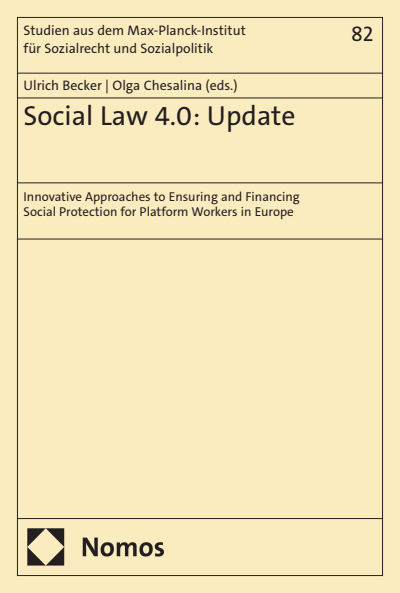
Social Law 4.0
New Approaches for Ensuring and Financing Social Security in the Digital Age- Herausgeber:innen:
- |
- Verlag:
- 2021
Zusammenfassung
Digitalisierung und die damit einhergehenden Veränderungen der Arbeitswelt stellen das Standardmodell der Beschäftigung als Basis von sozialen Sicherungssystemen zunehmend in Frage. Während sich eine wachsende Zahl an Veröffentlichungen mit deren Folgen für das Arbeitsrecht beschäftigen, bleibt bis heute das Sozialrecht weitgehend ausgeblendet. Das Buch schafft Abhilfe. Es beschäftigt sich mit den wichtigsten Herausforderungen für den sozialen Schutz durch Digitalisierung, dem Zugang zu Sicherungssystemen und deren Finanzierung am Beispiel der Plattformarbeit. Es gibt einen Überblick über nationale Lösungsansätze, analysiert dies in vergleichender Perspektive und stellt sie in einen transnationalen Kontext. Das Buch vereint Fallstudien aus Belgien, Italien, dem Vereinigten Königreich, den Niederlanden, Dänemark, Schweden, Spanien, Frankreich und Estland und behandelt die Herausforderungen, die Reformen für eine Standardsetzung auf EU-Ebene, für die Koordinierung innerhalb der EU und für ihr Verhältnis zum Steuerrecht ausgesetzt sind. Es vermittelt damit neue Einsichten, wie ein „Sozialrecht 4.0“ aussehen sollte.
Publikation durchsuchen
Bibliographische Angaben
- Auflage
- 1/2021
- Copyrightjahr
- 2021
- ISBN-Print
- 978-3-8487-7149-3
- ISBN-Online
- 978-3-7489-1200-2
- Verlag
- Nomos, Baden-Baden
- Reihe
- Studien aus dem Max-Planck-Institut für Sozialrecht und Sozialpolitik
- Band
- 74
- Sprache
- Englisch
- Seiten
- 393
- Produkttyp
- Sammelband
Inhaltsverzeichnis
- Titelei/InhaltsverzeichnisSeiten 1 - 12 Download Kapitel (PDF)
- Autor:innen: |Download Kapitel (PDF)
- Autor:innen: |
- 1. Digitalisation, Industrial Relations and Social ProtectionAutor:innen: |
- Autor:innen: |
- a) Access to Social ProtectionAutor:innen: |
- b) Financing of Social ProtectionAutor:innen: |
- Autor:innen: |
- a) Insights from Innovations in Social ProtectionAutor:innen: |
- b) Innovations in ResearchAutor:innen: |
- Autor:innen: |
- 1. BackgroundAutor:innen: |
- 2. Ensuring Social Security: Employment Status Classification and Innovative SolutionsAutor:innen: |
- 3. Financing Social Security: Experiences and New ApproachesAutor:innen: |
- 4. Transborder Perspective: The Future Role of the European UnionAutor:innen: |
- III. Conclusions and PerspectivesAutor:innen: |
- Autor:innen:Download Kapitel (PDF)
- I. IntroductionAutor:innen:
- II. Platform Work: What is Really New?Autor:innen:
- Autor:innen:
- 1. Situation at a GlanceAutor:innen:
- 2. Shortcomings of Empirical StudiesAutor:innen:
- 3. Cross-Border Labour Flows in Platform WorkAutor:innen:
- Autor:innen:
- 1. Platform Work as a Main Job and as a Side Job, and Motivation of Platform WorkersAutor:innen:
- Autor:innen:
- a) Dependence as a Legal CategoryAutor:innen:
- b) Dependence Explored in Empirical StudiesAutor:innen:
- 3. Access of Platform Workers to Social ProtectionAutor:innen:
- 4. Comparison of the Situation concerning Access to Social Protection of Platform Workers and Non-Standard Workers, and that of Self-Employed PersonsAutor:innen:
- V. Implications for Social Security from Practical EvidenceAutor:innen:
- VI. ConclusionAutor:innen:
- Autor:innen:Download Kapitel (PDF)
- I. IntroductionAutor:innen:
- Autor:innen:
- 1. Indirect Legal StatusAutor:innen:
- 2. Non-StatusAutor:innen:
- 3. Is the Sharing Economy not Labour?Autor:innen:
- 4. Back to the Drawing BoardAutor:innen:
- III. Towards New Protection for Platform Workers?Autor:innen:
- IV. ConclusionAutor:innen:
- Autor:innen:Download Kapitel (PDF)
- I. IntroductionAutor:innen:
- II. The Classification of Work Relationships: The BeginningAutor:innen:
- III. Subordination and Autonomy: A Political and Legal IssueAutor:innen:
- IV. Coordination: A New Star is BornAutor:innen:
- Autor:innen:
- 1. The Extension of Subordinated Social Protection to Autonomous WorkAutor:innen:
- 2. “Hetero-Organisation”: A New Challenge for SubordinationAutor:innen:
- Autor:innen:
- 1. Smart Working (on Platform) as a Modality of Subordinate WorkAutor:innen:
- 2. Platform Work as a Modality of Hetero-Organised CollaborationAutor:innen:
- 3. Platform Work as a Modality of (“False”) Autonomous WorkAutor:innen:
- VII. ConclusionAutor:innen:
- Autor:innen:Download Kapitel (PDF)
- I. IntroductionAutor:innen:
- Autor:innen:
- 1. Advantages of Non-Standard Forms of EmploymentAutor:innen:
- 2. Disadvantages of Non-Standard Forms of EmploymentAutor:innen:
- Autor:innen:
- 1. Universal Credit, Unemployment and WorkAutor:innen:
- 2. Universal Credit, New Style ESA, and Incapacity for WorkAutor:innen:
- 3. The Legislative Benefit CapAutor:innen:
- IV. Non-Standard Forms of Work and the Social Security SystemAutor:innen:
- V. Judicial Action in the Sphere of Non-Standard WorkAutor:innen:
- VI. Social Security Reforms for the 21st Century UK Labour MarketAutor:innen:
- VII. ConclusionAutor:innen:
- Autor:innen:Download Kapitel (PDF)
- I. IntroductionAutor:innen:
- II. The System in the Netherlands and Logical Setup of this ContributionAutor:innen:
- Autor:innen:
- Autor:innen:
- a) Main RulesAutor:innen:
- b) The Role of Case LawAutor:innen:
- c) Extending and Limiting the Scope of Application of the Employee Insurance Schemes on the Basis of Legal FictionAutor:innen:
- d) No (Formal) Definition of “Self-Employed Worker”Autor:innen:
- e) Practical Assessment of the Nature of the Employment Relationship by the Taxation AuthoritiesAutor:innen:
- Autor:innen:
- a) SicknessAutor:innen:
- b) UnemploymentAutor:innen:
- c) Incapacity for WorkAutor:innen:
- Autor:innen:
- a) Second PillarAutor:innen:
- b) Third PillarAutor:innen:
- Autor:innen:
- 1. Fighting Bogus Self-Employment and Enforcing Labour Law ProtectionAutor:innen:
- 2. Confronting the Great DivideAutor:innen:
- 3. Borstlap CommissionAutor:innen:
- V. Conclusion: Lessons (not) to be Learned from the Dutch ExperienceAutor:innen:
- Autor:innen:Download Kapitel (PDF)
- I. IntroductionAutor:innen:
- Autor:innen:
- 1. Sick Leave BenefitsAutor:innen:
- 2. Maternity Leave BenefitsAutor:innen:
- 3. Unemployment InsuranceAutor:innen:
- 4. Cash BenefitsAutor:innen:
- 5. Retirement PensionsAutor:innen:
- 6. Occupational Injury InsuranceAutor:innen:
- III. The Role of Social Partners in Improving Social Security for Platform WorkersAutor:innen:
- IV. ConclusionAutor:innen:
- Autor:innen:Download Kapitel (PDF)
- I. IntroductionAutor:innen:
- Autor:innen:
- 1. BasicsAutor:innen:
- 2. A Wide Concept of Employment in Labour LawAutor:innen:
- 3. No Requirement for Duration of TimeAutor:innen:
- 4. Generous Possibilities for Fixed-Term EmploymentAutor:innen:
- 5. Umbrella Companies and Temporary Work AgenciesAutor:innen:
- Autor:innen:
- 1. The Concept of Employment in Social Security LegislationAutor:innen:
- 2. The “Intention of the Parties” CriterionAutor:innen:
- 3. Social Security for Umbrella Company WorkersAutor:innen:
- 4. Unemployment Benefits for Umbrella Company WorkersAutor:innen:
- Autor:innen:
- 1. The Social Parties and New Phenomena in the Labour MarketAutor:innen:
- 2. Supplemental Collective AgreementsAutor:innen:
- V. ConclusionAutor:innen:
- Autor:innen:Download Kapitel (PDF)
- I. IntroductionAutor:innen:
- II. The Legal Classification of Platform WorkersAutor:innen:
- III. The Platform Economy and its Impact on Social SecurityAutor:innen:
- IV. Coping with the Financial Risks Associated with the Platform Economy? Small Steps, So FarAutor:innen:
- V. Preserving or Transforming the Financial Structure of Social Security Systems in a Context of Ageing?Autor:innen:
- VI. ConclusionAutor:innen:
- Autor:innen:Download Kapitel (PDF)
- I. IntroductionAutor:innen:
- II. Financing Social Security: Main PrinciplesAutor:innen:
- Autor:innen:
- 1. The Premises: The Mettling Report and the France Stratégie ReportAutor:innen:
- Autor:innen:
- a) First Attempt: Law on Work, Modernising the Social Dialogue of 2016Autor:innen:
- b) Second Attempt: Law to Choose One’s Professional Future of 2018Autor:innen:
- c) Law on Mobilities of 2019Autor:innen:
- Autor:innen:
- Autor:innen:
- a) Bed and BreakfastAutor:innen:
- b) Furnished Tourist AccommodationAutor:innen:
- Autor:innen:
- a) Bed and BreakfastAutor:innen:
- b) Furnished Tourist AccommodationAutor:innen:
- V. Anti-Fraud Measures: New Forms of ControlAutor:innen:
- VI. ConclusionAutor:innen:
- Autor:innen:Download Kapitel (PDF)
- I. IntroductionAutor:innen:
- II. New Forms of EmploymentAutor:innen:
- Autor:innen:
- 1. The Constitutional Framework of Social ProtectionAutor:innen:
- 2. Benefits Included in the Social Protection System and Personal ScopeAutor:innen:
- 3. Taxes and Contributions Foreseen for Financing Social ProtectionAutor:innen:
- Autor:innen:
- 1. General Tendencies of Development of Social ProtectionAutor:innen:
- 2. Shortcomings in Health Insurance CoverAutor:innen:
- 3. Unemployment Benefits – Access for the PrivilegedAutor:innen:
- Autor:innen:
- 1. What is an Entrepreneur Account?Autor:innen:
- 2. Necessary Social Security Protection (Example: Health Insurance)Autor:innen:
- 3. Entrepreneur Account – Sufficient for Social Protection?Autor:innen:
- VI. ConclusionAutor:innen:
- Autor:innen:Download Kapitel (PDF)
- I. IntroductionAutor:innen:
- Autor:innen:
- 1. Platform WorkAutor:innen:
- 2. Platform Work Compared to Standard WorkAutor:innen:
- Autor:innen:
- 1. What is “Work”?Autor:innen:
- 2. Who is the Employer?Autor:innen:
- 3. Irregular Work PatternsAutor:innen:
- 4. Virtual Mobility of Platform WorkersAutor:innen:
- Autor:innen:
- 1. The Recommendation as a Concrete Outcome of the European Pillar of Social RightsAutor:innen:
- Autor:innen:
- a) Formal AccessAutor:innen:
- b) Effective AccessAutor:innen:
- c) Adequate BenefitsAutor:innen:
- d) Transparent AccessAutor:innen:
- Autor:innen:
- 1. Platform Work: Self-Employment or Wage-Earnership?Autor:innen:
- 2. Low-Income Groups Covered by the Guarantee of Adequate Benefits?Autor:innen:
- 3. What is a Professional Activity and What is Not?Autor:innen:
- VI. An Alternative to Benefits Harmonisation: Towards an EU Financing Fork?Autor:innen:
- VII. ConclusionAutor:innen:
- Autor:innen:Download Kapitel (PDF)
- I. IntroductionAutor:innen:
- Autor:innen:
- 1. The ObjectiveAutor:innen:
- 2. Two ParadoxesAutor:innen:
- III. Distinctive DefinitionsAutor:innen:
- Autor:innen:
- 1. Impact of Qualification to Collision RulesAutor:innen:
- 2. Rules on Marginal ActivityAutor:innen:
- 3. Minimum Coverage for a Legislation to be Applicable?Autor:innen:
- 4. Only Voluntary Insurance for Non-Standard Workers?Autor:innen:
- V. Equality of TreatmentAutor:innen:
- VI. Aggregation of PeriodsAutor:innen:
- VII. Export of BenefitsAutor:innen:
- VIII. Conclusions and Proposals de lege ferendaAutor:innen:
- Autor:innen:Download Kapitel (PDF)
- I. IntroductionAutor:innen:
- Autor:innen:
- 1. Relationship of Platform and Work StatusAutor:innen:
- 2. Labour-Related Tax Incentives for PlatformsAutor:innen:
- III. Tax Issues and Employment Relationship: National ResponsesAutor:innen:
- Autor:innen:
- 1. Double Tax Treaties and the OECD MCAutor:innen:
- Autor:innen:
- a) Carrying out Activities “Independently”Autor:innen:
- b) Taxable PersonAutor:innen:
- c) Economic Activity/ Income DefinitionAutor:innen:
- 3. Enforcement and CollectionAutor:innen:
- V. ConclusionAutor:innen: