, um zu prüfen, ob Sie einen Vollzugriff auf diese Publikation haben.
Monographie Kein Zugriff
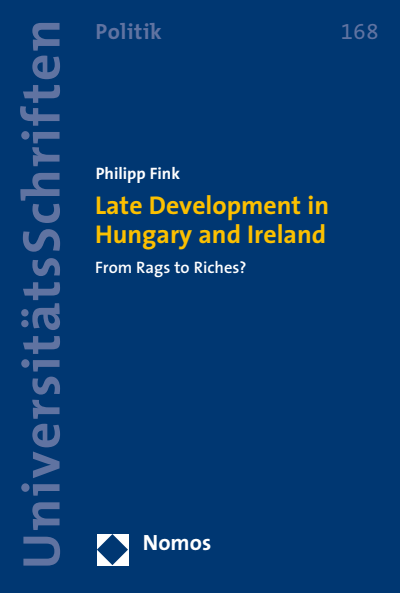
Late Development in Hungary and Ireland
From Rags to Riches?- Autor:innen:
- Reihe:
- Nomos Universitätsschriften - Politik, Band 168
- Verlag:
- 2009
Zusammenfassung
Irland und Ungarn verfolgen eine Entwicklungsstrategie, die in bewusster Abhängigkeit von Globalisierungsprozessen in Form von ausländischen Direktinvestitionen steht und sich als Paradigma in der Peripherie durchgesetzt hat. Doch dieser Entwicklungspfad hat zu einer ungleichen und abhängigen Entwicklung geführt. Dies ist laut dem Autor das Resultat des mangelnden Gestaltungswillens beider Staaten, für einen gleichgewichtigen Wachstumsprozess zu sorgen. Die historische Analyse zeigt, dass eine auf ausländische Firmen fußende Entwicklungsstrategie nicht ausreicht, um traditionelle Peripheralität zu überwinden. Der Autor fordert eine Reform des Entwicklungsparadigmas, um eine gleichgewichtige Entwicklung zu ermöglichen.
Publikation durchsuchen
Bibliographische Angaben
- Auflage
- 1/2009
- Copyrightjahr
- 2009
- ISBN-Print
- 978-3-8329-4173-4
- ISBN-Online
- 978-3-8452-1720-8
- Verlag
- Nomos, Baden-Baden
- Reihe
- Nomos Universitätsschriften - Politik
- Band
- 168
- Sprache
- Englisch
- Seiten
- 278
- Produkttyp
- Monographie
Inhaltsverzeichnis
KapitelSeiten
- Titelei/Inhaltsverzeichnis Kein Zugriff Seiten 2 - 12Autor:innen:
- List of Tables Kein Zugriff Seiten 13 - 14Autor:innen:
- Abbreviations Kein Zugriff Seiten 15 - 16Autor:innen:
- Introduction Kein Zugriff Seiten 17 - 27Autor:innen:
- Autor:innen:
- Divergent Development Kein ZugriffAutor:innen:
- Restitution of Noble Privileges Kein ZugriffAutor:innen:
- Constrained Development Kein ZugriffAutor:innen:
- Autor:innen:
- The Demise of Trade Kein ZugriffAutor:innen:
- Complementary Imperial Incorporation Kein ZugriffAutor:innen:
- External Imperial Modernisation Kein ZugriffAutor:innen:
- Autor:innen:
- Irish Proto-Industrialisation Kein ZugriffAutor:innen:
- External and Internal Factors of Deindustrialisation Kein ZugriffAutor:innen:
- The Act of the Union (1801) Kein ZugriffAutor:innen:
- Autor:innen:
- The Transformation of Agriculture Kein ZugriffAutor:innen:
- Detrimental Development Effects Kein ZugriffAutor:innen:
- Agricultural Export Dependency Kein Zugriff Seiten 46 - 47Autor:innen:
- Autor:innen:
- Noble Ascendancy Kein ZugriffAutor:innen:
- The Ethnic Dimension Kein ZugriffAutor:innen:
- The Social Dimension Kein ZugriffAutor:innen:
- Autor:innen:
- Agrarian Interests Kein ZugriffAutor:innen:
- Labour Interests Kein ZugriffAutor:innen:
- Party Political Structure Kein ZugriffAutor:innen:
- Constrained Industrialisation Kein Zugriff Seiten 55 - 56Autor:innen:
- Capacity and Autonomy Kein Zugriff Seiten 57 - 59Autor:innen:
- Popular Consent and Dissent Kein Zugriff Seiten 59 - 60Autor:innen:
- Autor:innen:
- The First Phase: Export Orientation and Laissez-Faire Kein ZugriffAutor:innen:
- The Second Phase: Industrial Protectionism Kein ZugriffAutor:innen:
- Results of Dualism Kein ZugriffAutor:innen:
- Autor:innen:
- Changed Environment for Development Kein ZugriffAutor:innen:
- Post-WWI Reconstruction Regime Kein ZugriffAutor:innen:
- The Rise of the Right and Revisionist Consent Kein ZugriffAutor:innen:
- Autor:innen:
- The State-Socialist Development Regime Kein ZugriffAutor:innen:
- The Results of Forced Capital Accumulation Kein ZugriffAutor:innen:
- The Revolution of 1956 and the Ascent of Kádárism Kein ZugriffAutor:innen:
- The Era of Continuous Reforms Kein ZugriffAutor:innen:
- The Demise of Socialism Kein ZugriffAutor:innen:
- Continued Hungarian Backwardness Kein Zugriff Seiten 90 - 91Autor:innen:
- Autor:innen:
- The Free State Development Regime Kein ZugriffAutor:innen:
- Restrained Capacity and Strong Autonomy Kein ZugriffAutor:innen:
- The Results of Laissez-Faire Kein ZugriffAutor:innen:
- Autor:innen:
- Protectionist Autonomy and Restrained Capacity Kein ZugriffAutor:innen:
- The Results of Protectionism Kein ZugriffAutor:innen:
- Autonomy, Capacity and Consent Kein Zugriff Seiten 104 - 105Autor:innen:
- Macroeconomic Effects Kein Zugriff Seiten 106 - 108Autor:innen:
- Microeconomic Effects Kein Zugriff Seiten 108 - 109Autor:innen:
- Attraction Strategy Kein Zugriff Seiten 109 - 112Autor:innen:
- Macro and Micro-Coordination Kein Zugriff Seiten 112 - 114Autor:innen:
- Implications for State Autonomy, Capacity and Consent Kein Zugriff Seiten 114 - 115Autor:innen:
- External and Internal Factors for Hungarian FDI-Attraction Kein Zugriff Seiten 115 - 119Autor:innen:
- Autor:innen:
- Crisis Management (1990-1994) Kein ZugriffAutor:innen:
- Strategic Reorientation and Stabilisation (1994-1998) Kein ZugriffAutor:innen:
- Creation of a Counter-Movement (1998-2002) Kein ZugriffAutor:innen:
- The 1958 Revolution? Kein Zugriff Seiten 134 - 138Autor:innen:
- Autor:innen:
- The Golden Age of Irish Economic Growth (1955-1973) Kein ZugriffAutor:innen:
- Decades of Crisis (1973-1987) Kein ZugriffAutor:innen:
- The Rise of the “Network State” Kein ZugriffAutor:innen:
- Complementarity and Divergence Kein Zugriff Seiten 154 - 155Autor:innen:
- Industrial Dualism Kein Zugriff Seiten 156 - 159Autor:innen:
- Social Dichotomy Kein Zugriff Seiten 159 - 160Autor:innen:
- Autor:innen:
- Extent of TNC Penetration Kein ZugriffAutor:innen:
- Impact on Trade Kein ZugriffAutor:innen:
- The Issue of Transfer Pricing Kein ZugriffAutor:innen:
- Autor:innen:
- Direct and Indirect Linkages Kein ZugriffAutor:innen:
- Indigenous Firms Kein Zugriff Seiten 169 - 171Autor:innen:
- Autor:innen:
- Socialist Legacies and Transition Kein ZugriffAutor:innen:
- Product Market Competition Kein ZugriffAutor:innen:
- Factor Market Competition Kein ZugriffAutor:innen:
- Political Neglect Kein ZugriffAutor:innen:
- Dichotomy of Industry in Hungary Kein Zugriff Seiten 177 - 177Autor:innen:
- Autor:innen:
- Income Dispersion Kein ZugriffAutor:innen:
- Autor:innen:
- Earnings Mobility Kein ZugriffAutor:innen:
- Skill-Biased Labour Demand Kein ZugriffAutor:innen:
- Collective Bargaining and Inequality Kein ZugriffAutor:innen:
- Autor:innen:
- Household Income Inequality Kein ZugriffAutor:innen:
- Income Poverty and Deprivation Kein ZugriffAutor:innen:
- Autor:innen:
- Transformation of the Hungarian Welfare State Kein ZugriffAutor:innen:
- Inequality Reduction Kein ZugriffAutor:innen:
- Poverty Alleviation Kein ZugriffAutor:innen:
- Hungarian Social Dichotomy Kein Zugriff Seiten 194 - 195Autor:innen:
- Autor:innen:
- TNC Penetration Kein ZugriffAutor:innen:
- Impact on Irish Trade Kein ZugriffAutor:innen:
- Transfer Pricing Distortions Kein ZugriffAutor:innen:
- Autor:innen:
- Pecuniary and Productive Linkages Kein ZugriffAutor:innen:
- Spillover Effects Kein ZugriffAutor:innen:
- Autor:innen:
- The Nature of Irish-owned Industry Kein ZugriffAutor:innen:
- Displacement Effects Kein ZugriffAutor:innen:
- Factor Market Competition Effects Kein ZugriffAutor:innen:
- The Internal Demand Factor Kein ZugriffAutor:innen:
- Political Neglect Kein ZugriffAutor:innen:
- Dichotomous Irish Industrial Structure Kein Zugriff Seiten 218 - 218Autor:innen:
- Autor:innen:
- Labour Market Supply and Demand Factors Kein ZugriffAutor:innen:
- Social Partnership Kein ZugriffAutor:innen:
- Autor:innen:
- Household Income Distribution Kein ZugriffAutor:innen:
- Poverty and Exclusion Kein ZugriffAutor:innen:
- Autor:innen:
- The Irish Welfare State Kein ZugriffAutor:innen:
- Redistribution, Poverty Alleviation and Inclusion Kein ZugriffAutor:innen:
- Social Partnership Revisited Kein ZugriffAutor:innen:
- Irish Social Dichotomy Kein Zugriff Seiten 238 - 239Autor:innen:
- Results of FDI-led Development in Hungary and Ireland Kein Zugriff Seiten 239 - 241Autor:innen:
- Conclusion: Myth or Mirage? Kein Zugriff Seiten 242 - 252Autor:innen:
- Bibliography Kein Zugriff Seiten 253 - 278Autor:innen: