, um zu prüfen, ob Sie einen Vollzugriff auf diese Publikation haben.
Sammelband Kein Zugriff

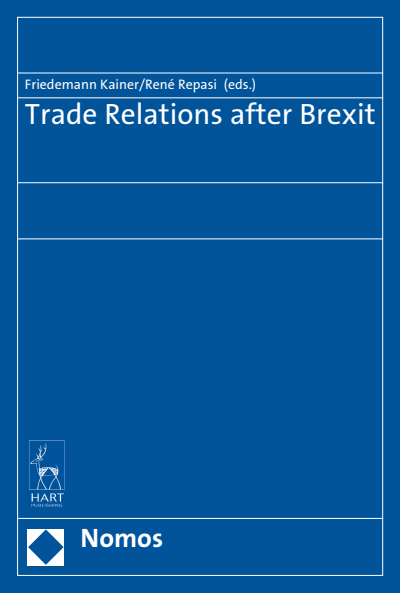
Trade Relations after Brexit

Herausgeber:innen:
Verlag:
 2019

Zusammenfassung

Der Austritt Großbritanniens aus der EU stellt die erste Rückabwicklung europäischer Integration dar. Er wird spürbare Auswirkungen auf die gemeinsamen Handelsbeziehungen haben. Dieser Sammelband führt Beiträge aus der Wirtschafts- und Rechtswissenschaft zusammen, die die entscheidenden Herausforderungen des Brexit benennen. Dabei betrachten die Beiträge nicht nur das Austrittsabkommen, sondern werfen darüber hinausgehend einen Blick auf die künftigen Handelsbeziehungen zwischen Großbritannien und der EU.

Die Autoren dieses Bandes sind davon überzeugt, dass die künftigen Beziehungen zwischen der EU und Großbritannien ein größtmögliches Maß an wirtschaftlichen Freiheiten zum Wohle beider Seiten ermöglichen sollen. Dabei müssen jedoch die politischen Grenzen berücksichtigt werden, die für Großbritannien daraus folgen, dass die britische Regierung die Hauptziele der erfolgreichen Brexit-Kampagne umsetzen und zugleich verhindern muss, dass der nordirische Friedensprozess destabilisiert wird. Die EU will ihrerseits verhindern, dass durch den Brexit Anreize für eine Destabilisierung der europäischen Integration entstehen könnten. Vor diesem Hintergrund entwickeln die Beiträge Lösungen, die als verlässliches Modell für den Verhandlungsprozess dienen können.

Schlagworte


Publikation durchsuchen


Bibliographische Angaben

Auflage
1/2019
Copyrightjahr
2019
ISBN-Print
978-3-8487-5133-4
ISBN-Online
978-3-8452-9334-9
Verlag
Nomos, Baden-Baden
Sprache
Englisch
Seiten
415
Produkttyp
Sammelband

Inhaltsverzeichnis

KapitelSeiten
  1. Titelei/Inhaltsverzeichnis Kein Zugriff Seiten 1 - 6
  2. Trade Relations after Brexit: An Introduction Kein Zugriff Seiten 7 - 14
    Autor:innen:
    1. Autor:innen:
      1. Autor:innen:
        1. The UK’s loss of sovereignty Kein Zugriff
          Autor:innen:
        2. Migration Kein Zugriff
          Autor:innen:
        3. EU, the Bottomless Money Pit Kein Zugriff
          Autor:innen:
      2. The UK’s Take in the Negotiation and the EU’s Dilemma Kein Zugriff
        Autor:innen:
      3. The UK’s Red Lines Kein Zugriff
        Autor:innen:
      4. Slow Progress Kein Zugriff
        Autor:innen:
      5. The Economic Implications of Brexit Kein Zugriff
        Autor:innen:
      6. Resume Kein Zugriff
        Autor:innen:
    2. Autor:innen:
      1. I. Un peu d’histoire Kein Zugriff
        Autor:innen:
      2. Autor:innen:
        1. The economic effects of Brexit Kein Zugriff
          Autor:innen:
      3. Autor:innen:
        1. A. EU trade negotiations: the outcome from a full Brexit compared with a Soft Brexit Kein Zugriff
          Autor:innen:
        2. B. What if there was no Trade Deal with the EU? Kein Zugriff
          Autor:innen:
        3. C. Canada-plus: the only possible negotiated outcome Kein Zugriff
          Autor:innen:
      4. IV. Conclusions: the post-Brexit world will be a better world Kein Zugriff
        Autor:innen:
    3. Autor:innen:
      1. A. Introduction Kein Zugriff
        Autor:innen:
      2. Autor:innen:
        1. Autor:innen:
          1. 1. Early studies Kein Zugriff
            Autor:innen:
          2. 2. Qualification of the early studies Kein Zugriff
            Autor:innen:
          3. 3. Newer studies Kein Zugriff
            Autor:innen:
        2. Autor:innen:
          1. 1. Additional static trade effects Kein Zugriff
            Autor:innen:
          2. 2. Additional dynamic trade effects Kein Zugriff
            Autor:innen:
          3. 3. Additional non-trade effects of economic integration Kein Zugriff
            Autor:innen:
        3. Autor:innen:
          1. 1. What scope for deregulation? Kein Zugriff
            Autor:innen:
          2. 2. What potential for “Global Britain” and new FTAs with third countries? Kein Zugriff
            Autor:innen:
          3. 3. No more contributions to the EU? Kein Zugriff
            Autor:innen:
      3. Autor:innen:
        1. I. Limited impact of Brexit in 2016 Kein Zugriff
          Autor:innen:
        2. II. Losses in real income in 2017 due to pound devaluation Kein Zugriff
          Autor:innen:
        3. III. Slower economic growth and investment Kein Zugriff
          Autor:innen:
      4. Autor:innen:
        1. I. Long-term implications Kein Zugriff
          Autor:innen:
        2. II. Short-term implications Kein Zugriff
          Autor:innen:
      5. E. Bibliography Kein Zugriff
        Autor:innen:
    1. Autor:innen:
      1. A. Introduction Kein Zugriff
        Autor:innen:
      2. B. Trade policy background for the Brexit process Kein Zugriff
        Autor:innen:
      3. Autor:innen:
        1. I. Starting point: Parallel membership of EU and EU Member States in the WTO Kein Zugriff
          Autor:innen:
        2. Autor:innen:
          1. 1. Formal membership status Kein Zugriff
            Autor:innen:
          2. 2. Scope of legal obligations Kein Zugriff
            Autor:innen:
          3. 3. Schedules of Concessions; Tariff Rate Quotas (TRQ) Kein Zugriff
            Autor:innen:
          4. 4. Agricultural subsidies Kein Zugriff
            Autor:innen:
          5. 5. Market access for services Kein Zugriff
            Autor:innen:
          6. 6. Dispute settlement mechanism Kein Zugriff
            Autor:innen:
          7. 7. Trade defence measures Kein Zugriff
            Autor:innen:
      4. D. Other EU trade agreements Kein Zugriff
        Autor:innen:
      5. E. Future EU 27-UK trade relations Kein Zugriff
        Autor:innen:
      6. F. Brexit and investment protection Kein Zugriff
        Autor:innen:
      7. G. UK’s third country trade relations Kein Zugriff
        Autor:innen:
      8. H. Conclusion Kein Zugriff
        Autor:innen:
    2. Autor:innen:
      1. A. The ‘Brexit’ Challenge in Trade: Maintaining or Establishing Integrated Markets with Means other than a Single Market Kein Zugriff
        Autor:innen:
      2. B. Positions on the Future Relationship between the UK and the EU Kein Zugriff
        Autor:innen:
      3. Autor:innen:
        1. I. Object Common to all Trade Cooperation: Reducing Costs Attached to Cross-Border Economic Activities Kein Zugriff
          Autor:innen:
        2. Autor:innen:
          1. 1. Intensity of Trade Cooperation Kein Zugriff
            Autor:innen:
          2. 2. Means to Implement Trade Cooperation Kein Zugriff
            Autor:innen:
          3. 3. Enforcement of Trade Cooperation Kein Zugriff
            Autor:innen:
          4. 4. Scope of Trade Cooperation Kein Zugriff
            Autor:innen:
          5. 5. Analytical Grid Kein Zugriff
            Autor:innen:
        3. Autor:innen:
          1. 1. Setting the Benchmark: Membership in the European Union Kein Zugriff
            Autor:innen:
          2. 2. Comprehensive Free Trade Agreement: The Example of CETA Kein Zugriff
            Autor:innen:
          3. 3. The Political Declaration Setting out the Framework for the Future Relationship Kein Zugriff
            Autor:innen:
        4. IV. Interim Conclusion Kein Zugriff
          Autor:innen:
      4. Autor:innen:
        1. Autor:innen:
          1. 1. Agreement Kein Zugriff
            Autor:innen:
          2. 2. Delegation of Powers to Treaty Bodies Kein Zugriff
            Autor:innen:
          3. 3. International Organisation Kein Zugriff
            Autor:innen:
        2. Autor:innen:
          1. 1. Limits Inherent to Agreements Kein Zugriff
            Autor:innen:
          2. 2. Limits Inherent to the Delegation of Powers to Treaty Bodies Kein Zugriff
            Autor:innen:
          3. 3. Limits Inherent to the Delegation of Powers to International Organisations Kein Zugriff
            Autor:innen:
        3. III. Including the Limits of Available Legal Instruments into the Analytical Grid Kein Zugriff
          Autor:innen:
        4. IV. Interim Conclusion Kein Zugriff
          Autor:innen:
      5. E. Free Trade Agreements are no Means to Maintain the Existing Level of Market Integration between the UK and the EU Kein Zugriff
        Autor:innen:
      6. F. Conclusions Kein Zugriff
        Autor:innen:
    3. Autor:innen:
      1. I. Introduction Kein Zugriff
        Autor:innen:
      2. Autor:innen:
        1. 1. Common Standards and Efficiency in Trade Kein Zugriff
          Autor:innen:
        2. 2. The Case for Services Kein Zugriff
          Autor:innen:
        3. Autor:innen:
          1. a) The principle of competition under the Internal Market law Kein Zugriff
            Autor:innen:
          2. b) Distortions of Competition due to Differences in Regulatory Costs Kein Zugriff
            Autor:innen:
        4. 4. Interim Conclusion Kein Zugriff
          Autor:innen:
      3. Autor:innen:
        1. 1. Harmonisation: EEA and the EU-Ukraine Association Agreement Kein Zugriff
          Autor:innen:
        2. 2. Regulatory Cooperation: The CETA Approach Kein Zugriff
          Autor:innen:
        3. 3. Autonomous Alignment: The Swiss Model Kein Zugriff
          Autor:innen:
        4. 4. Minimum Standards and Non-Regression: The Backstop Protocol Kein Zugriff
          Autor:innen:
        5. 5. Analysis Kein Zugriff
          Autor:innen:
      4. Autor:innen:
        1. 1. The Need for a Bespoke, Comprehensive, and Living Agreement Kein Zugriff
          Autor:innen:
        2. Autor:innen:
          1. a) A Forum for Regulatory Cooperation Kein Zugriff
            Autor:innen:
          2. b) Monitoring Regulatory Alignment Kein Zugriff
            Autor:innen:
          3. c) Decision Making Kein Zugriff
            Autor:innen:
          4. d) Institutional Setting Kein Zugriff
            Autor:innen:
        3. 3. Conditionality of Market Access Kein Zugriff
          Autor:innen:
        4. 4. The Need for Legal Protection Kein Zugriff
          Autor:innen:
        5. 5. Voluntary Equivalence as Case for Cherry Picking? Kein Zugriff
          Autor:innen:
      5. V. Summary Kein Zugriff
        Autor:innen:
    1. Autor:innen:
      1. 1. Introduction: the enduring importance of goods Kein Zugriff
        Autor:innen:
      2. Autor:innen:
        1. 2.1. Customs duties and charges having equivalent effect Kein Zugriff
          Autor:innen:
        2. 2.2. Fiscal barriers due to internal taxation Kein Zugriff
          Autor:innen:
        3. 2.3. Non-tariff barriers Kein Zugriff
          Autor:innen:
        4. 2.4. The legal machinery behind free movement of goods Kein Zugriff
          Autor:innen:
      3. 3. The backstop and the minimum content of a future arrangement for goods Kein Zugriff
        Autor:innen:
      4. Autor:innen:
        1. 4.1. Customs duties and charges having equivalent effect under the white paper Kein Zugriff
          Autor:innen:
        2. 4.2. Fiscal barriers due to internal taxation and the white paper Kein Zugriff
          Autor:innen:
        3. 4.3. Non-tariff barriers and the white paper Kein Zugriff
          Autor:innen:
        4. 4.4. The legal machinery behind free movement of goods and the white paper Kein Zugriff
          Autor:innen:
      5. Autor:innen:
        1. 5.1. Falling short: regulatory models for goods that do not prevent a hard border Kein Zugriff
          Autor:innen:
        2. 5.2. Regulatory models that do prevent a hard border (at a cost) Kein Zugriff
          Autor:innen:
        3. 5.3. Time for hard choices: the UK trilemma Kein Zugriff
          Autor:innen:
        4. 5.4. Time for serious self-reflection: the EU choices Kein Zugriff
          Autor:innen:
    2. Autor:innen:
      1. Introduction – the Importance of Services Kein Zugriff
        Autor:innen:
      2. The Particular Case of Financial Services Kein Zugriff
        Autor:innen:
      3. Relevant Considerations in Negotiating a Brexit Deal on Services Kein Zugriff
        Autor:innen:
      4. Possible Negotiation Outcomes Regarding the Free Movement of Services Kein Zugriff
        Autor:innen:
      5. Retention of EU Membership Kein Zugriff
        Autor:innen:
      6. EEA-Style Agreement/EEA-plus-Customs Union-Style Agreement Kein Zugriff
        Autor:innen:
      7. Free Trade Areas and the Free Movement of Services Kein Zugriff
        Autor:innen:
      8. CETA plus-style (or EEA minus-style) agreement Kein Zugriff
        Autor:innen:
      9. Ukraine-style association agreement Kein Zugriff
        Autor:innen:
      10. CETA/Korea-style agreement. Kein Zugriff
        Autor:innen:
      11. The ‘No Deal’ Scenario Kein Zugriff
        Autor:innen:
      12. Developments During the Negotiations on Brexit and their Relevance to the Free Movement of Services Kein Zugriff
        Autor:innen:
      13. Mansion House speech Kein Zugriff
        Autor:innen:
      14. Chequers Kein Zugriff
        Autor:innen:
      15. The July White Paper Kein Zugriff
        Autor:innen:
      16. The Withdrawal Agreement and Associated Political Declaration Kein Zugriff
        Autor:innen:
      17. Ground Zero: the Looming Danger of a No Deal Scenario Kein Zugriff
        Autor:innen:
      18. Endnote? Kein Zugriff
        Autor:innen:
    3. Autor:innen:
      1. Abstract Kein Zugriff
        Autor:innen:
      2. 1. Introduction Kein Zugriff
        Autor:innen:
      3. Autor:innen:
        1. 2.1 No More Passporting Post Brexit Kein Zugriff
          Autor:innen:
        2. 2.2 No alternative—EEA Membership or Bespoke Arrangement Kein Zugriff
          Autor:innen:
        3. 2.3 Anticipatory Action and Fait Accompli Kein Zugriff
          Autor:innen:
        4. 2.4 Conclusion: End of Access to Financial Market? Kein Zugriff
          Autor:innen:
      4. Autor:innen:
        1. 3.1 The Economic Case for Access to the Internal Market—for the UK Kein Zugriff
          Autor:innen:
        2. 3.2 The Case for Continental Europe to Stay with Britain Kein Zugriff
          Autor:innen:
        3. 3.3 Avoiding a Precedent? Kein Zugriff
          Autor:innen:
        4. 3.4 Political Constraints Kein Zugriff
          Autor:innen:
        5. 3.5 Currently Hardening Stances Kein Zugriff
          Autor:innen:
      5. Autor:innen:
        1. 4.1 Lessons from EU Financial Integration Kein Zugriff
          Autor:innen:
        2. 4.2 Reason to Worry? Kein Zugriff
          Autor:innen:
        3. 4.3 Implications for Brexit Kein Zugriff
          Autor:innen:
      6. Autor:innen:
        1. 5.1 ‘Special Deal’ As Most Likely Outcome Kein Zugriff
          Autor:innen:
        2. 5.2 Alternative: Equivalence and Third-Country Passport Kein Zugriff
          Autor:innen:
        3. 5.3 Private Solutions Kein Zugriff
          Autor:innen:
      7. 6. Conclusion Kein Zugriff
        Autor:innen:
    4. Autor:innen:
      1. I. Introduction Kein Zugriff
        Autor:innen:
      2. Autor:innen:
        1. 1. The legal effects and interpretation of the Withdrawal Agreement Kein Zugriff
          Autor:innen:
        2. 2. The personal scope of the Withdrawal Agreement with respect to citizens’ rights Kein Zugriff
          Autor:innen:
        3. 3. Administrative procedures for applications for status Kein Zugriff
          Autor:innen:
        4. 4. The substantive provisions on citizens’ rights Kein Zugriff
          Autor:innen:
      3. Autor:innen:
        1. 1. Foundational issues and methods for interpretation Kein Zugriff
          Autor:innen:
        2. 2. The personal scope of citizens’ rights Kein Zugriff
          Autor:innen:
        3. 3. Rights related to residence Kein Zugriff
          Autor:innen:
        4. 4. Residence documents Kein Zugriff
          Autor:innen:
        5. 5. The rights of workers and self-employed persons Kein Zugriff
          Autor:innen:
        6. 6. Other provisions Kein Zugriff
          Autor:innen:
      4. IV. The future mobility framework Kein Zugriff
        Autor:innen:
      5. V. Some reflections on citizens’ rights after Brexit Kein Zugriff
        Autor:innen:
    5. Autor:innen:
      1. A. Introduction Kein Zugriff
        Autor:innen:
      2. Autor:innen:
        1. Autor:innen:
          1. 1. Block Exemptions Kein Zugriff
            Autor:innen:
          2. 2. Alignment or divergence in the longer run? Kein Zugriff
            Autor:innen:
        2. II. Mergers Kein Zugriff
          Autor:innen:
        3. III. Market Investigations Kein Zugriff
          Autor:innen:
        4. IV. State Aid Kein Zugriff
          Autor:innen:
      3. Autor:innen:
        1. I. Public enforcement: cooperation in the ECN and the Advisory Committee on concentrations. Kein Zugriff
          Autor:innen:
        2. II. Public enforcement: cooperation with third countries. Kein Zugriff
          Autor:innen:
        3. III. Public enforcement: resource implications Kein Zugriff
          Autor:innen:
        4. Autor:innen:
          1. 1. Recognition and enforcement Kein Zugriff
            Autor:innen:
          2. 2. Follow-on actions based on Commission decisions Kein Zugriff
            Autor:innen:
      4. D. Transitional arrangements Kein Zugriff
        Autor:innen:
      5. E. What if the UK stayed in the EEA? Kein Zugriff
        Autor:innen:
      6. F. Changes from the perspective of the EU Kein Zugriff
        Autor:innen:
      7. G. Conclusion Kein Zugriff
        Autor:innen:
      8. Bibliography Kein Zugriff
        Autor:innen:
    6. Autor:innen:
      1. A. Introduction Kein Zugriff
        Autor:innen:
      2. Autor:innen:
        1. I. Dismantling of non-tariff barriers to trade in public markets Kein Zugriff
          Autor:innen:
        2. II. Administrative cooperation as a trade-facilitation strategy Kein Zugriff
          Autor:innen:
        3. III. Boosting the enforceability of the rules Kein Zugriff
          Autor:innen:
      3. Autor:innen:
        1. I. Preventing the re-appearance of non-tariff barriers to trade in public markets Kein Zugriff
          Autor:innen:
        2. II. Continued administrative cooperation as a trade-facilitation strategy Kein Zugriff
          Autor:innen:
        3. III. Retaining the enforceability of the rules Kein Zugriff
          Autor:innen:
      4. D. Concluding remarks Kein Zugriff
        Autor:innen:
    7. Autor:innen:
      1. Autor:innen:
        1. I. Reasons for Specific EU-UK Common Substantive Rules. Kein Zugriff
          Autor:innen:
        2. II. Scenario of No Agreement on Common Substantive Rules Kein Zugriff
          Autor:innen:
        3. III. Lack of Common Rules on Judicial Protection. Kein Zugriff
          Autor:innen:
      2. Autor:innen:
        1. I. Presumptions Kein Zugriff
          Autor:innen:
        2. II. Uniformity of Existing Law. Kein Zugriff
          Autor:innen:
        3. III. Uniformity of Future Legislation. Kein Zugriff
          Autor:innen:
      3. Autor:innen:
        1. I. Presumptions. Kein Zugriff
          Autor:innen:
        2. Autor:innen:
          1. 1. Absence Model (Full Judicial Autonomy of Both Sides). Kein Zugriff
            Autor:innen:
          2. 2. Cooperation Model (Modified Judicial Autonomy). Kein Zugriff
            Autor:innen:
          3. 3. Common Dispute Resolution Model. Kein Zugriff
            Autor:innen:
          4. 4. The Inclusion Model Kein Zugriff
            Autor:innen:
      4. D. Conclusion. Kein Zugriff
        Autor:innen:

Literaturverzeichnis (135 Einträge)

  1. Ashton, P., MacKinnon, N. & Minford, P. (2016) ‘The economics of unskilled immigration’, (London) <http://www.economistsforfreetrade.com/the-economics-of-unskilled-immigration/> Google Scholar öffnen doi.org/10.5771/9783845293349-43
  2. Australian Department of Foreign Affairs and Trade (2017), Australian Trade Liberalisation: Analysis of Trade Impacts, <https://dfat.gov.au/about-us/publications/trade-investment/Documents/cie-report-trade-liberalisation.pdf> Google Scholar öffnen doi.org/10.5771/9783845293349-43
  3. Berden, K., Francois, J., Tamminen, S., Thelle, M., & Wymenga, P. (20009) ‘Non-Tariff Measures in EU-US Trade and Investment: An Economic Analysis,’ Final report, Ecorys; cited in Breinlich et al (2016) [Table of ntbs on p 123.] Google Scholar öffnen doi.org/10.5771/9783845293349-43
  4. Breinlich, H., Dhingra, S, Ottaviano, G., Sampson, T., Van Reenen, J. & Wadsworth, J. (2016) ‘BREXIT 2016: Policy analysis from the Centre for Economic Performance’, (London, 2016), pp154. Google Scholar öffnen doi.org/10.5771/9783845293349-43
  5. Ciuriak, D. & Jingliang X., with Ciuriak, N., Dadkhah, A, Lysenko, D. and Badri Narayanan G. (2015) ‘The Trade-related Impact of a UK Exit from the EU Single Market’ - a Research Report prepared for Open Europe by Ciuriak Consulting, (2015) <http://ssrn.com/abstract=2620718> Google Scholar öffnen doi.org/10.5771/9783845293349-43
  6. Civil Service (2018) EU Exit Analysis: A Cross Whitehall Briefing, <https://www.parliament.uk/documents/commons-committees/Exiting-the-European-Union/17-19/Cross-Whitehall-briefing/EU-Exit-Analysis-Cross-Whitehall-Briefing.pdf> Google Scholar öffnen doi.org/10.5771/9783845293349-43
  7. Economists for Brexit, ‘A brief on the City after Brexit: written evidence to the International Trade Committee, December 2016’ (2016) https://www.economistsforfreetrade.com/wpcontent/uploads/2017/08/ABriefontheCityAfterBrexit-WrittenEvidencetoIntlTradeCom....pdf Google Scholar öffnen doi.org/10.5771/9783845293349-43
  8. HM Treasury (2016) ‘HM Treasury analysis: the long-term economic impact of EU membership and the alternatives’, Ref: ISBN 978-1-4741-3089-9, PU1908, Cm 9250PDF, 8.97MB, 206 pages (2016) Google Scholar öffnen doi.org/10.5771/9783845293349-43
  9. Minford, P., with Gupta, Le V., Mahambare, V. and Xu, Y. (2015) ‘Should Britain leave the EU? An economic analysis of a troubled relationship, second edition, December 2015’, pp. 197, (Cheltenham, 2015) Google Scholar öffnen doi.org/10.5771/9783845293349-43
  10. Minford, P. and Xu, Y. (2017) ‘Classical or gravity: which model best matches the UK facts?’ forthcoming Open Economies Review, (2017), https://link.springer.com/content/pdf/10.1007%2Fs11079-017-9470-z.pdf Google Scholar öffnen doi.org/10.5771/9783845293349-43
  11. Minford, P., (2017a) ‘From Project Fear to Project Prosperity, an Introduction’, https://www.economistsforfreetrade.com/wp-content/uploads/2017/08/From-Project-Fear-to-Project-Prosperity-An-Introduction-15-Aug-17-2.pdf Google Scholar öffnen doi.org/10.5771/9783845293349-43
  12. Minford, P., (2017b) on behalf of Economists for Free Trade, ‘A Budget for Brexit- Economic Report’, <https://www.economistsforfreetrade.com/wp-content/uploads/2017/11/EFT-Budget-for-Brexit-14.11.17.pdf> Google Scholar öffnen doi.org/10.5771/9783845293349-43
  13. Protts, J., (2016) ‘Potential post-Brexit tariff costs for EU-UK trade’ Briefing note: October 2016, Civitas, (2016), <http://www.civitas.org.uk/reports_articles/potential-post-brexit-tariff-costs-for-eu-uk-trade/> Google Scholar öffnen doi.org/10.5771/9783845293349-43
  14. Reynolds, B., (2017a) A Template for enhanced equivalence: creating a lasting relationship for financial services between the EU and the UK, (London, 2017a) Google Scholar öffnen doi.org/10.5771/9783845293349-43
  15. Reynolds, B., (2017b) The Art of No Deal: how best to navigate Brexit for financial services, (London, 2017b) Google Scholar öffnen doi.org/10.5771/9783845293349-43
  16. Abadie, Alberto/Gardeazabal, Javier, ‘The Economic Costs of Conflict: A Case Study of the Basque’ Country (2003) 93, 1 American Economic Review, 113-132. Google Scholar öffnen doi.org/10.5771/9783845293349-59
  17. Aichele, Rahel/Felbermayr, Gabriel, Kosten und Nutzen eines Austritts des Vereinigten Königreichs aus der Europäischen Union (Munich April 2015). Google Scholar öffnen doi.org/10.5771/9783845293349-59
  18. Albornoz, Facundo/Calvo Pardo, Héctor F./Corcos, Gregory/Ornelas, Emanuel, ‘Sequential exporting’ (2012) 88, 1 Journal of International Economics, 17−31. Google Scholar öffnen doi.org/10.5771/9783845293349-59
  19. Altomonte, Carlo/Aquilante, Tommaso/Békés, Gábor/Ottaviano, Gianmarco I. P., ‘Internationalization and innovation of firms: evidence and policy’ (2013) 76 Economic policy: a European forum, 663-700 Google Scholar öffnen doi.org/10.5771/9783845293349-59
  20. Auer, Raphael/Fischer, Andreas M., ‘The Effect of Trade with Low-Income Countries on U.S. Industry’ (2008) CEPR Discussion Paper Series 6819. Google Scholar öffnen doi.org/10.5771/9783845293349-59
  21. Aw, Bee Yan/Roberts, Mark J./Yi Xu, Daniel, ‘R&D Investment, Exporting, and Productivity Dynamics’ (2011) American Economic Review 101, 4, 1312−1344. Google Scholar öffnen doi.org/10.5771/9783845293349-59
  22. Badinger, Harald, ‘Growth Effects of Economic Integration: Evidence from the EU Member States’ (2005) 141 Review of World Economics, 50-78. Google Scholar öffnen doi.org/10.5771/9783845293349-59
  23. Baier, Scott L./Bergstrand, Jeffrey H., ‘Do free trade agreements actually increase members’ international trade?’ (2007) 71, 1 Journal of International Economics, 72-95. Google Scholar öffnen doi.org/10.5771/9783845293349-59
  24. Baier, Scott L./Bergstrand, Jeffrey H./Egger, Peter/McLaughlin, Patrick A., ‘Do Economic Integration Agreements Actually Work? Issues in Understanding the Causes and Consequences of the Growth of Regionalism’ (2008) 31, 4 The World Economy, 461−497. Google Scholar öffnen doi.org/10.5771/9783845293349-59
  25. Baldwin, Richard/Seghezza, Elena, ‘Testing for Trade-Induced InvestmentLed Growth’ (2008) 61, 2-3 Economia Internazionale/International Economics, 507−537. Google Scholar öffnen doi.org/10.5771/9783845293349-59
  26. Baldwin, Richard/Braconier, Hernik/Forslid, Rikard, ‘Multinationals, Endogenous Growth, and Technological Spillovers: Theory and Evidence’ (2005) 15, 5 Review of International Economics, 945-963. Google Scholar öffnen doi.org/10.5771/9783845293349-59
  27. Bernard, Andrew B./Jensen, J. Bradford/Schott, Peter K., ‘Trade Costs, Firms and Productivity’ (2006) 53 Journal of Monetary Economics, 917-937. Google Scholar öffnen doi.org/10.5771/9783845293349-59
  28. Bloom, Nicholas/Draca, Mirko/Van Reenen, John, ‘Trade Induced Technical Change? The Impact of Chinese Imports on Innovation, IT and Productivity’, (2011) NBER Working Papers 16717. Google Scholar öffnen doi.org/10.5771/9783845293349-59
  29. Booth, Stephen et al., What if …? The consequences, challenges and opportunities facing Britain outside the EU, Open Europe Report 3(London 2015). Google Scholar öffnen doi.org/10.5771/9783845293349-59
  30. Bootle et al., Alternative Brexit Economic Analysis, (February 2018) https://www.economistsforfreetrade.com/wp-content/uploads/2018/03/Alternative-Brexit-Economic-Analysis-Final-2-Mar-18.pdf Google Scholar öffnen doi.org/10.5771/9783845293349-59
  31. Broda, Christian/Weinstein, David E., ‘Globalization and the Gains from Variety’ (2006) 121, 2 The Quarterly Journal of Economics, 541-585. Google Scholar öffnen doi.org/10.5771/9783845293349-59
  32. Brown, Drusilla K./Deardorff, Alan V./Stern, Robert M., ‘A North American Free Trade Agreement: Analytical Issues and Computational Assessment’ (1992) 15, 1 The World Economy, 11-30. Google Scholar öffnen doi.org/10.5771/9783845293349-59
  33. Burchard, Hans von der, EU trade partners demand concessions for Brexit transition rollover. During a transition period, the UK must abide by EU trade agreements but has no guarantee that third countries will do the same, Article for Politico, (5 February 2018) https://www.politico.eu/article/eu-trade-partners-object-to-brexit-transition-roll-over/ Google Scholar öffnen doi.org/10.5771/9783845293349-59
  34. Busch, Berthold/Matthes, Jürgen, ‘Brexit - The Economic Impact - A Meta-Analysis’, IW-Report 10 (Cologne 2016a). Google Scholar öffnen doi.org/10.5771/9783845293349-59
  35. Busch, Berthold/Matthes, Jürgen,‘Brexit: The Economic Impact - A Survey’ (2016b) 2 CESifo-Forum, 37-44. Google Scholar öffnen doi.org/10.5771/9783845293349-59
  36. Busch, Berthold/Matthes, Jürgen, 2016c, Ökonomische Konsequenzen eines Austritts aus der EU am Beispiel des Brexits, IW-Analysen 112 (Cologne 2016c). Google Scholar öffnen doi.org/10.5771/9783845293349-59
  37. Bustos, Paula, ‘Trade Liberalization, Exports and Technology Upgrading: Evidence on the impact of MERCOSUR on Argentinian Firms’ (2011) 101, 1 American Economic Review, 304-340. Google Scholar öffnen doi.org/10.5771/9783845293349-59
  38. Campos, Nauro F./Coricelli, Fabrizio/Moretti, Luigi, ‘Economic Growth and Political Integration: Estimating the Benefits from Membership in the European Union Using the Synthetic Counterfactuals Method’, IZA Discussion paper 8162 (Bonn 2014) Google Scholar öffnen doi.org/10.5771/9783845293349-59
  39. Campos, Nauro F./Coricelli, Fabrizio/Moretti, Luigi, Deep Integration and Economic Growth: Counterfactual Evidence from Europe, mimeo (Brunel University 2015) Google Scholar öffnen doi.org/10.5771/9783845293349-59
  40. Chen, Natalie/Imbs, Jean/Scott, Andrew, ‘The dynamics of trade and competition’ (2009) 77, 1 Journal of International Economics, 50−62. Google Scholar öffnen doi.org/10.5771/9783845293349-59
  41. Chen, Wen et al., The continental divide? Economic exposure to Brexit in regions and countries on both sides of The Channel, Papers in Regional Science, Open Access, (2017) https://onlinelibrary.wiley.com/doi/full/10.1111/pirs.12334. Google Scholar öffnen doi.org/10.5771/9783845293349-59
  42. Congdon, Tim, How much does the European Union cost Britain? (UKIP, Dagenham 2014). Google Scholar öffnen doi.org/10.5771/9783845293349-59
  43. Corcos, Gregory/Del Gatto, Massimo/Mion, Giordano/Ottaviano, Gianmarco I. P., ‘Productivity and Firm Selection: Quantifying the ‘New’ Gains from Trade’ (2012) 122, 561 The Economic Journal, 754-798. Google Scholar öffnen doi.org/10.5771/9783845293349-59
  44. Crespo Cuaresma, Jesus/Ritzberger-Grünwald, Doris/Silgoner, Maria Antoinette, ‘Growth, Convergence and EU Membership’ (2008) 40, 5 Applied Economics, 643-656. Google Scholar öffnen doi.org/10.5771/9783845293349-59
  45. Dhingra, Swati/Ottaviano, Gianmarco/Sampson, Thomas/Reenen, John van, The consequences of Brexit for UK trade and living standards, CEP, (2016) http://cep.lse.ac.uk/pubs/download/brexit02.pdf [2016-3-22]. Google Scholar öffnen doi.org/10.5771/9783845293349-59
  46. Ebell, Monique/Warren, James,‘The Long Term Economic Impact of Leaving the EU’ (2016) 236 National Institute Economic Review, 121-138. Google Scholar öffnen doi.org/10.5771/9783845293349-59
  47. Ebell, Monique/Hurst, Ian/Warren, James, ‘Modelling the long-run economic impact of leaving the European Union’, NIESR Discussion Paper 462 (London 2016). Google Scholar öffnen doi.org/10.5771/9783845293349-59
  48. Economists for Free Trade, What if we can’t agree? Why a world trade deal exit from the EU will be best for the UK, (June 2018) https://www.economistsforfreetrade.com/wp-content/uploads/2018/06/Why-a-World-Trade-Deal-exit-from-the-EU-may-be-best-for-the-UK-Final-15.06.18.pdf Google Scholar öffnen doi.org/10.5771/9783845293349-59
  49. Edmond, Chris/Midrigan, Virgiliu/Xu, Daniel Y., ‘Competition, markups, and the gains from international trade’, NBER Working Paper 18041 (Cambridge, MA 2012). Google Scholar öffnen doi.org/10.5771/9783845293349-59
  50. Egger, Peter/Larch, Mario/Staub, Kevin E./Winkelmann, Rainer, ‘The Trade Effects of Endogenous Preferential Trade Agreements’ (2011) 3, 3 American Economic Journal: Economic Policy, 113-143. Google Scholar öffnen doi.org/10.5771/9783845293349-59
  51. Emerson et al., An Assessment of the Economic Impact of Brexit on the EU27, Study by CEPS for the European Parliament (Brussels 2017). Google Scholar öffnen doi.org/10.5771/9783845293349-59
  52. Erixon, Frederik, ‘Globalization, earnings and consumer prices: taking stock of the benefits from global economic integration’, ECIPE Policy Briefs 05 (Brussels 2008). Google Scholar öffnen doi.org/10.5771/9783845293349-59
  53. European Council, European Council (Art. 50) guidelines following the United Kingdom's notification under Article 50 TEU, (2018) http://www.consilium.europa.eu/en/press/press-releases/2017/04/29/euco-brexit-guidelines/. Google Scholar öffnen doi.org/10.5771/9783845293349-59
  54. Feenstra, Robert C., ‘Measuring the gains from trade under monopolistic competition’ (2010a) 43, 1 Canadian Journal of Economics, 1-28. Google Scholar öffnen doi.org/10.5771/9783845293349-59
  55. Feenstra, Robert C., Product variety and the Gains from International Trade (Cambridge, MA 2010b). Google Scholar öffnen doi.org/10.5771/9783845293349-59
  56. Feenstra, Robert C., ‘Restoring the Product Variety and Pro-Competitiveness Gains from Trade with Heterogeneous Firms and Bounded Productivity’, NBER Working Paper 19833 (Cambridge, MA 2014). Google Scholar öffnen doi.org/10.5771/9783845293349-59
  57. Feenstra, Robert C./Kee, Hiau Looi, ‘Export variety and country productivity: estimating the monopolistic competition model with endogenous productivity’ (2008) 74, 2 Journal of International Economics, 500-518. Google Scholar öffnen doi.org/10.5771/9783845293349-59
  58. Feenstra, Robert C./Weinstein, David E., ‘Globalization, Markups, and the U.S. Price Level’, NBER Working Paper 15749 (Cambridge MA 2010). Google Scholar öffnen doi.org/10.5771/9783845293349-59
  59. Felbermayr, Gabriel et al., Ökonomische Effekte eines Brexit auf die deutsche und europäische Wirtschaft, Studie im Auftrag des Bundesministeriums für Wirtschaft und Energie (BMWi), ifo Studie (Munich 2017). Google Scholar öffnen doi.org/10.5771/9783845293349-59
  60. Giovanni, Julian di/Levchenko, Andrei/Ortega, Francesc, ‘A Global View of Cross-Border Migration’, CReAM Discussion Paper Series 18/12 (London 2012). Google Scholar öffnen doi.org/10.5771/9783845293349-59
  61. Grossman, Gene M./Helpman, Elhanan, Innovation and Growth in the Global Economy (Cambridge, MA 1991). Google Scholar öffnen doi.org/10.5771/9783845293349-59
  62. Grossman, Gene M./Rossi-Hansberg, Esteban, ‘Trading Tasks: A Simple Theory of Off-Shoring’ (2008) 98, 5 American Economic Review, 1978- 1997. Google Scholar öffnen doi.org/10.5771/9783845293349-59
  63. Henrekson, Magnus/Torstensson, Johan/Torstensson, Rasha, ‘Growth Effects of European Integration’ (1997) 41 European Economic Review, 1537-1557. Google Scholar öffnen doi.org/10.5771/9783845293349-59
  64. HM Government, HM Treasury analysis. The immediate economic impact of leaving the EU, (2016a) https://www.gov.uk/government/uploads/system/uploads/attachment_data/file/524967/hm_treasury_analysis_the_immediate_economic_impact_ of_leaving_the_eu_web.pdf [2016-9-9]. Google Scholar öffnen doi.org/10.5771/9783845293349-59
  65. HM Government, Treasury analysis. The long-term economic impact of EU membership and the alternatives, (2016b) https://www.gov.uk/government/publications/ hm-treasury-analysis-the-long-term-economic-impact-of-eu-membership-and-thealternatives [2016-9-9]. Google Scholar öffnen doi.org/10.5771/9783845293349-59
  66. House of Commons, EU Exit Analysis, Cross Whitehall Briefing, (2018) https://www.parliament.uk/documents/commons-committees/Exiting-the-European-Union/17-19/Cross-Whitehall-briefing/EU-Exit-Analysis-Cross-Whitehall-Briefing.pdf. Google Scholar öffnen doi.org/10.5771/9783845293349-59
  67. Impullitti, Giammario/Licandro, Omar, ‘Trade, firm selection, and innovation: the competition channel’, University of Nottingham, School of Economics (ed.), Discussion Papers 13/04 (2013). Google Scholar öffnen doi.org/10.5771/9783845293349-59
  68. Jäger-Ambrożewicz, Manfred/Matthes, Jürgen, ‚Finanzmarkt - Beschleuniger oder Bremse des Wachstums?‘, in Institut der deutschen Wirtschaft Köln (Ed.), Wirtschaftswachstum?! - Warum wir wachsen sollten und warum wir wachsen können, IW-Studien (Cologne 2012), 173-188. Google Scholar öffnen doi.org/10.5771/9783845293349-59
  69. Johansen, S., Likelihood-Based Inference in Cointegrated Vector Autoregressive Models, Oxford University Press (Oxford 1988). Google Scholar öffnen doi.org/10.5771/9783845293349-59
  70. Kehoe, Thimoty J.,‘An Evaluation of the Performance of Applied General Equilibrium Models of the Impact of NAFTA’, in Federal Reserve Bank of Minneapolis (ed.), Research Department Staff Report 320 (2003). Google Scholar öffnen doi.org/10.5771/9783845293349-59
  71. Keller, Wolfgang, ‘How Trade Patterns and Technology Flows Affect Productivity Growth’, NBER Working Papers 6990 (1999). Google Scholar öffnen doi.org/10.5771/9783845293349-59
  72. Keller, Wolfgang, ‘Trade and the Transmission of Technology’ (2002) 7, 1 Journal of Economic Growth, 5−24. Google Scholar öffnen doi.org/10.5771/9783845293349-59
  73. Kierzenkowski, Rafal et al., The Economic Consequences of Brexit. A Taxing Decision, OECD Economic Policy Paper 16, (2016) http://www.oecd.org/eco/the-economic-consequences-of-brexit-a-taxing-decision.htm [2016-9-9]. Google Scholar öffnen doi.org/10.5771/9783845293349-59
  74. Kolev, Galina/Matthes, Jürgen/Busch, Berthold, Brexit impacts on Germany?, IW-Kurzbericht 71 (Cologne 2016) Google Scholar öffnen doi.org/10.5771/9783845293349-59
  75. Krugman, Paul, ‘Increasing Returns, Monopolistic Competition and International Trade’ (1979) 9, 4 Journal of International Economics, 469-479. Google Scholar öffnen doi.org/10.5771/9783845293349-59
  76. Krugman, Paul, ‘Scale Economies, Product Differentiation, and the Pattern of Trade’ (1980) 70, 5 American Economic Review, 950-959. Google Scholar öffnen doi.org/10.5771/9783845293349-59
  77. Loecker, Jan de, ‘Detecting Learning by Exporting’ (2013) 5, 3 American Economic Journal: Microeconomics, 1-21. Google Scholar öffnen doi.org/10.5771/9783845293349-59
  78. MacDuffie, John Paul/Helper, Susan, ‘Creating Lean Suppliers: Diffusing Lean Production Through the Supply Chain’ (1997) 39, 4 California Management Review, 118-151. Google Scholar öffnen doi.org/10.5771/9783845293349-59
  79. Markusen, James R., Multinational firms and the theory of international trade, (Cambridge,MA 2002). Google Scholar öffnen doi.org/10.5771/9783845293349-59
  80. Matthes, Jürgen‚ ‘Globalisierung - Ursache zunehmender Lohnungleichheit‘, in IW Köln (ed.), Die Zukunft der Arbeit in Deutschland - Megatrends, Reformbedarf und Handlungsoptionen (Cologne 2008), 31-64. Google Scholar öffnen doi.org/10.5771/9783845293349-59
  81. Matthes, Jürgen, ‘Krisenländer: Relevanz von Strukturreformen für Wachstum und Währungsraum‘ (2015) 92, 2 Wirtschaftsdienst, 106-113. Google Scholar öffnen doi.org/10.5771/9783845293349-59
  82. Matthes, Jürgen, ‘Wachstumskosten des Brexit‘, IW-Kurzbericht 81 (Cologne 2017). Google Scholar öffnen doi.org/10.5771/9783845293349-59
  83. Matthes, Jürgen, ‘Brexit führt zu Schwäche bei Reallöhnen und Konsum‘, IW-Kurzbericht 18 (Cologne 2018a). Google Scholar öffnen doi.org/10.5771/9783845293349-59
  84. Matthes, Jürgen, ‘Brexit: Was kommt auf die deutschen Unternehmen zu?‘, IW-Report 8 (Cologne 2018b). Google Scholar öffnen doi.org/10.5771/9783845293349-59
  85. Matthes, Jürgen/Busch, Berthold, ‘What next after Brexit? Considerations regarding the future relationship between the EU and the UK’, IW-Report 16 (Cologne 2016). Google Scholar öffnen doi.org/10.5771/9783845293349-59
  86. Matthes, Jürgen/Busch, Berthold/Kolev, Galina‚ ‘Auswirkungen des Brexit auf das UK und Deutschland‘ (2017) 1 List-Forum, 35-55. Google Scholar öffnen doi.org/10.5771/9783845293349-59
  87. May, Theresa, ‘The government's negotiating objectives for exiting the EU: PM Speech’ (17 January 2017). Google Scholar öffnen doi.org/10.5771/9783845293349-59
  88. May, Theresa, ‘PM speech on our future economic partnership with the European Union’, (2 March 2018) https://www.gov.uk/government/speeches/ pm-speech-on-our-future-economic-partnership-with-the-european-union [2018-3-2]. Google Scholar öffnen doi.org/10.5771/9783845293349-59
  89. Melitz, Marc J./Redding, Stephen J., ‘Heterogeneous Firms and Trade’ (2012) NBER Working Paper 18652 (Cambridge, MA 2012). Google Scholar öffnen doi.org/10.5771/9783845293349-59
  90. Melitz, Marc J./Redding, Stephen J., 2014, Missing Gains from Trade?, in: American Economic Review, Vol. 104, No. 5, pp. 317-321 Google Scholar öffnen doi.org/10.5771/9783845293349-59
  91. Minford, P./Gupta, S./Le, V./Mahambare, V./Xu, Y., Should Britain Leave the EU? An Economic Analysis of a Troubled Relationship, (2nd edition, IEA 2016). Google Scholar öffnen doi.org/10.5771/9783845293349-59
  92. Mohler, Lukas/Seitz, Michael, ‘The gains from variety in the European Union’ (2012) 148, 3 Review of World Economics, 475-500. Google Scholar öffnen doi.org/10.5771/9783845293349-59
  93. OECD - Organisation for Economic Co-operation and Development, Offshoring and Employment: Trends and Impacts (Paris 2007). Google Scholar öffnen doi.org/10.5771/9783845293349-59
  94. Open Europe, Top 100 EU rules cost Britain GBP 33.3bn, 16 March, (2015) http://openeurope.org.uk/intelligence/britain-and-the-eu/top-100-eu-rules-cost-britain33-3bn/ [2016-3-8]. Google Scholar öffnen doi.org/10.5771/9783845293349-59
  95. Ottaviano, Gianmarco I. P., European Integration and the Gains from Trade, (2014c) CFS Working Paper 470. Google Scholar öffnen doi.org/10.5771/9783845293349-59
  96. Ottaviano, Gianmarco/Pessoa, João Paulo/Sampson, Thomas/Reenen, John van, ‘The costs and benefits of leaving the EU’, CFS Working Paper 472 (Frankfurt am Main 2014a). Google Scholar öffnen doi.org/10.5771/9783845293349-59
  97. Ottaviano, Gianmarco et al., Brexit or Fixit? The Trade and Welfare Effects of Leaving the European Union, CEP Policy Analysis, (May 2014b) http://cep.lse.ac.uk/pubs/download/pa016.pdf [2016-3-8]. Google Scholar öffnen doi.org/10.5771/9783845293349-59
  98. Oxford Economics, Assessing the economic implications of Brexit, Executive Summary (London 2016). Google Scholar öffnen doi.org/10.5771/9783845293349-59
  99. Pain, Nigel/Young, Garry, The macroeconomic impact of UK withdrawal from the EU, National Institute of Economic and Social Research (London 2004). Google Scholar öffnen doi.org/10.5771/9783845293349-59
  100. Pelkmans, Jacques/Lejour, Arjan/Schrefler, Lorna/Mustilli, Federica/Timini, Jacopo, ‘The Impact of TTIP: The underlying economic model and comparisons’, CEPS Special Report 93 (Brussels 2014). Google Scholar öffnen doi.org/10.5771/9783845293349-59
  101. PwC (for CBI), Leaving the EU: Implications for the UK economy, (2016) http://news.cbi.org.uk/news/leaving-eu-would-cause-a-serious-shock-to-uk-economynew-pwc-analysis/leaving-the-eu-implications-for-the-uk-economy/ [2016-3-22]. Google Scholar öffnen doi.org/10.5771/9783845293349-59
  102. Ramondo, Natalia/Rodriguez-Clare, Andres, ‘Trade, Multinational Production, and the Gains from Openness’ (2013) 121, 2 Journal of Political Economy, 273-322. Google Scholar öffnen doi.org/10.5771/9783845293349-59
  103. Rosa, Dean A. de/Gilbert, John P., ‘Predicting Trade Expansion under FTAs and Multilateral Agreements, Peterson Institute for International Economics’, Working Paper 05-13 (2005). Google Scholar öffnen doi.org/10.5771/9783845293349-59
  104. Sampson, Thomas, ‘Dynamic Selection and the New Gains from Trade with Heterogeneous Firms’, FIW Working Paper Series 122 (2013). Google Scholar öffnen doi.org/10.5771/9783845293349-59
  105. Sampson, Thomas, ‘Economists for Brexit: A Critique, Centre for Economic Performance’, London School of Economics, Brexit Paper 6 (London 2016). Google Scholar öffnen doi.org/10.5771/9783845293349-59
  106. Smith, Alasdair, Written evidence submitted (ETP0004) to the UK Parliament -International Trade Committee and Treasury Committee Oral evidence: The economic effects of trade policy, HC 931i, (ETP0004), (24 April 2018) http://data.parliament.uk/writtenevidence/committeeevidence.svc/evidencedocument/international-trade-committee/the-economic-effects-of-trade-policy/written/83106.pdf Google Scholar öffnen doi.org/10.5771/9783845293349-59
  107. Springford, John/Lowe, Sam, Britain's services firms can't defy gravity, alas, Centre for European Reform, CER-Insight, (5 February 2018) https://www.cer.eu/sites/default/files/insight_JS_SL_5.2.18.pdf. Google Scholar öffnen doi.org/10.5771/9783845293349-59
  108. Tybout, James R., ‘Plant- and Firm-Level Evidence on ‘New’ Trade Theories’, in Handbook of International Economics, 388−415 (2001). Google Scholar öffnen doi.org/10.5771/9783845293349-59
  109. Wacziarg, Romain, ‘Measuring the Dynamic Gains from Trade’ (2001) 15, 3 World Bank Economic Review, 393−425. Google Scholar öffnen doi.org/10.5771/9783845293349-59
  110. Wacziarg, Romain/Welch, Karen Horn, ‘Trade Liberalization and Growth: New Evidence’ (2008) 22, 2 World Bank Economic Review, 187−231. Google Scholar öffnen doi.org/10.5771/9783845293349-59
  111. Wadsworth, Jonathan,‘Immigration and the UK Labour Market’, Centre for Economic Performance Election Analysis 1 (London 2015). Google Scholar öffnen doi.org/10.5771/9783845293349-59
  112. Books and chapters Google Scholar öffnen doi.org/10.5771/9783845293349-331
  113. Kenneth A Armstrong, Brexit Time: Leaving the EU - Why, How and When? (Cambridge University Press, Cambridge, 2017) Google Scholar öffnen doi.org/10.5771/9783845293349-331
  114. Damien Geradin & Laurie-Anne Grelier, ‘Cartel damages claims in the European Union: Have we only seen the tip of the iceberg?’ in Nicolas Charbit & Elisa Ramundo (eds) William E. Kovacic - An Antitrust Tribute: Liber Amicorum Vol. II (Institute of Competition Law, New York, 2014) 257 Google Scholar öffnen doi.org/10.5771/9783845293349-331
  115. Barry Rodger, ‘The Empirical Data Part I’ in Barry Rodger (ed), Competition Law, Comparative Private Enforcement, and Collective Redress across the EU (Wolters Kluwer, Alphen aan den Rijn, 2014) 95 Google Scholar öffnen doi.org/10.5771/9783845293349-331
  116. Lord Acton (John Emerich Edward Dalberg, first Baron Acton), ‘Democracy in Europe; a History. By Sir Thomas Erskine May, K.C.B., D.B.L. In 2 volumes, 1877.’ (January 1878) 145 The Quarterly Review, Issue 289, 112-142 Google Scholar öffnen doi.org/10.5771/9783845293349-331
  117. Arianna Andreangeli, ‘The consequences of Brexit for competition litigation: an end to a "success story"?’ (2017) 38 European Competition Law Review 228 Google Scholar öffnen doi.org/10.5771/9783845293349-331
  118. Peter Behrens, The extraterritorial reach of EU competition law revisited: The “effects doctrine” before the ECJ, Discussion Paper No. 3/16, Europa-Kolleg Hamburg, Institute for European Integration, Hamburg, <<http://hdl.handle.net/10419/148068>> (last accessed 20.05.2019) Google Scholar öffnen doi.org/10.5771/9783845293349-331
  119. Gordon Blanke, ‘Brexit and private competition law enforcement under the Arbitration Act 1996: taking stock: Part 2’ [2017] Global Competition Law Review 1 Google Scholar öffnen doi.org/10.5771/9783845293349-331
  120. Brexit Competition Law Working Group, Conclusions and Recommendations (July 2017), <http://www.bclwg.org/activity/bclwg-conclusions>(last accessed 20.05.2019) Google Scholar öffnen doi.org/10.5771/9783845293349-331
  121. Nicholas Crafts, ‘Brexit and state aid’ (2017) 33 Oxford Review of Economic Policy S105 Google Scholar öffnen doi.org/10.5771/9783845293349-331
  122. Marie Demetriou, ‘The future is a foreign country: they do things differently there - the impact of Brexit on the enforcement of competition law’ (2018) 39 European Competition Law Review 99 Google Scholar öffnen doi.org/10.5771/9783845293349-331
  123. Andrew Dickinson, ‘Back to the future: the UK’s EU exit and the conflict of laws’ (2016) 12 Journal of Private International Law 195 Google Scholar öffnen doi.org/10.5771/9783845293349-331
  124. Stefano Fella, ‘UK adoption of The EU's external agreements after Brexit’, House of Commons Library Briefing Paper No. 8370, 24.07.2018, <https://researchbriefings.parliament.uk/ResearchBriefing/Summary/CBP-8370#fullreport <https://researchbriefings.parliament.uk/ResearchBriefing/Summary/CBP-8370>> (last accessed 20.05.2019) Google Scholar öffnen doi.org/10.5771/9783845293349-331
  125. Roger Gamble, ‘The European embrace of private enforcement: this time with feeling’, (2014) 35 European Competition Law Review 469 Google Scholar öffnen doi.org/10.5771/9783845293349-331
  126. William E Kovacic & David A Hyman, ‘Consume or invest: What do/should agency leaders maximize?’ (2016) 91 Washington Law Review 295 Google Scholar öffnen doi.org/10.5771/9783845293349-331
  127. Richard H. Kreindler, Paul Gilbert, et al., ‘Impact of Brexit on UK Competition Litigation and Arbitration’, (2016) 33 Journal of International Arbitration 521 Google Scholar öffnen doi.org/10.5771/9783845293349-331
  128. Ioannis Lianos, Denis Mantzari, Florian Wagner-von Papp & Florence Thepot, ‘Brexit and Competition Law’, UCL Centre for Law, Economics & Society (CLES) Policy Paper Series 2/2017 (the ‘CLES House of Lords submission’) <<https://ssrn.com/abstract=3077221>> (last accessed 20.05.2019), <<http://data.parliament.uk/writtenevidence/committeeevidence.svc/evidencedocument/eu-internal-market-subcommittee/brexit-competition/written/70279.html>> (last accessed 20.05.2019) Google Scholar öffnen doi.org/10.5771/9783845293349-331
  129. Alistair Lindsay & Alison Berridge, ‘Brexit, merger control and potential reforms’ (2017) 38 European Competition Law Review 435 Google Scholar öffnen doi.org/10.5771/9783845293349-331
  130. David Mwoni Ndolo & Margaret Liu, ‘Is this the end? The effect of Brexit on the arbitration of EU competition laws in the UK’ (2017) 38 European Competition Law Review 322 Google Scholar öffnen doi.org/10.5771/9783845293349-331
  131. Albert Sanchez-Graells, ‘Written Evidence to the House of Commons Transport Select Committee in relation to its inquiry “Freight and Brexit”’, submitted 02.01.2019, <http://www.bristol.ac.uk/media-library/sites/law/documents/Written%20Evidence%20to%20the%20House%20of%20Commons%20Transport%20Committee%20 (Jan%202019).pdf> (last accessed 20.05.2019) Google Scholar öffnen doi.org/10.5771/9783845293349-331
  132. John Vickers, ‘Consequences of Brexit for competition law and policy’ (2017) 33 Oxford Review of Economic Policy S70 Google Scholar öffnen doi.org/10.5771/9783845293349-331
  133. Florian Wagner-von Papp, ‘Competition Law in EU Free Trade and Cooperation Agreements (and What the UK Can Expect After Brexit)’ (2017) 8 European Yearbook of International Economic Law 301 Google Scholar öffnen doi.org/10.5771/9783845293349-331
  134. Richard Whish, ‘Brexit and EU competition policy’ (2016) 7 Journal of European Competition Policy & Practice 297 Google Scholar öffnen doi.org/10.5771/9783845293349-331
  135. Wouter PJ Wils, ‘Ten years Regulation 1/2003 - a retrospective’ (2013) 4 Journal of European Competition Law & Practice 293 Google Scholar öffnen doi.org/10.5771/9783845293349-331

Ähnliche Veröffentlichungen

aus den Schlagworten "Europäisches Verfassungsrecht", "Wirtschaftsrecht"
Cover des Buchs: Europäisches Organisations- und Verfassungsrecht
Kommentar Kein Zugriff
Armin Hatje, Peter-Christian Müller-Graff
Europäisches Organisations- und Verfassungsrecht
Cover des Buchs: Europäisches Wirtschaftsrecht
Lehrbuch Kein Zugriff
Wolfgang Kilian, Domenik Henning Wendt
Europäisches Wirtschaftsrecht
Cover des Buchs: International Legal Studies V
Sammelband Kein Zugriff
Claas Friedrich Germelmann, Vasco Pereira da Silva
International Legal Studies V
Cover des Buchs: Maß- und Gradfragen im Wirtschaftsrecht
Sammelband Kein Zugriff
Florian Bien, Joachim Jickeli, Peter-Christian Müller-Graff
Maß- und Gradfragen im Wirtschaftsrecht
Cover des Buchs: Europäisches Sektorales Wirtschaftsrecht
Kommentar Kein Zugriff
Matthias Ruffert
Europäisches Sektorales Wirtschaftsrecht