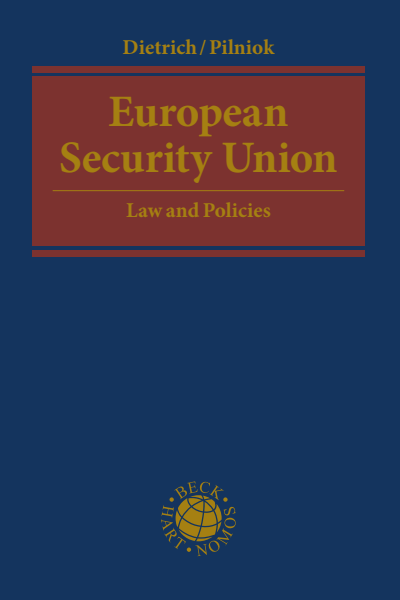
European Security Union
Law and Policies- Herausgeber:innen:
- |
- Reihe:
- Beck International
- Verlag:
- 2024
Zusammenfassung
Cross-border threats have increased the importance of internal and external security for the EU Member States. In this respect, the 2020 EU Security Union Strategy provides a coherent regulatory framework for numerous concepts, strategies and action plans in the field of EU security measures concerning, e.g.
Critical infrastructure and network information systems
Counter-terrorism
Institutional intelligence cooperation
The contributions discuss these and numerous other security issues, providing clarification and insights into the extent and limits of European security cooperation and the degree to which Member States remain solely responsible for their own national security.
Jan-Hendrik Dietrich is professor at the Federal University of Applied Administrative Sciences; Arne Pilniok is professor at the University of Bielefeld. The authors are distinguished experts from academia and stakeholder institutions.
Schlagworte
Publikation durchsuchen
Bibliographische Angaben
- Auflage
- 1/2024
- Copyrightjahr
- 2024
- ISBN-Print
- 978-3-406-81045-9
- ISBN-Online
- 978-3-406-83344-1
- Verlag
- C.H.BECK Recht - Wirtschaft - Steuern, München
- Reihe
- Beck International
- Sprache
- Englisch
- Seiten
- 412
- Produkttyp
- Sammelband
Inhaltsverzeichnis
- Titelei/Inhaltsverzeichnis Kein Zugriff Seiten I - XXII
- § 1 The European Security Union between Member State interests and necessities of European integration (Schwarzelühr-Sutter) Kein Zugriff Seiten 1 - 5
- § 2 Crime doesn’t stop at the border post – European security in a multi-level system (Barley) Kein Zugriff Seiten 5 - 9
- § 3 Building a strong and effective Security Union (Onidi) Kein Zugriff Seiten 9 - 13
- A. Guaranteeing security: a joint undertaking Kein Zugriff
- B. The European Security Union: a legal and political objective Kein Zugriff
- I. EU competences for guaranteeing security Kein Zugriff
- II. Regulation of the exercise of competences in EU constitutional law Kein Zugriff
- III. Rule-of-law requirements under primary EU legislation in relation to Member States’ security authorities Kein Zugriff
- I. EU institutions Kein Zugriff
- II. EU agencies in the Area of Freedom, Security and Justice Kein Zugriff
- III. Other EU bodies involved in guaranteeing security Kein Zugriff
- I. Integration by means of institutionalization, cooperation and mutual learning Kein Zugriff
- II. Integration by means of harmonizing security law Kein Zugriff
- III. Integration by means of information systems Kein Zugriff
- IV. Integration by means of financing the guarantee of security Kein Zugriff
- F. Outlook: trends in the Security Union Kein Zugriff
- A. Overview Kein Zugriff
- I. Central common values as a precondition Kein Zugriff
- II. National and EU legal provisions on security Kein Zugriff
- I. Practical issues flowing from a conflict around competence Kein Zugriff
- II. Need to outline the scope of Art. 4(2) sent. 3 TEU Kein Zugriff
- D. Conclusion Kein Zugriff
- A. Introduction Kein Zugriff
- I. A Union based on the rule of law Kein Zugriff
- II. Formal und substantive EU rule-of-law guarantees Kein Zugriff
- I. Foundations of the Security Union in primary EU law Kein Zugriff
- II. The context of freedom and security Kein Zugriff
- III. Member States’ security authorities within the system of the AFSJ Kein Zugriff
- IV. Police cooperation as an example Kein Zugriff
- I. Acting within the scope of the Treaties Kein Zugriff
- II. General enforcement principles of EU law Kein Zugriff
- III. EU rule-of-law guarantees between full commitment and relaxation Kein Zugriff
- I. Art. 4(2) sent. 3 TEU as a general exception in relation to security policy Kein Zugriff
- II. Art. 72 TFEU in relation to the AFSJ Kein Zugriff
- III. Exemptions to the Single Market Programme Kein Zugriff
- IV. Special structure of the Common Foreign and Security Policy/Common Security and Defence Policy Kein Zugriff
- F. Conclusions Kein Zugriff
- A. Introduction Kein Zugriff
- I. Preliminary remarks Kein Zugriff
- II. Focus on intelligence agencies in the following examination of national security and intelligence agencies Kein Zugriff
- III. Binding nature of laws and values on the intelligence services of the Member States in the community of laws and values Kein Zugriff
- IV. Scope of concrete primary-legislation requirements Kein Zugriff
- V. Art. 4(2) sent. 3 TEU Kein Zugriff
- I. Availability of a national security reservation and consequences of the Member States’ involvement in EU lawmaking? Kein Zugriff
- II. Application of secondary legislation not specifically enacted to regulate it also in relation to the intelligence services? Kein Zugriff
- III. Scope of the reservation Kein Zugriff
- D. Summary Kein Zugriff
- A. Introduction Kein Zugriff
- I. National security and horizontal principles Kein Zugriff
- II. ‘In particular, national security remains the sole responsibility of each Member State.’ Kein Zugriff
- I. Freedom, security and justice Kein Zugriff
- II. Internal market and (public) security Kein Zugriff
- III. When security crosses boxes: horizontal matters Kein Zugriff
- IV. Common foreign and security policy Kein Zugriff
- D. ‘No other choice’ Kein Zugriff
- A. Giving content to Member States’ national security reserve Kein Zugriff
- I. Art. 4(2) sent. 3 TEU in the context of the treaties’ conception of competitive federalism Kein Zugriff
- II. Functions and normative demands of Art. 4(2) sent. 3 TEU Kein Zugriff
- III. Instruments for managing competence overlap: the example of the GDPR Kein Zugriff
- I. EU data protection law frameworks as indirect AI regulation Kein Zugriff
- II. Direct AI regulation: constraints on Member States’ security policy imposed by the proposed AI Act Kein Zugriff
- D. EU AI Regulation and Art. 4(2) sent. 3 TEU: sovereigns in sovereigntyrespecting chains Kein Zugriff
- A. Introduction Kein Zugriff
- I. Art. 4(2) TEU cited to justify potential lack of jurisdiction on the part of the Court of Justice Kein Zugriff
- II. Recognition of national security subject to review by an EU judge Kein Zugriff
- II. The constructive echo of European case-law by the Conseil d’État Kein Zugriff
- III. A persistent disagreement regarding the use of data in action to combat serious crime Kein Zugriff
- I. Reserved power and different security cultures Kein Zugriff
- II. Transnational threats from outside and inside the EU Kein Zugriff
- III. Modes of cooperation: a question of trust Kein Zugriff
- IV. Information sharing: a boost for security cooperation Kein Zugriff
- I. Sharing intelligence as an endurance test Kein Zugriff
- II. How a new type of threat to fundamental rights could lead to a European security benchmark on surveillance Kein Zugriff
- C. Cooperation as a pathway in sensitive areas of common EU policy fields Kein Zugriff
- A. Introduction Kein Zugriff
- I. Policy context Kein Zugriff
- II. Law and governance Kein Zugriff
- I. Coordination Kein Zugriff
- II. Harmonization Kein Zugriff
- III. Centralization Kein Zugriff
- I. Frontex Kein Zugriff
- II. ENISA Kein Zugriff
- E. Conclusions Kein Zugriff
- A. The EU security architecture: introductory remarks on its process of differentiation Kein Zugriff
- I. Security agencies Kein Zugriff
- II. Security networks and communications infrastructure: the example of ETIAS Kein Zugriff
- I. Establishing a genuine European border police force Kein Zugriff
- II. Expanding Europol’s mandate on information processing Kein Zugriff
- III. Establishing a security information architecture Kein Zugriff
- D. Outlook and evaluation Kein Zugriff
- A. Introduction Kein Zugriff
- B. The control and oversight ‘landscape’ Kein Zugriff
- I. General comments Kein Zugriff
- II. Authorization Kein Zugriff
- III. Post hoc functions of courts Kein Zugriff
- D. Prosecutors Kein Zugriff
- E. Data protection authorities Kein Zugriff
- F. Concluding remarks Kein Zugriff
- A. Introduction Kein Zugriff
- I. Intergovernmental cooperation to ensure external security and support internal security Kein Zugriff
- II. Supranational dimension of an ‘EU Security Union’ based on Treaty competences Kein Zugriff
- III. The European Security Union: no executive powers, but initiation, support and coordination of Member States’ policies and action Kein Zugriff
- I. Protecting critical infrastructure in the EU against physical and digital attacks Kein Zugriff
- II. Enhancing the EU’s cybersecurity Kein Zugriff
- III. Countering hybrid threats, fighting foreign interference and enhancing EU cyber defence Kein Zugriff
- IV. Fighting terrorism and radicalization Kein Zugriff
- V. Fighting organized crime Kein Zugriff
- VI. Organized crime Kein Zugriff
- VII. Ensuring the security of EU borders and supporting law enforcement and judicial cooperation Kein Zugriff
- VIII. The internal-external security nexus: security in the EU neighbourhood and in partner countries Kein Zugriff
- D. What remains to be done? Kein Zugriff
- E. Subsequent chapters Kein Zugriff
- A. Introduction Kein Zugriff
- I. From the ends of cybersecurity… Kein Zugriff
- II. To the means: three layers of cybersecurity regulation Kein Zugriff
- I. EU cybersecurity regulation – an overview Kein Zugriff
- II. Inconsistencies and gaps in EU cybersecurity regulation Kein Zugriff
- III. The EU Treaties as an obstacle to comprehensive and coherent cybersecurity regulation? Kein Zugriff
- D. Outlook: towards an effective multi-level cybersecurity governance system Kein Zugriff
- A. Introduction Kein Zugriff
- B. The emergence of hybrid threats in the EU’s political discourse Kein Zugriff
- C. Towards shared control of the information space Kein Zugriff
- D. Institutional framework for coordinated response Kein Zugriff
- E. Building resilience Kein Zugriff
- F. Tools for preventing hybrid threats and responding to them Kein Zugriff
- G. Conclusions Kein Zugriff
- A. Introduction Kein Zugriff
- I. Intelligence Kein Zugriff
- II. Intelligence cooperation Kein Zugriff
- I. EU intelligence cooperation between political ambition and bureaucratic reality Kein Zugriff
- II. The primary legislative setting Kein Zugriff
- III. EU intelligence structures Kein Zugriff
- IV. Intelligence cooperation beyond the EU Kein Zugriff
- D. Conclusions Kein Zugriff
- A. Introduction Kein Zugriff
- I. European understandings of IBM and the creation of Frontex Kein Zugriff
- II. IBM in the Treaty of Lisbon Kein Zugriff
- III. IBM and the subsequent evolution of the European Border and Coast Guard Kein Zugriff
- IV. Additional use of Art. 77(2)(d) TFEU to expand the EU’s role in border security Kein Zugriff
- C. Additional critique and developments Kein Zugriff
- D. Conclusions Kein Zugriff
- A. Introduction Kein Zugriff
- I. The underlying databases Kein Zugriff
- II. Interoperability of EU large-scale information systems Kein Zugriff
- I. Problems related to data quality Kein Zugriff
- II. Algorithmic testing and inherent biases Kein Zugriff
- III. The use of AI Act-based technologies Kein Zugriff
- I. EU data protection rules in different contexts Kein Zugriff
- II. Supervision of multi-level data flows Kein Zugriff
- E. Conclusion and outlook Kein Zugriff
- A. Introduction Kein Zugriff
- I. Technological progress Kein Zugriff
- II. The link between internal and external security Kein Zugriff
- III. Executive aggrandisement Kein Zugriff
- I. Roles and responsibilities Kein Zugriff
- II. Legislative and policy agenda Kein Zugriff
- D. Conclusion Kein Zugriff