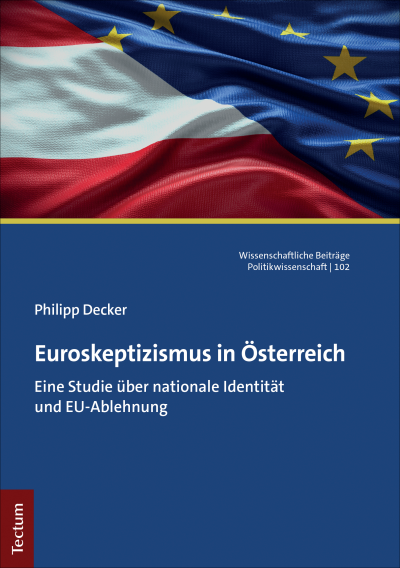
Euroskeptizismus in Österreich
Eine Studie über nationale Identität und EU-Ablehnung- Autor:innen:
- Reihe:
- Wissenschaftl.Beitr.a.d.Tectum Verlag: Politikwissenschaft, Band 102
- Verlag:
- 2022
Zusammenfassung
Diese Studie geht der Frage nach, weshalb es gerade in Österreich zu einer besonders hohen Resonanz an Euroskeptizismus kommt. Mit Nationalismustheorien wird ein analytischer Rahmen entwickelt, anhand dessen man den Zusammenhang von nationaler Identität und der Akzeptanz der EU erklären kann. Die Befunde deuten darauf hin, dass das Land eine von der politischen Elite konstruierte nationale Identität aufweist. Inhaltlich beruft sich diese auf außergewöhnliche wirtschaftliche Leistung sowie auf eine Tradition der Artikulation von kollektiven „Anderen“. Zusammen erklären diese beiden Elemente die Anschlussfähigkeit eines exkludierenden Nationsverständnisses, welches von Rechtspopulisten wie der FPÖ im Rahmen von EU-Kritik artikuliert wird.
Schlagworte
Publikation durchsuchen
Bibliographische Angaben
- Copyrightjahr
- 2022
- ISBN-Print
- 978-3-8288-4818-4
- ISBN-Online
- 978-3-8288-7932-4
- Verlag
- Tectum, Baden-Baden
- Reihe
- Wissenschaftl.Beitr.a.d.Tectum Verlag: Politikwissenschaft
- Band
- 102
- Sprache
- Deutsch
- Seiten
- 182
- Produkttyp
- Monographie
Inhaltsverzeichnis
- Titelei/Inhaltsverzeichnis Kein Zugriff Seiten I - XII
- Einleitung Kein Zugriff Seiten 1 - 4
- 1.1. Die Europäische Union – Ein europäischer Zweckverband Kein Zugriff
- 1.2. Erste Schritte der Integration Kein Zugriff
- 1.3. Die EG wird zur Europäischen Union Kein Zugriff
- 1.4. Die Richtung des europäischen Projektes: Bundesstaat, Staatenbund oder Staatenverbund? Kein Zugriff
- 1.5. EU – Quo vadis? Kein Zugriff
- 2.1.1. Die soziokulturelle Dimension von Nation und Nationalismus Kein Zugriff
- 2.1.2. Die sozioökonomische Dimension von Nation und Nationalismus Kein Zugriff
- 2.1.3. Die politische Dimension von Nation und Nationalismus Kein Zugriff
- 2.1.4. Die ideologisch-kognitive Dimension von Nation und Nationalismus Kein Zugriff
- 2.2. Nationalismus im Kontext der Globalisierung Kein Zugriff
- 2.3.1. Ethno-Symbolismus Kein Zugriff
- 2.3.2. Sozialkonstruktivismus Kein Zugriff
- 2.3.3. Sozialpsychologische Ansätze Kein Zugriff
- 3.1. Renationalisierungsthese Kein Zugriff
- 3.2. Mangelnde Legitimation? Kein Zugriff
- 3.3.1. Rationale Faktoren Kein Zugriff
- 3.3.2. EU-Ablehnung aufgrund von Identität und Einstellungen Kein Zugriff
- 3.3.3. Unterschiedliche kollektive Identitäten und Verteidigung der in-group Kein Zugriff
- 3.3.4. Der Einfluss von ökonomischer Rationalität und Identität im Vergleich Kein Zugriff
- 4.1. Österreichische deutschnationale Identität Kein Zugriff
- 4.2. Die Erste Republik – Anfänge einer eigenständigen österreichischen nationalen Identität Kein Zugriff
- 4.3. Die moderne österreichische nationale Identität in der Zweiten Republik Kein Zugriff
- 5.1. Generelle Grundlagen des Rechtspopulismus Kein Zugriff
- 5.2. Spezifischer österreichischer Nationalstolz als Basis für EU-Gegner Kein Zugriff
- 5.3. Artikulation nationaler Positionen in Bezug auf weltpolitische Bruchlinien Kein Zugriff
- 6. Resümee Kein Zugriff Seiten 171 - 174
- Quellen Kein Zugriff
Literaturverzeichnis (99 Einträge)
Es wurden keine Treffer gefunden. Versuchen Sie einen anderen Begriff.
- Altvater, Elmar & Mahnkopf, Birgit, Konkurrenz für das Empire. Die Zukunft der Europäischen Union in der globalisierten Welt (Münster, 2007). Google Scholar öffnen DOI: 10.5771/9783828879324
- Anderson, Benedict, Die Erfindung der Nation. Zur Karriere eines folgenreichen Konzepts (Frankfurt am Main; New York, 1996). Google Scholar öffnen DOI: 10.5771/9783828879324
- Anderson, Christopher J., „When in Doubt, Use Proxies: Attitudes toward Domestic Politics and Support for European Integration“, in: Comparative Political Studies, Ausg. 31, Nr. 5 (1998), S. 569–601. Google Scholar öffnen DOI: 10.5771/9783828879324
- Assmann, Jan, Das kulturelle Gedächtnis. Schrift, Erinnerung und politische Identität in frühen Hochkulturen (München, 1997). Google Scholar öffnen DOI: 10.5771/9783828879324
- Beck, Ulrich (Hrsg.), Was ist Globalisierung? Irrtümer des Globalismus: Antworten auf Globalisierung. 5. Auflage (Frankfurt am Main, 1998) Google Scholar öffnen DOI: 10.5771/9783828879324
- Beck, Ulrich & Grande, Edgar, Das kosmopolitische Europa. Gesellschaft und Politik in der Zweiten Moderne (Frankfurt am Main, 2007). Google Scholar öffnen DOI: 10.5771/9783828879324
- Berezin, Mabel, „Introduction / Territory, Emotion, and Identity: Spatial Recalibration in a New Europe“, in: Mabel Berezin & Martin Schain (Hrsg.), Europe without Borders. Remapping Territory, Citizenship, and Identity in a Transnational Age (Baltimore, 2003), S. 1–32. Google Scholar öffnen DOI: 10.5771/9783828879324
- Bhabha, Homi, „Narrating the Nation“, in: John Hutchinson & Anthony D. Smith (Hrsg.), Nationalism (Oxford, 1994), S. 306–311. Google Scholar öffnen DOI: 10.5771/9783828879324
- Bruter, Michael, „Civic and Cultural Components of a European Identity: A Pilot Model of Measurement of Citizens’ Levels of European Identity“, in: Richard K. Herrmann, Thomas Risse & Marilynn B. Brewer (Hrsg.), Transnational Identities. Becoming European in the EU (Oxford, 2004), S. 186–213. Google Scholar öffnen DOI: 10.5771/9783828879324
- Busek, Erhard, Eine Seele für Europa. Aufgaben für einen Kontinent (Wien, 2008). Google Scholar öffnen DOI: 10.5771/9783828879324
- Carey, Sean, „Undivided Loyalties: Is National Identity an Obstacle to European Integration?“, in: European Union Politics, Ausg. 3, Nr. 4 (London, 2002), S. 387–413. Google Scholar öffnen DOI: 10.5771/9783828879324
- Carmichael, Cathie, „Conclusions: Language and National Identity in Europe“, in: Stephen Barbour & Cathie Carmichael (Hrsg.), Language and Nationalism in Europe (Oxford, 2000), S. 280–289. Google Scholar öffnen DOI: 10.5771/9783828879324
- Castano, Emanuele, „European Identity: A Social-Psychological Perspective“, in: Richard K. Herrmann, Thomas Risse & Marilynn B. Brewer (Hrsg.), Transnational Identities. Becoming European in the EU (Oxford, 2004), S. 40–58. Google Scholar öffnen DOI: 10.5771/9783828879324
- Cerutti, Furio, „Why political identity and legitimacy matter in the European Union“, in: Furio Cerutti & Sonia Lucarelli (Hrsg.), The search for a European identity. Values, policies and legitimacy of the European Union (London, 2008). Google Scholar öffnen DOI: 10.5771/9783828879324
- D’Appolonia, A. C., „National and European Identities between Myths and Realities“, in: Ulf Hedetoft (Hrsg.), Political Symbols, Symbolic Politics: European Identities in Transformation (Aldershot, 1998), S. 65–79. Google Scholar öffnen DOI: 10.5771/9783828879324
- Davies, Norman, Europe: A history (London, 1997). Google Scholar öffnen DOI: 10.5771/9783828879324
- Decker, Frank, „Die populistische Herausforderung. Theoretische und ländervergleichende Perspektiven“, in: Frank Decker (Hrsg.), Populismus: Gefahr für die Demokratie oder nützliches Korrektiv? (Wiesbaden, 2006), S. 9–32. Google Scholar öffnen DOI: 10.5771/9783828879324
- Decker, Philipp, „The European Parliament elections in Austria will be the latest battleground in the far-right’s challenge to the country’s EU consensus“, in: EUROPP – European Politics and Policy (Feb. 2014a). Google Scholar öffnen DOI: 10.5771/9783828879324
- Decker, Philipp, „One year into office, Austria’s grand coalition is under pressure from the growing popularity of the far-right Freedom Party“, in: EUROPP – European Politics and Policy (Oct. 2014b). Google Scholar öffnen DOI: 10.5771/9783828879324
- Decker, Philipp, „Nationalities without Nationalism? The cultural consequences of Metternich’s nationality policy“, in: Nationalities Papers (2022), S. 1–18. Google Scholar öffnen DOI: 10.5771/9783828879324
- Decker, Philipp, Braunstein, Jürgen & Campbell, David, „Interdisciplinarity as a Source of Relevance for Political Science“, in: Austrian Journal of Political Science, 47(3), Dez. 2018, S. 19–32. Google Scholar öffnen DOI: 10.5771/9783828879324
- DeLamater, John, Katz, Daniel & Kelman, Herbert C., „On the Nature of National Involvement: A Preliminary Study“, in: Journal of Conflict Resolution, Ausg. 13 (1969), S. 320–357. Google Scholar öffnen DOI: 10.5771/9783828879324
- Delanty, Gerard, Inventing Europe: Idea, Identity, Reality (London, 1995). Google Scholar öffnen DOI: 10.5771/9783828879324
- Díez Medrano, Juan, Framing Europe: Attitudes to European Integration in Germany, Spain, and the United Kingdom (Princeton, 2003). Google Scholar öffnen DOI: 10.5771/9783828879324
- Druckman, Daniel, „Nationalism, Patriotism, and Group Loyalty: A Social Psychological Perspective“, in: Mershon International Studies Review, Ausg. 38, Nr. 1 (Apr. 1994), S. 43–68. Google Scholar öffnen DOI: 10.5771/9783828879324
- Druckman, James N., „On the Limits of Framing Effects: Who Can Frame?“, in: The Journal of Politics, Ausg. 63, Nr. 4 (Oxford, Nov. 2001), S. 1041–1066. Google Scholar öffnen DOI: 10.5771/9783828879324
- Europäische Union, Vertrag über eine Verfassung für Europa (Luxemburg, 2005). Google Scholar öffnen DOI: 10.5771/9783828879324
- Flecker, Jörg & Kirschenhofer, Sabine, Die populistische Lücke: Umbrüche in der Arbeitswelt und Aufstieg des Rechtspopulismus am Beispiel Österreichs (Berlin, 2007). Google Scholar öffnen DOI: 10.5771/9783828879324
- Gabel, Matthew, Interests and Integration: Market Liberalization, Public Opinion, and European Union (Ann Arbor, 1998). Google Scholar öffnen DOI: 10.5771/9783828879324
- Gabel, Matthew, „Public Support for European Integration: An Empirical Test of Five Theories“, in: The Journal of Politics, Ausg. 60, Nr. 2 (1998), S. 333–354. Google Scholar öffnen DOI: 10.5771/9783828879324
- Gellner, Ernest, Nationalismus. Kultur und Macht (Berlin, 1999). Google Scholar öffnen DOI: 10.5771/9783828879324
- Gilland, Karin & Goldmann, Kjell, „Nationality and Europeanisation: Conclusions“, in: Kjell Goldmann und Karin Gilland (Hrsg.), Nationality versus Europeanisation: the national view of the nation in four EU countries (Stockholm, 2001), S. 166–184. Google Scholar öffnen DOI: 10.5771/9783828879324
- Griller, Stefan, „Ein Staat ohne Volk? Zur Zukunft der Europäischen Union“, in: IEF Working Paper, Nr. 21 (Wien, Okt. 1996). Google Scholar öffnen DOI: 10.5771/9783828879324
- Guibernau, Montserrat Nations without States. Political Communities in a Global Age (Cambridge, 1999). Google Scholar öffnen DOI: 10.5771/9783828879324
- Gourevitch, Peter, „The second image reversed: The international sources of domestic politics“, in: International Organization, Ausg. 32. Nr. 4 (1978), S. 881–912. Google Scholar öffnen DOI: 10.5771/9783828879324
- Hazard, Paul, The European Mind. The Critical Years, 1680–1715 (Middlesex, 1964). Google Scholar öffnen DOI: 10.5771/9783828879324
- Heater, Derek, The idea of European unity (Leicester, 1992). Google Scholar öffnen DOI: 10.5771/9783828879324
- Heinisch, Reinhard, McDonnell, Duncan & Werner, Annika, „Equivocal Euroscepticism: How Populist Radical Right Parties Can Have Their EU Cake and Eat It“, in: Journal of Common Market Studies 59(2) 2021, S. 189–205. Google Scholar öffnen DOI: 10.5771/9783828879324
- Hinsley, F. H., Power and the Pursuit of Peace. Theory and Practice in the History of Relations between States (Cambridge, 1963). Google Scholar öffnen DOI: 10.5771/9783828879324
- Hooghe, Liesbet & Marks, Gary, „Does Identity or Economic Rationality Drive Public Opinion on European Integration?“, in: Political Science and Politics, Ausg. 37, Nr. 3 (Jul. 2004), S. 415–420. Google Scholar öffnen DOI: 10.5771/9783828879324
- Hooghe, Liesbet & Marks, Gary, „Calculation, Community and Cues: Public Opinion on European Integration“, in: European Union Politics, Ausg. 6, Nr. 4 (London, 2005), S. 419–443. Google Scholar öffnen DOI: 10.5771/9783828879324
- Ifversen, Jan, „Europe and European culture – a conceptual analysis“, in: European Societies, Ausg. 4, Nr. 1 (London, 2002), S. 1–26. Google Scholar öffnen DOI: 10.5771/9783828879324
- Jászi, Oscar, The Dissolution of the Habsburg Monarchy (Chicago, 1929). Google Scholar öffnen DOI: 10.5771/9783828879324
- Joas, Hans & Mandry, Christof, „Europa als Werte- und Kulturgemeinschaft“, in: Gunnar Folke Schuppert (Hrsg.) Europawissenschaft (Baden-Baden, 2005), S. 541–572. Google Scholar öffnen DOI: 10.5771/9783828879324
- Johnson, Lonnie, „The Society and Its Environment“, in: Eric Solsten & David E. McClave (Hrsg.), Austria: a country study, 2. Auflage (Washington, D.C., 1994), S. 65–116. Google Scholar öffnen DOI: 10.5771/9783828879324
- Kellas, J. G., The Politics of Nationalism and Ethnicity (London, 1991). Google Scholar öffnen DOI: 10.5771/9783828879324
- Knelangen, Wilhelm, „Ist die Europäische Union ein Fall für die Vergleichende Regierungslehre?“, in: Johannes Varwick & Wilhelm Knelangen (Hrsg.), Neues Europa – alte EU? Fragen an den europäischen Integrationsprozess (Opladen, 2004), S. 113–132. Google Scholar öffnen DOI: 10.5771/9783828879324
- Kohli, Martin, „The Battlegrounds of European Identity“, in: European Societies, Ausg. 2, Nr. 2 (London, 2000), S. 113–137. Google Scholar öffnen DOI: 10.5771/9783828879324
- Kymlicka, Will, Multicultural Citizenship: A Liberal Theory of Minority Rights (Oxford, 1995). Google Scholar öffnen DOI: 10.5771/9783828879324
- Laffan, Brigid, „The European Union and Its Institutions as ‚Identity Builders‘“, in: Richard K. Herrmann, Thomas Risse & Marilynn B. Brewer (Hrsg.), Transnational Identities. Becoming European in the EU (Oxford, 2004), S. 75–96. Google Scholar öffnen DOI: 10.5771/9783828879324
- Luif, Paul, „The Austrian View of Nationality“, in: Kjell Goldmann & Karin Gilland (Hrsg.), Nationality versus Europeanisation. The national view of the nation in four EU countries (Stockholm, 2001), S. 85–125. Google Scholar öffnen DOI: 10.5771/9783828879324
- Marin, Bernd, Antisemitismus ohne Antisemiten: Studien zur Vorurteilsdynamik (Frankfurt am Main; New York, 2000). Google Scholar öffnen DOI: 10.5771/9783828879324
- Martet, M. Jean, „M. Clemenceau and the Versailles Peace Treaty“, in: Journal of the Royal Institute of International Affairs, Vol. 9, Nr. 6 (Blackwell, Nov. 1930), S. 783–800. Google Scholar öffnen DOI: 10.5771/9783828879324
- McLaren, Lauren M., „Public Support for the European Union: Cost/Benefit Analysis or Perceived Cultural Threat?“, in: The Journal of Politics, Ausg. 64, Nr. 2 (Mai 2002), S. 551–566. Google Scholar öffnen DOI: 10.5771/9783828879324
- Meinhof, Ulrike Hanna, „Europe Viewed from Below: Agents, Victims, and the Threat of the Other“, in: Richard K. Herrmann, Thomas Risse & Marilynn B. Brewer (Hrsg.), Transnational Identities. Becoming European in the EU (Oxford, 2004), S. 214–246. Google Scholar öffnen DOI: 10.5771/9783828879324
- Menasse, Robert, „Es war zweimal: Der Wiederholungszwang in der Zweiten Republik“, in: Ein-Sichten und Vor-Bilder. Überlegungen, Materialien und Texte zur Identität Österreichs (Schulheft 66, 1992), S. 23–32. Google Scholar öffnen DOI: 10.5771/9783828879324
- Michalski, Krzysztof, Die geistige und kulturelle Dimension Europas: Reflexionsgruppe der Europäischen Kommission (Europäische Kommission, 2004). Google Scholar öffnen DOI: 10.5771/9783828879324
- Mummendey, Amélie & Waldzus, Sven, „National Differences and European Plurality: Discrimination or Tolerance between European Countries“, in: Richard K. Herrmann, Thomas Risse & Marilynn B. Brewer (Hrsg.), Transnational Identities: Becoming European in the EU (Oxford, 2004), S. 59–74. Google Scholar öffnen DOI: 10.5771/9783828879324
- Özkirimli, Umut, Theories of Nationalism. A Critical Introduction (New York, 2000). Google Scholar öffnen DOI: 10.5771/9783828879324
- Pelinka, Anton, „Österreichische und jüdische Identität“, in: Anton Pelinka, Huber Sickinger & Karin Stögner, Kreisky Haider: Bruchlinien österreichischer Identitäten (Wien, 2008), S. 1–23. Google Scholar öffnen DOI: 10.5771/9783828879324
- Pfetsch, Frank R. Die Europäische Union. Geschichte, Institutionen, Prozesse, 3. Auflage (Paderborn; München, 2005). Google Scholar öffnen DOI: 10.5771/9783828879324
- Pfetsch, Frank R., Das neue Europa (Wiesbaden, 2007). Google Scholar öffnen DOI: 10.5771/9783828879324
- Pollak, Johannes, Repräsentation ohne Demokratie. Kollidierende Systeme der Repräsentation in der Europäischen Union (Wien; New York, 2007). Google Scholar öffnen DOI: 10.5771/9783828879324
- Pollak, Johannes & Slominski, Peter, Das politische System der EU (Wien, 2006). Google Scholar öffnen DOI: 10.5771/9783828879324
- Posener, Alan, Imperium der Zukunft: Warum Europa Weltmacht werden muss (München, 2007). Google Scholar öffnen DOI: 10.5771/9783828879324
- Quaisser, W. & Wood, S. „The ‚New European Union‘ – Characteristics, Contradictions and Challenges“, in: Kurzanalysen und Informationen des Osteuropa-Instituts Regensburg, Nr. 30 (Regensburg, Febr. 2008). Google Scholar öffnen DOI: 10.5771/9783828879324
- Richmond, A. H., „Ethnic Nationalism and Post-Industrialism“, in: John Hutchinson & Anthony D. Smith (Hrsg.) Nationalism (Oxford, 1994), S. 289–299 Google Scholar öffnen DOI: 10.5771/9783828879324
- Riley, Patrick, Leibniz. Political writings (Cambridge; New York, 1992). Google Scholar öffnen DOI: 10.5771/9783828879324
- Risse, Thomas, „European Institutions and Identity Change: What Have We Learned?“, in: Richard K. Herrmann, Thomas Risse & Marilynn B. Brewer (Hrsg.), Transnational Identities. Becoming European in the EU (Oxford, 2004), S. 247–272. Google Scholar öffnen DOI: 10.5771/9783828879324
- Risse, Thomas, „Social Constructivism and European Integration“, in: Antje Wiener & Thomas Diez (Hrsg.), European Integration Theory (Oxford, 2004), S. 159–176. Google Scholar öffnen DOI: 10.5771/9783828879324
- Rittberger, Berthold, Die Europäische Union. Politik, Institutionen, Krisen (München, 2021). Google Scholar öffnen DOI: 10.5771/9783828879324
- Sbragia, Alberta, „Italy Pays for Europe: Political Leadership, Political Choice, and Institutional Adaptation“, in: Maria Green Cowles, James Caporaso & Thomas Risse (Hrsg.), Transforming Europe: Europeanization and Domestic Change (Ithaka, NY, 2001), S. 79–96. Google Scholar öffnen DOI: 10.5771/9783828879324
- Sbragia, Alberta M. (Hrsg.), Euro-Politics. Institutions and Policymaking in the „New“ European Community (Washington D.C., 1992). Google Scholar öffnen DOI: 10.5771/9783828879324
- Scharpf, Fritz, Regieren in Europa. Effektiv und demokratisch? (Frankfurt/M.; New York, 1999). Google Scholar öffnen DOI: 10.5771/9783828879324
- Schmidt, Paul, „Austria: Taking a Walk on the Wild Side“, in: Michael Kaeding, Johannes Pollak & Paul Schmidt (Hrsg.) Euroscepticism and the Future of Europe: Views from the Capitals (Cham, 2021), S. 5–8. Google Scholar öffnen DOI: 10.5771/9783828879324
- Schmitter, Philippe C., How to democratize the European Union … and why bother? (Lanham, Md., 2000). Google Scholar öffnen DOI: 10.5771/9783828879324
- Smith, Anthony D., Nations and Nationalism in a Global Era (Cambridge, 1995). Google Scholar öffnen DOI: 10.5771/9783828879324
- Smith, Anthony D., „National Identity and the Idea of European Unity“, in: Peter Gowan & Perry Anderson (Hrsg.), The Question of Europe (London, 1997), S. 318–344. Google Scholar öffnen DOI: 10.5771/9783828879324
- Smith, Anthony D., „National Identity and the Idea of European Unity“, in: International Affairs (Royal Institute of International Affairs), Ausg. 68, Nr. 1 (Jan. 1992), S. 55–76. Google Scholar öffnen DOI: 10.5771/9783828879324
- Smith, Anthony D., Nationalism (Cambridge, 2001). Google Scholar öffnen DOI: 10.5771/9783828879324
- Smith, Anthony D., The Cultural Foundations of Nations: Hierarchy, Covenant, and Republic (Oxford, 2008). Google Scholar öffnen DOI: 10.5771/9783828879324
- Smith, Tom W. & Kim, Seokho, „National Pride in Cross-national and Temporal Perspective“, in: International Journal of Public Opinion Research, Nr. 18 (Spring, 2006), S. 127–136. Google Scholar öffnen DOI: 10.5771/9783828879324
- Smutny, Florian, Das Nationale. Aktuelle Impulse für die Nationalismustheorie (Wien, 2004). Google Scholar öffnen DOI: 10.5771/9783828879324
- Spier, Tim, „Populismus und Modernisierung“, in: Frank Decker (Hrsg.), Populismus: Gefahr für die Demokratie oder nützliches Korrektiv? (Wiesbaden, 2006), S. 33–58. Google Scholar öffnen DOI: 10.5771/9783828879324
- Spohn, Willfried, „Austria: From Habsburg Empire to a Small Nation in Europe“, in: Atsuko Ichijo & Willfried Spohn (Hrsg.), Entangled Identities: Nations and Europe (London; New York, 2005), S. 55–71. Google Scholar öffnen DOI: 10.5771/9783828879324
- Staudinger, Anton, „Die nationale Frage im Österreich der Ersten und Zweiten Republik“, in: Erich Zöllner (Hrsg.), Volk, Land und Staat: Landesbewußtsein, Staatsidee und nationale Fragen in der Geschichte Österreichs (Wien, 1984), S. 168–179. Google Scholar öffnen DOI: 10.5771/9783828879324
- Steenbergen, Marco R. & Jones, „Modeling Multilevel Data Structures“, in: American Journal of Political Science, Ausg. 46 (2002), S. 218–237. Google Scholar öffnen DOI: 10.5771/9783828879324
- Szczerbiak, Aleks & Taggart, Paul, „Introduction: Researching Euroscepticism in European Party Systems: A Comparative and Theoretical Research Agenda“, in: Aleks Szczerbiak & Paul Taggart (Hrsg.), Opposing Europe? The Comparative Party Politics of Euroscepticism (New York, 2008), S. 1–27. Google Scholar öffnen DOI: 10.5771/9783828879324
- Tajfel, Henri, Human Groups and Social Categories: Studies in Social Psychology (Cambridge, 1981). Google Scholar öffnen DOI: 10.5771/9783828879324
- Tálos, Emmerich, Vom Siegeszug zum Rückzug: Sozialstaat Österreich 1945–2005 (Innsbruck, 2005). Google Scholar öffnen DOI: 10.5771/9783828879324
- Tilly, Charles, The Formation of National States in Western Europe (Princeton, 1975). Google Scholar öffnen DOI: 10.5771/9783828879324
- Wagner, Gerhard, Projekt Europa. Die Konstruktion europäischer Identität zwischen Nationalismus und Weltgesellschaft (Berlin, 2005). Google Scholar öffnen DOI: 10.5771/9783828879324
- Weidenfeld, Werner, „Europäische Einigung im historischen Überblick“, in: Werner Weidenfeld & Wolfgang Wessels (Hrsg.), Europa von A bis Z. Taschenbuch der europäischen Integration (Bonn, 2006), S. 13–48. Google Scholar öffnen DOI: 10.5771/9783828879324
- Wiebe, Robert H., Who we are. A History of Popular Nationalism (Princeton, 2002). Google Scholar öffnen DOI: 10.5771/9783828879324
- Wimmer, Hannes, Evolution der Politik: Von der Stammesgesellschaft zur modernen Demokratie (Wien, 1996). Google Scholar öffnen DOI: 10.5771/9783828879324
- Wimmer, Hannes, Die Modernisierung politischer Systeme. Staat, Parteien, Öffentlichkeit (Wien [u. a.], 2000). Google Scholar öffnen DOI: 10.5771/9783828879324
- Wodak, Ruth & Pelinka, Anton (Hrsg.), The Haider Phenomenon in Austria (New York, 2017). Google Scholar öffnen DOI: 10.5771/9783828879324
- Zaller, John R., The Nature and Origins of Mass Opinion (Cambridge, 1992). Google Scholar öffnen DOI: 10.5771/9783828879324
- Zaretsky, Eli, „The Birth of Identity Politics in the 1960s: Psychoanalysis and the Public/Private Division“, in: Mike Featherstone, Scott Lash & Roland Robertson (Hrsg.), Global Modernities (London, 1995), S. 244–259. Google Scholar öffnen DOI: 10.5771/9783828879324