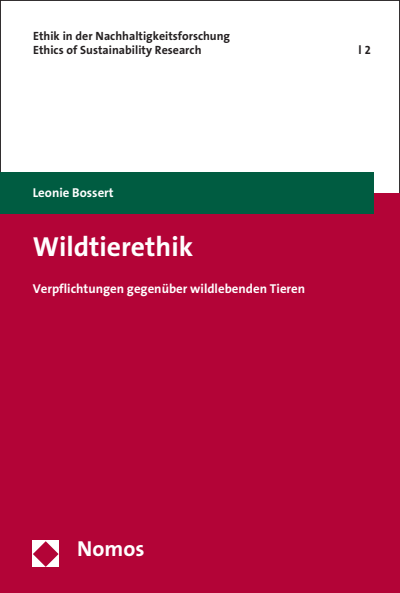
Wildtierethik
Verpflichtungen gegenüber wildlebenden Tieren- Autor:innen:
- Verlag:
- 2015
Zusammenfassung
Die zeitgenössische Tierethik ist vor allem als eine Reaktion auf den Umgang mit sogenannten Nutztieren entstanden. Darüber wurden die folgenden Fragen vernachlässigt: Was hat die moralische Berücksichtigungswürdigkeit von nichtmenschlichen Tieren für den Umgang mit wildlebenden Tieren zu bedeuten? Soll dieser zwangsläufig der gleiche sein wie mit domestizierten Tieren? Könnten Ungleichbehandlungen gerechtfertigt sein oder stellen sie einen Willkürakt dar? Diese Fragen sind im tierethischen Diskurs der jüngsten Zeit verstärkt aufgenommen worden. Mit ihnen setzt sich der vorliegende Band intensiv auseinander. Dabei wird untersucht, wie sich die klassischen Theorien der zeitgenössischen Tierethik auf den Umgang mit wildlebenden Tieren anwenden lassen. Ein besonderer Fokus liegt auf dem kontextsensitiven Ansatz Clare Palmers und seinen Implikationen für Wildtiere und sogenannte Kulturfolger. Im Anschluss werden die erarbeiteten Ergebnisse auf das Praxisfeld der ‚invasiven Arten‘ angewandt.
Publikation durchsuchen
Bibliographische Angaben
- Auflage
- 1/2015
- Copyrightjahr
- 2015
- ISBN-Print
- 978-3-8487-1693-7
- ISBN-Online
- 978-3-8452-5747-1
- Verlag
- Nomos, Baden-Baden
- Reihe
- Ethik in der Nachhaltigkeitsforschung | Ethics of Sustainability Research
- Band
- 2
- Sprache
- Deutsch
- Seiten
- 158
- Produkttyp
- Monographie
Inhaltsverzeichnis
- Titelei/Inhaltsverzeichnis Kein Zugriff Seiten 1 - 10
- 1. Einführung Kein Zugriff Seiten 11 - 14
- 2. Sentientismus. Die Ansätze wichtiger VertreterInnen Kein Zugriff Seiten 15 - 48
- 3. Wildtierethik. Aktueller Stand der Diskussionen Kein Zugriff Seiten 49 - 126
- 4. Der Umgang mit invasiven Arten als konkreter Problemfall Kein Zugriff Seiten 127 - 144
- 5. Sentientistische Naturschutzethik Kein Zugriff Seiten 145 - 148
- 6. Literatur Kein Zugriff Seiten 149 - 158
Literaturverzeichnis (139 Einträge)
Es wurden keine Treffer gefunden. Versuchen Sie einen anderen Begriff.
- Adams, Carol J. (1996): Caring about Suffering. A Feminist Exploration. In: Josephine Donovan; Carol Adams (Hg.): Beyond animal rights. A feminist caring ethic for the treatment of animals. New York, London: Continuum; Cassell, S. 170-196. Google Scholar öffnen DOI: 10.5771/9783845257471
- Adams, Carol J. (2002): Zum Verzehr bestimmt. Eine feministisch-vegetarische Theorie. Wien, Mülheim an der Ruhr: Guthmann-Peterson. Google Scholar öffnen DOI: 10.5771/9783845257471
- Aitken, Gill (1997): Conservation and Individual Worth. In: Environmental Values 6 (4), S. 439-454. Google Scholar öffnen DOI: 10.5771/9783845257471
- Allen, Colin (2004): Animal Pain. In: Nous 38 (4), S. 617-643. Google Scholar öffnen DOI: 10.5771/9783845257471
- Anderson, Elizabeth (2004): Animal Rights and the Values of Nonhuman Life. In: Cass R. Sunstein; Martha C. Nussbaum (Hg.): Animal rights. Current debates and new directions. Oxford, New York: Oxford University Press, S. 277-298. Google Scholar öffnen DOI: 10.5771/9783845257471
- Balzer, Philipp; Rippe, Klaus Peter; Schaber, Peter (2008): Menschenwürde versus Würde der Kreatur. In: Ursula Wolf (Hg.): Texte zur Tierethik. Stuttgart: Reclam, S. 61-72. Google Scholar öffnen DOI: 10.5771/9783845257471
- Bekoff, Marc; Pierce, Jessica (2009): Wild Justice. The Moral Lifes of Animals. Chicago: University of Chicago Press. Google Scholar öffnen DOI: 10.5771/9783845257471
- Benatar, David (2001): Why the Naive Argument against Moral Vegetarianism Really is Naive. In: Environmental Values 10 (1), S. 103-112. Google Scholar öffnen DOI: 10.5771/9783845257471
- Birnbacher, Dieter (1991): „Natur“ als Maßstab menschlichen Handelns. In: Zeitschrift für Philosophische Forschung 45 (1), S. 60-76. Google Scholar öffnen DOI: 10.5771/9783845257471
- Bossert, Leonie (2014): Tierethik. Die verschiedenen Positionen und ihre Auswirkungen auf die Mensch- nichtmenschliches Tier- Beziehung, In: Voget-Kleschin, Lieske; Bossert, Leonie; Ott, Konrad (Hg.): Nachhaltige Lebensstile – Welchen Beitrag kann ein bewusster Fleischkonsum zu mehr Naturschutz, Klimaschutz und Gesundheit leisten?, Marburg: Metropolis, S. 32-57. Google Scholar öffnen DOI: 10.5771/9783845257471
- Bossert, Leonie (2015a): Nichtmenschliche Tiere als moralisch Handelnde? Eine kritische Reflexion der Argumente von Bekoff/Pierce und Rowlands. In: Chimaira (Hg.): Handeln Tiere? Theorien und Konzepte tierlicher Agency (Arbeitstitel), Bielefeld: Transcript, in Vorbereitung. Google Scholar öffnen DOI: 10.5771/9783845257471
- Bossert, Leonie (2015b): Tierschutz (Arbeitstitel). In: Ott, Konrad; Voget-Kleschin, Lieske; Dierks, Jan (Hg.): Handbuch Umweltethik. Stuttgart: Metzler, in Vorbereitung. Google Scholar öffnen DOI: 10.5771/9783845257471
- Boscardin, Livia; Bossert, Leonie (2015): Sustainable Development and Nonhuman Animals: Why anthropocentric concepts of Sustainability are outdated and need to be extended, In: Meisch, Simon; Lundershausen, Johannes; Bossert, Leonie; Rockoff, Marcus (Hg.): Ethics of Science in the Research for Sustainable Development, Baden-Baden: Nomos, in Vorbereitung. Google Scholar öffnen DOI: 10.5771/9783845257471
- Budiansky, Stephen (1994): The covenant of the wild. Why animals chose domestication. Ist ed. London: Weidenfeld & Nicolson. Google Scholar öffnen DOI: 10.5771/9783845257471
- Bulliet, Richard W. (2005): Hunters, herders, and hamburgers. The past and future of human-animal relationships. New York: Columbia University Press. Google Scholar öffnen DOI: 10.5771/9783845257471
- Callicott, J.Baird (1980): Animal Liberation A Triangular Affair. In: Environmental Ethics 2 (4), S. 311-338. Google Scholar öffnen DOI: 10.5771/9783845257471
- Callicott, J.Baird (1988): Animal Liberation and Environmental Ethics: Back Together Again. In: Between the Species, S. 163-169. Google Scholar öffnen DOI: 10.5771/9783845257471
- Callicott, J.Baird (1997): Die begrifflichen Grundlagen der land ethics. In: Angelika Krebs (Hg.): Naturethik. Grundtexte der gegenwärtigen tier- und ökoethischen Diskussion. 1. Aufl. Frankfurt am Main: Suhrkamp (Suhrkamp-Taschenbuch Wissenschaft, 1262), S. 211-246. Google Scholar öffnen DOI: 10.5771/9783845257471
- Caney, Simon (2006): Environmental Degradation, Reparations, and the Moral Significance of History. In: J Social Philosophy 37 (3), S. 464-482. Google Scholar öffnen DOI: 10.5771/9783845257471
- Cassidy, Rebecca (2007): Introduction. In: Rebecca Cassidy; Molly H. Mullin (Hg.): Where the wild things are now. Domestication reconsidered. Oxford: Berg, S. 1-26. Google Scholar öffnen DOI: 10.5771/9783845257471
- Clutton-Brock, Juliet (1994): The Unnatural World. In: Aubrey Manning; James Serpell (Hg.): Animals and human society. Changing perspectives. London, New York: Routledge, S. 23-35. Google Scholar öffnen DOI: 10.5771/9783845257471
- Cohen, Carl (2007): Haben Tiere Rechte? In: Interdisziplinäre Arbeitsgemeinschaft Tierethik (Hg.): Tierrechte. Eine interdisziplinäre Herausforderung. 1. Aufl. Erlangen: Fischer, S. 89-104. Google Scholar öffnen DOI: 10.5771/9783845257471
- Cohen, Carl; Regan, Tom (2001): The animal rights debate. Lanham: Rowman & Littlefield Publishers. Google Scholar öffnen DOI: 10.5771/9783845257471
- Cowen, Tyler (2003): Policing nature. In: Environmental Ethics 25 (2), S. 169.182. Google Scholar öffnen DOI: 10.5771/9783845257471
- Curtin, Deane (1996): Toward an Ecological Ethic of Care. In: Josephine Donovan; Carol Adams (Hg.): Beyond animal rights. A feminist caring ethic for the treatment of animals. New York, London: Continuum; Cassell, S. 60-76. Google Scholar öffnen DOI: 10.5771/9783845257471
- Davis, M. A.; Thompson, K. (2000): Eight Ways to be a Colonizer; Two Ways to be an Invader: A Proposed Nomenclature Scheme for Invasion Ecology. In: Bulletin of the Ecological Society of America (81), S. 226-230. Google Scholar öffnen DOI: 10.5771/9783845257471
- DeGrazia, David (1996): Taking animals seriously. Mental life and moral status. Cambridge;, New York: Cambridge University Press. Google Scholar öffnen DOI: 10.5771/9783845257471
- DeGrazia, David (2002): Animal rights. A very short introduction. Oxford: Oxford University Press. Google Scholar öffnen DOI: 10.5771/9783845257471
- DeGrazia, David (2003): Carl Cohen and Tom Regan, The Animal Rights Debate: The Animal Rights Debate. In: ETHICS 113 (3), S. 692-695. Google Scholar öffnen DOI: 10.5771/9783845257471
- DeGrazia, David; Rowan, Andrew (1991): Pain, suffering, and anxiety in animals and humans. In: Theoretical Medicine Bioethics 12 (3), S. 193-211. Google Scholar öffnen DOI: 10.5771/9783845257471
- Donaldson, Sue; Kymlicka, Will (2011): Zoopolis. A political theory of animal rights. Oxford, New York: Oxford University Press. Google Scholar öffnen DOI: 10.5771/9783845257471
- Donovan, Josephine (2008): Aufmerksamkeit für das Leiden. Mitgefühl als Grundlage der moralischen Behandlung von Tieren. In: Ursula Wolf (Hg.): Texte zur Tierethik. Stuttgart: Reclam, S. 105-120. Google Scholar öffnen DOI: 10.5771/9783845257471
- Everett, Jennifer (2001): Environmental Ethics, Animal Welfarism, and the Problem of Predation: A Bambi Lover's Respect For Nature. In: Ethics & the Environment 6 (1), S. 42-67. Google Scholar öffnen DOI: 10.5771/9783845257471
- Fink, Charles K. (2005): The Predation Argument. In: Between the Species 13 (5), S. 1-16. Google Scholar öffnen DOI: 10.5771/9783845257471
- Francione, Gary L. (2000): Introduction to animal rights. Your child or the dog? Philadelphia: Temple University Press. Google Scholar öffnen DOI: 10.5771/9783845257471
- Francis, Leslie Pickering; Norman, Richard (1978): Some Animals are More Equal Than Others. In: Philosophy 53 (206), S. 507-527. Google Scholar öffnen DOI: 10.5771/9783845257471
- Frey, Raymond G. (2007): Moral Standing, the Values of Lives, and Speciesism. In: Hugh LaFollette (Hg.): Ethics in practice. An anthology. Malden, MA: Blackwell, S. 192-204. Google Scholar öffnen DOI: 10.5771/9783845257471
- Füßler, Claudia (2012): Das Schwein weiß um sein Ich. In: ZEIT ONLINE, 5.6.2012. Online verfügbar unter http://www.zeit.de/wissen/umwelt/2012-05/unterschaetztes-tier-schwein, zuletzt geprüft am 13.10.2014. Google Scholar öffnen DOI: 10.5771/9783845257471
- Gilligan, Carol (1988): Die andere Stimme. Lebenskonflikte und Moral der Frau. München; Zürich: Piper. Google Scholar öffnen DOI: 10.5771/9783845257471
- Gullo, Andrea; Lassiter, Unna; Wolch, Jennifer R. (1998): The Cougar's Tale. In: Jennifer R. Wolch; Jody Emel (Hg.): Animal geographies. Place, politics, and identity in the nature-culture borderlands. London, New York: Verso, S. 139-161. Google Scholar öffnen DOI: 10.5771/9783845257471
- Hadley, John (2006): The Duty to Aid Nonhuman Animals in Dire Need. In: Journal of Applied Philosophy 23 (4), S. 445-451. Google Scholar öffnen DOI: 10.5771/9783845257471
- Hettinger, Ned (1994): Valuing Predation in Rolston’s Environmental Ethics. Bambi Lovers versus Tree Huggers. In: Environmental Ethics 16, S. 3-20. Google Scholar öffnen DOI: 10.5771/9783845257471
- Holtmeier, Friedrich-Karl (2002): Tiere in der Landschaft. Einfluss und ökologische Bedeutung. Stuttgart: Ulmer. Google Scholar öffnen DOI: 10.5771/9783845257471
- Horta, Oscar (2010a): Debunking the idyllic view of natural processes: Population dynamics and suffering in the wild. In: Télos 17, S. 73-88. Google Scholar öffnen DOI: 10.5771/9783845257471
- Horta, Oscar (2010b): The Ethics of the Ecology of Fear against the Nonspeciesist Paradigm: A Shift in the Aims of Intervention in Nature. In: Between the Species 13 (10), S. 163-187. Google Scholar öffnen DOI: 10.5771/9783845257471
- Hursthouse, Rosalind (2007): Virtue Theory. In: Hugh LaFollette (Hg.): Ethics in practice. An anthology. Malden, MA: Blackwell, S. 45-55. Google Scholar öffnen DOI: 10.5771/9783845257471
- Hursthouse, Rosalind (2011): Virtue Ethics and the Treatment of Animals. In: Tom L. Beauchamp; R. G. Frey (Hg.): The Oxford handbook of animal ethics. Oxford, New York: Oxford University Press, S. 119-143. Google Scholar öffnen DOI: 10.5771/9783845257471
- Jamieson, Dale (1998): Animal Liberation is an Environmental Ethic. In: Environmental Values 7 (1), S. 41-57. Google Scholar öffnen DOI: 10.5771/9783845257471
- Jamieson, Dale (1990): Rights, Justice, and Duties to Provde Assistance: A Critique of Regan's Theory of Rights. In: Ethics 100 (2), S. 349-362. Google Scholar öffnen DOI: 10.5771/9783845257471
- Jamieson, Dale (1995): Wildlife Conservation and Individual Animal Welfare. In: Bryan G. Norton; Michael Hutchins; Elizabeth F. Stevens; Terry L. Maple (Hg.): Ethics on the ark. Zoos, animal welfare, and wildlife conservation. Washington, [D.C.]: Smithsonian Inst. Press, S. 69-73. Google Scholar öffnen DOI: 10.5771/9783845257471
- Katz, Eric (1983): Is There a Place for Animals in the Moral Consideration of Nature? In: Ethics and Animals 4 (3), S. 74-87. Google Scholar öffnen DOI: 10.5771/9783845257471
- Kirkpatrick, J. F.; Turner, J. W., JR; Liu, I. K.; Fayrer-Hosken, R. (1996): Applications of pig zona pellucida immunocontraception to wildlife fertility control. In: Journal of Reproduction and Fertility Supplement 50, S. 183-189. Google Scholar öffnen DOI: 10.5771/9783845257471
- Kirkwood, J. K.; Sainsbury, A. W. (1996): Ethics of Interventions for the Welfare of Free-living Wild Animals. In: Animal Welfare 5 (3), S. 235-243. Google Scholar öffnen DOI: 10.5771/9783845257471
- Korsgaard, Christine (2004): Fellow Creatures: Kantian Ethics and Our Duties to Animals. In: Grethe Peterson (Hg.): The Tanner Lectures on Human Values. Salt Lake City: University of Utah Press (25/26), S. 79-110. Google Scholar öffnen DOI: 10.5771/9783845257471
- Kukathas, Chandran (2006): Who? Whom? Reparations and the Problem of Agency. In: Journal of Social Philosophy 37 (3), S. 330-341. Google Scholar öffnen DOI: 10.5771/9783845257471
- Lamont, Julian (1998): A solution to the puzzle of when death harms its victims. In: Australasian Journal of Philosophy 76 (2), S. 198-212. Google Scholar öffnen DOI: 10.5771/9783845257471
- Lamont, Julian (2003): More solutions to the puzzle of when death harms its victims? In: Charles Tandy (Hg.): Death and Anti-Death Volume 1 One Hundred Years after N.F. Federov (1829-1903). California: Ria University Press, S. 377-396. Google Scholar öffnen DOI: 10.5771/9783845257471
- Linkola, Pentti (2009): Can life prevail? A revolutionary approach to the environmental crisis. London: Arktos. Google Scholar öffnen DOI: 10.5771/9783845257471
- Lodge, David M.; Shrader-Frechette, Kristin (2003): Nonindigenous Species: Ecological Explanation, Environmental Ethics, and Public Policy. In: Conservation Biology 17 (1), S. 31-37. Google Scholar öffnen DOI: 10.5771/9783845257471
- Luke, Brian (1996): Justice, Caring and Animal Liberation. In: Josephine Donovan; Carol Adams (Hg.): Beyond animal rights. A feminist caring ethic for the treatment of animals. New York, London: Continuum; Cassell, S. 77-102. Google Scholar öffnen DOI: 10.5771/9783845257471
- MacClellan, Joel (2011): Recreating Eden?: Natural Evil And Environmental Ethics. Online verfügbar unter http://macclellan.net/wp-content/uploads/2011/10/JPM-Writing.Sample-Recreating.Eden_.pdf. Google Scholar öffnen DOI: 10.5771/9783845257471
- MacKinnon, Catharine (2004): Of Mice and Men. A Feminist Fragment on Animal Rights. In: Cass R. Sunstein; Martha C. Nussbaum (Hg.): Animal rights. Current debates and new directions. Oxford; New York: Oxford University Press, S. 263-376. Google Scholar öffnen DOI: 10.5771/9783845257471
- Maurizi, Marco (2005): Nine Theses on Speciesism. Online verfügbar unter http://apesfromutopia.blogspot.de/2011/03/nine-theses-on-speciesism.html, zuletzt geprüft am 13.10.2014. Google Scholar öffnen DOI: 10.5771/9783845257471
- McMahan, Jeff (2010): The Meat Eaters. Online verfügbar unter http://opinionator.blogs.nytimes.com/2010/09/19/the-meat-eaters/. Google Scholar öffnen DOI: 10.5771/9783845257471
- Meyer, Lukas H. (2006): Reparations and Symbolic Restitution. In: Journal of Social Philosophy 37 (3), S. 406-422. Google Scholar öffnen DOI: 10.5771/9783845257471
- Michelfelder, Diane P. (2003): Valuing Wildlife Populations in Urban Environments. In: Journal of Social Philosophy 34 (1), S. 79-90. Google Scholar öffnen DOI: 10.5771/9783845257471
- Milburn, Josh (2014): Not only humans eat meat: Animal politics and carnivorous companions, Veröffentlichung in Arbeit. Google Scholar öffnen DOI: 10.5771/9783845257471
- Narveson, Jan (2003): We Don't Owe Them A Thing! A tough-minded but soft-hearted view of aid to the faraway needy. In: Monist 86, S. 419-433. Google Scholar öffnen DOI: 10.5771/9783845257471
- Norton, Bryan G. (1995): Caring For Nature: A Broader Look At Animal Stewardship. In: Bryan G. Norton; Michael Hutchins; Elizabeth F. Stevens; Terry L. Maple (Hg.): Ethics on the ark. Zoos, animal welfare, and wildlife conservation. Washington, [D.C.]: Smithsonian Inst. Press, S. 102-121. Google Scholar öffnen DOI: 10.5771/9783845257471
- Norton, Bryan G.; Hutchins, Michael; Stevens, Elizabeth F.; Maple, Terry L. (Hg.) (1995): Ethics on the ark. Zoos, animal welfare, and wildlife conservation. Washington, [D.C.]: Smithsonian Inst. Press. Google Scholar öffnen DOI: 10.5771/9783845257471
- Nozick, Robert (1974): Anarchy, state, and utopia. New York: Basic Books. Google Scholar öffnen DOI: 10.5771/9783845257471
- Nussbaum, Martha C. (2000): Symposium on Cosmopolitanism Duties of Justice, Duties of Material Aid: Cicero's Problematic Legacy. In: Journal for Political Philosophy 8 (2), S. 176-206. Google Scholar öffnen DOI: 10.5771/9783845257471
- Nussbaum, Martha C. (2004): Beyond “Compassion and Humanity”. In: Cass R. Sunstein; Martha C. Nussbaum (Hg.): Animal rights. Current debates and new directions. Oxford; New York: Oxford University Press, S. 299-320. Google Scholar öffnen DOI: 10.5771/9783845257471
- Nussbaum, Martha C. (2010): Die Grenzen der Gerechtigkeit. Behinderung, Nationalität und Spezieszugehörigkeit. Berlin: Suhrkamp. Google Scholar öffnen DOI: 10.5771/9783845257471
- Nussbaum, Martha C. (2011): The Capabilities Approach and Animal Entitlements. In: Tom L. Beauchamp; R. G. Frey (Hg.): The Oxford handbook of animal ethics. Oxford, New York: Oxford University Press, S. 228-251. Google Scholar öffnen DOI: 10.5771/9783845257471
- Ott, Konrad (2003): Zum Verhältnis von Tier- und Naturschutz. In: Andreas Brenner (Hg.): Tiere beschreiben. Erlangen: Fischer, S. 124-152. Google Scholar öffnen DOI: 10.5771/9783845257471
- Ott, Konrad (2005): Moralbegründungen zur Einführung. Hamburg: Junius. Google Scholar öffnen DOI: 10.5771/9783845257471
- Ott, Konrad (2007): Zur ethischen Begründung des Schutzes von Biodiversität. In: Bundesamt für Naturschutz (Hg.): Biodiversität – Schlüsselbegriff des Naturschutzes im 21.Jahrhundert? Erweiterte Ergebnisdokumente einer Vilmer Sommerakademie. Unter Mitarbeit von Thomas Potthast. Bonn; Bad Godesberg, S. 89-124. Google Scholar öffnen DOI: 10.5771/9783845257471
- Ott, Konrad (2008): A Modest Proposal about How to Proceed in Order to Solve the Problem of Inherent Moral Value in Nature. In: Laura Westra; Klaus Bosselmann; Richard Westra (Hg.): Reconciling human existence with ecological integrity. Science, ethics, economics and law. London: Earthscan, S. 39-59. Google Scholar öffnen DOI: 10.5771/9783845257471
- Ott, Konrad (2010): Umweltethik zur Einführung. Hamburg: Junius. Google Scholar öffnen DOI: 10.5771/9783845257471
- Palmer, Clare (1997): The Idea of the Domesticated Animal Contract. In: Environmental Values 6 (4), S. 411-425. Google Scholar öffnen DOI: 10.5771/9783845257471
- Palmer, Clare (2003): Placing Animals in Urban Environmental Ethics. In: Journal of Social Philosophy 34 (1), S. 64-78. Google Scholar öffnen DOI: 10.5771/9783845257471
- Palmer, Clare (2010): Animal ethics in context. New York: Columbia University Press. Google Scholar öffnen DOI: 10.5771/9783845257471
- Palmer, Clare (2011): The Moral Relevance of the Distinction between Domesticated and Wild Animals. In: Tom L. Beauchamp; R. G. Frey (Hg.): The Oxford handbook of animal ethics. Oxford, New York: Oxford University Press, S. 701-725. Google Scholar öffnen DOI: 10.5771/9783845257471
- Pearce, David (2009): Blueprint for a Cruelty-Free: Reprogramming Predators. The Abolitionist Project. Online verfügbar unter http://abolitionist.com/reprogramming/index.html, zuletzt geprüft am 13.10.2014. Google Scholar öffnen DOI: 10.5771/9783845257471
- Platz, Jeppe von; Reidy, David A. (2006): The Structural Diversity of Historical Injustices. In: Journal of Social Philosophy 37 (3), S. 360-376. Google Scholar öffnen DOI: 10.5771/9783845257471
- Pluhar, Evelyn B. (1995): Beyond prejudice. The moral significance of human and nonhuman animals. Durham: Duke University Press. Google Scholar öffnen DOI: 10.5771/9783845257471
- Pogge, Thomas (2007): Eradicating systematic poverty. In: Hugh LaFollette (Hg.): Ethics in practice. An anthology. Malden, MA: Blackwell, S. 633-646. Google Scholar öffnen DOI: 10.5771/9783845257471
- Rachels, James (2004): Drawing Lines. In: Cass R. Sunstein; Martha C. Nussbaum (Hg.): Animal rights. Current debates and new directions. Oxford; New York: Oxford University Press, S. 162-174. Google Scholar öffnen DOI: 10.5771/9783845257471
- Raterman, Ty (2008): An Environmentalist's Lament on Predation. In: Environmental Ethics 30, S. 417-434. Google Scholar öffnen DOI: 10.5771/9783845257471
- Regan, Tom (1986): In Sachen Rechte der Tiere. In: Peter Singer (Hg.): Verteidigt die Tiere. Überlegungen für eine neue Menschlichkeit. Wien: Neff, S. 28-47. Google Scholar öffnen DOI: 10.5771/9783845257471
- Regan, Tom (2001): Defending animal rights. Urbana: University of Illinois Press. Google Scholar öffnen DOI: 10.5771/9783845257471
- Regan, Tom (2003): Animal Rights: What's in a Name? In: Andrew Light und Holmes Rolston (Hg.): Environmental ethics. An anthology. Malden, MA: Blackwell, S. 65-73. Google Scholar öffnen DOI: 10.5771/9783845257471
- Regan, Tom (2004): The case for animal rights. Berkeley: University of California Press. Google Scholar öffnen DOI: 10.5771/9783845257471
- Regan, Tom (2007): Die Tierrechtsdebatte. In: Interdisziplinäre Arbeitsgemeinschaft Tierethik (Hg.): Tierrechte. Eine interdisziplinäre Herausforderung. Erlangen: Fischer, S. 71-88. Google Scholar öffnen DOI: 10.5771/9783845257471
- Riechelmann, Cord (2011): Exoten auf dem Vormarsch. Die neuen Deutschen. In: ZOON (6), S. 16-27. Google Scholar öffnen DOI: 10.5771/9783845257471
- Rollin, Bernard E. (2006): Animal rights & human morality. Amherst, N.Y: Prometheus Books. Google Scholar öffnen DOI: 10.5771/9783845257471
- Rolston, Holmes (2007): Feeding People versus Saving Nature. In: Hugh LaFollette (Hg.): Ethics in practice. An anthology. Malden, MA: Blackwell, S. 647-656. Google Scholar öffnen DOI: 10.5771/9783845257471
- Rosenzweig, Michael L. (2001): The four questions: What does the introduction of exotic species do to diversity? In: Evolutionary Ecology Research (3), S. 361-367. Google Scholar öffnen DOI: 10.5771/9783845257471
- Ryder, Richard D. (2010): Speciesism Again: the original leaflet. In: Critical Society (2). Google Scholar öffnen DOI: 10.5771/9783845257471
- Sagoff, Mark (1984): Animal Liberation and Environmental Ethics: Bad Marriage, Quick Divorce. In: Osgoode Hall Law Journal 22, S. 297-307. Google Scholar öffnen DOI: 10.5771/9783845257471
- Sagoff, Mark (1999): What's Wrong with Exotic Species? Institute for Philosophy and Public Policy. School of Public Affairs. University of Maryland. Online verfügbar unter https://scholar.vt.edu/access/content/user/hullrb/PUBLIC/sagoffexoticspecies.pdf, zuletzt geprüft am 13.10.2014. Google Scholar öffnen DOI: 10.5771/9783845257471
- Sapontzis, Steve (1984): Predation. In: Ethics and Animals 5 (2), S. 27-38. Google Scholar öffnen DOI: 10.5771/9783845257471
- Sapontzis, Steve (1988): Speciesism. In: Between the Species 4 (2). Google Scholar öffnen DOI: 10.5771/9783845257471
- Sapontzis, Steve (2008): Die Anwendung des Begriffs der Rechte auf Tiere. In: Ursula Wolf (Hg.): Texte zur Tierethik. Stuttgart: Reclam, S. 73-77. Google Scholar öffnen DOI: 10.5771/9783845257471
- Sapontzis, Steve F. (1987): Morals, reason, and animals. Philadelphia: Temple University Press. Google Scholar öffnen DOI: 10.5771/9783845257471
- Schäfer-Bossert, Stefanie; Bossert, Leonie (2012): Über Anthropozentrismus, Speziezismus und die Würde der Kreatur. In: Stefanie Schäfer-Bossert; Elisabeth Hartlieb (Hg.): Feministische Theologie – Politische Theologie. Entwicklungen und Perspektiven. Sulzbach/Taunus: Helmer, S. 197-218. Google Scholar öffnen DOI: 10.5771/9783845257471
- Scheffler, Samuel (1997): Relationships and Responsibilities. In: Philosophy & Public Affairs 26 (3), S. 189-209. Google Scholar öffnen DOI: 10.5771/9783845257471
- Schopenhauer, Arthur (1977): Preisschrift über die Grundlage der Moral. Einmalige Sonderausgabe. Herrsching: Pawlak. Google Scholar öffnen DOI: 10.5771/9783845257471
- Schroth, Jörg (2001): Die Universalisierbarkeit moralischer Urteile. Paderborn: Mentis. Google Scholar öffnen DOI: 10.5771/9783845257471
- Shelton, Jo-Ann (2004): Killing Animal That Don't Fit In: Moral Dimensions of Habitat Restoration. In: Between the Species 4. Google Scholar öffnen DOI: 10.5771/9783845257471
- Simberloff, Daniel (2011): Invasive Species. In: Navjot S. Sodhi; Paul R. Ehrlich (Hg.): Conservation biology for all. Oxford, New York: Oxford University Press (Oxford biology), S. 131-152. Google Scholar öffnen DOI: 10.5771/9783845257471
- Simmons, Aaron (2009): Animals, Predators, the Right to Life, and the Duty to Save Lives. In: Ethics & the Environment 14 (1), S. 15-27. Google Scholar öffnen DOI: 10.5771/9783845257471
- Singer, Marcus G. (1965): Negative and positive duties. In: Philosophical Quarterly 15 (59), S. 97-103. Google Scholar öffnen DOI: 10.5771/9783845257471
- Singer, Peter (1972): Famine, Affluence, and Morality. In: Philosophy & Public Affairs 1 (3), S. 229-243. Google Scholar öffnen DOI: 10.5771/9783845257471
- Singer, Peter (1980): Utilitarianism and Vegetarianism. In: Philosophy & Public Affairs 9 (4), S. 325-337. Google Scholar öffnen DOI: 10.5771/9783845257471
- Singer, Peter (Hg.) (1986): Verteidigt die Tiere. Überlegungen für eine neue Menschlichkeit. Wien: Neff. Google Scholar öffnen DOI: 10.5771/9783845257471
- Singer, Peter (1987): Animal Liberation or Animal Rights? In: The Monist 70 (1), S. 3-14. Google Scholar öffnen DOI: 10.5771/9783845257471
- Singer, Peter (1994): Praktische Ethik. Stuttgart: Reclam. Google Scholar öffnen DOI: 10.5771/9783845257471
- Singer, Peter (1996): Animal liberation. Die Befreiung der Tiere. Reinbek bei Hamburg: Rowohlt. Google Scholar öffnen DOI: 10.5771/9783845257471
- Singer, Peter (2003): Not for Humans Only: The Place of Nunhumans in Environmental Issues. In: Andrew Light; Holmes Rolston (Hg.): Environmental ethics. An anthology. Malden, MA: Blackwell, S. 55-64. Google Scholar öffnen DOI: 10.5771/9783845257471
- Singer, Peter (2004): Ethics beyond Species and beyond Instincts: A Response to Richard Posner. In: Cass R. Sunstein; Martha C. Nussbaum (Hg.): Animal rights. Current debates and new directions. Oxford; New York: Oxford University Press, S. 78-92. Google Scholar öffnen DOI: 10.5771/9783845257471
- Slote, Michael A. (2007): The ethics of care and empathy. London, New York: Routledge. Google Scholar öffnen DOI: 10.5771/9783845257471
- Sommer, Volker (2012): Menschenaffen wie wir. Zum Verhältnis von "Mensch" und "Tier" aus evolutionsbiologischer Perspektive. Lust- und leidfähige Kreaturen oder seelenlose Automaten? Warum wir über die Würde und Eigenrechte der Tiere neu nachdenken müssen. Evangelische Akademie in Hessen und Nassau e.V. Evangelische Akademie Arnoldshain. Schmitten/Taunus, 30.11.2012. Google Scholar öffnen DOI: 10.5771/9783845257471
- Sunstein, Cass R. (2004): Can Animals Sue? In: Cass R. Sunstein; Martha C. Nussbaum (Hg.): Animal rights. Current debates and new directions. Oxford; New York: Oxford University Press, S. 251-262. Google Scholar öffnen DOI: 10.5771/9783845257471
- Teutsch, Gotthard (2008): Die „Würde der Kreatur“. In: Ursula Wolf (Hg.): Texte zur Tierethik. Stuttgart: Reclam, S. 56-60. Google Scholar öffnen DOI: 10.5771/9783845257471
- TIERethik (Hg.) (2011): Tierwürde. Unter Mitarbeit von Edition ALTEX: Monsenstein Und Vannerdat. Google Scholar öffnen DOI: 10.5771/9783845257471
- Unger, Peter (1996): Living high and letting die. Our illusion of innocence. Oxford: Oxford University Press. Google Scholar öffnen DOI: 10.5771/9783845257471
- Varner, Gary E. (2003): Can Animal Rights Activists be Environmentalists? In: Andrew Light; Holmes Rolston (Hg.): Environmental ethics. An anthology. Malden, MA: Blackwell, S. 95-113. Google Scholar öffnen DOI: 10.5771/9783845257471
- Voget-Kleschin, Lieske (2012): Sustainable food consumption? Claims for sustainable lifestyles in between normative and eudaimonistic issues. The example of food production and consumption. Dissertation. Universität Greifswald. Google Scholar öffnen DOI: 10.5771/9783845257471
- Wachtendorf, Thomas (2004): Die Würde des Menschen. Ontologischer Anspruch, praktische Verwendung und lebensweltliche Notwendigkeit. Marburg: Tectum. Google Scholar öffnen DOI: 10.5771/9783845257471
- Wenar, Leif (2006): Reparations for the Future. In: Journal of Social Philosophy 37 (3), S. 396-405. Google Scholar öffnen DOI: 10.5771/9783845257471
- Wild, Markus (2012): Fische. Kognition, Bewusstsein und Schmerz. Eine philosophische Perspektive. Bern: EKAH. Google Scholar öffnen DOI: 10.5771/9783845257471
- Wolf, Jean-Claude (2003): Interspezies-Unparteilichkeit? Kritische Rückfragen. In: Andreas Brenner (Hg.): Tiere beschreiben. Erlangen: Fischer, S. 192-207. Google Scholar öffnen DOI: 10.5771/9783845257471
- Wolf, Jean-Claude (2005): Tierethik. Neue Perspektiven für Menschen und Tiere. Erlangen: Fischer. Google Scholar öffnen DOI: 10.5771/9783845257471
- Wolf, Jean-Claude (2009): Eine Ethik der natürlichen Sympathie. In: Carola Otterstedt (Hg.): Gefährten – Konkurrenten – Verwandte. Die Mensch-Tier-Beziehung im wissenschaftlichen Diskurs. Göttingen: Vandenhoeck und Ruprecht, S. 348-367. Google Scholar öffnen DOI: 10.5771/9783845257471
- Wolf, Ursula (2004): Das Tier in der Moral. Frankfurt am Main: Klostermann. Google Scholar öffnen DOI: 10.5771/9783845257471
- Wolf, Ursula (2008): Die Mensch-Tier-Beziehung und ihre Ethik. In: Ursula Wolf (Hg.): Texte zur Tierethik. Stuttgart: Reclam, S. 170-192. Google Scholar öffnen DOI: 10.5771/9783845257471
- Wolf, Ursula (2012): Die Ethik der Mensch-Tier-Beziehung. Frankfurt am Main: Klostermann, Vittorio. Google Scholar öffnen DOI: 10.5771/9783845257471