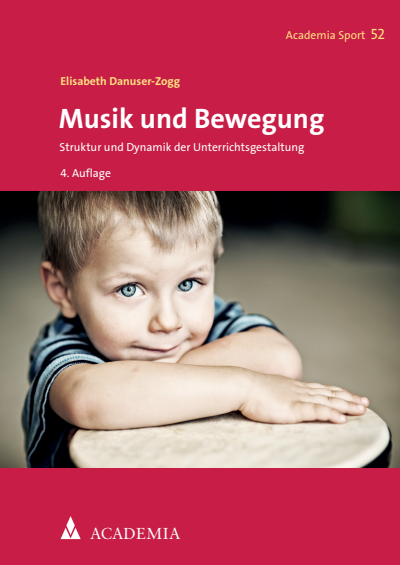
Music and Movement
The Structure and Dynamics in Teaching- Autor:innen:
- Reihe:
- Academia Sport, Band 58
- Verlag:
- 2020
Zusammenfassung
Die Vermittlung von Musik und Bewegung / Rhythmik wird als Modell in einer dualen Einheit von Struktur und Dynamik dargestellt. In der Struktur im ersten Teil werden Kompetenzprofile umrissen, welche für die Arbeit mit Menschen aller Altersstufen sowie Menschen mit besonderen Bedürfnissen zuzuordnen sind. Der zweite Teil definiert die Merkmale einer kunstbasierten kreativen Unterrichtsgestaltung. Modellzeichnungen erleichtern an jedem Punkt die Orientierung im Spannungsfeld von Struktur und Dynamik.
Die genaue Definierung von Zielen als auch die Möglichkeit der individuell anpassbaren Dynamik macht eine Anwendung in unterschiedlichsten Berufsfeldern möglich. Durch die Vielfalt der Ebenen werden zusätzlich zahlreiche Hinweise für die Arbeit im Bereich der Inklusion beschrieben.
Angesprochen sind Lehrende und Lernende in Musik und Bewegung / Rhythmik, Musik, Künstlerischer Vermittlung, Gymnastik und Sport, sowie kunstpädagogisch Interessierte aus den verschiedensten Arbeitsgebieten.
Publikation durchsuchen
Bibliographische Angaben
- Auflage
- 1/2020
- Copyrightjahr
- 2020
- ISBN-Print
- 978-3-89665-938-5
- ISBN-Online
- 978-3-89665-939-2
- Verlag
- Academia, Baden-Baden
- Reihe
- Academia Sport
- Band
- 58
- Sprache
- Englisch
- Seiten
- 240
- Produkttyp
- Monographie
Inhaltsverzeichnis
- Titelei/Inhaltsverzeichnis Kein Zugriff Seiten 1 - 8
- Preface Kein Zugriff
- Music and Movement / Rhythmics Kein Zugriff
- Practical relevance Kein Zugriff
- Terminology Kein Zugriff
- The text Kein Zugriff
- Sources Kein Zugriff
- Diagrams Kein Zugriff
- Translate music into movement and movement into music Kein Zugriff
- Time – Space – Strength – Form: first distinctions Kein Zugriff
- Distinction of the four parameters within the poles Kein Zugriff
- Practical relevance Kein Zugriff
- The six fields Kein Zugriff
- Structure and dynamics Kein Zugriff
- The different sections Kein Zugriff
- The structures of the fields and sections Kein Zugriff
- The model as a basis for practice Kein Zugriff
- Practical relevance Kein Zugriff
- Music A: Being with music/Perceiving music Kein Zugriff
- Music B: Learning the basics Kein Zugriff
- Music C: Differentiating musical parameters Kein Zugriff
- Music D: Relating music to the room, an object, a partner, the group Kein Zugriff
- Music E: Discovering music as a personal language Kein Zugriff
- Movement A: Perception of body and body space Kein Zugriff
- Movement B: Movement development Kein Zugriff
- Movement C: Distinctions of the movement rhythms Kein Zugriff
- Movement D: Movement in relation to the room, a partner, an object Kein Zugriff
- Movement E: Movement creations Kein Zugriff
- Perception A1, developing proprioception: surface perception Kein Zugriff
- Perception A2, developing proprioception: depth perception Kein Zugriff
- Perception A3, developing proprioception: kinaesthetic perception Kein Zugriff
- Perception A4, developing proprioception: vestibular perception Kein Zugriff
- Perception C1: Distinctions in remote senses: auditive perception Kein Zugriff
- Perception C2: Distinctions in proprioception: visual perception Kein Zugriff
- Perception D: Perception – Movement – Space Kein Zugriff
- Concept formation A: Perceiving processes with all senses and putting them into one’s own words Kein Zugriff
- Concept formation B: Experiencing, recognising and naming the basics of the parameters, of cultural techniques and factual topics Kein Zugriff
- Concept formation C: Differentiating, comparing, connecting, naming terms Kein Zugriff
- Concept formation D: Relating concepts to creation in Music and Movement, to material, to the room, to partners Kein Zugriff
- Concept formation E: Personalising terms from everyday life Kein Zugriff
- Social interaction A: “ME”, self-awareness as the basis for social awareness Kein Zugriff
- Social Interaction B: “YOU and ME”, dealing with a partner Kein Zugriff
- Social interaction C: “ME and US”, dealing with a group Kein Zugriff
- Social interaction D: Me ‒ my partner ‒ the group in the room and/or with materials Kein Zugriff
- Social interaction E: Social competence and creativity Kein Zugriff
- Personal expression A: Becoming self-aware Kein Zugriff
- Personal expression B: Using one’s own repertoire of personal abilities Kein Zugriff
- Personal expression C: Developing something new from made experiences Kein Zugriff
- Personal expression D: Putting personal expressions in relation to materials, the group, a partner, the room Kein Zugriff
- Personal expression E: Creativity in all fields Kein Zugriff
- Definition of rhythm Kein Zugriff
- Rhythm training in Music and Movement Kein Zugriff
- Rhythms of the body Kein Zugriff
- Rhythm as an expressive means of personal properties in everyday life Kein Zugriff
- Timing and time research Kein Zugriff
- Personal definition Kein Zugriff
- Rhythm as the dynamics between the poles of tension and relaxation Kein Zugriff
- The importance of rhythm for the human development Kein Zugriff
- Selection criteria Kein Zugriff
- Rhythmics materials Kein Zugriff
- Groove Pack Kein Zugriff
- Musical instruments Kein Zugriff
- Everyday materials and objects for movement Kein Zugriff
- Handling of materials and instruments Kein Zugriff
- Quality Kein Zugriff
- Two lessons in comparison Kein Zugriff
- Learning success Kein Zugriff
- Creative processes Kein Zugriff
- Lesson dynamics within the four parameters Kein Zugriff
- Rhythm and rhythmisation in the lesson dynamics Kein Zugriff
- The six fields as a design tool in the aesthetic learning space Kein Zugriff
- Reactions as feedback Kein Zugriff
- Goal and process Kein Zugriff
- Setting goals Kein Zugriff
- Implementing goals ‒ achieving goals Kein Zugriff
- Concrete setting of goals Kein Zugriff
- Goal and topic Kein Zugriff
- Variations Kein Zugriff
- The organic exercise development Kein Zugriff
- Mixed forms Kein Zugriff
- Rhythmised learning within the fields Kein Zugriff
- Resonance in the aesthetic learning space Kein Zugriff
- Resonance and inspiration Kein Zugriff
- Interaction patterns in the learning process Kein Zugriff
- Lesson structure: beginning – development – end Kein Zugriff
- Preparatory grid Kein Zugriff
- Planning a long-term process Kein Zugriff
- Lively preparation and reflection Kein Zugriff
- Reflections Kein Zugriff
- Assessment Kein Zugriff
- Evaluations Kein Zugriff
- Observation of individual pupils using the model Kein Zugriff
- Children learn (about) music with all their senses Kein Zugriff
- Impact of a lack of differentiation Kein Zugriff
- Structural changes in the classroom Kein Zugriff
- Observing, analysing and changing difficult teaching situations Kein Zugriff
- The chance of music in diversity Kein Zugriff
- Musical learning is a complex process Kein Zugriff
- The inclusive music lessons are designed to be perceptible and tangible Kein Zugriff
- Clear pulse and rhythm movements support musical learning Kein Zugriff
- Composing the ‘aesthetic’ in a visual and auditive manner is part of the success Kein Zugriff
- The score of the inclusive music lesson has different parts Kein Zugriff
- Between the poles of art and pedagogy Kein Zugriff
- The model and acquisition of competencies Kein Zugriff
- Music – movement – learning Kein Zugriff
- The model as the basis for a specific concept development Kein Zugriff
- Experimental spaces Kein Zugriff
- The relationship of creativity and learning Kein Zugriff
- Relationship and handiwork Kein Zugriff
- Innovative learning Kein Zugriff
- Appendix: Information on literature and references Kein Zugriff