Monographie Open Access Vollzugriff
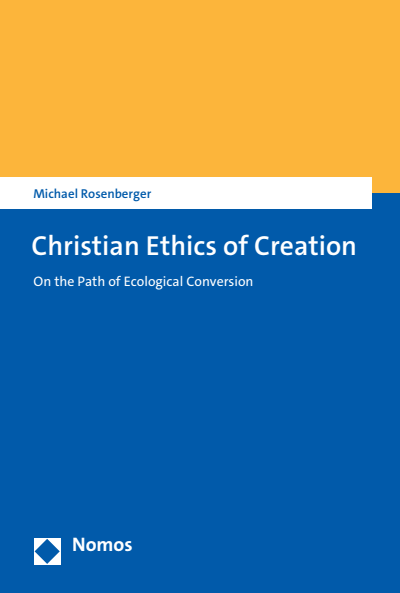
Christian Ethics of Creation
On the Path of Ecological Conversion- Autor:innen:
- Verlag:
- 2022
Zusammenfassung
Wenn die gewaltigen ökologischen Herausforderungen der Gegenwart bewältigt werden sollen, braucht es klare ethische Orientierungen und tiefe Quellen innerer Kraft. Der Autor reflektiert die Potenziale der christlichen Tradition für eine Ethik und Spiritualität der Schöpfung. Dafür greift er auf biblische und liturgische Impulse ebenso zurück wie auf die Enzyklika Laudato si von Papst Franziskus und setzt sie mit naturwissenschaftlichen, soziologischen und ökonomischen Überlegungen in Beziehung. Auf dieser Grundlage entwickelt es eine Handlungs- und Hoffnungsperspektive, die durch Schwierigkeiten und Enttäuschungen hindurch tragfähig ist.
Schlagworte
Publikation durchsuchen
Bibliographische Angaben
- Copyrightjahr
- 2022
- ISBN-Print
- 978-3-8487-8796-8
- ISBN-Online
- 978-3-7489-3438-7
- Verlag
- Nomos, Baden-Baden
- Sprache
- Englisch
- Seiten
- 316
- Produkttyp
- Monographie
Inhaltsverzeichnis
KapitelSeiten
- Titelei/InhaltsverzeichnisSeiten 1 - 4 Download Kapitel (PDF)
- ForewordSeiten 5 - 14 Download Kapitel (PDF)
- 1.1 The impetus of Fridays for Future
- 1.2 The environmental crisis as a sign of the times
- 1.3 Bound in the bag of life
- 1.4 The structure of the book
- 2.1 The concept of planetary boundaries
- 2.2 The nine borders and their meaning
- 2.3 Measured variables and measurement of the limits
- 2.4 Key problem 1: Global warming
- 2.5 Key problem 2: The loss of biodiversity
- 2.6 The great acceleration
- 2.7 Regional inequalities. The World Risk Index
- 2.8 The two central causes: Economic activity and lifestyle
- 2.9 Boundaries in an anthropological and ethical perspective
- 2.10 A New Age: The Earth in the Anthropocene
- 3.1 The ecclesiastical aberrations in the interpretation of biblical creation texts
- 3.2 Hermeneutical and exegetical preliminary remarks on Gen. 1–9
- 3.3 Prelude: The vision of a great family of all creatures (Ps. 104)
- 3.4.1 God's Covenant with His Creation (Gen. 9)
- 3.4.2 The flood of violence and the lifeboat of the ark (Gen. 6–8)
- 3.5.1 Man and animals in the garden of paradise (Gen. 2–3)
- 3.5.2 The great house of life of creation (Gen. 1)
- 3.6 The guiding principle of the peace of Creation and the norms of Creation justice
- 3.7 The Sabbath as the Basic Principle of Creation Justice
- 3.8 The tree of life as an archetypal symbol of Creation justice
- 4.1 "All like the altar vessels". Creation spirituality in the liturgical stance
- 4.2.1 Baptism as a sign of the great flood
- 4.2.2 The Eucharist as the thanksgiving of all creatures
- 4.2.3 The other sacraments
- 4.2.4 The earth rite of burial as a return to the earth
- 4.3.1 The Lord's Prayer
- 4.3.2 The Liturgy of the Hours
- 4.3.3 The missing lament prayer
- 4.4 Sharing the Easter Bread. Creation spirituality in the church year
- 4.5.1 Blessings around nutrition
- 4.5.2 Blessing of herbs
- 4.5.3 Blessing of the waters
- 4.5.4 Blessing of the animals
- 4.5.5 Blessing in the killing of animals. A missing person report
- 4.6 As the church "do not remain silent". Creation Day and Creation Time
- 4.7 Celebrating outdoors. Creation as a space and time-giver for the liturgy
- 4.8 Still room for improvement. A conclusion
- 5.1 Anthropocentristic approaches
- 5.2 Pathocentrist/ Sentientist approaches
- 5.3 Biocentristic approaches
- 5.4 Ecocentrist/Cosmocentrist/Holistic Approaches
- 5.5.1 The normative content of the attribution of inherent worth/dignity
- 5.5.2 The necessary incommensurability of inherent worth/dignity
- 5.5.3 The bearers of inherent worth/dignity. Methodological preliminary remarks
- 5.5.4 The bearers of inherent worth/dignity. The fundamental decision
- 5.5.5 The theological deepening of the attribution of inherent worth/dignity
- 5.5.6 The emotional power of holistically based biocentrism and its spiritual deepening
- 5.6 Moral individualism and the common good principle
- 5.7 Epilogue: Being born and dying as cornerstones of ethics of Creation
- 6.1 History of the concept and idea of sustainable development
- 6.2.1 Sustainable development as a concept of justice
- 6.2.2 The three "pillars" of sustainability
- 6.2.3 What is replaceable? Strong versus weak sustainability
- 6.2.4 The five rules of ecological sustainability
- 6.2.5 The concept of sustainability and holistically based biocentrism
- 6.3 Sustainable climate protection
- 6.4 Sustainable biodiversity conservation
- 6.5 Sustainability and population policy
- 6.6 Sustainability as a link between different discourses
- 7.1.1 A “transformation of value attitudes”
- 7.1.2 Existing power relations as the biggest obstacle
- 7.2 The Concept of “Ecological Conversion”
- 7.3.1 Apocalyptic figures of thought in the perception of the world
- 7.3.2 Apocalyptic figures in theological interpretation
- 7.3.3 "Laudato si'" as gentle apocalypticism
- 7.4 The added value of a theology of conversion for the project of the great transformation
- 8.1 Common good versus individual good. The problem of the commons
- 8.2 Structural change models for the eco-social market economy
- 8.3 Eco-social market economy in a global context
- 8.4 (Post-)Growth?
- 9.1 Gratitude as appreciation of the given
- 9.2 Humility as becoming free through limitations
- 9.3 Reverence as stepping back from the mystery
- 9.4 Justice as impartial engagement
- 9.5 Moderation as harmony with Creation
- 9.6 Enjoyment as a taste for life
- 9.7 Serenity as being free from oneself
- 9.8 Devotion as the willingness to give oneself to others
- 9.9 Epilogue: Living simply
- 10.1 A new understanding of (God-)trust
- 10.2 Hope as letting something happen
- 10.3 Hope as refraining from success
- 10.4 Hope as the certainty that something has meaning
- 10.5 Epilogue: Bound in the bag of life
- BibliographySeiten 281 - 306 Download Kapitel (PDF)
- Index of passages from the Bible and magisterial textsSeiten 307 - 312 Download Kapitel (PDF)
- Register of personsSeiten 313 - 316 Download Kapitel (PDF)