Monograph Open Access Full access
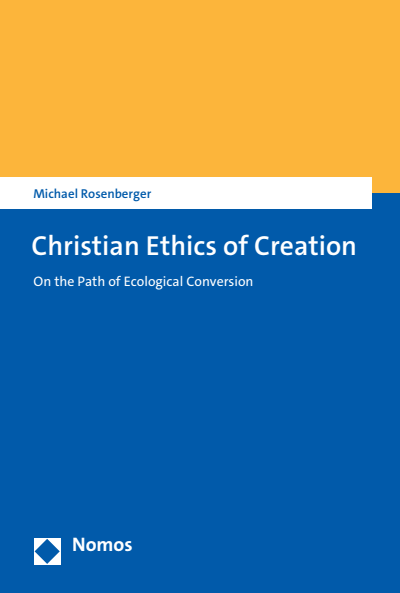
Christian Ethics of Creation
On the Path of Ecological Conversion- Authors:
- Publisher:
- 2022
Keywords
Search publication
Bibliographic data
- Copyright Year
- 2022
- ISBN-Print
- 978-3-8487-8796-8
- ISBN-Online
- 978-3-7489-3438-7
- Publisher
- Nomos, Baden-Baden
- Language
- English
- Pages
- 316
- Product Type
- Monograph
Table of contents
ChapterPages
- Titelei/InhaltsverzeichnisPages 1 - 4 Download chapter (PDF)
- ForewordPages 5 - 14 Download chapter (PDF)
- 1.1 The impetus of Fridays for Future
- 1.2 The environmental crisis as a sign of the times
- 1.3 Bound in the bag of life
- 1.4 The structure of the book
- 2.1 The concept of planetary boundaries
- 2.2 The nine borders and their meaning
- 2.3 Measured variables and measurement of the limits
- 2.4 Key problem 1: Global warming
- 2.5 Key problem 2: The loss of biodiversity
- 2.6 The great acceleration
- 2.7 Regional inequalities. The World Risk Index
- 2.8 The two central causes: Economic activity and lifestyle
- 2.9 Boundaries in an anthropological and ethical perspective
- 2.10 A New Age: The Earth in the Anthropocene
- 3.1 The ecclesiastical aberrations in the interpretation of biblical creation texts
- 3.2 Hermeneutical and exegetical preliminary remarks on Gen. 1–9
- 3.3 Prelude: The vision of a great family of all creatures (Ps. 104)
- 3.4.1 God's Covenant with His Creation (Gen. 9)
- 3.4.2 The flood of violence and the lifeboat of the ark (Gen. 6–8)
- 3.5.1 Man and animals in the garden of paradise (Gen. 2–3)
- 3.5.2 The great house of life of creation (Gen. 1)
- 3.6 The guiding principle of the peace of Creation and the norms of Creation justice
- 3.7 The Sabbath as the Basic Principle of Creation Justice
- 3.8 The tree of life as an archetypal symbol of Creation justice
- 4.1 "All like the altar vessels". Creation spirituality in the liturgical stance
- 4.2.1 Baptism as a sign of the great flood
- 4.2.2 The Eucharist as the thanksgiving of all creatures
- 4.2.3 The other sacraments
- 4.2.4 The earth rite of burial as a return to the earth
- 4.3.1 The Lord's Prayer
- 4.3.2 The Liturgy of the Hours
- 4.3.3 The missing lament prayer
- 4.4 Sharing the Easter Bread. Creation spirituality in the church year
- 4.5.1 Blessings around nutrition
- 4.5.2 Blessing of herbs
- 4.5.3 Blessing of the waters
- 4.5.4 Blessing of the animals
- 4.5.5 Blessing in the killing of animals. A missing person report
- 4.6 As the church "do not remain silent". Creation Day and Creation Time
- 4.7 Celebrating outdoors. Creation as a space and time-giver for the liturgy
- 4.8 Still room for improvement. A conclusion
- 5.1 Anthropocentristic approaches
- 5.2 Pathocentrist/ Sentientist approaches
- 5.3 Biocentristic approaches
- 5.4 Ecocentrist/Cosmocentrist/Holistic Approaches
- 5.5.1 The normative content of the attribution of inherent worth/dignity
- 5.5.2 The necessary incommensurability of inherent worth/dignity
- 5.5.3 The bearers of inherent worth/dignity. Methodological preliminary remarks
- 5.5.4 The bearers of inherent worth/dignity. The fundamental decision
- 5.5.5 The theological deepening of the attribution of inherent worth/dignity
- 5.5.6 The emotional power of holistically based biocentrism and its spiritual deepening
- 5.6 Moral individualism and the common good principle
- 5.7 Epilogue: Being born and dying as cornerstones of ethics of Creation
- 6.1 History of the concept and idea of sustainable development
- 6.2.1 Sustainable development as a concept of justice
- 6.2.2 The three "pillars" of sustainability
- 6.2.3 What is replaceable? Strong versus weak sustainability
- 6.2.4 The five rules of ecological sustainability
- 6.2.5 The concept of sustainability and holistically based biocentrism
- 6.3 Sustainable climate protection
- 6.4 Sustainable biodiversity conservation
- 6.5 Sustainability and population policy
- 6.6 Sustainability as a link between different discourses
- 7.1.1 A “transformation of value attitudes”
- 7.1.2 Existing power relations as the biggest obstacle
- 7.2 The Concept of “Ecological Conversion”
- 7.3.1 Apocalyptic figures of thought in the perception of the world
- 7.3.2 Apocalyptic figures in theological interpretation
- 7.3.3 "Laudato si'" as gentle apocalypticism
- 7.4 The added value of a theology of conversion for the project of the great transformation
- 8.1 Common good versus individual good. The problem of the commons
- 8.2 Structural change models for the eco-social market economy
- 8.3 Eco-social market economy in a global context
- 8.4 (Post-)Growth?
- 9.1 Gratitude as appreciation of the given
- 9.2 Humility as becoming free through limitations
- 9.3 Reverence as stepping back from the mystery
- 9.4 Justice as impartial engagement
- 9.5 Moderation as harmony with Creation
- 9.6 Enjoyment as a taste for life
- 9.7 Serenity as being free from oneself
- 9.8 Devotion as the willingness to give oneself to others
- 9.9 Epilogue: Living simply
- 10.1 A new understanding of (God-)trust
- 10.2 Hope as letting something happen
- 10.3 Hope as refraining from success
- 10.4 Hope as the certainty that something has meaning
- 10.5 Epilogue: Bound in the bag of life
- BibliographyPages 281 - 306 Download chapter (PDF)
- Index of passages from the Bible and magisterial textsPages 307 - 312 Download chapter (PDF)
- Register of personsPages 313 - 316 Download chapter (PDF)