, um zu prüfen, ob Sie einen Vollzugriff auf diese Publikation haben.
Monographie Kein Zugriff
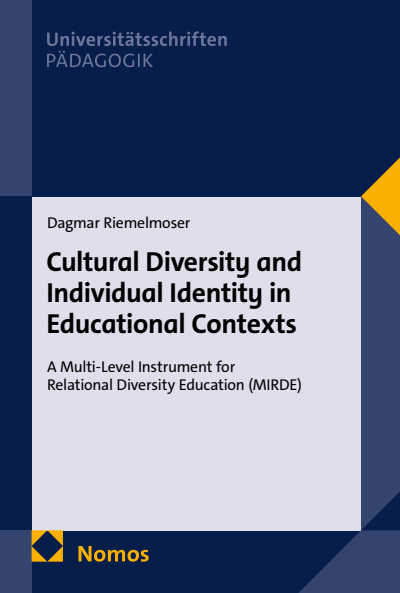
Cultural Diversity and Individual Identity in Educational Contexts
A Multi-Level Instrument for Relational Diversity Education (MIRDE)- Autor:innen:
- Reihe:
- Nomos Universitätsschriften – Pädagogik, Band 1
- Verlag:
- 2026
Zusammenfassung
Diskriminierung innerhalb österreichischer Schulen nimmt alarmierend zu. Durch die Analyse von US-amerikanischer Jugendliteratur sowie qualitative Interviews werden wertvolle Einblicke in die Herausforderungen und Vorteile geliefert, die mit Vielfalt verbunden sind. Der Fokus liegt auf der Wahrnehmung von Schülern und Lehrern bezüglich ethnokultureller Diversität und den damit verbundenen Konflikten. Als Lösung wird das innovative Lehrprojekt MIRDE vorgestellt, das darauf abzielt, interkulturelle Kompetenzen zu fördern. Es bereitet Schüler darauf vor, in einer zunehmend pluralistischen Gesellschaft kompetente Bürger zu werden und vermittelt ihnen wichtige Fähigkeiten im Umgang mit Diversitätskonflikten.
Publikation durchsuchen
Bibliographische Angaben
- Auflage
- 1/2026
- Copyrightjahr
- 2026
- ISBN-Print
- 978-3-7560-3999-9
- ISBN-Online
- 978-3-7489-7011-8
- Verlag
- Nomos, Baden-Baden
- Reihe
- Nomos Universitätsschriften – Pädagogik
- Band
- 1
- Sprache
- Englisch
- Seiten
- 279
- Produkttyp
- Monographie
Inhaltsverzeichnis
KapitelSeiten
- Acknowledgement Kein Zugriff
- 1. Introduction Kein Zugriff Seiten 11 - 16
- 2.1.1. Studying Culture Kein Zugriff
- 2.1.2. Intercultural Communication Kein Zugriff
- 2.1.3. Intercultural Understanding Kein Zugriff
- 2.1.4. Stereotyping Kein Zugriff
- 2.2. Identity: Definition and Meaning Kein Zugriff
- 2.3. A Definition of Diversity Kein Zugriff
- 2.4. Summary Kein Zugriff
- 3.1. Numbers and Facts on the Austrian School System Kein Zugriff
- 3.2.1. From “Foreigner Pedagogy” to Diversity Pedagogy: On the Development of an Educational Approach Kein Zugriff
- 3.2.2. Requirements of Intercultural Competence Kein Zugriff
- 3.2.3. Theory and Practice: The Inclusion of Intercultural Learning in Austrian Schools Kein Zugriff
- 3.3. Summary Kein Zugriff
- 4.1. Research Questions Kein Zugriff
- 4.2. Literary Analysis Kein Zugriff
- 4.3.1. The Qualitative Paradigm: The Six Principles of Qualitative Research Kein Zugriff
- 4.3.2. Methods: The Problem-Oriented Interview and the Focus Group Interview Kein Zugriff
- 4.3.3. Interviews – The Perks and Complexities Kein Zugriff
- 4.3.4. Study Participants Kein Zugriff
- 5.1.1. Observations on Diverse Cultural Backgrounds Kein Zugriff
- 5.1.2. Cultural Bias as Self-Defense and Result of Discrimination Kein Zugriff
- 5.1.3. Disadvantages Based on Racism Kein Zugriff
- 5.1.4. Summary Kein Zugriff
- 5.2.1. Observations on Diverse Cultural Backgrounds Kein Zugriff
- 5.2.2. Cultural Bias as Self-Defense and Result of Discrimination Kein Zugriff
- 5.2.3. Instances of Conflict in the Novel Based on Racism Kein Zugriff
- 5.2.4. Disadvantages Based on to Racism Kein Zugriff
- 5.2.5. Summary Kein Zugriff
- 5.3.1. Cultural Bias as Self-Defense and Result of Discrimination Kein Zugriff
- 5.3.2. Instances of Conflict Based on Racism Kein Zugriff
- 5.3.3. Identity Issues Based on Cultural Differences Kein Zugriff
- 5.3.4. Disadvantages Due to Racism Kein Zugriff
- 5.3.5. Summary Kein Zugriff
- 5.4.1. Cultural Bias as Self-defense and Result of Discrimination Kein Zugriff
- 5.4.2. Incidences of Conflict Based on Racism Kein Zugriff
- 5.4.3. Identity Issues Based on Cultural Differences Kein Zugriff
- 5.4.4. Summary Kein Zugriff
- 5.5.1. Cultural Bias as Self-Defense and Result of Discrimination Kein Zugriff
- 5.5.2. Identity Issues Based on Cultural Differences Kein Zugriff
- 5.5.3. Summary Kein Zugriff
- 5.6.1. Observations on Diverse Cultural Backgrounds Kein Zugriff
- 5.6.2. Cultural Bias as Self-Defense and Result of Discrimination Kein Zugriff
- 5.6.3. Incidences of Conflict Based on Racism Kein Zugriff
- 5.6.4. Disadvantages Due to Racism Kein Zugriff
- 5.6.5. Identity Issues Based on Cultural Differences Kein Zugriff
- 5.6.6. Summary Kein Zugriff
- 5.7. Summary and Discussion Kein Zugriff
- 6.1.1. Perception of Cultural Diversity and Diversity in Schools Kein Zugriff
- 6.1.2. Experiences with Cultural Diversity in the School Setting Kein Zugriff
- 6.1.3. Advantages of Diversity in the Classroom Kein Zugriff
- 6.1.4. The Multicultural Classroom as Place of Studying, Learning and Understanding Kein Zugriff
- 6.1.5. The Multicultural Classroom as Means of Promotion of Cultural Awareness Kein Zugriff
- 6.1.6. The Multicultural Classroom as Means of Promoting Integration and Cultural Exchange Kein Zugriff
- 6.2.1. Supporting Cultural Diversity in Austria through Multicultural Classrooms Kein Zugriff
- 6.3.1. Support for Teachers from Within the School Kein Zugriff
- 6.3.2. Support for Teachers from Outside the School Kein Zugriff
- 6.4.1. Conflicts between Pupils Kein Zugriff
- 6.4.2.1. Racism, Stereotypes, and Inequity Kein Zugriff
- 6.4.2.2. Language and Language Use Kein Zugriff
- 6.4.2.3. Intercultural Conflicts Kein Zugriff
- 6.4.3. Institutional Manuals in the Context of Conflicts Connected to Cultural Diversity Kein Zugriff
- 6.5. The Role of Diversity Teaching in Teacher-Training Kein Zugriff
- 6.6. Intercultural Learning and Intercultural Competence in the AHS Classroom Kein Zugriff
- 6.7. Lookout: Potentials of Diversity Teaching and Inclusion of Diversity in the Austrian Classroom Kein Zugriff
- 6.8. Summary Kein Zugriff
- 7.1. Step 1: Reading Kein Zugriff
- 7.2.1. What is a Digital Story? Kein Zugriff
- 7.2.2. Digital Storytelling and Teaching Intersectionality Kein Zugriff
- 7.2.3. Digital Storytelling as a Reflective Process Kein Zugriff
- 7.2.4. Digital Storytelling as a Practice of Meaning-Making and Building of Relationships Kein Zugriff
- 7.2.5. Digital Storytelling as a Tool for Empowerment and Autonomy Kein Zugriff
- 7.2.6. Digital Storytelling as a Teaching Tool Kein Zugriff
- 7.3. Step 3: Open Discussion Kein Zugriff
- 8. Discussion and Conclusion: The MIRDE Teaching Project as Tool for Conflict Prevention in Diverse Societies? Kein Zugriff Seiten 229 - 234
- 9. Sources Kein Zugriff Seiten 235 - 246
- 10.1. Teacher Guide Kein Zugriff
- 10.2. Pupil Guide Kein Zugriff