, um zu prüfen, ob Sie einen Vollzugriff auf diese Publikation haben.
Monographie Kein Zugriff
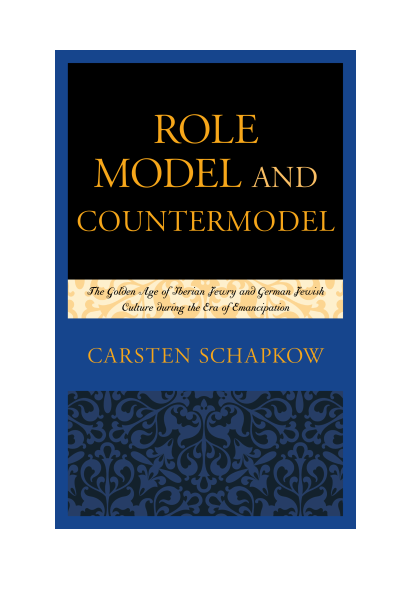
Role Model and Countermodel
The Golden Age of Iberian Jewry and German Jewish Culture during the Era of Emancipation- Autor:innen:
- Verlag:
- 2015
Schlagworte
Publikation durchsuchen
Bibliographische Angaben
- Copyrightjahr
- 2015
- ISBN-Print
- 978-1-4985-0802-5
- ISBN-Online
- 978-1-4985-0803-2
- Verlag
- Lexington, Lanham
- Sprache
- Englisch
- Seiten
- 305
- Produkttyp
- Monographie
Inhaltsverzeichnis
KapitelSeiten
- Contents Kein Zugriff
- Foreword Kein Zugriff
- Acknowledgments Kein Zugriff
- Notes Kein Zugriff
- Historical Foundations: Jewish History and Culture in Ancient Spain Kein Zugriff
- Jewish History under Muslim Rule in al-Andalus Kein Zugriff
- Jews in Christian Spain Kein Zugriff
- Forms of Perception in German Jewish Culture Kein Zugriff
- Methodological Approach and State of Research Kein Zugriff
- Notes Kein Zugriff
- The Haskalah as an Era of Upheaval Kein Zugriff
- Dohm’s On the Civil Improvement of the Jews Kein Zugriff
- History of Its Reception: Dohm’s Memorandum Kein Zugriff
- Educational Programs of the Maskilim and the Sephardic Model in Amsterdam Kein Zugriff
- The German Jewish Press in the Haskalah and the Iberian-Sephardic Ideal Kein Zugriff
- Biographies of Famous Men Kein Zugriff
- Moses Maimonides Kein Zugriff
- Maimonides’ Reception in the Haskalah Kein Zugriff
- Menasseh ben Israel Kein Zugriff
- The Maskilic Reception of Menasseh ben Israel Kein Zugriff
- Representations of Sephardic History in theJournal Sulamith Kein Zugriff
- Notes Kein Zugriff
- Representing German National History, the Jewish and non-Jewish Perspectives Kein Zugriff
- The Image of Spain in German Literature and Intellectual History Kein Zugriff
- Johann Gottfried Herder’s Idealization ofIberian Literatures Kein Zugriff
- Fichte’s Nationalism: The Free German Volkand the Jews Kein Zugriff
- Novalis: Christianity as PoliticalRegulatory Factor Kein Zugriff
- Rühs and Fries Attacks and Saul Ascher’s Response Kein Zugriff
- Counter-Images to the Concept of Nation in the “Society for Jewish Culture and Science” Kein Zugriff
- Saul Ascher’s Polemical Antithesis Kein Zugriff
- Leopold Zunz’s Organism Theory: The Example of Iberian-Sephardic Culture Kein Zugriff
- Isaak Markus Jost and his Political History of the Sephardic Jews Kein Zugriff
- Notes Kein Zugriff
- Jewish History as Reflected in Heinrich Graetz’s Depictions of Iberian-Sephardic andPolish-Jewish Life Kein Zugriff
- Graetz’s Construction of Jewish History and the Myth of al-Andalus Kein Zugriff
- Graetz’s Portrayal of Polish Jewish Life Kein Zugriff
- Reception History since Mendelssohn Kein Zugriff
- Abraham Geiger’s Interpretation of Iberian-Sephardic History as Counter-History Kein Zugriff
- Geiger and the Science of Judaism Kein Zugriff
- Geiger and the Iberian-Sephardic Role Model Kein Zugriff
- Representation of Poets in Geiger’s Works Kein Zugriff
- Notes Kein Zugriff
- Jewish Literature and German National Literature: Iberian-Sephardic Authors asIntercultural Mediators Kein Zugriff
- Point of Departure:Phöbus Philippson’s The Marranos Kein Zugriff
- Ludwig Philippson as Writer and Advocate Kein Zugriff
- Iberian-Sephardic History in Ludwig Philippson’s Fictional Works Kein Zugriff
- Neo-Orthodox Responses Kein Zugriff
- The Damascus-Affair: Starting Point for Ludwig Philippson’s Political Initiative in Spain Kein Zugriff
- The Politics of His Day: Ludwig Philippson’s Use of the Iberian-Sephardic Model Kein Zugriff
- The Middle Ages and Its Consequences Kein Zugriff
- Philippson’s Petition of 1854 Kein Zugriff
- Notes Kein Zugriff
- Conclusion Kein Zugriff Seiten 265 - 268
- Bibliography Kein Zugriff Seiten 269 - 288
- Index Kein Zugriff Seiten 289 - 304
- About the Author Kein Zugriff Seiten 305 - 305