, to see if you have full access to this publication.
Monograph No access
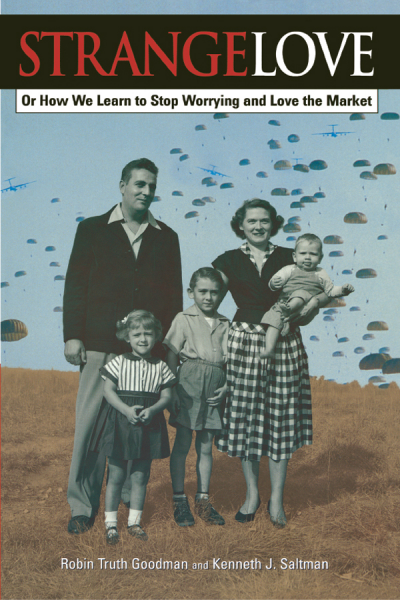
Strange Love
Or How We Learn to Stop Worrying and Love the Market
Authors:
|
Publisher:
2001
Summary
As Junk Bond felon Michael Milken attempts to transform public education on the model of the HMO, he is hailed in the mainstream press as having "done more to help mankind than Mother Theresa." Even as BP Amoco, a notorious U.S. polluter, is charged with funding and arming paramilitaries in Colombia, it freely distributes science curricula that portrays itself as a loving protector of citizens from a dangerous and 'out of control' nature. These as well as many other examples abound as Professors Robin Truth Goodman and Kenneth J. Saltman take on the corporate educators, media monopolies, and oil companies in their new book Strange Love: How We Learn to Stop Worrying and Love the Market. Saltman and Goodman show how corporate-produced curricula, films, and corporate-promoted books often use depictions of family love, childhood innocence, and compassion in order to sell the public on policies that ironically put the profit of multinational corporations over the well-being of people. In doing so Goodman and Saltman reveal the extent to which globalization depends upon education and also show how battles over culture, language, and the control of information are matters of life, death, and democracy.
Search publication
Bibliographic data
Edition
1/2001
Copyright Year
2001
ISBN-Print
978-0-7425-1635-9
ISBN-Online
978-1-4616-1833-1
Publisher
Rowman & Littlefield, Lanham
Language
English
Pages
235
Product Type
Monograph
Table of contents
ChapterPages
Table of Contents No access
Introduction No access Pages 1 - 38
1: Junk King Education No access Pages 39 - 66
2: Rivers of Fire: Amoco's iMPACT on Education No access Pages 67 - 92
3: A Time for Flying Horses: Oil Education and the Future of Literature No access Pages 93 - 120
4: The Mayor's Madness: So Far from God No access Pages 121 - 152
5: Enemy of the State No access Pages 153 - 178
6: A Hilarious Romp through the Holocaust No access Pages 179 - 208