, to see if you have full access to this publication.
Monograph No access
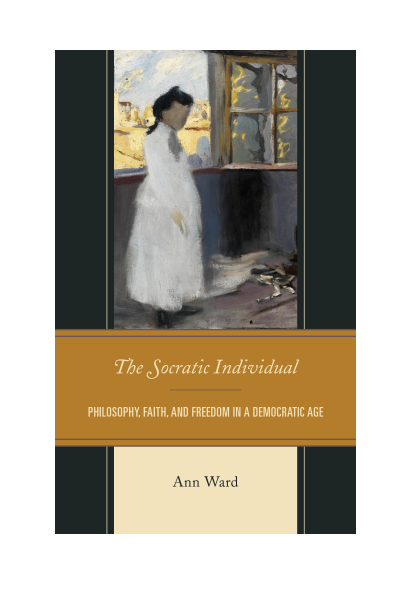
The Socratic Individual
Philosophy, Faith, and Freedom in a Democratic Age
Authors:
Publisher:
2020
Summary
The author explores the recovery of Socratic philosophy in the political thought of G.W.F. Hegel, Soren Kierkegaard, John Stuart Mill, and Friedrich Nietzsche. Ward identifies the cause of the renewed interest in Socrates in Hegel’s call for the absorption of the individual within the modern, liberal state and the concomitant claim that Socratic skepticism should cease because history has reached its end and perfection. Recoiling from Hegel’s attempt to chain the individual within the “cave,” nineteenth century thinkers push back against his deification of the state. Yet, underlying Kierkegaard, Mill and Nietzsche’s turn to Socrates is their acceptance of Hegel’s critique of the liberal conception of the rights-bearing individual. Like Hegel, they agree that such an individual is an unworthy competitor to the state. In search of a noble individual to hold up against the state and counter the belief in the “end” of history, Kierkegaard, Mill and Nietzsche bring back and transform Socrates in significant ways. For Kierkegaard the Socratic philosopher in modern times is the person of faith, for Mill the public intellectual whose idiosyncratic identity arises from the freedom of speech, and for Nietzsche the Dionysian artist. Each model the beauty of individuality in our democratic age.
Keywords
Search publication
Bibliographic data
Edition
1/2020
Copyright Year
2020
ISBN-Print
978-1-7936-0377-7
ISBN-Online
978-1-7936-0378-4
Publisher
Lexington, Lanham
Language
English
Pages
141
Product Type
Monograph
Table of contents
ChapterPages
Contents No access
Acknowledgments No access
Introduction: The Recovery of Socrates in Nineteenth-Century Political Thought No access Pages 1 - 12
1 Socrates, Democracy, and the End of History No access Pages 13 - 26
2 Abraham and Socrates No access Pages 27 - 54
3 Socrates and the God No access Pages 55 - 76
4 Socrates and the Search for Individuality No access Pages 77 - 90
5 Socrates and Dionysus No access Pages 91 - 104
6 Socrates, Democracy, and the End of Man No access Pages 105 - 122
Conclusion: The Socratic Soul in a Democratic Age No access Pages 123 - 130