, to see if you have full access to this publication.
Edited Book No access
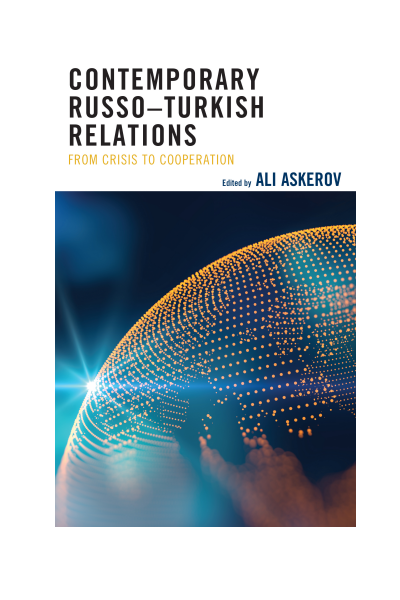
Contemporary Russo-Turkish Relations
From Crisis to Cooperation
Editors:
Publisher:
2018
Summary
The Syrian Civil War started in March 2011 and still continues. It causes death, turmoil, humanitarian crisis, and mass migration in the region. Numerous state and non-state actors are involved in this multi-sided armed conflict. On 24 November 2015, Turkey shoots down a Russian fighter jet on its border and this event becomes the turning point in Russo–Turkish relations. An economic and psychological war starts between Moscow and Ankara which damages their good relations existed before the crisis. Despite the crisis, the sides to the conflict understand that they need each other for their own benefits and look for reconciliation. Russia, a supporter of the Assad government in Syria, does not want to lose Turkey as a friend. Turkey, an energy partner of Russia, needs Russia to balance the power relations in the region. They are two neighboring countries with strong historical socio-economic ties that need to be restored. The reconciliation process is not easy and requires some third party role. The PYD/YPG-centered US policy in Syria affects Turkey’s strategies.
Keywords
Search publication
Bibliographic data
Edition
1/2018
Copyright Year
2018
ISBN-Print
978-1-4985-5323-0
ISBN-Online
978-1-4985-5324-7
Publisher
Lexington, Lanham
Language
English
Pages
333
Product Type
Edited Book
Table of contents
ChapterPages
Contents No access
Foreword No access
Acknowledgments No access
Introduction No access
Chapter One: A History of Russian–Turkish Relations No access Pages 1 - 26
Chapter Two: Main Lines of Turkey–Russia Relations in the 2000s No access Pages 27 - 44
Chapter Three: Contending Policies of Russia and Turkey No access Pages 45 - 64
Chapter Four: Turkey–Russia Relations After the Shooting Down of a Russian Warplane No access Pages 65 - 82
Chapter Five: Effects of US PYD/YPG Policy on Russo–Turkish Relations No access Pages 83 - 108
Chapter Six: The Military-Strategic Dimensions of Turkey–Russian Relations No access Pages 109 - 124
Chapter Seven: The Black Sea Question in Russo–Turkish Relations No access Pages 125 - 156
Chapter Eight: Restrictions on a Possible Rapprochement between Turkey, Russia, and Iran No access Pages 157 - 180
Chapter Nine: Central Asia at the Crossroads of Russian–Turkish Cooperation and Competition No access Pages 181 - 202
Chapter Ten: The Turkish–Russian Relations in the Context of Energy Cooperation No access Pages 203 - 222
Chapter Eleven: A Comparison of the EU Policies of Turkey and Russia No access Pages 223 - 248
Chapter Twelve: A Proposal for Sustainable Peace in the Sykes-Picot Agreement’s Hundredth Year No access Pages 249 - 264
Chapter Thirteen: Social Dynamics of Modern Russian and Turkish Societies No access Pages 265 - 280
Chapter Fourteen: The Future of the Black Sea Economic Cooperation Organization in the Context of Contemporary Developments No access Pages 281 - 290
Chapter Fifteen: A Third Party Role in the Normalization of Russo–Turkish Relations No access Pages 291 - 312