, to see if you have full access to this publication.
Monograph No access
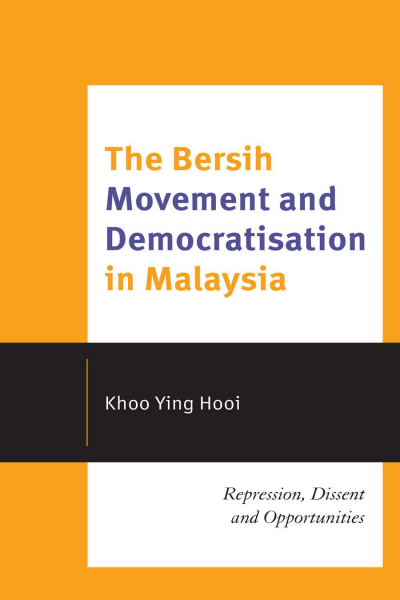
The Bersih Movement and Democratisation in Malaysia
Repression, Dissent and Opportunities
Authors:
Publisher:
2020
Summary
Beginning in 2005 as a small electoral reform initiative, the Coalition for Clean and Fair Elections, known as Bersih, became the most prominent social movement in Malaysia. Based on participant observation approach and first-hand interviews with key actors, this book examines how Bersih became a movement that aggregated the collective grievance of Malaysians and brought Malaysian sociopolitical activism to a new level. This book makes a major contribution to the scholarly work on social movement theories in the Southeast Asian context and to the growing literature on social movements and democratization.
Keywords
Search publication
Bibliographic data
Edition
1/2020
Copyright Year
2020
ISBN-Print
978-1-7936-4213-4
ISBN-Online
978-1-7936-4214-1
Publisher
Lexington, Lanham
Language
English
Pages
213
Product Type
Monograph
Table of contents
ChapterPages
Contents No access
List of figures and tables No access
List of acronyms and abbreviations No access
1 Introduction No access Pages 1 - 10
Social movements: definitions and debates No access
Formation and outcomes: how and why do social movements matter? No access
Debates on social movement theories No access
Democratisation: concepts and debates No access
Social movement approaches to democratisation No access
Political opportunity: closed vs. open No access
Malaysia’s democracy: processes and obstacles No access
Electoral politics, political reshaping and coalitions No access
Civil society and social movements in Malaysia No access
Protest politics No access
Irregularities in the electoral process No access
Abdullah Badawi’s administration and public grievances No access
The role of the Internet No access
The electoral protests No access
New media repertoire No access
Electoral reforms No access
State repression No access
Access to the political system No access
Political parties as agents of mobilisation No access
Networking No access
Political divisions among elites No access
The changing culture of opposition: how powerful is protest? No access
Political participation and public awareness No access
Spillover effects and counter-movements No access
People power through the ballot No access
From mobilisation to institutionalisation No access