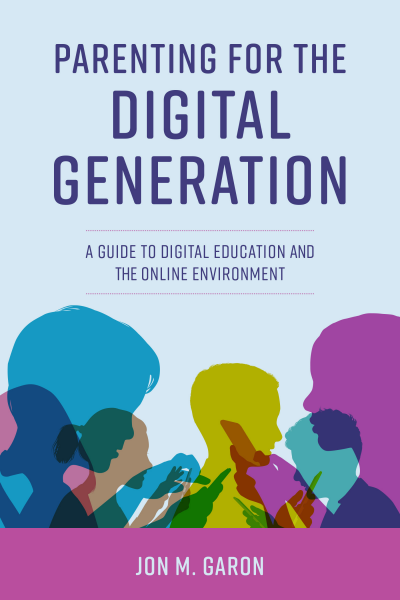
Parenting for the Digital Generation
A Guide to Digital Education and the Online Environment- Authors:
- Publisher:
- 2022
Summary
Parenting for the Digital Generation provides a practical handbook for parents, grandparents, teachers, and counselors who want to understand both the opportunities and the threats that exist for the generation of digital natives who are more familiar with a smartphone than they are with a paper book. This book provides straightforward, jargon-free information regarding the online environment and the experience in which children and young adults engage both inside and outside the classroom.
The digital environment creates many challenges, some of which are largely the same as parents faced before the Internet, but others which are entirely new. Many children struggle to connect, and they underperform in the absence of the social and emotional support of a healthy learning environment. Parents must also help their children navigate a complex and occasionally dangerous online world.
This book provides a step-by-step guide for parents seeking to raise happy, mature, creative, and well-adjusted children. The guide provides clear explanations of the keys to navigating as a parent in the online environment while providing practical strategies that do not look for dangers where there are only remote threats.
Keywords
Search publication
Bibliographic data
- Edition
- 1/2022
- Copyright Year
- 2022
- ISBN-Print
- 978-1-4758-6195-2
- ISBN-Online
- 978-1-4758-6196-9
- Publisher
- Rowman & Littlefield, Lanham
- Language
- English
- Pages
- 276
- Product Type
- Monograph
Table of contents
- Dedication No access
- Contents No access
- Preface No access
- Introduction No access
- About This Book No access
- A. What Families Need No access
- B. Household Strategies to Tame Intrusive Technology No access
- C. Raising Children for Success No access
- A. Using Age and Developmental Milestones to Guide Online Engagement No access
- B. From Idiot Box to Trolls No access
- C. Mental and Behavioral Health No access
- A. Introduction No access
- B. Information Literacy Skills No access
- C. Digital Literacy Skills No access
- D. Privacy, Netiquette, and Security Literacy Skills No access
- A. Introduction No access
- B. Origins No access
- C. Definition and Attributes of Distance Education No access
- D. Modalities—Face-to-Face, Online, and Blended Instruction No access
- E. Cognitive Science and Learning Theory No access
- F. Supplemental Education—Distance Learning Outside of Accredited Institutions No access
- G. FERPA—Protecting Educational Privacy No access
- A. The Keys to Effective Online Education No access
- B. Learning in Practice No access
- C. Learning Management Systems and Parental Access No access
- D. Preparing for Online Instruction No access
- E. Homework and Take-Home Assignments No access
- F. Learning beyond the Classroom No access
- A. Accessibility No access
- B. Special Education under IDEA No access
- C. The Digital Divide No access
- D. Diversity and Inclusion No access
- A. Introduction No access
- B. Navigating Modern Social Media’s Cancel Culture No access
- C. How Employers and Universities Use Applicants’ Online Presence No access
- D. What to Build No access
- E. What to Avoid No access
- A. Introduction No access
- B. Copyright No access
- C. Fair Use and Fan Fiction No access
- D. Content Management by the ISPs No access
- A. Introduction No access
- B. Sex Education No access
- C. Sexualization and Body Shaming across Media No access
- D. Sexual Orientation and Gender Identity No access
- E. Nudity, Sexually Explicit Content, and Obscenity No access
- F. Prohibited Content: Child Pornography No access
- G. Violent Content and Mature Games No access
- A. Introduction—the Harms of Online Harassment No access
- B. Harassment versus Protected Speech No access
- C. Obligations of the School No access
- A. Introduction No access
- B. Digital Self-Harm No access
- C. Sexploitation and Revenge Porn No access
- D. Online Sexual Predators—Digital Stranger Danger No access
- E. Working with Law Enforcement No access
- A. Contextualizing Radical Extremism No access
- B. Deepfakes and Disinformation No access
- C. Intervention Strategies No access
- D. School Shootings No access
- A. The Rest of the Internet No access
- B. The Deep Web No access
- C. The Dark Web No access
- D. Torrenting and Illegal File Sharing No access
- A. Hacking Explained No access
- B. Signs of a Malicious Adolescent Hacker No access
- C. Steps to Stop Hacking from Home No access
- A. Introduction No access
- B. eCommerce and Safe Shopping No access
- C. Advertising and Promotion No access
- D. Targeted Messaging, Political Manipulation, and Analytics No access
- E. Protection from Unwanted Intrusions No access
- F. Protection from Government Surveillance No access
- A. The Origins of Data Security: The Envelope No access
- B. Personally Identifiable Information No access
- C. Data Protection—Integrity, Availability, and Confidentiality No access
- D. Household Fundamentals to Protect Personal Information No access
- E. Tracking Device Usage and the Balance between Trust and Verify No access
- A. Controlling the Online Engagement No access
- B. Make the Most of Online Education No access
- C. Taking Advantage of the Internet No access
- 1. History of Technologies That Run the World No access
- 2. Understanding the Information Economy No access
- List of Acronyms No access Pages 243 - 246
- Chapter 1 No access
- Chapter 2 No access
- Chapter 3 No access
- Chapter 4 No access
- Chapter 5 No access
- Chapter 6 No access
- Chapter 7 No access
- Chapter 8 No access
- Chapter 9 No access
- Chapter 10 No access
- Chapter 11 No access
- Chapter 12 No access
- Chapter 13 No access
- Chapter 14 No access
- Chapter 15 No access
- Chapter 17 No access
- Appendices No access
- Bibliography No access Pages 265 - 266
- Index No access Pages 267 - 274
- About the Author No access Pages 275 - 276