, to see if you have full access to this publication.
Edited Book No access
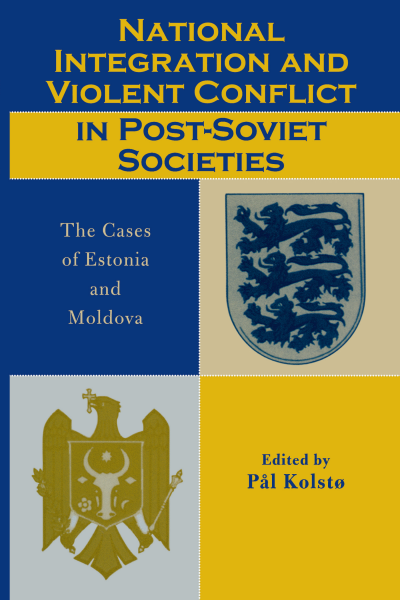
National Integration and Violent Conflict in Post-Soviet Societies
The Cases of Estonia and Moldova
Editors:
Publisher:
2002
Summary
Why has social peace been preserved in some new, nationalizing countries in Eastern Europe and broken down in others? While civil peace has reigned in Estonia, Moldova experienced a bloody civil war in 1992, claiming more than a thousand casualties. These two states in question share a number of common characteristics, but there is one important difference. National Integration and Violent Conflict in Post-Soviet Societies analyzes processes of nation-building and ethnic integration in Estonia and Moldova in order to increase our general understanding of how social peace remains strong in one place and disintegrates in another. Chapters employ both 'on the ground' empirical studies and a strong theoretical framework to discuss theories on ethnic violence in the modern world and their possible relevance for these two cases. Additionally, the results of two large-scale surveys and four country chapters written by scholars living and working in Moldova and Estonia round out the book's exploration of each country's similarities and differences. The resulting volume contributes to a better understanding of national integration process in Estonia and Moldova and of national integration and communal violence in general.
Search publication
Bibliographic data
Edition
1/2002
Copyright Year
2002
ISBN-Print
978-0-7425-1888-9
ISBN-Online
978-1-4616-3945-9
Publisher
Rowman & Littlefield, Lanham
Language
English
Pages
301
Product Type
Edited Book
Table of contents
ChapterPages
Table of Contents No access
List of Tables and Figures No access
Preface No access
Chapter 1: Introduction No access Pages 1 - 30
Chapter 2: Integration, Alienation, and Conflict in Estonia and Moldova at the Societal Level: A Comparison No access Pages 31 - 70
Chapter 3: The Cultural and Social Makeup of Estonia No access Pages 71 - 104
Chapter 4: Estonia: Nation-Building and Integration–Political and Legal Aspects No access Pages 105 - 158
Chapter 5: The Cultural and Social Makeup of Moldova: A Bipolar or Dispersed Society? No access Pages 159 - 196
Chapter 6: Social Multipolarity and Political Violence No access Pages 197 - 232
Chapter 7: Russia and the OSCE: The Influence of Interested Third and Disinterested Fourth Parties on the Conflicts in Estonia and Moldova No access Pages 233 - 248