, to see if you have full access to this publication.
Monograph No access
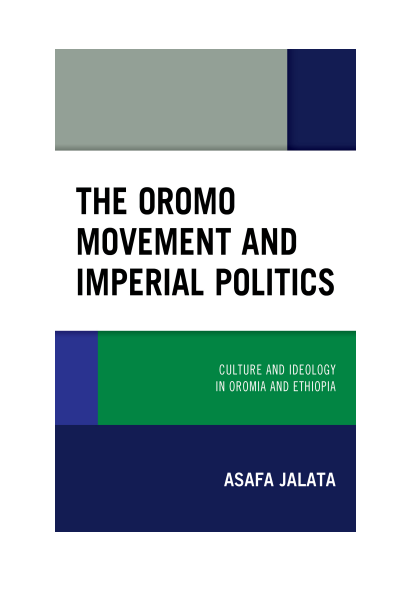
The Oromo Movement and Imperial Politics
Culture and Ideology in Oromia and Ethiopia
Authors:
Publisher:
2020
Summary
Focusing on the issue of the Oromo national struggle for liberation, statehood, and democracy, this book critically examines the dialectical relationship between Ethiopian colonialism and Oromo culture, epistemology, politics, and ideology in the context of the accumulated collective grievances of the Oromo nation. Specifically, the book identifies chains of sociological and historical factors that facilitated the development of Oromummaa (Oromo nationalism) and the Oromo national movement. It demonstrates how the Oromo national movement has been challenging and transforming Ethiopian imperial politics, tracks the different forms and phases of the movement, and maps out its future direction.
Currently, the Oromo are the largest ethno-national group and political minority in the Ethiopian Empire. They were colonized and incorporated into Ethiopia as colonial subjects in the last decades of the 19th century through the alliance of Abyssinian/Ethiopian colonialism and European imperialism. Since their colonization, the Oromo people have been treated as second-class citizens and have been economically exploited and culturally and politically suppressed. Despite the fact that Oromo resistance to Ethiopian colonialism existed during the process of their colonization and subjugation, it was only in the 1960s and 1970s that Oromo nationalists initiated organized efforts to liberate their people. Presently, Oromo nationalism plays a central role in Ethiopian politics.
Search publication
Bibliographic data
Edition
1/2020
Copyright Year
2020
ISBN-Print
978-1-7936-0337-1
ISBN-Online
978-1-7936-0338-8
Publisher
Lexington, Lanham
Language
English
Pages
197
Product Type
Monograph
Table of contents
ChapterPages
Contents No access
Preface No access
Acknowledgments No access
Chapter One: Introduction No access Pages 1 - 12
Chapter Two: The Oromo Epistemology, Agency, and Movement No access Pages 13 - 30
Chapter Three: The Oromo Nation No access Pages 31 - 52
Chapter Four: The Oromo National Movement and Gross Human Rights Violations No access Pages 53 - 74
Chapter Five: Theorizing Oromummaa No access Pages 75 - 98
Chapter Six: Gadaa/Siqqee as the Fountain of Oromummaa and the Theoretical Base of Oromo Liberation No access Pages 99 - 118
Chapter Seven: The Oromo Movement No access Pages 119 - 136
Chapter Eight: Politico-Cultural Prerequisites for Protecting the Oromo National Interest No access Pages 137 - 152
Chapter Nine: The Challenges of Building Oromo National Institutions No access Pages 153 - 176