, to see if you have full access to this publication.
Monograph No access
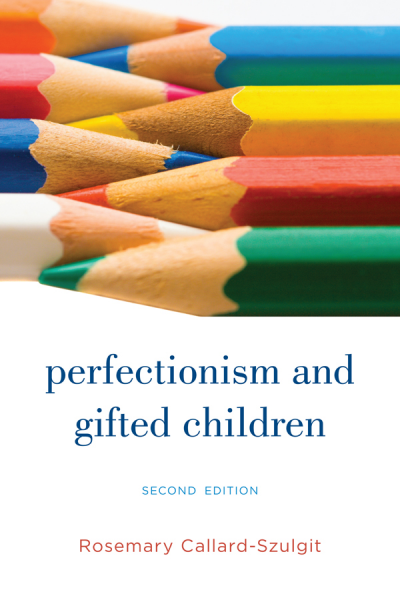
Perfectionism and Gifted Children
Authors:
Publisher:
2012
Summary
Parents and educators expect gifted children to be well-behaved, studious, and hard working. Why, then, do so many have trouble in school? According to Dr. Rosemary Callard-Szulgit, perfectionism—the number one social-emotional trait of gifted children—can actually immobilize some children and cause social adjustment problems for others. This explains why so many of today's gifted children do not, or cannot, complete school assignments or even follow through on personal responsibilities.
During her forty-five year career, Callard-Szulgit has helped hundreds of students and their parents recover from the harmful effects of being perfectionists. In her second edition of Perfectionism and Gifted Children, Callard-Szulgit provides practical insight into perfectionism, discussing why so many gifted children are perfectionists while also providing common sense solutions to the problems this presents. This book will be helpful to families and educators of gifted students, as well as to gifted children themselves. The expanded question and answer section will better help parents and teachers ease children’s anxieties and behaviors that stem from the problems of perfectionism. Appendixes list current associations and advocacy groups, Internet resources, journals and magazines that address the special needs of the gifted and talented.
Search publication
Bibliographic data
Edition
2/2012
Copyright Year
2012
ISBN-Print
978-1-61048-679-8
ISBN-Online
978-1-61048-680-4
Publisher
Rowman & Littlefield, Lanham
Language
English
Pages
174
Product Type
Monograph
Table of contents
ChapterPages
CONTENTS No access
PREFACE No access
CHAPTER 1. WHAT IS PERFECTIONISM? No access Pages 1 - 12
CHAPTER 2. WHO ARE THE GIFTED AND TALENTED? No access Pages 13 - 40
CHAPTER 3. COMMON NEGATIVE BEHAVIORS OF PERFECTIONISTS No access Pages 41 - 50
CHAPTER 4. THE POSITIVES OF PERFECTIONISM No access Pages 51 - 52
CHAPTER 5. THE NEGATIVES OF PERFECTIONISM No access Pages 53 - 60
CHAPTER 6. HOW TO RECOVER FROM PERFECTIONISM No access Pages 61 - 64
CHAPTER 7. MOST COMMONLY ASKED QUESTIONS ABOUT PERFECTIONISM, WITH SOLUTIONS No access Pages 65 - 90
CHAPTER 8. ADVOCACY No access Pages 91 - 104
CHAPTER 9. WHAT TWEAKS MY BRAIN MOST ABOUT PERFECTIONISM No access Pages 105 - 106
CHAPTER 10. GIFTED CHILDREN SPEAK TO US No access Pages 107 - 118