, to see if you have full access to this publication.
Monograph No access
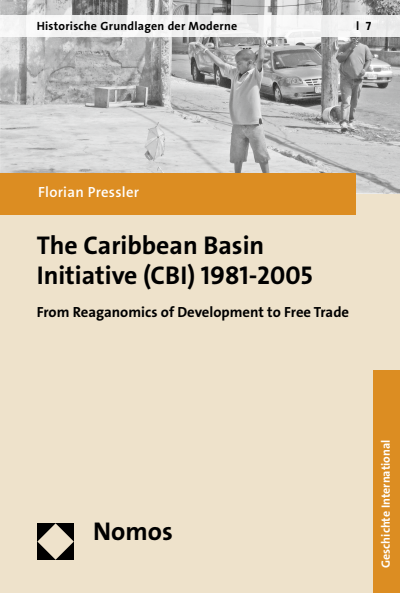
The Caribbean Basin Initiative (CBI) 1981-2005
From Reaganomics of Development to Free Trade- Authors:
- Series:
- Historische Grundlagen der Moderne, Volume 7
- Publisher:
- 2012
Summary
Vor dem Hintergrund des wirtschaftlichen Abstiegs der USA seit den 1980er Jahren beschreibt der Autor die CBI als Schrittmacher für die wirtschaftliche Integration Nordamerikas und als Wendepunkt der amerikanischen Handelspolitik. Das 1981 von Ronald Reagan ins Leben gerufene Entwicklungsprogramm diente den USA zunächst als wirtschaftspolitische Waffe im Kampf gegen linksgerichtete Regime und Guerillas im karibischen Becken. Doch nach dem Ende des Kalten Krieges wandelte sich die Initiative rasch zu einer embryonalen Freihandelszone. Arbeitsintensive Industriezweige in den USA begannen die CBI zu nutzen, um sich vor einer stärker werdenden asiatischen Konkurrenz zu schützen.
Search publication
Bibliographic data
- Edition
- 1/2012
- Copyright Year
- 2012
- ISBN-Print
- 978-3-8329-7057-4
- ISBN-Online
- 978-3-8452-3603-2
- Publisher
- Nomos, Baden-Baden
- Series
- Historische Grundlagen der Moderne
- Volume
- 7
- Language
- English
- Pages
- 322
- Product Type
- Monograph
Table of contents
ChapterPages
- Titelei/Inhaltsverzeichnis No access Pages 2 - 12Authors:
- Abbreviations No access Pages 13 - 14Authors:
- Introduction No access Pages 15 - 18Authors:
- Research Question No access Pages 19 - 23Authors:
- Secondary Literature Review No access Pages 24 - 28Authors:
- Primary Sources Review No access Pages 29 - 31Authors:
- Historical Context and Outlook No access Pages 32 - 36Authors:
- The Export-Import Model of Growth No access Pages 37 - 42Authors:
- Import-Substituting Industrialisation (ISI) and Industrialisation by Invitation No access Pages 42 - 47Authors:
- Operation Bootstrap No access Pages 47 - 50Authors:
- The Cuban Model of Development No access Pages 50 - 52Authors:
- The Alliance for Progress No access Pages 52 - 54Authors:
- The Lomé/Cotonou Conventions and the Generalised System of Preferences (GSP) No access Pages 54 - 57Authors:
- Economic Difficulties in the Caribbean Basin during the late 1970s and early 1980s No access Pages 57 - 59Authors:
- Jimmy Carter No access Pages 60 - 67Authors:
- Edward Seaga No access Pages 67 - 72Authors:
- Alexander Haig No access Pages 72 - 77Authors:
- Ronald Reagan No access Pages 77 - 81Authors:
- The CBI in International Negotiations No access Pages 81 - 89Authors:
- Reactions from the Beneficiary Nations No access Pages 89 - 91Authors:
- Inner-Administration Struggles about the CBI No access Pages 91 - 94Authors:
- The CBI unveiled No access Pages 94 - 97Authors:
- US Industrial and Labour Groups’ Opposition against the CBERA No access Pages 97 - 104Authors:
- Amending the CBERA No access Pages 104 - 109Authors:
- The CBERA enacted No access Pages 109 - 110Authors:
- El Salvador No access Pages 110 - 116Authors:
- Honduras No access Pages 116 - 119Authors:
- Jamaica No access Pages 119 - 125Authors:
- Nicaragua and Grenada No access Pages 125 - 131Authors:
- The Development Record No access Pages 131 - 140Authors:
- The Political Record No access Pages 140 - 145Authors:
- The Caribbean Basin on America’s Foreign Policy Agenda after the End of the Cold War No access Pages 146 - 156Authors:
- The US Position in the World Economy and the End of Tradeoffs No access Pages 156 - 163Authors:
- The Caribbean Basin and America’s New Trade Agenda No access Pages 163 - 172Authors:
- The Twin-Plant Programme No access Pages 172 - 176Authors:
- The Special Access Programme for the Caribbean Basin No access Pages 176 - 185Authors:
- The Caribbean Basin Economic Recovery Expansion Act (CBI II) No access Pages 185 - 196Authors:
- NAFTA and the Erosion of CBI Preferences No access Pages 196 - 201Authors:
- The Textile and Apparel Lobbies No access Pages 201 - 212Authors:
- The Labour Camp No access Pages 212 - 217Authors:
- The Administration No access Pages 217 - 223Authors:
- Congress No access Pages 223 - 227Authors:
- A Structural Perspective on the Failure to Pass Parity No access Pages 227 - 241Authors:
- Intra-Regional Integration as an Alternative to the CBI? No access Pages 241 - 249Authors:
- Hurricanes and Financial Storms No access Pages 249 - 254Authors:
- The Caribbean Basin Trade and Partnership Act No access Pages 254 - 262Authors:
- The CBI and the Passage of Trade Promotion Authority (TPA) . . No access Pages 263 - 267Authors:
- Latin America and the Caribbean Basin on George W. Bush’s Foreign Policy Agenda No access Pages 267 - 270Authors:
- The Negotiating Process No access Pages 270 - 278Authors:
- The DR-CAFTA Provisions No access Pages 278 - 281Authors:
- The Ratification of DR-CAFTA in the US Congress No access Pages 281 - 285Authors:
- Conclusion and Outlook No access Pages 286 - 292Authors:
- Bibliography No access Pages 293 - 322Authors: