, to see if you have full access to this publication.
Edited Book No access
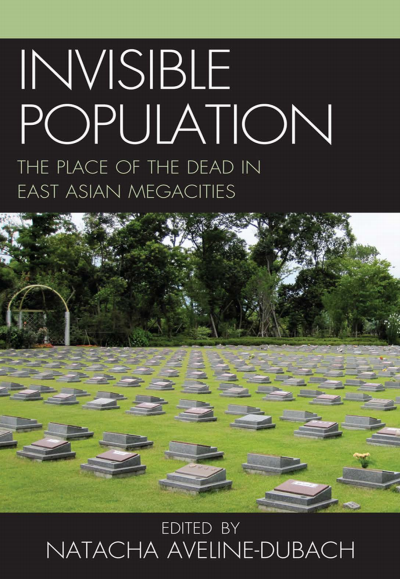
Invisible Population
The Place of the Dead in East-Asian Megacities
Editors:
Publisher:
2012
Summary
The issue of population ageing in East-Asia has been extensively studied but we remain in the dark as to the fate of the region’s growing dead population, particularly in the largest metropolitan areas where there is bitter competition for space among the various human activities. From private cemetery developers to undertakers, not to mention a vast array of sub-contractors, death is discreetly helping a multitude of industry players to prosper. The result has been the transformation of funeral services into a fully-fledged industry that is rapidly expanding and adapting to the needs of urban societies with their extreme lack of space. In the specific context of East-Asian megacities, funeral rituals and practices are evolving rapidly in an attempt to conform to spatial constraints and address emerging challenges such as urban sustainability and growing social inequalities.
Research dealing with death in East-Asia has so far focused on symbolic and religious issues, ignoring the social, economic and spatial dimensions that have become crucial in a context of rapid urbanization. This book aims to remedy this situation while highlighting for the first time the shared characteristics of funerary issues across Japan, Korea and China.
Search publication
Bibliographic data
Edition
1/2012
Copyright Year
2012
ISBN-Print
978-0-7391-7144-8
ISBN-Online
978-0-7391-7145-5
Publisher
Lexington, Lanham
Language
English
Pages
223
Product Type
Edited Book
Table of contents
ChapterPages
Contents No access
Acknowledgments No access
List of Illustrations No access
Introduction No access
Retrospect on the Origins of the Funeral Industry in Japan No access
Restructuring of the Stakeholder System No access
The Outlook for the Funeral Industry No access
Conclusion No access
Introduction No access
The Main Stages of the Traditional Ceremony No access
The Evolution of Funerals in Urban Societies No access
Conclusion No access
New Religious Institutions Set Out to Conquer Funerary Affairs No access
Tailor-Made Grave Systems No access
Graveless Burial Systems No access
Conclusion No access
The Rise and Fall of Shanghai’s Funeral Industry No access
The Revival of the Funeral Industry Under Close Supervision No access
New Challenges for Deathspaces No access
Conclusion No access
Funeral Reform in Shanghai No access
Funerary Sites: Restricted Spaces No access
Survival and Reorganising of Traditional Practices No access
Conclusion No access
Introduction No access
The Evolution of Funerary Rites Since the Imperial Era No access
Funerary Rites in the Contemporary China, the Example of Panyu District No access
The New Policy On Graves No access
Conclusion No access
Cremation and Burial: Successive Debates Throughout Korean History No access
Choosing Cremation and the Type of Grave No access
Conclusion No access
Changes in Funerary Site and Grave Regulations No access
The Creation of Cemeteries and Construction of Crematoria in Seoul No access
Evolution in Mortuary Spaces and Facilities After Independence No access
Conclusion No access
The Importance of Funeral Services No access
Changes in Burial Systems No access
Bright Future for South Korea’s Funeral Industry No access