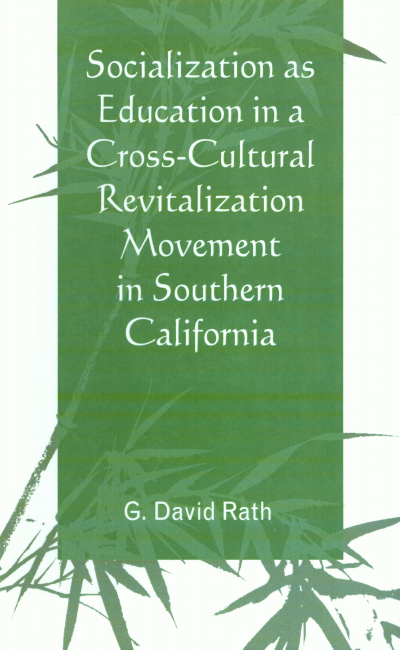
Socialization As Education in a Cross-Cultural Revitalization Movement in Southern California
- Authors:
- Publisher:
- 2009
Summary
This grounded theory study investigates how the Falun Gong in Southern California recruits and instructs followers. Participants are adult followers who meet regularly in public parks, on college campuses, and outside the Chinese Consulate in Los Angeles. This study uses grounded theory methodology with unstructured interviews, overt participant observations of meetings, and text analysis of published Falun Gong materials used by the practitioners. Falun Gong is a revitalization movement that is cross-cultural in nature and appeals to new adherents for how it addresses flaws found in perhaps all societies_failures of existing epistemology, ontology, health care, morality, politics, community, aesthetics, and the education of the young. Falun Gong provides a new way of thinking that can lead to a new life. The results of this study include a theory describing the movement, its methods of socialization, and suggestions for educators.
Search publication
Bibliographic data
- Edition
- 1/2009
- Copyright Year
- 2009
- ISBN-Print
- 978-0-7618-4653-6
- ISBN-Online
- 978-0-7618-4654-3
- Publisher
- Hamilton Books, Lanham
- Language
- English
- Pages
- 148
- Product Type
- Monograph
Table of contents
- Contents No access
- Acknowledgments No access
- Problem Statement No access
- Limitations No access
- The Qigong Boom No access
- The Rise of Falun Gong No access
- Roots of Estrangement No access
- Crackdown No access
- Significance of the Study No access
- Definitions No access
- Summary No access
- Description without Theory No access
- Nativistic Movements No access
- Revitalization Theory No access
- New Religious Movements No access
- Relative Deprivation Theory No access
- Alienation, Deprivation, Modernization and Secularization No access
- Rational Choice No access
- Global Movements No access
- Advantages of Globalization No access
- Religion No access
- Brain Studies No access
- Conclusion to Literature Review on Movements No access
- Summary of Theoretical Literature in Regard to Falun Gong No access
- Summary of Chapter 2 No access
- Qualitative Research No access
- Grounded Theory Methodology No access
- Data Collection No access
- Validation Strategies No access
- Ethical considerations No access
- Falun Gong Texts No access
- Semi-Structured Interviews No access
- Observations No access
- Setting and Sample No access
- Participants No access
- Data Analysis No access
- Delimitations No access
- Limitations No access
- Summary of Chapter 3 No access
- Conversion and Growth No access
- Five Exercises No access
- Volunteerism No access
- Sharing No access
- Conversion Stories No access
- Individual and Group Sharing No access
- Demonstrations, Parades and Shows No access
- Print and Sharing No access
- Books and Sharing No access
- Books and Growth No access
- Newspapers No access
- Telephones No access
- E-mail No access
- The Internet No access
- Secular Media No access
- FLG Media No access
- Interconnected Technologies No access
- Parents No access
- The Principal No access
- The Ming Hui Complementary Curriculum No access
- Analysis of Ming Hui Content No access
- Restoration No access
- Summary of Chapter 4 No access
- Compassion No access
- Tolerance No access
- The Internet No access
- Learning the Exercises from the Books No access
- Learning the Exercises from the Internet No access
- Learning the Exercises at the Parks No access
- Nine Day Seminars No access
- Volunteerism No access
- Individual and Group Sharing No access
- Parades No access
- Shows No access
- Banknotes No access
- Print and Sharing No access
- Cold Calling China No access
- Funding the Cold Calling No access
- Texting and Online Chatting No access
- E-Mail No access
- Marketing No access
- Circumventing Firewalls No access
- Digital Invasion No access
- Declarations No access
- Lawsuits No access
- Reports before Governments No access
- Summary of Chapter 5 No access
- The Ming Hui Network No access
- The Ming Hui Complementary Curriculum No access
- The Ming Hui School Site No access
- Sample Lesson Plan No access
- Myth and Legend No access
- History No access
- Poetry and Drawing No access
- Science No access
- Modern Methods No access
- Stories and Drama No access
- Teaching Methodology No access
- Multiple Intelligences No access
- Metacognition and Self-Assessment No access
- Traditional Method: Memorization No access
- Spirituality No access
- Summary of Chapter 6 No access
- Los Angeles Area Chinese School No access
- A Saturday Korean School No access
- The Kabbalah School: Spirituality for Kids No access
- Comparison and Contrast No access
- Summary of Chapter 7 No access
- A Compelling New Vision for All No access
- Model of FLG Socialization No access
- Suggestions for Further Study No access
- Education and CCRMs No access
- What Educators Can Learn No access
- Principles of Educational Evaluation No access
- Educational Imperative No access
- Summary of Chapter 8 No access
- Appendix A Informed Consent Form (English) No access Pages 123 - 124
- Appendix B Informed Consent Form (Chinese) No access Pages 125 - 126
- Appendix C Questionnaire No access Pages 127 - 127
- Appendix D Phase One Interview Guide for Practitioners No access Pages 128 - 128
- Appendix E Phase Two Interview Guide for Practitioners No access Pages 129 - 129
- Appendix F Interview Guide for the Principal No access Pages 130 - 130
- Appendix G Interview Guide for Parents No access Pages 131 - 132
- References No access Pages 133 - 144
- Index No access Pages 145 - 148