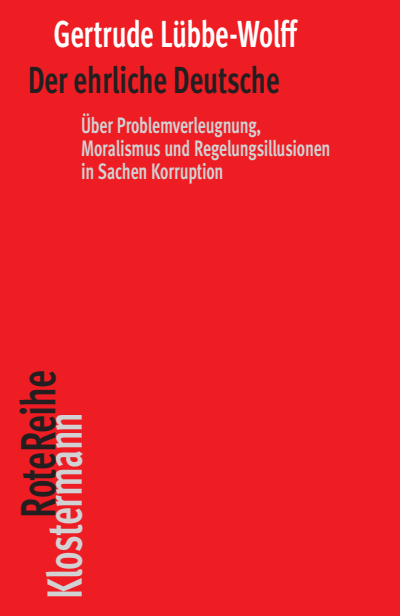
What is corruption? Why is it harmful? What role does corruption play in Germany, what role does it play in other EU member states, in the EU itself, in the recognised candidate countries and in other countries aspiring to join, and what role does it play worldwide? What risks are recognisable for future development? What role do - among other things - internationalisation, growing geopolitical tensions, migration, organised crime, the development of economic inequality, crises and crisis management policies play? What difficulties do the fight against corruption and the prevention of corruption face at different levels and in view of different levels of corruption? The book addresses these questions, presents examples, highlights progress and shortcomings in legal development and highlights the widespread misconceptions and misperceptions that stand in the way of an effective anti-corruption policy: Denial of the problem, moralism and illusions concerning regulation.
Keywords
Search publication
Bibliographic data
Edition
1/2025
Copyright Year
2025
ISBN-Print
978-3-465-04668-4
ISBN-Online
978-3-465-14668-1
Publisher
Klostermann, Frankfurt am Main
Series
Klostermann Rote Reihe
Volume
162
Language
German
Pages
344
Product Type
Monograph
Table of contents
ChapterPages
Titelei/Inhaltsverzeichnis No access Pages 1 - 12
1. Der vorherrschende Korruptionsbegriff No access
a) Korruption als Verderbnis No access
aa) Normbezug No access
aa) Handlungsfeld No access
aa) Akteurskonstellation No access
c) Aufzählende Erläuterungen No access
d) Grauzonen und Abgrenzungsbedarf No access
1. Schäden für das politische System No access
2. Wirtschaftliche Schäden No access
1. Korruption in Deutschland No access
a) Korruption in den Mitgliedstaaten No access
b) Korruption in Staaten mit Beitrittsperspektive No access
aa) Einwirkung auf Beitrittsaspiranten und Perspektiven der Erweiterungspolitik No access
aa) Einwirkung auf die Mitgliedstaaten No access
d) Korruption auf EU-Ebene No access
3. Internationale Antikorruptionspolitik No access
a) Internationalisierung No access
b) Wachsende geopolitische Spannungen No access
c) Interne politische Polarisierung, Entdemokratisierung, Rechtsstaatsabbau No access
d) Organisierte Kriminalität No access
e) Komplexität der Entscheidungsvorgänge No access
f) Migration No access
g) Entwicklung wirtschaftlicher Ungleichheit No access
h) Krisen und Krisenbewältigungspolitik No access
1. Kleine Fortschritte No access
a) Blindheit für eigene Risiken No access
aa) Medien No access
aa) Nichtregierungsorganisationen No access
aa) Justiz No access
1. Was ist Moralismus? No access
2. »Deutsche Ehrlichkeit« und andere Innerlichkeitstopoi No access
3. Gesinnungsfixierung No access
a) »Generalverdacht« und »Vermutung der Rechtstreue« No access
b) »Denunziation« und »Nestbeschmutzung« No access
5. Moralistische Verbrämungen unzureichender Regulierung finanzieller Einflüsse auf politisches Entscheiden No access
6. Unzureichende Sanktionsbereitschaft No access
7. Ablehnung direkter Demokratie No access
8. Was macht Moralismus so attraktiv? No access
1. Das Papierpolitiksyndrom No access
2. Mangelnde Aufmerksamkeit für Vollzugs- und Effizienzfragen No access
3. Transparenzaversion und Unterschätzung der Vorteile von Transparenz No access