, to see if you have full access to this publication.
Monograph No access
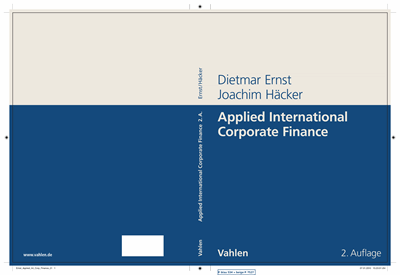
Applied International Corporate Finance
- Authors:
- |
- Publisher:
- 2012
Search publication
Bibliographic data
- Edition
- 2/2012
- Copyright Year
- 2012
- ISBN-Print
- 978-3-8006-3751-5
- ISBN-Online
- 978-3-8006-4463-6
- Publisher
- Vahlen, München
- Language
- German
- Pages
- 515
- Product Type
- Monograph
Table of contents
ChapterPages
- Titelei/Inhaltsverzeichnis No access Pages I - XXI
- 1.1.1 Mergers No access
- 1.1.2 Acquisitions No access
- 1.1.3.1 Forms of business alliances No access
- 1.1.3.2 M&A versus business alliances No access
- 1.2 Reasons for and success factors of M&A No access
- 1.3.1.1 Increased public perception No access
- 1.3.1.2 Shareholder structure No access
- 1.3.1.3 The target company's share price as an uncertainty factor No access
- 1.3.1.4 The bidder company's share price as an uncertainty factor No access
- 1.3.2.1 The regulations of § 93 AktG No access
- 1.3.2.2 The regulations of § 15 WpÜG No access
- 1.3.2.3 The regulations of § 21 WpHG No access
- 1.3.3.1 Overview of the "Wertpapiererwerbs- und Übernahmegesetz" (WpÜG) (Security Purchase and Takeover Act) No access
- 1.3.3.2 The bid process according to the WpÜG No access
- 1.3.3.3 Squeeze out No access
- 1.4 The process of M&A No access
- 2.1 Pitch No access
- 2.2.1 The discrete approach No access
- 2.2.2 Simultaneous bilateral negotiations No access
- 2.2.3 Controlled competitive auction No access
- 2.2.4 Full public auction No access
- 2.3.1 MBO or MBI No access
- 2.3.2 Financial investors No access
- 2.3.3 Strategic investors No access
- 2.4.1 Investment banks No access
- 2.4.2 Accountants and tax advisers No access
- 2.4.3 Lawyers No access
- 2.4.4 Other advisers No access
- 2.5 Mandate letter No access
- 2.6 Confidentiality agreement No access
- 3.1.1 Anonymous short profile No access
- 3.1.2 Information memorandum No access
- 3.2 Non-binding offer No access
- 4.1 Due diligence No access
- 4.2 Valuation No access
- 4.3 Structuring No access
- 5.1 Negotiations No access
- 5.2 Binding offer No access
- 5.3.1 Purchase agreement No access
- 5.3.2 Closing No access
- 1.1 Definitions No access
- 1.2.1.1 Seed financing No access
- 1.2.1.2 Start-up financing No access
- 1.2.1.3 First-stage financing No access
- 1.2.2.1 Second-stage financing No access
- 1.2.2.2 Third-stage financing No access
- 1.2.2.3 Fourth-stage financing No access
- 1.3.1 Expansion (development capital) No access
- 1.3.2 Bridge financing No access
- 1.3.3 Public-to-private (going private) No access
- 1.3.4 Succession planning and displacement of existing shareholders No access
- 1.3.5 Spin-off No access
- 1.3.6 Private placement No access
- 1.3.7 Turnaround No access
- 1.3.8 Platform strategy or buy and build strategy No access
- 1.4.1 Open investments No access
- 1.4.2 Indirect investments No access
- 2.1.1 Captive funds No access
- 2.1.2 Public funds No access
- 2.1.3 Independent funds No access
- 2.2 The role of banks in the private equity business No access
- 2.3.1 New funds raised according to capital sources No access
- 2.3.2 Geographical distribution in Germany No access
- 2.3.3 New funds raised according to financing phases No access
- 2.3.4 Sectoral distribution of investment No access
- 3.1.1.1 Separation of fund and management No access
- 3.1.1.2 Subsidiaries No access
- 3.1.2 Management, control and advisory organs No access
- 3.1.3 Inner organization No access
- 3.2.1 Basic types and significant parts of the contract No access
- 3.2.2.1 Options No access
- 3.2.2.2 Pre-emptive right, right of first refusal, duty to supply information on offer No access
- 3.2.2.3 Take-along rights of managers No access
- 3.2.2.4 Drag-along rights No access
- 3.2.2.5 Exit/Liquidation proceeds preference No access
- 3.2.2.6 Antidilution clause No access
- 3.2.2.7 Concentration of corporate activities No access
- 3.2.2.8 Prohibition of competition and solicitation for seller No access
- 3.2.2.9 Provisions regarding exit No access
- 3.2.2.10 List of transactions requiring consent No access
- 3.2.2.11 Reporting duties No access
- 3.2.3 Adoption of existing contracts, important side contracts and covenants No access
- 3.2.4 Combined investment contracts No access
- 3.2.5 Participation in advisory and control organs No access
- 3.3.1.1 Derivation of the IRR No access
- 3.3.1.2 Calculating the IRR using standard spreadsheet software No access
- 3.3.1.3 Three levels of IRR advocated by EVCA No access
- 3.3.2.1 Valuation principles No access
- 3.3.2.2 Valuation methodologies No access
- 4.1.1.1 Recruiting No access
- 4.1.1.2 Fund raising No access
- 4.1.2.1 Deal-flow No access
- 4.1.2.2 Due diligence No access
- 4.1.2.3 Business plan No access
- 4.1.2.4 Investment negotiations No access
- 4.1.2.5 Investment support No access
- 4.1.2.6 Exit No access
- 4.2.1 Quality controls in the project examination area No access
- 4.2.2 Setting of competences and decision levels No access
- 4.2.3 Selection of projects according to the criteria of company size No access
- 4.2.4 Risk limitation through syndication No access
- 4.2.5 Risk limitation through specialization No access
- 4.3 Investment purchase abroad No access
- 4.4.1 Governing principles No access
- 4.4.2.1.1 Early stage planning No access
- 4.4.2.1.2 Investors and marketing No access
- 4.4.2.1.3 Structuring No access
- 4.4.2.2.1 Initiators No access
- 4.4.2.2.2 Target investors No access
- 4.4.2.2.3 Origin of funds No access
- 4.4.2.2.4 Investors No access
- 4.4.2.2.5 Structure of the offer: terms of investment No access
- 4.4.2.2.6 Structure of the documentation No access
- 4.4.2.2.7 Presentation to investors No access
- 4.4.2.2.8 Track records and forecasts No access
- 4.4.2.2.9 Time period for fundraising No access
- 4.4.2.3.1 Due diligence No access
- 4.4.2.3.2 Investment decision No access
- 4.4.2.3.3 Structuring investment No access
- 4.4.2.3.4 Possible means by which the fund may influence an investee business No access
- 4.4.2.3.5 Investment agreements and documents No access
- 4.4.2.3.6 Manager's consent to investee business actions No access
- 4.4.2.3.7 Cooperation with co-investors and syndicate partners No access
- 4.4.2.3.8 Co-investment and parallel investment by the manager and executives No access
- 4.4.2.3.9 Co-investment and parallel investments by fund investors and other third parties No access
- 4.4.2.3.10 Divestment planning No access
- 4.4.2.4.1 Investment monitoring No access
- 4.4.2.4.2 Exercise of investor consents No access
- 4.4.2.4.3 Follow-on investments No access
- 4.4.2.4.4 Under-performing investments No access
- 4.4.2.5.1 Implementation of divestment planning No access
- 4.4.2.5.2 Responsibility for divestment decision-making No access
- 4.4.2.5.3 Warranties and indemnities No access
- 4.4.2.5.4 Should cash always be taken on realization or can shares/earn-outs be accepted? No access
- 4.4.2.5.5 Sales to another fund managed by the same manager No access
- 4.4.2.5.6 Managing quoted investments No access
- 4.4.2.6.2 Timing of distributions No access
- 4.4.2.7.1 Reporting obligations No access
- 4.4.2.7.2 Transparency No access
- 4.4.2.7.3 Investor relations No access
- 4.4.2.7.4 Investors' committee No access
- 4.4.2.8.1 Liquidation No access
- 4.4.2.8.2 Fund documentation No access
- 4.4.2.9.1 Conflicts of interest No access
- 4.4.2.9.2 Establishment of new funds No access
- 4.4.2.10.1 Human resources No access
- 4.4.2.10.2 Incentivization No access
- 4.4.2.10.3 Financial resources No access
- 4.4.2.10.4 Procedures and organization No access
- 4.4.2.10.5 Segregation of fund assets No access
- 4.4.2.10.6 Internal reviews and controls No access
- 4.4.2.10.7 External assistance No access
- 4.4.2.11 List of questions addressed in 'Examples' section No access
- 1.1 Definition and challenges No access
- 1.2 The challenges of acquisition financing No access
- 1.3.1 Management buy-out (MBO) No access
- 1.3.2 Management buy in (MBI) No access
- 1.3.3 Leveraged buy-out (LBO) No access
- 2.1.1 Senior partners No access
- 2.1.2 Strategic investors No access
- 2.1.3 Financial investors (private equity investors) No access
- 2.1.4 Management No access
- 2.1.5 Financial institutions No access
- 2.1.6 Advisors No access
- 2.2.1 Low debt capital ratio No access
- 2.2.2 Collateral No access
- 2.2.3 Marketability – loan syndication No access
- 2.2.4 Return on debt No access
- 2.3.1 Return on equity No access
- 2.3.2 Limited liability No access
- 2.3.3 Contract flexibility No access
- 2.3.4 Minimum expenses No access
- 3.1 Functionality of leveraged buy-outs No access
- 3.2 Exploiting the leverage effect No access
- 3.3.1 Fixed assets and working capital optimization No access
- 3.3.2 Strategic reorientation of the enterprise No access
- 3.3.3 Efficient capital allocation No access
- 3.3.4 Know-how transfer by financial investors No access
- 3.3.5 Elimination of underperformance in the enterprise No access
- 3.3.6 Asset stripping No access
- 3.4.1 Increase purchase price multiple due to improved returns and profits No access
- 3.4.2 Increase purchase price multiple due to an optimized firm size No access
- 3.5.1 Attractive LBO market environment No access
- 3.5.2 LBO proficient company No access
- 3.5.3 Exit possibilities and increase in company value No access
- 3.5.4 Management No access
- 3.5.5 Track record and firm ethics of financial investor No access
- 3.5.6 Fair price No access
- 3.5.7 Fiscal optimization No access
- 3.5.8 Feasible and sustainable financing structure No access
- 4.1.1 Three-step takeover approach No access
- 4.1.2 Respective interests of equity capital investors No access
- 4.1.3 Respective interests of debt capital investors No access
- 4.1.4 Legal restrictions No access
- 4.2 Asset deal vs.share deal No access
- 4.3 Acquisition financing – structuring the financing tools No access
- 5.1 Determination of the debt service ability No access
- 5.2.1 Share capital No access
- 5.2.2 Shareholder loans No access
- 5.3.1 Senior term debt No access
- 5.3.2 Working capital facilities No access
- 5.4.1 Particular characteristics of mezzanine capital No access
- 5.4.2.1 Mezzanine capital – bridging the gap No access
- 5.4.2.2 Mezzanine capital – payment structure and yield expectations No access
- 5.4.2.3 Mezzanine capital – contractual structuring No access
- 5.4.3.1 Equity mezzanine instruments No access
- 5.4.3.2 Debt mezzanine instruments No access
- 5.5 Capital structure and key figures No access
- 6.1.1 Precedent conditions No access
- 6.1.2 Representations and warranties No access
- 6.1.3 Covenants No access
- 6.2 Collateral agreement No access
- 6.3 Consortium agreement No access
- 6.4 Intercreditor agreement No access
- 6.5 Purchase agreement No access
- 7.1.1 Business plan No access
- 7.1.2 Due diligence No access
- 7.1.3 Financing case No access
- 7.1.4 Financing structure and term sheet No access
- 7.1.5 Commitment letter No access
- 7.1.6 Contract documentation No access
- 7.1.7 Syndication No access
- 7.1.8 Deal signing and closing No access
- 7.2 Post-deal monitoring No access
- 1.1 Definition and reasons for an IPO No access
- 1.2.1 Benefits and opportunities No access
- 1.2.2 Drawbacks and continuing obligations No access
- 1.3 Pre-IPO strategy No access
- 2.1.1.1 Stock corporation No access
- 2.1.1.2 Financial reporting No access
- 2.1.1.3 Business plan No access
- 2.1.2 Equity story No access
- 2.1.3 Issue concept No access
- 2.2.1.1 Coordinators No access
- 2.2.1.2 Syndicate structure No access
- 2.2.1.3 Designations No access
- 2.2.1.4 Beauty contest and selection criteria No access
- 2.2.1.5 Agreements with coordinators No access
- 2.2.1.6 Underwriting commissions No access
- 2.2.2 IPO consultants No access
- 2.2.3 Legal advisers No access
- 2.2.4 Auditors and tax advisers No access
- 2.2.5 IR/PR agencies No access
- 2.2.6 Due diligence No access
- 2.2.7 Valuation No access
- 2.2.8 Prospectus No access
- 2.2.9 Corporate governance No access
- 2.3.1 Investor relations No access
- 2.3.2.1 Analyst meetings No access
- 2.3.2.2 Research No access
- 2.3.3 Road show No access
- 2.4.1.1.1 Fixed-price method No access
- 2.4.1.1.2 Bookbuilding No access
- 2.4.1.2 Pricing structure No access
- 2.4.1.3 Pricing mechanism No access
- 2.4.2.1 Allocation to institutional investors No access
- 2.4.2.2 Allocation to retail investors No access
- 2.4.2.3 Employee equity compensation programs No access
- 2.4.2.4 Friends & family program No access
- 2.4.3.1 Greenshoe (over-allotment option) No access
- 2.4.3.2 Naked short No access
- 2.4.3.3 Naked long No access
- 2.5.1 Ad-hoc disclosures No access
- 2.5.2 Insider information and compliance No access
- 2.5.3 Transparency for capital markets No access
- 2.5.4 Annual financial statements and quarterly reports No access
- 2.5.5 Analyst conferences and research No access
- 2.5.6 Corporation action timetable No access
- 4.5.7 Investor relations No access
- 1.1 Definition of going private No access
- 1.2.1 Going dark No access
- 1.2.2 Similarities and differences between going private and going dark No access
- 1.3.1 Reasons for going private No access
- 1.3.2 Benefits of going private No access
- 1.3.3 Risks of going private No access
- 1.4 Candidates for going private transactions No access
- 1.5 Recent transactions in the U.S., U.K. and Germany No access
- 2.1 What is the legal framework of going private transactions in Germany? No access
- 2.2.1 Ex officio delisting No access
- 2.2.2 Hot delisting No access
- 2.2.3.1 Squeeze-out No access
- 2.2.3.2 Integration No access
- 2.2.3.3 Conversion, merger and corporate division No access
- 2.2.3.4 Liquidation and sale of all assets No access
- 1.1 Definition of the term due diligence No access
- 1.2 Motives for conducting a due diligence No access
- 1.3.1 Reducing the information asymmetry No access
- 1.3.2 Identifying and examining the synergy potential No access
- 1.3.3 Linking the strategic preparation with the integration period No access
- 1.3.4 Providing reps and warranties No access
- 1.4 Participants in the due diligence process No access
- 1.5.1.1 The data room No access
- 1.5.1.2 Interviewing the management No access
- 1.5.1.3 Site visits No access
- 1.5.2 External sources of information No access
- 2.1 The data room No access
- 2.2.1 Corporate organization No access
- 2.2.2 Employees No access
- 2.2.3 Litigation No access
- 2.2.4 Pensions No access
- 2.2.5 Taxation No access
- 2.2.6 Agreements No access
- 2.2.7 Insurances No access
- 2.2.8 Financial documents No access
- 2.2.9 Intellectual property No access
- 2.2.10 Property No access
- 2.2.11 Products/services/technology No access
- 3.1.1 Assessing the target company's forecasting process No access
- 3.1.2 Steps for formulating a business plan No access
- 3.1.3 What happens with the business plan? No access
- 3.1.4 Challenging the business plan No access
- 3.2.1 Assessing internal controls No access
- 3.2.2 Assessing annual reports No access
- 3.3.1 The legal foundation No access
- 3.3.2 The legal risk factors No access
- 3.3.3 The internal legal structure No access
- 3.3.4 The external legal structure No access
- 3.4.1 The scope of the tax due diligence No access
- 3.4.2 Past periods that were not covered by tax audits No access
- 1.1 Valuation methods at a glance No access
- 1.2 Occasions and purposes of valuation No access
- 1.3.1 Valuation: art or science? No access
- 1.3.2 Value vs.price No access
- 2.1 Valuation techniques No access
- 2.2.1 Net asset value based on reproduction values No access
- 2.2.2 Net asset value based on liquidation values No access
- 2.3 The Automotive Supplier Case Study No access
- 3.1.1 The WACC approach No access
- 3.1.2 Adjusted present value (APV) approach No access
- 3.1.3 Equity approach (net approach) No access
- 3.2.1 Calculation of the operating free cash flows according to the WACC approach and the APV approach No access
- 3.2.2 Calculation of the flows to equity in the equity approach No access
- 3.2.3.1 The two-phase model for the determination of the value of a company with infinite lifetime No access
- 3.2.3.2 Determination of the terminal value No access
- 3.2.3.3 Determination of the detail planning horizon (detail planning period) No access
- 3.3.1 Determination of the discount rate subject to the respective DCF method No access
- 3.3.2.1 Determination of the current capital structure No access
- 3.3.2.2 Target capital structure No access
- 3.3.3.1 Determination of the interest rate of a risk-free investment No access
- 3.3.3.2.1 Systematization of risks No access
- 3.3.3.2.2.1 Market risk premium No access
- 3.3.3.2.2.2 Significance of the Beta factor No access
- 3.3.3.2.2.3 Structure of the Beta factor (dependence of the Beta factor on the leverage) No access
- 3.3.3.2.2.4 Determination of the Beta factor out of past values No access
- 3.3.3.2.2.5 Beta factors for non-publicly listed companies No access
- 3.3.3.2.2.6 Determination of Beta factors for conglomerates No access
- 3.3.3.2.2.7 Estimation of future Beta factors No access
- 3.3.3.2.2.8 Model assumptions of the CAPM No access
- 3.3.3.2.3.1 Agios for the unsystematic risk No access
- 3.3.3.2.3.2 Mobility agio (liquidity agio, fungibility agio) No access
- 3.3.3.2.3.3 Agio for personal liability No access
- 3.3.3.2.3.4 Majority disagio (package agio) No access
- 3.3.4.1 But where can the information on the risk premium which is currently valid in the market be obtained? No access
- 3.4 Calculation of the enterprise value No access
- 3.5 Period-specific WACC No access
- 4.1.1 The procedure of multiples valuation No access
- 4.1.2 Creation of multiples No access
- 4.1.3 Calculation of the company value No access
- 4.2.1 Equity value vs.entity value multiples No access
- 4.2.2 Trading vs.transaction multiples No access
- 4.2.3 Overview of the different multiples No access
- 4.2.4 Multiples based on balance sheet figures – price-book-value No access
- 4.2.5.1 Sales multiples No access
- 4.2.5.2 EV/EBITDA multiple No access
- 4.2.5.3 EV/EBITA multiple No access
- 4.2.5.4 EV/EBIT multiple No access
- 4.2.5.5 Price-earnings-ratio No access
- 4.2.6 Cash flow multiples No access
- 4.2.7 Non-financial multiples No access
- 4.2.8 Consideration of growth No access
- 4.3.1 Selection of the peer companies No access
- 4.3.2 Selection of the valuation period No access
- 4.3.3 Selection of the multiple No access
- 4.3.4.1 Market value of the equity and enterprise value No access
- 4.3.4.2 Determination of the reference figures: annual report figures No access
- 4.3.4.3 Determination of the reference figures: estimations No access
- 4.3.5.1 Market value of the equity No access
- 4.3.5.2 Enterprise value No access
- 4.3.5.3.1 Determination of the reference figures of the single multiples from the annual report figures No access
- 4.3.5.3.2 Calculation of the multiples No access
- 4.3.5.4.1 Collection of the estimations No access
- 4.3.5.4.2 Verification of the estimations No access
- 4.3.5.4.3 Interpolation in case of a business year deviating from the calendar year No access
- 4.3.5.4.4 Calculation of the multiples No access
- 4.3.6.1 Consideration of minority interests in the example of Peugeot and Faurecia No access
- 4.3.6.2 Consideration of non-consolidated participations based on the example of Renault and Nissan No access
- 4.4.1 Determination of the peer companies' multiples No access
- 4.4.2 Aggregation of the multiples No access
- 4.4.3 Calculation of the company value of Automotive Supplier GmbH No access
- 5.1 Valuation conception No access
- 5.2 Prevalence and application of the valuation method No access
- 5.3.1 Preferred multiples No access
- 5.3.2.1 Company-specific factors No access
- 5.3.2.2 Transaction-specific factors No access
- 5.3.3.1 Calculation of the transaction multiples No access
- 5.3.3.2 Financial data of the valuation object No access
- 5.4.1 The relevance of the sector and the regional presence for transaction multiples No access
- 5.4.2 Reasons and implications No access
- 5.5.1 Significance of the takeover premium No access
- 5.2.2.1 Undervaluation of the target company No access
- 5.2.2.2 Compensation of synergy effects No access
- 5.2.2.3 Manager hybris No access
- 5.5.2.4 Control premium No access
- 5.2.2.5 Bidder competition vs.exclusive negotiations No access
- 5.6 Case study No access
- 5.7 Critique of the valuation methodology No access
- Index No access Pages 514 - 515