, to see if you have full access to this publication.
Monograph No access
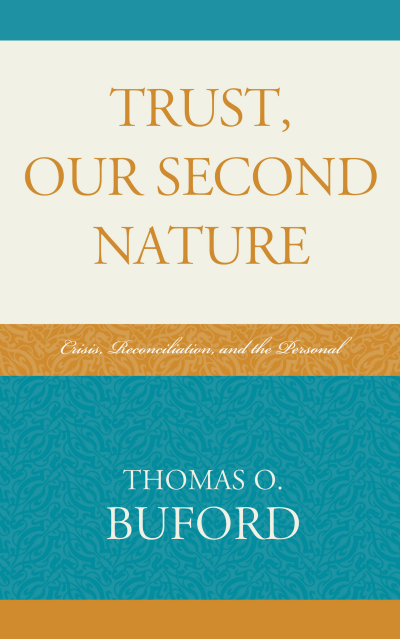
Trust, Our Second Nature
Crisis, Reconciliation, and the Personal
Authors:
Publisher:
2009
Summary
The thesis of this book is that only a social personalism and no form of impersonalism can adequately account for the solidarity and stability of what we individuals share with all other members of our society, our second nature. In the ancient world the discussion of society, at least since Plato and Aristotle, began with the social nature of individuals as found in families and proceeded to topics such as the formation and the well ordering of societies according to eternal principles grasped by reason. Since the beginning of the modern world, at least since Hobbes and Locke, the discussion of society began with the relation of persons and society and then moved on to other topics, usually political and legal ones. The central problem was to find the basis on which individuals formed societies and how they could do so. Buford's question is with a more basic issue: 'What do individuals and society share in common?' or what philosophers since Cicero have called our second nature, and how to best understand its unity and stability. The crisis of our culture in the erosion of both solidarity and stability pointedly manifests itself in our second nature. There the culture in which we live is felt, lived, and shared. Buford asks how we can lay bare our second nature, revealing the extent of the crisis. Our second nature is the form of social actions of persons in triadic relations, and Buford argues that it is there that we find that trust unifies a society and provides the basis for the institutions that stabilize it.
Search publication
Bibliographic data
Edition
1/2009
Copyright Year
2009
ISBN-Print
978-0-7391-3231-9
ISBN-Online
978-0-7391-3233-3
Publisher
Lexington, Lanham
Language
English
Pages
144
Product Type
Monograph
Table of contents
ChapterPages
Contents No access
Preface No access
Acknowledgments No access
Chapter 01. Our Problematic Second Nature No access Pages 1 - 24
Chapter 02. Solidarity: Trusting, Oughting, and Transcending No access Pages 25 - 58
Chapter 03. Stability No access Pages 59 - 86
Chapter 04. Reconciliation No access Pages 87 - 110
Chapter 05. The Personal No access Pages 111 - 124