, to see if you have full access to this publication.
Monograph No access
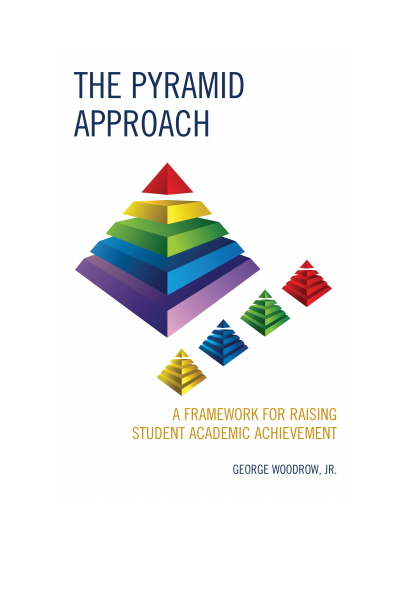
The Pyramid Approach
A Framework for Raising Student Academic Achievement
Authors:
Publisher:
2014
Summary
This book explains why virtually all children can achieve proficiency or higher. And it gives educators the tools to help them achieve those levels of learning.
The notion that schools are “waiting for Superman” or Wonder Woman to rescue them is at best a fantasy and at worst, damaging to schools and school systems that advance this type of flawed thinking. This is why in this book the reader will be encouraged to embrace the concept that only through building effective teams (collective instructional leadership) will schools begin to realize their stated goal—educate “all” students. It may take a village to raise children but it takes collective instructional leadership to educate them.
This book takes great care to ask the questions that policymakers, educators, parents, students and the larger community want answered:
Can you handle the truth?
Why is team leadership needed?
How do campuses improve their team dynamics?
What methods do high performing nations use to excel?
What strategies really work in high poverty schools?
Where do American schools rank on the rigor scale?
What is trust and how is it developed?
What are campus learning disabilities?
How do beliefs about human capacity affect student achievement levels?
What methods motivate students to work hard?
What do we really mean when we say, “All children can learn”?
The Pyramid Approach was designed by Dr. George Woodrow, Jr. for use by educators. The Pyramid is research-based; it aligns theory with professional practice. In addition, it strives to take what we know and provide a practical framework to effectively apply that same knowledge in ways that promotes student achievement. The Pyramid Approach calls attention to the need for a systematic framework that recognizes the interconnectedness among research methods.
Search publication
Bibliographic data
Edition
1/2014
Copyright Year
2014
ISBN-Print
978-1-4758-1351-7
ISBN-Online
978-1-4758-1352-4
Publisher
Rowman & Littlefield, Lanham
Language
English
Pages
219
Product Type
Monograph
Table of contents
ChapterPages
Contents No access
Acknowledgments No access
Can You handle the truth? No access
Reflective Thoughts No access
Bare Facts No access
References No access
Reflective Thoughts No access
Systematic Framework and Key Terms No access
The Bare Facts No access
The Five Levels of the Pyramid No access
Safe and Caring Culture No access
Performance at the Group Level No access
Employing Active Listening Skills No access
Safe and Orderly Organizational Environment No access
Significance and Elements of a Caring Culture No access
Perceptions About Poverty and Learning No access
Trusting Team Culture No access
Culture is the Organization’s Personality No access
Reflective Thoughts No access
Bare Facts No access
References No access
Reflective Thoughts No access
Developing School-wide Instructional Strategies No access
Essential Components of School-wide Instructional Strategies No access
Implementing and Monitoring School-wide Instructional Strategies No access
What Works Best No access
Reflective Thoughts No access
Bare Facts No access
References No access
Reflective Thoughts No access
Beliefs Matter! Rhetoric Doesn’t No access
Instructional Leader’s Belief Statement No access
How to Transform One’s Belief System No access
Selecting and Hiring the Best No access
Develop Believing Teachers No access
Collaboration vs. Merit Pay No access
We Have Had Our Fifty Years No access
Reflective Thoughts No access
Bare Facts No access
References No access
Reflective Thoughts No access
Try Harder No access
Biography of E=mc2 No access
Using E=mc2 as an Analogy in Education No access
Rigor on Steroids No access
The Affluenza Mindset No access
Rigor and Hard Work No access
Effectively Teaching Effort No access
Reflective Thoughts No access
Bare Facts No access
References No access
Reflective Thoughts No access
Getting to the Fifth Level No access
A Theory of Action No access
How to Apply the Instructional Leadership Pyramid No access