, to see if you have full access to this publication.
Monograph No access
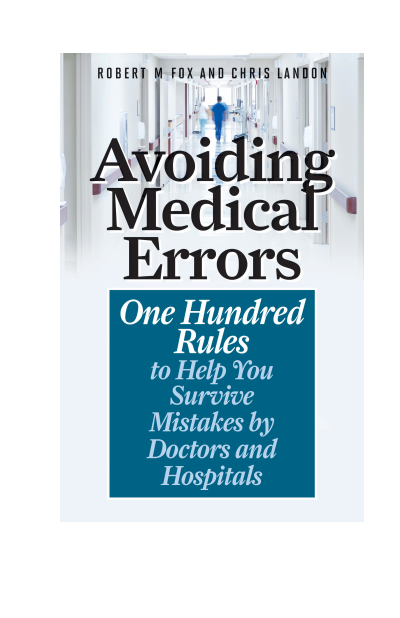
Avoiding Medical Errors
One Hundred Rules to Help You Survive Mistakes by Doctors and Hospitals- Authors:
- |
- Publisher:
- 2020
Keywords
Search publication
Bibliographic data
- Copyright Year
- 2020
- ISBN-Print
- 978-1-5381-3571-6
- ISBN-Online
- 978-1-5381-3572-3
- Publisher
- Rowman & Littlefield, Lanham
- Language
- English
- Pages
- 176
- Product Type
- Monograph
Table of contents
ChapterPages
- Contents No access
- Acknowledgments No access
- Introduction No access
- Preamble to the Rules No access
- Rule 1. Select (or Change to) a Competent Doctor No access
- Rule 2. Use State Medical Board Websites to Verify the Credentials of Your Doctor No access
- Rule 3. Don’t Hesitate to Ask Questions That Can Help Your Doctor Evaluate Your Medical Care and Protect Your Health No access
- Rule 4. Be Courteous and Considerate to Your Doctor and All Other Medical Office Personnel No access
- Rule 5. If You Have Doubts about Your Doctor’s Advice concerning Diagnosis or Treatment, Don’t Hesitate to Speak Up and Ask Questions No access
- Rule 6. Insist That Your Doctor Tell You the Diagnosis Before You Accept Treatment No access
- Rule 7. Be Persistent, Particularly If You’ve Been Told There Is Nothing Wrong, but You Know Something Is Wrong No access
- Rule 8. Obtain an Independent Second Opinion No access
- Rule 9. Be Careful Before You Accept Experimental or Unproven Medication or Treatment No access
- Rule 10. Consider Stopping Treatment If There Is No Improvement over Time or If Your Condition Worsens No access
- Rule 11. Do Not Go Home If You Do Not Feel OK No access
- Rule 12. Take Action—Firmly and Courteously—If You Are Habitually Kept Waiting for Long Periods of Time Before You See Your Doctor No access
- Rule 13. To Save Time (and Aggravation), Follow the “Call First” and “Schedule First” Tips No access
- Rule 14. Before Seeing Your Doctor, Prepare a Short List of Questions No access
- Rule 15. Resist the Urge to Talk during a Procedure or Examination No access
- Rule 16. If You Become Involved in Legal Disputes, Remind Your Doctor’s Office to Protect Your Records No access
- Rule 17. Educate Yourself on Doctors and Hospitals No access
- Rule 18. In an Emergency That Requires Hospitalization, by Private Car or “911” Vehicle, Ask to Be Taken to a Full-Service Hospital No access
- Rule 19. Consider Simple Research about Your Medical Problem or Medication No access
- Rule 20. Evaluate Unsubstantiated Health and Medical Advice No access
- Rule 21. In Your Home, Post Information about Doctors, Hospitals, and Medication No access
- Rule 22. Keep Medical and Personal Information in Your Wallet No access
- Rule 23. If Your HCP or Hospital Requires You to Sign an Arbitration Agreement, Sign It—and Don’t Worry! No access
- Rule 24. Consider Joining a Medical Support Group No access
- Rule 25. Create and Maintain Your Own Medical File No access
- Rule 26. If You Discover an Error in Any Record, Ask for a Corrective Note No access
- Rule 27. Obtain Your Original Records before Their “Destruct Date” No access
- Rule 28. Ask for Written Instructions for Any Medication, Diet Change, or Exercise No access
- Rule 29. Keep Each of Your Doctors Informed of Your Medications and Supplements No access
- Rule 30. Be as Accurate as Possible When Providing the Doctor or Hospital with Essential Information No access
- Rule 31. If There Is a Language Barrier, Bring Your Own Translator or Interpreter No access
- Rule 32. Communicate Your Concerns to All Your Healthcare Providers; Do Not Assume They Will Communicate with One Another No access
- Rule 33. Ask Questions and Think Carefully Before You Agree to Have Surgery No access
- Rule 34. If You Decide to Have Surgery, Take Steps to Assure the Best Possible Result No access
- Rule 35. Avoid Traveling Far Away for a Surgery from the “Best” Expert No access
- Rule 36. Verify with Your Surgeon That He or She Will Personally Perform the Surgery No access
- Rule 37. Schedule Your Surgery at a Time When the Surgeon Will Be Available Seven Days Postoperatively No access
- Rule 38. Schedule Your Elective Surgery for a Monday, Tuesday, or Wednesday Morning (If You Have a Choice) No access
- Rule 39. Avoid Elective Surgery When Residents and Interns Change (June or July at Most Hospitals) No access
- Rule 40. Ask Your Surgeon to Verify That Your Anesthesiologist Is a Board-Certified MD No access
- Rule 41. Attempt to Have Your Surgery in a Full-Service Hospital No access
- Rule 42. Arrange to Have an Advocate/Friend Remain in Your Hospital Room When Needed No access
- Rule 43. Consider a Surgeon Who Is Skilled in a Particular Surgery, Even Though He or She Has a Reputation for Poor Aftercare No access
- Rule 44. Select Your Surgeon Carefully: Investigate, Interview, and Decide No access
- Rule 45. Don’t Panic If You Must Violate Some of Rules 36–43 No access
- Rule 46. Let Your Surgeon Select His or Her Own Method and Instruments of Surgery No access
- Rule 47. Ask Your Surgeon If He or She Will Use a General or a Local Anesthetic and Whether You Have a Choice No access
- Rule 48. Do Not Have Surgery on a Holiday or Weekend No access
- Rule 49. Be Careful about Scheduling Surgery Only “to Avoid Losing Time from Work” If Such Scheduling Violates Other Rules No access
- Rule 50. Let Your Surgeon Decide on the Number of Surgeries That Will Be Performed No access
- Rule 51. During the Weeks before Hospital Entry, Prepare, Assemble, and Learn How to Use Your “Hospital Kit” No access
- Rule 52. A Day or Two before Hospital Entry, Use a Permanent Black Felt-Tip Marker to Print Warnings about Allergies and Body Surgery No access
- Rule 53. Except for Your Hospital Kit, Leave Your Valuables at Home to Prevent Loss or Theft No access
- Rule 54. If You Will Have a Private-Duty Nurse, Make Arrangements at Least a Week before Hospital Entry No access
- Rule 55. Review Hospital Paperwork Seven to Ten Days before Entry No access
- Rule 56. In the Weeks before Entry, Determine If a Hospitalist Will Be Available to See Patients No access
- Rule 57. If You Are Ill before Your Elective or Non-Emergency Surgery, Ask Your Doctor about Possible Cancellation No access
- Rule 58. Ask Your Doctor Which Medications You Should Be Taking or Discontinuing Before You Enter the Hospital No access
- Rule 59. Ask Your Doctor’s Permission to Bring Your Own Medication to the Hospital Instead of Taking Those Supplied by the Hospital No access
- Rule 60. Well before Surgery, Arrange for Postoperative Care No access
- Rule 61. Verify That You Have Had a Preoperative Physical Examination No access
- Rule 62. Have Your Friend/Advocate Help with the Check-in Procedure No access
- Rule 63. Both You and Your Advocate Should Always Be Diplomatic, Friendly, and Cooperative with Everyone at the Hospital No access
- Rule 64. Confirm That Your Hospital Wristband Has Your Correct Information No access
- Rule 65. Right Away, Learn How to Work the Call Device and Other Equipment in Your Hospital Room No access
- Rule 66. Promptly after Admission, Verify That Your Body Warning Signs and Other Printed Signs Are Placed and Visible No access
- Rule 67. Before Surgery, Reconfirm Your Surgeon Will Be the One Performing the Surgery No access
- Rule 68. Before Entering the Operating Room, Confirm Which Anesthetic Will Be Administered (Local or General) No access
- Rule 69. Prior to Surgery, Tell Your Surgeon If You Have Removable Dentures, Implants, Stents, or Similar Items No access
- Rule 70. Ask Your Doctor: “What Other Doctor Will Be Seeing Me during My Hospitalization?” No access
- Rule 71. In the Hospital, Make Notes of Important Events to Include in Your Medical File No access
- Rule 72. Before Taking Any Medication, Verify It Was Prescribed for You and Not Some Other Patient No access
- Rule 73. If Your Room Has a Bedside Scanning Device to Check Medication, Make Sure It Is Used No access
- Rule 74. If You Have a Serious Medical Problem, Insist on Being Seen by an Experienced MD; Do Not Allow a Delay Until Your Treating Doctor or Surgeon Returns No access
- Rule 75. If You Discover That Doctors or Other Hospital Personnel Disagree with the Treatment You Are Receiving, Investigate and Consider a Second Opinion No access
- Rule 76. When Tests Are Conducted, Always Ask Your Doctor, “What Did the Test Show?” No access
- Rule 77. If Your Private-Duty Nurse Is Hostile, Incompetent, or Otherwise Unsatisfactory, Discharge Him or Her Promptly No access
- Rule 78. Avoid Loss or Theft of Your Cell Phone or Smartphone No access
- Rule 79. Ask Questions If You Discover Surgical or Other Treatment Complications No access
- Rule 80. If You Are Cleared for Discharge but Feel Too Sick to Leave, Take Steps to Appeal So You Can Stay in the Hospital No access
- Rule 81. Upon Discharge, Ask for Written Instructions about Medications or Other Required Action No access
- Rule 82. Do Not Sign Any Documents When You Leave the Hospital No access
- Rule 83. Ask Questions Before You Agree to Tests or Devices (See Exceptions) No access
- Rule 84. Ask That All Tests Ordered by Your Doctor Be Conducted and Interpreted in the US (See Exceptions) No access
- Rule 85. When Your Blood Is Taken for Testing, Check That Your Name Is on the Body of the Container No access
- Rule 86. Whenever a Needle Is Used, Verify That It Is Taken from an Unopened and Sterile Package No access
- Rule 87. Always Request Lead Shielding for Tests Involving Radiation (All X-rays and Scans) No access
- Rule 88. If You Are Told to Use a Device, Have It Explained to You While You Are Still at the Office No access
- Rule 89. Be Careful Buying Prescriptions by Mail or Online Pharmacies; Some Are Good, Some Are Bad, Some Are Fraudulent No access
- Rule 90. Select Your Local Pharmacies Carefully; It Will Save Time and Money and Will Protect Your Health No access
- Rule 91. If You Feel Sick or Have Another Problem When Starting New Medication, Stop Immediately and Contact Your Doctor No access
- Rule 92. Check with Your Doctor about Taking, Continuing, or Stopping Medications No access
- Rule 93. Verify That the Medication You Are Taking Was Prescribed by Your Doctor No access
- Rule 94. Ask Your Doctor to Prescribe the Generic Unless There Are Good Reasons to Do Otherwise No access
- Rule 95. Discard and Replace Outdated Medications No access
- Rule 96. Do Not Give Children Adult Medication (See Exceptions) No access
- Rule 97. Maintain Medical, Hospital, and Drug Insurance No access
- Rule 98. Verify in Advance That Your Bills Will Be Paid by Your Medical Plan No access
- Rule 99. Reduce Out-of-Pocket Expenses by Bargaining, Coordinating, and Shopping No access
- Rule 100. Whether You Have Insurance or Not, Learn to Financially Navigate Out-of-Pocket, Out-of-Network, and Concierge Medical Plans No access
- Rule 101. Be Cautious Before Putting Other Medical or Laboratory Bills on Your Credit Card No access
- Rule 102. If Injury or Illness May Have Been Caused by Medical or Hospital Errors, or Other Causes, Take Steps to Protect Your Legal Rights No access
- Rule 103. If Illness or Injury Occurs, as Discussed in Rule 102, Decline Requests for “Interviews” or “Statements,” and Avoid Other Communications That May Compromise Your Legal Rights No access
- Rule 104. Employ an Attorney ASAP If You Believe You Are a Victim of Medical or Hospital Error or Other Causes Discussed in Rule 102 No access
- Appendix A No access Pages 149 - 152
- 1. Full-Service Hospitals (First-Tier, Tertiary, or Quaternary-Care Hospitals) No access
- 2. Second-Tier (Regional) Hospitals No access
- 3. Third-Tier (Local Neighborhood) Hospitals No access
- 4. Ambulatory Surgical Centers No access
- 5. Stand-Alone Emergency Rooms No access
- 6. Urgent Care and Walk-in Clinics No access
- 7. Healthcare Provider Services Provided by Pharmacies and Other Retail Establishments No access
- Appendix C No access Pages 159 - 160
- Bibliography and Suggested Reading No access Pages 161 - 162
- Index No access Pages 163 - 174
- About the Authors No access Pages 175 - 176