, to see if you have full access to this publication.
Monograph No access
The Life and Times of Francis Cabot Lowell, 1775-1817
Authors:
Publisher:
2010
Summary
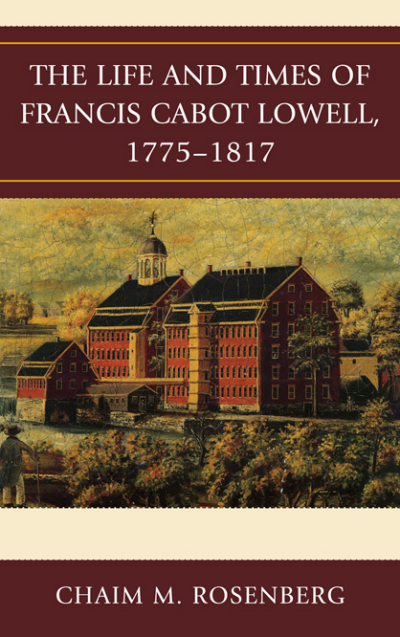
After the Revolutionary War, despite political independence, the United States still relied on other countries for manufactured goods. Francis Cabot Lowell was one of the principal investors in building the India Wharf and the shops and warehouses close to Boston harbor. His work was instrumental in establishing domestic industry for the United States and brought the Industrial Revolution to the United States. From 1810 to the start of the War of 1812, he traveled through Great Britain, where he saw the tremendous changes caused by the Industrial Revolution, starting with cotton textiles. On his return to the United States he focused on establishing a domestic textile industry to replace imported goods. With his brother-in-law, Patrick Tracy Jackson, he built the Boston Manufacturing Company at Waltham-America's first integrated mill. With his star mechanic, Paul Moody, he developed a power loom and other machines suitable for local conditions. The Life and Times of Francis Cabot Lowell, 1775-1817 tells the story of this amazing man and the great success of the Boston Manufacturing Company, which spurred the American industrial revolution. Francis Cabot Lowell's method-a detailed investment plan, cheap raw materials and power, a motivated labor force, a sound marketing plan, and, above all, modern technology-became the standard for the American factory of the nineteenth century. When Francis Cabot Lowell died, his associates established America's first industrial city, and named it Lowell in his honor.
Search publication
Bibliographic data
Edition
1/2010
Copyright Year
2010
ISBN-Print
978-0-7391-4683-5
ISBN-Online
978-0-7391-4685-9
Publisher
Lexington, Lanham
Language
English
Pages
352
Product Type
Monograph
Table of contents
ChapterPages
Contents No access
Notable Lowell Descendants No access
Acknowledgments No access
Introduction: The New Industrial System No access Pages 1 - 10
Chapter 1. Occasionem Cognosce( Know the Opportunity): Motto of the Lowell Family No access Pages 11 - 54
Chapter 2. A Privileged Education No access Pages 55 - 64
Chapter3. The Young Merchant: 1793–1802 No access Pages 65 - 96
Chapter 4. The Brothers Lowell No access Pages 97 - 124
Chapter 5. Francis and His Sisters No access Pages 125 - 140
Chapter 6. The Merchant King: 1803–1808 No access Pages 141 - 156
Chapter 7. Mr. Jefferson’s Embargo No access Pages 157 - 166
Chapter 8. A Proper Bostonianon a Grand Tour No access Pages 167 - 196
Chapter 9. American TextileIndustry Before 1814 No access Pages 197 - 212
Chapter 10. Return to Boston No access Pages 213 - 230
Chapter 11. The Boston Manufacturing Company No access Pages 231 - 258
Chapter 12. The Tariff of 1816 No access Pages 259 - 272