, to see if you have full access to this publication.
Monograph No access
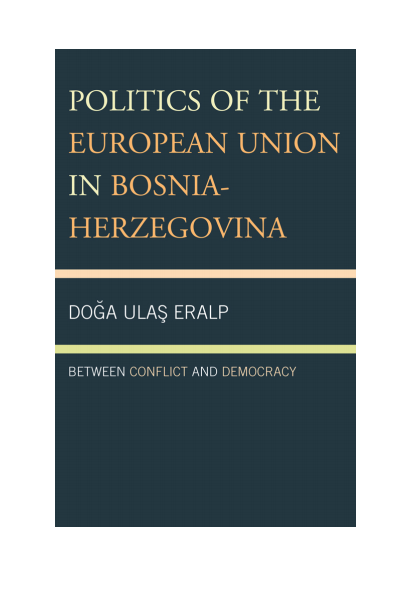
Politics of the European Union in Bosnia-Herzegovina
Between Conflict and Democracy
Authors:
Publisher:
2012
Summary
Politics of the European Union in Bosnia-Herzegovina: Between Conflict and Democracy, by Doga Ulas Eralp, evaluates the European Union's ability to transform the escalating political tensions at a period where the postconflict balance of the Dayton Peace Agreement is turning increasingly unsustainable. Eralp questions whether reforms integral to the EU membership process and existing European crisis management mechanisms can liberate Bosnian politics from the help of ethno-nationalism and plant the seeds for a successful liberal democracy.
Eralp's text captures the tools and history of the EU's accession strategy for Bosnia-Herzegovina and the challenges of the Dayton system as two interrelated narratives, both exploring the realities of Bosnian politics and analyzing the overall quality of Bosnian democracy. Bosnia's consociational system, the role of the international community, and the intervention of the European Union are all put under the spotlight as the institutional and political factors behind Bosnia's stagnation. The text concludes with a discussion of factors that impact the effectiveness of the European Union as an important transformative actor in Bosnia.
Search publication
Bibliographic data
Edition
1/2012
Copyright Year
2012
ISBN-Print
978-0-7391-4945-4
ISBN-Online
978-0-7391-4947-8
Publisher
Lexington, Lanham
Language
English
Pages
135
Product Type
Monograph
Table of contents
ChapterPages
Contents No access
List of Figures No access
List of Tables No access
Acknowledgments No access
Chapter One: Introduction No access Pages 1 - 6
Chapter Two: Conditions for Liberal Democracy in Bosnia-Herzegovina No access Pages 7 - 30
Chapter Three: The Dayton System No access Pages 31 - 56
Chapter Four: EU Membership Perspective for Bosnia-Herzegovina No access Pages 57 - 86
Chapter Five: The European Union’s Crisis Management Mechanisms No access Pages 87 - 110