, to see if you have full access to this publication.
Book Titles No access
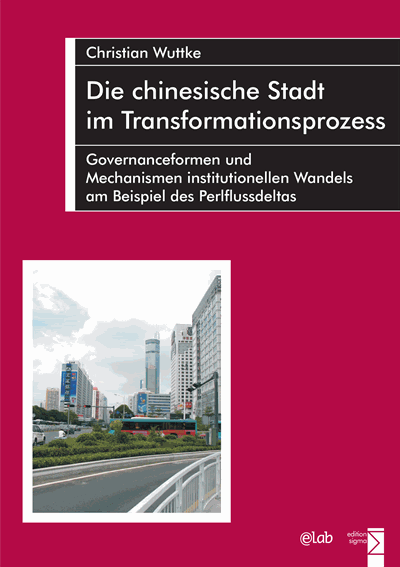
Die chinesische Stadt im Transformationsprozess
Governanceformen und Mechanismen institutionellen Wandels am Beispiel des Perlflussdeltas- Authors:
- Publisher:
- 2012
Search publication
Bibliographic data
- Copyright year
- 2012
- ISBN-Print
- 978-3-8360-1109-9
- ISBN-Online
- 978-3-8452-7097-5
- Publisher
- Nomos, Baden-Baden
- Language
- German
- Pages
- 204
- Product type
- Book Titles
Table of contents
ChapterPages
- Titelei/Inhaltsverzeichnis No access Pages 1 - 5
- Inhalt No access Pages 5 - 8
- Vorwort No access Pages 9 - 12
- 1.1 Institutionen und der chinesische Transformationsprozess No access
- 1.2 Chinas Städte im Transformationsprozess No access
- 1.3 Das Perlflussdelta No access
- 1.4 Fragestellung und Erkenntnisinteresse No access
- 2.1 Für einen politisch-geographischen Ansatz im Neuen Institutionalismus No access
- 2.2 Institutionen: Begriff und Abgrenzungen No access
- 2.3.1 Der Rational-Choice-Institutionalismus No access
- 2.3.2 Der soziologische Institutionalismus No access
- 2.3.3 Der historische Institutionalismus No access
- 2.3.4 Zusammenfassung No access
- 2.4 Zur Architektur und Analyse von Institutionen No access
- 2.5.1 Formen institutionellen Wandels No access
- 2.5.2 Ursachen und Barrieren für institutionellen Wandel No access
- 2.6.1 Postkommunistische Transformation zwischen Schock-Therapie und Gradualismus No access
- 2.6.2 Transformation als Wandel unter Bedingungen von höchster Unsicherheit No access
- 2.6.3 Institutionelle Lücken im Transformationsprozess No access
- 2.6.4 Dezentralisierung und institutioneller Wandel in China No access
- 2.6.5 Über das Zusammenspiel von informellen und formalen Institutionen im chinesischen Transformationsprozess No access
- 2.7 Institutionen und Governance No access
- 3.1 Governance: Zwischen Mode- und Brückenbegriff No access
- 3.2.1 Gutes Regieren: Governance als normatives Paradigma No access
- 3.2.3 Governance als analytische Forschungsperspektive No access
- 3.3 Governance und die komparative Stadtforschung No access
- 3.4 Zur Identifikation und Klassifizierung von Governanceformen No access
- 3.5.1 Korporatismus No access
- 3.5.2 Pluralismus No access
- 3.5.3 Klientelismus No access
- 3.5.4 Populismus No access
- 3.5.5 Managerialism No access
- 3.5.6 Entrepreneurialism No access
- 4.1 Chinas Urbanisierung No access
- 4.2 Phasen der chinesischen Reform- und Öffnungspolitik No access
- 4.3 Dezentralisierung und die Neuordnung der Regierungs- und Ver waltungsstruktur No access
- 4.4 Lokalstaat und Wirtschaft No access
- 4.5.1 Local State Corporatism No access
- 4.5.3 Entrepreneurialism No access
- 5.1 Regional differenzierte Reform- und Öffnungspolitik und der Aufstieg des Perlflussdeltas No access
- 5.2 Aktuelle Probleme der Stadt- und Regionalentwicklung No access
- 5.3 Stadtplanung No access
- 5.4 Development Zones: Neue Räume für den Kapitalismus No access
- 5.5 Urban Governance und institutioneller Wandel: Forschungsleitende Annahmen No access
- 5.6 Forschungsdesign und Methodik No access
- 5.7 Fallauswahl No access
- 6.1 Einführung No access
- 6.2 Shenzhen als Pionier im chinesischen Reformprozess No access
- 6.3.1 Nationale Entwicklungspolitik No access
- 6.3.2 Regionaler Kontext No access
- 6.3.3 Lokale Probleme No access
- 6.4.1 Neue Formen der Stadtplanung No access
- 6.4.2.New Special Districts No access
- 6.5 Governance und institutioneller Wandel in Shenzhen No access
- 7.1 Einführung No access
- 7.2 Stadtplanung in Guangzhou während der frühen Transformations phase No access
- 7.3 Erste Aufwertungsmaßnahmen No access
- 7.4.1 Die Einführung des „Concept Plan“ No access
- 7.4.2 Zur politischen Logik des neuen Concept Plan No access
- 7.5.1 Die historische Entwicklung des Guangzhou Development Districts von 1984 bis zum Zone Fever in den 1990er Jahren No access
- 7.5.2 Integration von GETDD, GHIDZ, GFTZ und GEPZ im GDD No access
- 7.5.3 „Fortschritt im Osten“: Die Integration von Wirtschafts- und Distriktverwaltung im neugegründeten Luogang-Distrikt No access
- 7.6 Governance und institutioneller Wandel in Guangzhou No access
- 8.1.1 Bündelung politischer Ressourcen No access
- 8.1.2 Reorganisation der Partei- und Verwaltungsorgane No access
- 8.1.3 Transformation des lokalen Wirtschaftssystems No access
- 8.1.4 Neudefinition von lokalstaatlichen Aufgaben No access
- 8.1.5 Ergänzende Reformen No access
- 8.2 Unternehmen und Lokalstaat nach der Reform No access
- 8.3 Die Transformation des Lokalstaats in Shunde No access
- 9.1 Der chinesische Lokalstaat als institutional entrepreneur No access
- 9.2 Governanceformen im Perlflussdelta No access
- 9.3 Auf dem Weg zum Managerialism? No access
- 9.4 Institutioneller Wandel in der Reform- und Öffnungspolitik No access
- 9.5 Beispiele für dezentral induzierten institutionellen Wandel No access
- 9.6.1 Überlegungen zur Analyse und Interpretation institutionellen Wandels No access
- 9.6.2 Institutioneller Wandel in der Stadtplanung No access
- 9.6.3 Institutioneller Wandel am Beispiel der Development Zones No access
- 9.7 Ausblick No access
- Literatur No access Pages 183 - 199
- Verzeichnis der Abbildungen und Tabellen No access Pages 200 - 200
- Abkürzungsverzeichnis No access Pages 201 - 201
- Liste der Interviewpartner No access Pages 202 - 204